Best 8 Quart Slow Cookers (2026): Types and Buying Guide
Disclosure: We may earn a commission when you buy through links on this page, at no extra cost to you. As an Amazon Associate I earn from qualifying purchases. Learn more

A practical guide to the best 8 quart slow cooker: manual, programmable and portable types compared for large households.
Picture a Sunday where a large roast, a double batch of soup, and tomorrow lunches all need to come from one pot, but your counter and cabinets are already full. That is the problem the best 8 quart slow cooker should solve. This guide helps you choose by space, household size, and budget, and you can compare the main types in the comparison table below.
An 8 quart model is a commitment in size, so fit matters as much as cooking. A pot that suits a large family may frustrate a couple who cooks big only twice a month. The sections below cover size, controls, safety, cost, and care.



Quick Answer: Three Types to Consider First
Most buyers choose between three types, and your routine should decide which one tops your list.
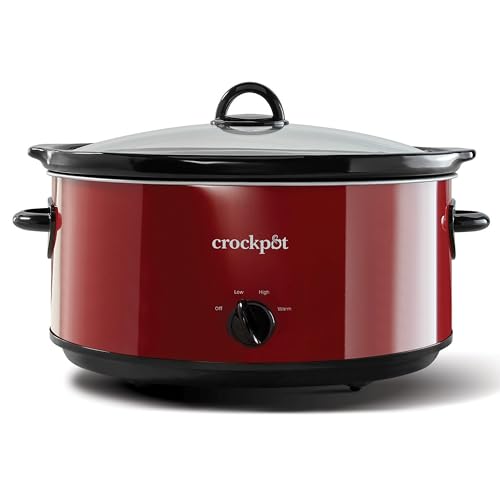
- Simple manual models use a dial with low, high, and warm settings. They suit homes that value controls anyone can use without instructions.
- Programmable digital models set a cooking time and then switch to warm on their own. They suit long days where dinner may sit an extra hour.
- Portable models with a locking lid suit cooks who take full pots to relatives and gatherings and need a lid that stays sealed in the car.
Before You Buy: A Quick Checklist for Choosing a Slow Cooker
Size: Match It to Your Space
Cookers range from mini sizes near 1 to 2 quarts for dips, through 4 quart and 6 quart models for small families, up to 7 quart, 8 quart, and 10 quart models for crowds. An 8 quart pot generally serves about eight to ten people. Choose it for whole chickens, large roasts, or big batches for freezing. If most meals feed two to four people, a smaller pot stores more easily.
Which Type Fits Your Routine
Oval pots fit whole birds and long cuts better than round pots, while casserole style models are shallow and wide. Ceramic inserts retain heat evenly but are heavy and can chip if dropped. Metal inserts are lighter and some are stovetop safe for browning, though you should confirm that detail per model. If material choice is a health priority, our guide to the best non toxic slow cooker explains the options.
Features Worth Paying For and Ones to Skip
A timer that switches the pot to warm, a locking lid for travel, and a clear lid you can check without lifting are worth paying for. A probe helps with large roasts, and a sear function saves washing a separate pan. Skip preset programs you will never select, decorative finishes, and bundled accessories you already own. Every extra feature adds cost and one more part that can fail.
Wattage, Power and Energy Use
Most large slow cookers draw roughly 200 to 400 watts, far less than heating a full oven for hours. The exact figure appears on the rating label or in the manual. Higher wattage does not mean better cooking, since these pots hold a gentle and steady heat. What matters is that the pot reaches a safe simmer and holds it. Check that your circuit is not already loaded with other large appliances.
Safety Features and Certifications
Look for a listing mark from UL or ETL on the base, which shows the appliance was checked against safety standards for household use. Sturdy handles, a cord that will not drape across a walkway, and steady feet all matter. Never use a cooker with a frayed cord, a cracked insert, or a lid that no longer sits flat. Place the pot away from walls and paper goods, and keep the cord out of reach of children.
Counter Space and Dimensions
An 8 quart cooker is wide, often around 15 to 17 inches across with handles, and tall enough that upper cabinets can block the lid. Measure the counter spot where it will cook, the cabinet where it will live, and the sink where you will wash the insert. Leave a few inches around the base for air flow. Remember that a ceramic insert is heavy even when empty, especially when lifted to a high shelf.
Realistic Budget Ranges
Simple manual models in this size often fall under $50 and cover basic low and high cooking well. Programmable models with locking lids and probes commonly sit at about $50 to $100, buying you scheduling control and easier transport. Models priced over $100 usually add metal inserts, browning functions, or larger displays. Those extras help only if you will use them weekly, so set your range by need, not by feature count.
Types Compared: Choosing an 8 Quart Format That Fits Your Home
Simple Manual Models for Everyday Simplicity
A manual model gives you a dial, two cooking levels, and a warm setting, and that simplicity helps in a shared kitchen. Anyone can start dinner without learning a menu, there is no screen to fail, and the lower price leaves room for storage containers. The trade off is attention: you need to be home to switch the pot to warm. Choose this type if someone is usually around near the end of cooking.
Programmable Digital Models for Scheduled Days
A programmable model lets you set the hours and trust the pot to move to warm when time ends, which protects food on a delayed commute. Digital controls also help when a recipe needs a precise window and a large cut would turn dry if it ran long. The trade off is complexity, cost, and a panel that must stay dry during cleaning. Choose this type if dinner often waits for the last person home.
Portable Models for Shared Meals Away From Home
A portable model focuses on the trip as much as the cooking, with a lid that clamps down and handles shaped for carrying. Choose it if your pot travels to family dinners or workplace meals, since a loose lid can spill a full quart in the driveway. At home it cooks like any other large cooker, though clamp hardware adds cleaning work around the rim. If you rarely carry food out, skip the locking hardware.
How to Compare 8 Quart Slow Cookers
Compare models on the same short list so a long feature list does not sway you. Start with usable capacity and insert weight, then cooking consistency, ease of use, and cleanup after a sticky recipe. Check warranty length and whether replacement inserts and lids are sold separately, since those parts decide how long the appliance stays useful. Read verified buyer reviews for patterns about lid fit, and use maker specifications for dimensions and wattage.
Is an 8 Quart Slow Cooker the Right Size for You?
Choose this size if you cook for six or more people often, host regularly, or batch cook for the freezer. It handles jobs smaller pots cannot, such as the large cuts covered in our guide to the best slow cooker for pot roast. It also shines for the batch cooking in our guide to the best slow cooker for soup, where doubling a recipe avoids a second cooking day.
Think twice if your household is one or two people and you dislike leftovers, since a half empty large pot can cook small portions unevenly and takes real storage space. A 4 quart or 6 quart model may serve daily meals better. If you are weighing another appliance, the comparison of slow cooker vs dutch oven helps you match the tool to food you cook on the stove and in the oven.
Common Buying Mistakes to Avoid
- Buying the largest size on sale without measuring cabinet depth, so the cooker crowds the counter during every other task.
- Choosing a ceramic insert without lifting one first, so a full pot becomes too heavy to move safely to the table.
- Paying for browning and preset programs you will use once, so the extra cost never turns into saved time.
- Ignoring replacement part prices, so a chipped insert or warped lid later costs nearly as much as a new basic cooker.
- Assuming a locking lid means the pot can travel on its side, so food leaks despite the sealed rim.
Cost of Ownership and Care
Running costs stay low because the pot draws modest power for a long and gentle cook, and batch cooking saves more on groceries than the electricity costs. Ongoing spending is mostly optional: liners if you use them, a replacement lid or insert if one is damaged, and containers for large batches. Favor models whose inserts are sold on their own, since replacing one part is far cheaper than replacing the whole appliance.
Store the cooker with a cloth between the lid and insert, which prevents trapped odors and protects the rim from chips in a crowded cabinet. Wipe the base with a damp cloth rather than immersing it in water. For the full routine, follow our guide on how to clean a slow cooker before residue builds up over several meals.
Your Questions, Answered
What is the most reliable slow cooker brand?
No single brand is most reliable for every home, and such claims are hard to verify without long term data. A better test is whether the maker sells replacement inserts and lids, offers a warranty of at least a year, and has a service contact you can reach. Simple controls also tend to outlast complex panels, since fewer electronic parts can fail.
How do you clean a slow cooker?
Unplug the cooker and let the insert cool before washing, since cold water on hot ceramic can crack it. Wash the insert and lid in warm soapy water, or in the dishwasher only if the maker allows it. For a stubborn ring, soak the insert with warm water and a little baking soda for an hour, then wipe it clean. Never immerse the base in water.
Is a slow cooker worth it?
It is worth it if you value starting dinner in the morning and freeing the oven and stove for the day. It also suits cooks who buy tougher and cheaper cuts, since long gentle cooking makes them tender without constant attention. The value drops if you rarely plan meals ahead. Count how many meals a month would truly use it before you decide.
How long does a slow cooker last?
A well kept cooker often lasts about five to ten years, depending on use and how carefully the insert is handled. Replace it sooner if the cord is damaged, the base heats unevenly, or the insert cracks, since those faults affect safety and results. A lid that warps or loses its seal is another sign, because steady moisture is part of how these pots cook.
What size slow cooker do I need?
Match the pot to your largest regular job, not your largest rare party. A household that cooks a whole chicken weekly or freezes soup in batches will use an 8 quart pot well, while meals for two fit a smaller size. One point many buyers miss is freezing space: a full batch can fill ten or more containers, so confirm your freezer can hold the results.
What is the best 8 quart slow cooker?
The answer depends on the type that fits your routine: manual for simple shared use, programmable for shifting schedules, or portable for meals you carry out. Beyond controls, weigh the insert before you commit, since a pot you cannot lift when full will sit unused. Check the lid fit in person if you can, because a snug lid holds moisture and steady heat.
Final Thoughts
An 8 quart cooker earns its space when it matches your household size, your storage, and the way your days run. Start with the type, confirm dimensions and insert weight, and spend only on features tied to meals you already make. Use the product table above to compare types on those points, and for the wider view across sizes, see our guide to the best slow cooker. Chosen that way, the best 8 quart slow cooker for your home is the one you reach for weekly without fighting for counter space.