Best 60 Inch Bathroom Vanities (2026): Buying Guide
Disclosure: We may earn a commission when you buy through links on this page, at no extra cost to you. As an Amazon Associate I earn from qualifying purchases. Learn more

Choosing the best 60 inch bathroom vanity? A 60 inch vanity fits one wide counter or two sinks, if the room allows.
A 60 inch vanity can give two people their own sink, or give one person a wide counter and deep storage, but only if the plumbing, doors, and walkway still fit. This guide to the best 60 inch bathroom vanity compares the main types on comfort, build quality, and usable capacity, so you can match the cabinet to your room. The comparison table below sums up the key differences.
If you are still weighing sizes and styles, start with our overview of the best bathroom vanity options, then come back here for the details that matter at exactly 60 inches wide.


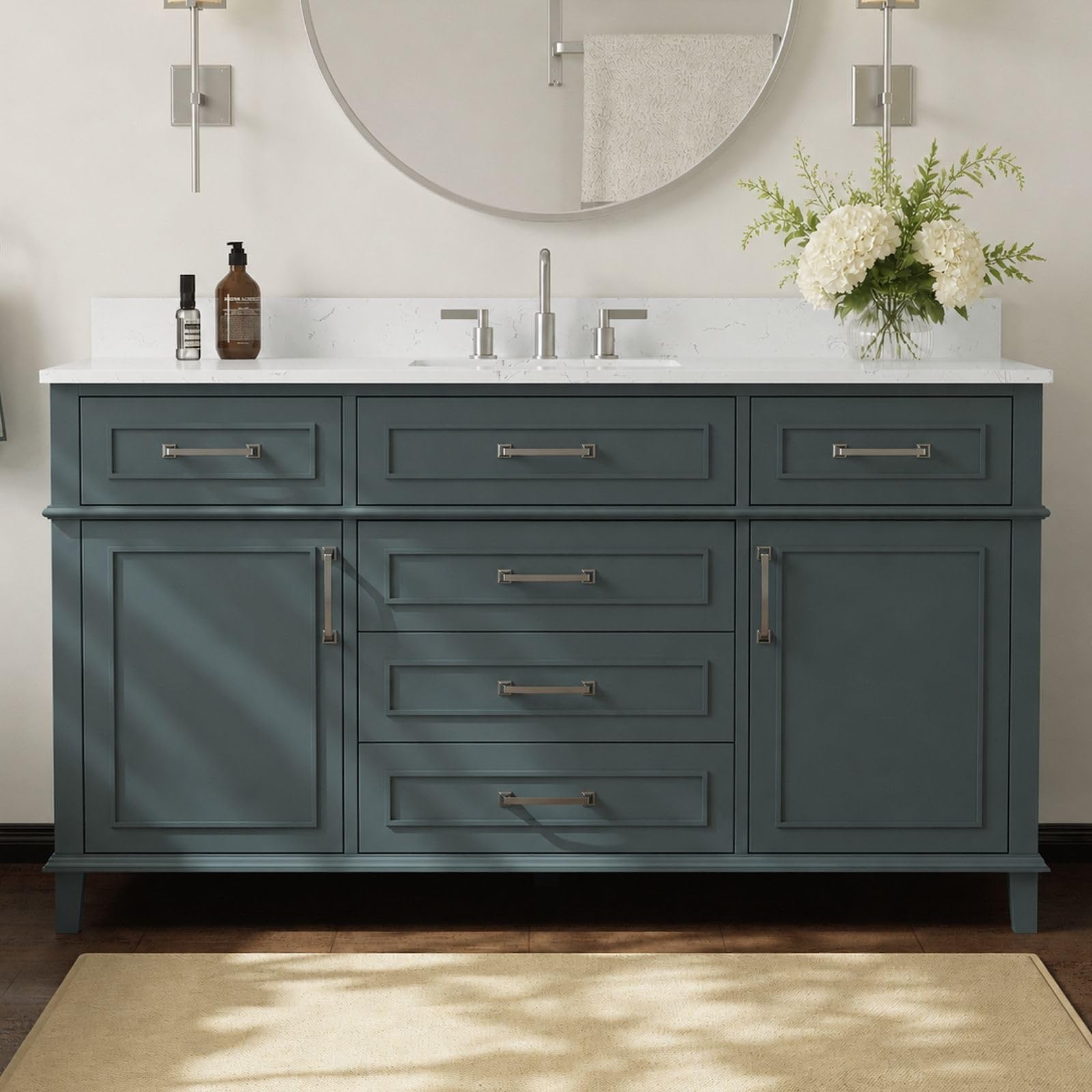


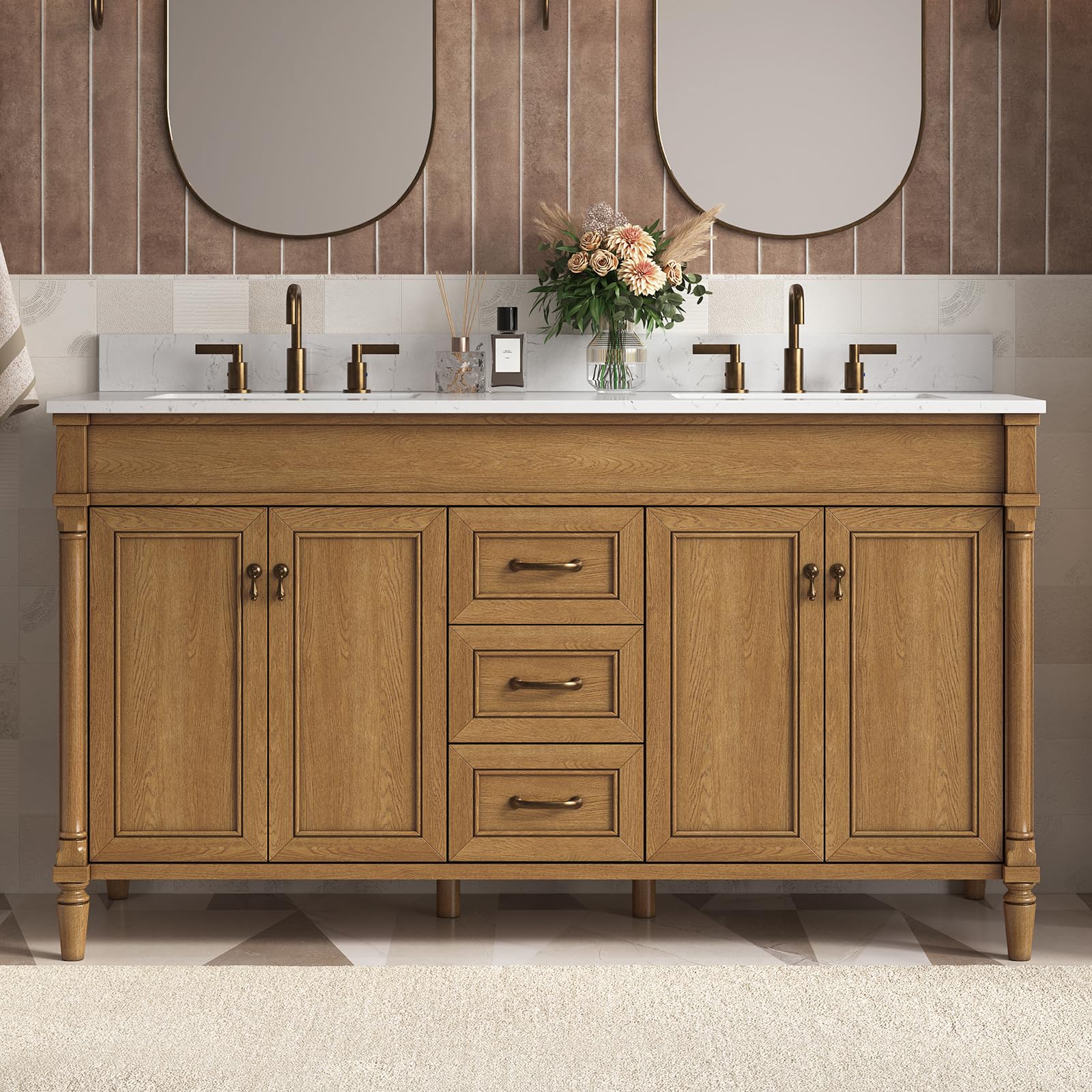
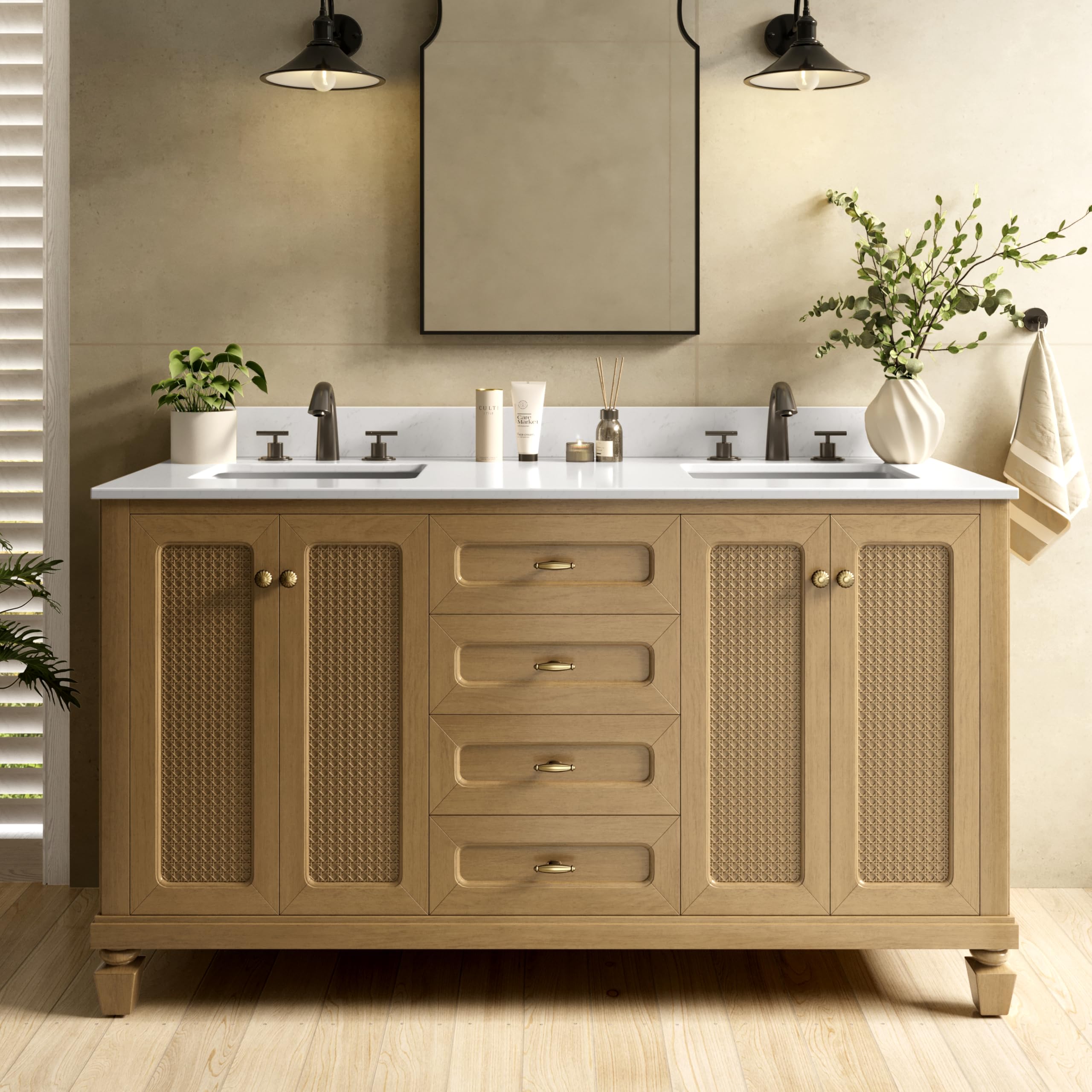
Vanity Types at a Glance
At 60 inches, the choice is less about width and more about layout. A double sink layout splits the counter in two, while a single sink layout leaves far more counter and drawer space. Floating and freestanding cabinets then change how the room feels and how you clean the floor.
- Double sink freestanding: two basins on a floor standing cabinet, best for shared morning routines.
- Single sink freestanding: one basin, a long unbroken counter, and the most drawer space of the three types.
- Floating: a wall mounted cabinet with open floor below, in either a single or double sink layout.
Three Vanity Types Compared
None of these types is better in general. Each one trades counter space, storage, and plumbing work in a different way, and the right trade depends on how many people use the room at the same time.
Double Sink Freestanding Vanities
Two basins let two people brush, wash, and get ready side by side without waiting for the sink. The cost is counter space, since each basin takes a wide cut of the top and leaves only a narrow strip between them. Storage also splits into two zones, and the center drawers on many models are shallow because two sets of drain pipes run behind them. Choose this type when two people truly overlap in the morning, not just because the width allows it.
Single Sink Vanities With a Long Counter
A single basin, often set to one side, leaves a long stretch of counter for styling tools, soap, and folded towels. Drawers can run wider and deeper because only one drain passes through the cabinet, so you gain storage that a double sink layout gives up. One person uses the sink at a time, which suits a bathroom where routines are staggered. If you love counter space more than a second basin, this type usually serves you better.
Floating Vanities
A floating cabinet hangs on the wall and leaves the floor clear, which makes a smaller room feel larger and lets you mop right under the unit. That clean look comes with real demands. The wall needs solid blocking or studs where the mounting rail sits, and the cabinet often holds a little less than a freestanding one. Floating models also sit at the height you choose during install, so measure carefully, since moving one later means new holes and patching.
How the Comparison Criteria Were Chosen
The criteria in this guide come from the decisions you cannot undo after delivery. Comfort covers sink height and how easily you can reach the back of a drawer. Build quality covers cabinet materials, drawer hardware, and finish. Capacity covers counter area, drawer volume, and the weight the top can safely hold. Assembly and warranty matter because a 60 inch cabinet is heavy, awkward to return, and expected to serve for many years.
How to Choose the Right Bathroom Vanity
The bathroom vanity buying guide covers vanities in general, while this section stays specific: choosing the best 60 inch bathroom vanity comes down to the seven checks below, in this order.
Size and Form Factor
Width is only the first measurement. Most 60 inch vanities stand about 32 to 36 inches tall and run about 18 to 22 inches deep, and depth is where tight rooms get into trouble. Measure the swing of the bathroom door and every drawer, and leave a clear walkway in front of the cabinet. Check the path from your front door too, since a fully built cabinet may not turn a tight hallway corner.
Type and Layout
Freestanding cabinets hide plumbing easily and rest on the floor, so install is simpler and storage is generous. Floating cabinets need a strong wall but return floor space and a lighter look. Corner models exist at smaller widths, yet at 60 inches the room rarely suits one. Style words such as modern and farmhouse describe doors and hardware rather than construction, so judge the cabinet box and drawers first and the finish second.
Features Worth Paying For
Pay first for soft close drawers and doors, since a wide vanity gets opened many times a day and slamming wears hinges fast. A top with a built in sink removes one seam where water can sit, while a separate vessel sink adds height you must count in your measurements. Drawers usually store daily items better than deep open cabinets, and a mix of both handles tall bottles and small trays.
Counter Space and Storage Capacity
Think in zones rather than totals. Each user needs a landing spot beside a sink for daily items, plus closed storage for the rest. Two narrow drawer stacks serve two people better than one shared wide drawer, even when the total volume matches. Check the weight limit for the counter if you plan to store heavy items on it, and ask how the cabinet carries that load, through a full frame or only through its side panels.
Comfort Height and Small Adjustments
Standard vanities used to sit near 32 inches, while taller comfort models sit near 36 inches, closer to kitchen counter height. Taller cabinets spare your back during a long routine, but young children may need a step stool and shorter adults may find a high basin awkward. You get little adjustment after install, apart from leveling feet on some freestanding models and the mounting height of a floating one. Faucet reach counts too, because a basin set far back makes you lean for the handles.
Materials and Durability
A bathroom cabinet lives with steam, splashes, and wet hands, so material choice drives lifespan. Solid wood and plywood resist moisture better than particle board with a thin surface film, which can swell at a cut edge. If you lean toward timber, our guide to the best wood bathroom vanity explains grades and finishes in detail. On top, quartz and cultured marble shrug off stains, while natural marble needs sealing and more care. Inside, look for smooth drawer boxes and metal slides.
Assembly and Warranty
Large vanities ship in three ways, fully built, partly built, or flat packed for you to assemble. Fully built units save hours but are the hardest to carry and to return. Read what the warranty actually covers, since many protect the cabinet box longer than the finish or the hardware. Save the paperwork and note whether the top, sink, and cabinet carry separate terms. Also confirm who pays return shipping for a damaged unit, because freight for a 60 inch cabinet can cost more than you expect.
How Much Should You Spend?
Most buyers land in one of three bands. At about $500 to $900 you get sound basic cabinets, often with simpler drawer hardware and a cultured marble top. At about $900 to $1,600 you gain plywood construction, better slides, and a wider choice of tops and finishes. Over $1,600, spending goes toward finer materials, careful finishing, and design detail rather than basic function. Set your band after pricing the extras, since faucets, mirrors, and plumbing parts often sit outside the cabinet price.
Is a 60 Inch Bathroom Vanity the Right Size for You?
A 60 inch vanity earns its place when two people share a primary bathroom, or when one person wants a generous counter in a guest room. It needs a wall run with room to spare and enough floor area that open drawers do not block the door or the tub.
If your wall is shorter or the room feels crowded on paper, a compact model from our guide to the best small bathroom vanity may fit your life better than a forced 60 inches. A single user in a narrow room often gains more from clear floor space than from a second basin.
Halfway cases exist as well. The best 36 inch bathroom vanity suits a single sink room where storage still matters, and stepping down frees floor area for a linen tower or a wider shower door swing. Measure first, then let the room, not the catalog photo, set the size.
FAQ
What is the best 60 inch bathroom vanity for a shared bathroom?
For a shared bathroom, the strongest choice is usually a double sink freestanding cabinet with two separate drawer stacks, one for each person. Look for a top that is easy to wipe between the basins, and faucets you can operate with wet or soapy hands. One point buyers miss is lighting, since two users need even light at both mirrors. A single wide mirror with two light sources works better than one small fixture in the center.
What size bathroom vanity do I need for a 60 inch wall space?
A wall space of exactly 60 inches calls for a cabinet slightly under that width, so the top can slide in without forcing. Leave a small gap at each end for filler strips, which cover uneven walls and let doors open fully. Also check the baseboards, since thick trim can push the cabinet out from the wall. If your alcove measures less than 60 inches wall to wall, order a smaller vanity rather than planning to trim a cabinet that was never built for cutting.
How long does a 60 inch bathroom vanity last?
A well built cabinet in a vented bathroom commonly serves for about 15 to 20 years, and the top often outlasts the box below it. The usual early failure is not the structure but the finish near the sink, where standing water works into edges. Running the fan after showers and wiping splash zones dry adds years. When drawers start to stick from swelling rather than loose hardware, the cabinet is nearing the end of its useful life.
Is a 60 inch bathroom vanity worth it over a 48 inch model?
It is worth it when the extra foot becomes something you use daily, such as a second basin or a styling zone with its own outlet. It is not worth it when the extra width only collects clutter or squeezes the walkway. One test helps: tape the footprint of both sizes on your floor and wall, then act out your morning routine inside each one. The size that keeps you from sidestepping the door or the toilet is the honest winner.
How do you clean a 60 inch bathroom vanity without harming the finish?
Start with a soft cloth and warm water for daily splashes, and save stronger cleaners for the sink and top only. The detailed steps in how to clean a bathroom vanity cover finishes from painted wood to stone. One habit matters most on a wide vanity: dry the strip between two basins after use, since water pools there unnoticed. Never leave a wet cloth draped over a cabinet door, because constant moisture in one spot dulls and lifts the finish.
What makes a bathroom vanity brand reliable at this size?
Reliability at 60 inches shows up in clear spec sheets, spare parts you can actually order, and warranty terms written in plain language. A maker that sells replacement slides, hinges, and touch up finish for older models is telling you it expects the cabinet to stay in service. Read buyer reports for patterns about shipping damage and finish wear rather than single complaints. Consistent packaging matters at this size, since a heavy cabinet that arrives intact has already passed a meaningful quality check.
Final Thoughts
Start with your wall, your plumbing, and your morning routine, in that order. Pick double sinks only for true overlap, favor plywood and good drawer hardware over styling extras, and leave room in the budget for faucets and install. Judged that way, the best 60 inch bathroom vanity is the one whose layout still feels easy on a rushed weekday. Use the product table above to compare the layouts side by side before you order.