Bathroom Vanity Buying Guide: How to Choose the Right One in 2026
Disclosure: We may earn a commission when you buy through links on this page, at no extra cost to you. As an Amazon Associate I earn from qualifying purchases. Learn more

Our bathroom vanity buying guide explains types, sizes, materials, features and prices so you can choose with confidence. Updated for 2026.
A vanity holds your sink, hides your plumbing, stores daily essentials, and sets the look of the whole room. This bathroom vanity buying guide walks through types, sizes, materials, features, and prices in the order you should decide them. Use the comparison table below to see how the main options differ at a glance.
Start with your room, not with a style photo. Measure the space you have, note where the plumbing sits, and count the people who will use the sink each morning.




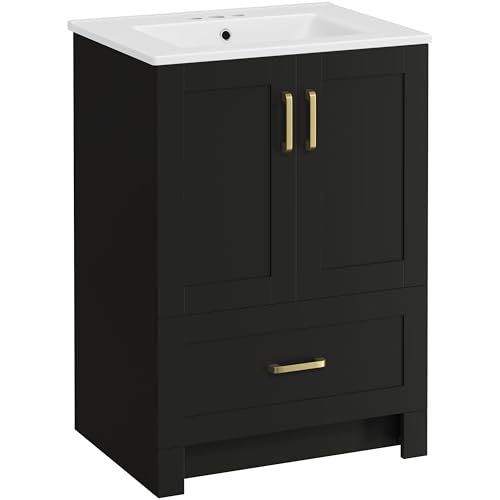


Quick Checklist
- Measure width, depth, and height, and check door swing and drawer clearance.
- Note whether your plumbing comes through the floor or the wall.
- Decide on one sink or two based on room width and morning demand.
- Pick a cabinet material that suits the moisture level in your bathroom.
- Choose storage that matches what you keep at the sink every day.
- Budget for the top, the faucet, and installation, not just the cabinet.
Types Explained
Types differ in how they sit in the room, how much storage they hold, and how hard they are to install. Style labels describe looks, while mounting style describes structure, so judge both separately.
Floating
A floating vanity is fixed to the wall with no legs and no base touching the floor. The open floor beneath makes a small bathroom feel larger and leaves room to clean underneath. The trade off is shallower storage and a wall that must carry the full load.
Freestanding
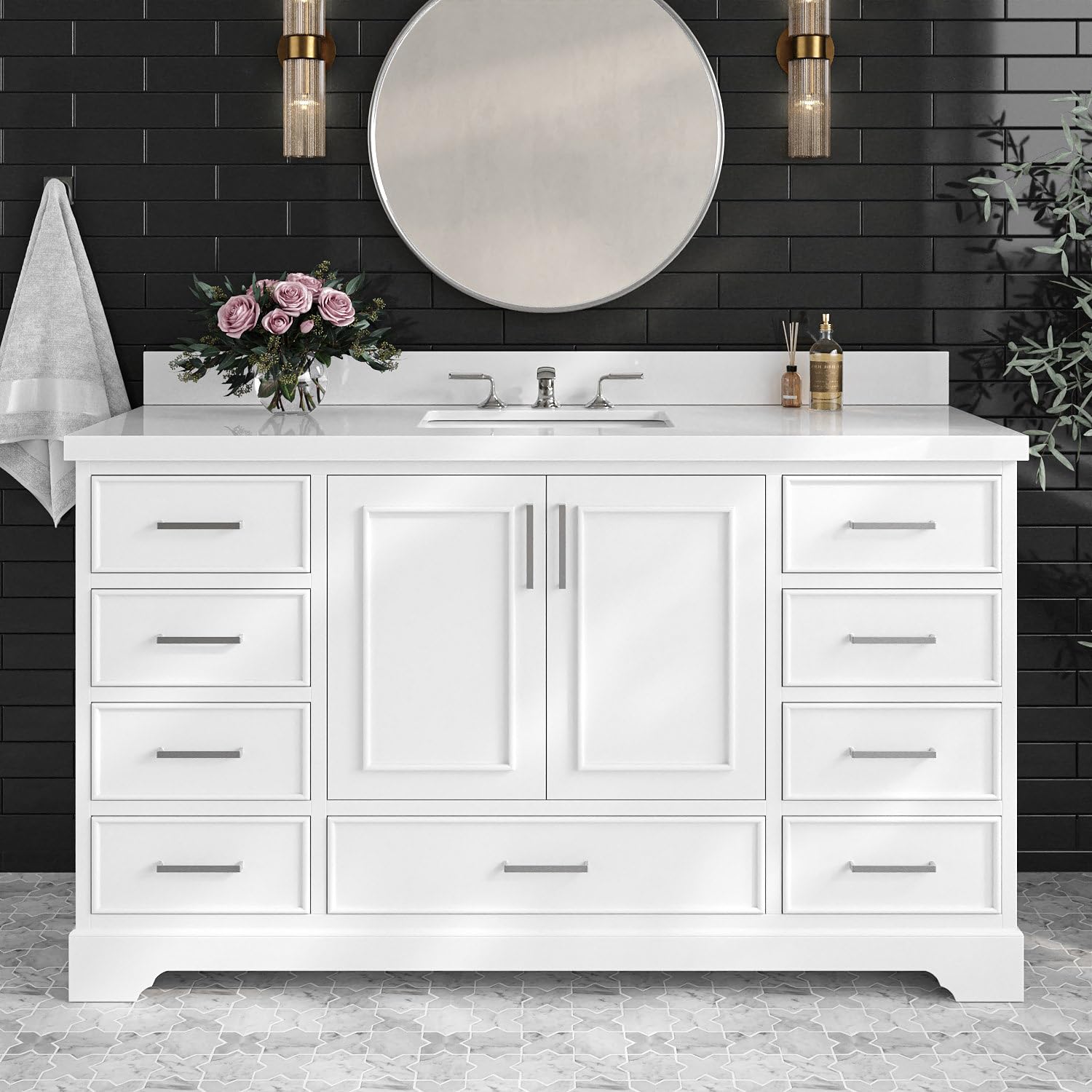
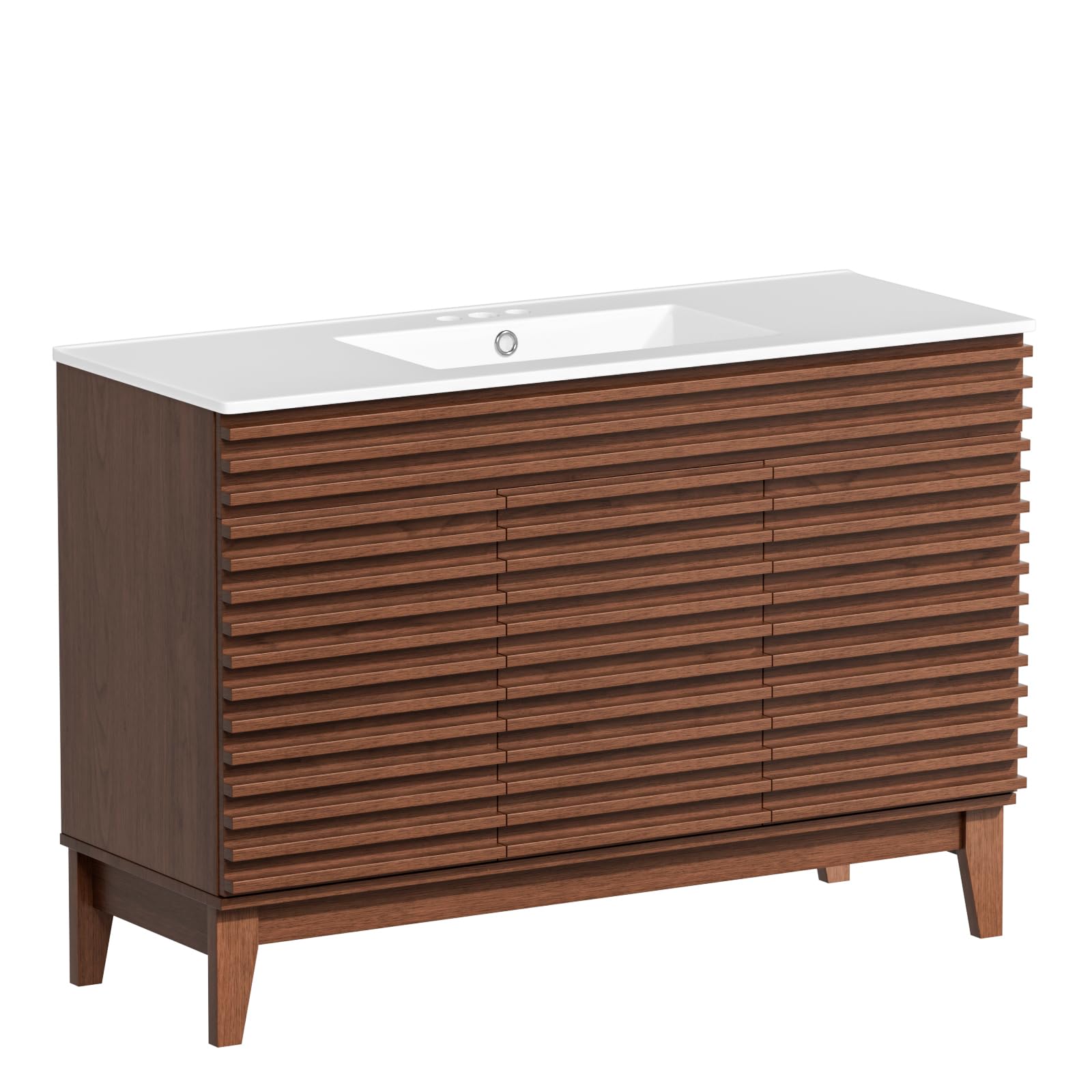
A freestanding vanity rests on the floor on legs or on a solid plinth base, much like a dresser. It is the easiest type to install because the floor carries the load and the cabinet only needs to sit level. These models tend to offer the deepest drawers, which suits busy family bathrooms.
Wall Mounted
Wall mounted is the broader term for any vanity hung from the wall, including floating designs and heavier framed cabinets. The key point is the fixing. The cabinet must anchor into studs or into blocking added inside the wall, so plan this type early in a remodel.
Double Sink
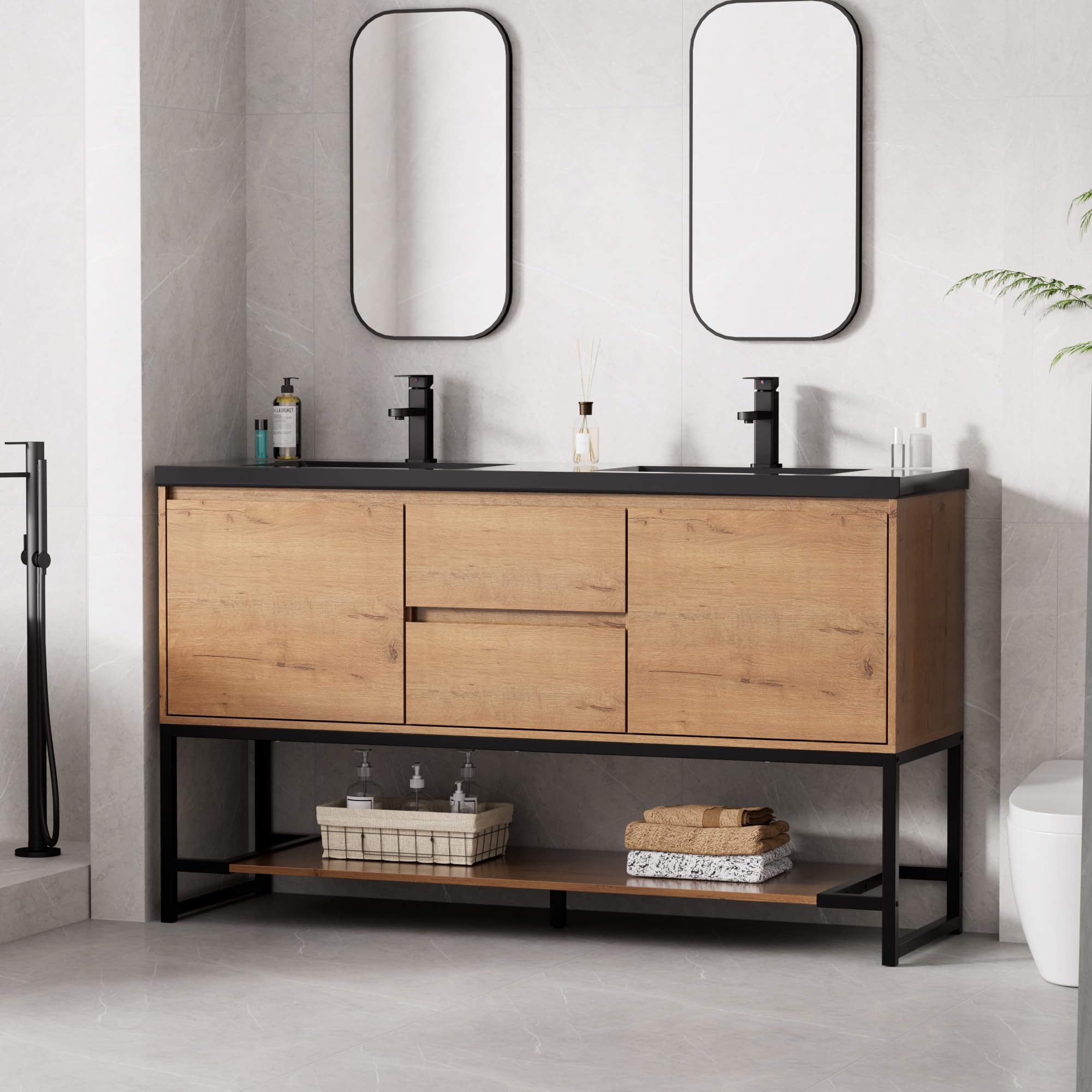
A double sink vanity holds two basins in one cabinet, giving two people separate space for washing and getting ready. It needs a wide cabinet, two sets of plumbing connections, and two faucets, so purchase and installation costs both rise. In return, each person gains personal counter space and storage.
Modern
Modern vanities favor flat drawer fronts, simple lines, and handles that sit flush or are cut into the drawer edge. Storage usually sits in wide drawers rather than behind doors, which keeps daily items visible when a drawer opens. Plain surfaces show water marks readily, so choose a finish that wipes clean.
Farmhouse
Farmhouse vanities borrow the look of sturdy kitchen furniture, with framed doors, visible wood grain, and apron style sink fronts on some models. They often stand on legs and offer generous storage behind doors. This style suits larger bathrooms, especially with baskets or bins planned inside the cabinet.
Choosing the Right Size
Width is the first number to settle. Common widths run from 24 inches for a compact cloakroom unit up to 72 inches for a double sink cabinet, with 30 inch, 36 inch, 48 inch, and 60 inch sizes in between. Leave clearance on each side so drawers and doors open fully and the room door clears the cabinet.
Depth matters just as much. A standard vanity is about 21 inches deep, while narrow models at about 18 inches suit tight rooms. For two basins, allow at least 60 inches of width for elbow room, and 72 inches if you want counter space between and beside the sinks. A small vanity in a large room wastes storage, so match the cabinet to the room.
Features Worth Paying For
Some features earn their cost every day, while others only look good in photos. Judge each one by how often you will use it at the sink.
Sink
The sink may come built into the top or as a separate basin you choose yourself. An integrated top and basin in one piece has no seam where water and grime collect, which makes wiping down fast. A separate undermount basin gives a smooth counter surface and lets you replace the basin alone later. Vessel basins raise the washing height, so check the total height before choosing one.
Top
The top takes the daily splash, heat, and cleaning, so its material shapes how the vanity ages. Engineered stone and quartz resist stains and need little care beyond wiping. Natural stone looks rich but usually needs sealing against water marks. Cultured marble costs less and often comes with the basin molded in, though it can scratch more easily. Confirm the top is drilled for your faucet type.
Mirror
Many vanities are sold with a matching mirror, and buying the pair saves you matching widths and finishes later. A mirror about as wide as the cabinet, or slightly narrower, keeps the proportions balanced. Mirrored cabinets add shallow storage for medicines and small bottles, which is valuable in a small room. Position the mirror so its center sits near eye level.
Drawers
Drawers beat doors for most daily storage because you see everything at once and nothing hides at the back. Look for a top drawer with a cut out that wraps around the plumbing, turning wasted space into room for toothbrushes and cosmetics. Deeper lower drawers hold hair dryers and spare towels. Smooth runners and a soft close action protect the cabinet and your early morning temper.
LED Mirror
An LED mirror has lighting built into or around the glass, giving even light across your face without harsh shadows. That helps with shaving, makeup, and skin care far more than a single ceiling light does. Useful extras include a dimmer and a heated pad that clears steam after a shower. These mirrors need a power supply, so plan the wiring before the wall is finished.
Body Size and Weight Capacity
Counter height shapes comfort every time you wash. Standard vanities stand about 32 inches tall, while comfort height models reach about 36 inches, close to a kitchen counter. Taller users and anyone who dislikes bending will prefer the higher option, while shorter users and young children may find it awkward.
Weight capacity matters most for wall hung models. Cabinet, stone top, basin, and stored contents together weigh a great deal, and the fixings must hold that load with a margin to spare. Check the rated load and the fixing method in the maker guide.
Adjustability
A vanity offers less adjustment than most furniture, but a few points help it fit your room. Legs on freestanding models often adjust slightly, letting you level the cabinet on an uneven floor so drawers run true. Movable shelves and drawer dividers let you reshape storage as needs change, and some wall hung cabinets allow a small range of mounting heights.
Materials and Durability
Bathrooms are wet, steamy rooms, so material choice drives how long a vanity lasts. Solid wood handles moisture well when sealed on all sides. Plywood with a good veneer resists warping better than most budget boards. Medium density fiberboard is common at lower prices and gives a smooth painted finish, but once water reaches a cut edge it can swell, so sealing around the sink and floor line matters.
Look closely at finish and hardware too. A finish covering the inside of the cabinet as well as the outside slows moisture damage, and metal runners and hinges outlast plastic ones. If your bathroom has no window or fan, favor the most water tolerant material your budget allows. Once size and type are settled, our guide to the best bathroom vanity options can help you compare complete units.
Assembly and Warranty
Vanities arrive fully built, partly built with the top separate, or flat packed for home assembly. A fully built cabinet saves time but is heavy and awkward to carry through doors and up stairs, so measure your route before ordering. Flat packed models move more easily and cost less to ship, but they demand careful assembly to keep the frame square and the drawers aligned.
Read the warranty before you buy, not after a fault appears. Check how long it covers the cabinet, the finish, and the hardware, and whether water damage is excluded, since that is the most common bathroom failure. A clear warranty with available spare parts, such as hinges and runners, extends the useful life of the unit.
How Much to Spend
Budget for the whole installation, not just the cabinet. Small single vanities start at around $200, mid range models with better materials and storage run about $500 to $1,200, and large double sink units in premium materials can pass $1,500. Allow extra for the faucet, the mirror if not included, plumbing parts, and fitting if you hire a plumber.
Spending more usually buys thicker cabinet materials, smoother drawer hardware, and a harder wearing top, all of which show up in daily use. Put money first into the cabinet material and the top, since neither can be upgraded later without replacing the whole vanity.
Best Brands to Consider
Rather than chasing a name, judge any brand by the evidence it offers. Look for clear specifications on cabinet material and thickness, honest load ratings for wall hung models, and fitting guides you can read before ordering. Brands that sell spare hinges, runners, and drawer fronts make repairs realistic years later.
How to Choose With Confidence
This bathroom vanity buying guide reduces to a simple order of decisions. Fix the size from your room measurements, pick the mounting type your walls and floor can support, choose storage that matches your daily routine, and then select materials that suit your moisture level. Only after those steps should style and finish decide between the remaining options, because looks are easy to compare in photos while fit and function are not.
If two models still tie, compare the drawer layout and picture your own items inside each one.
FAQ
How wide should a bathroom vanity be for two people?
Two people need at least 60 inches of width, and 72 inches is more comfortable because it adds counter space between the basins. Check the floor space in front too, since each user needs room to stand. If your room allows only 48 inches, a single wide basin with two faucets is a workable compromise, though double storage is lost.
Can a floating vanity hold a stone top?
Yes, provided the wall structure and fixings are rated for the combined weight. Stone tops are heavy, so the maker guide will state the fixing pattern and the blocking or stud positions required. A tiled wall alone cannot carry the load. If your installer cannot confirm the wall is strong enough, a floor standing cabinet removes the risk entirely.
Does a bathroom vanity come with a faucet?
Usually not. Most vanities include the cabinet, the top, and the basin, while the faucet and drain parts are sold separately. That is why the drilling pattern of the top matters, since it must match the faucet you plan to fit. Buy the faucet before installation day.
How do you care for a bathroom vanity day to day?
Wipe splashes off the top and cabinet fronts daily, because standing water is the main cause of swollen edges and peeling finish. Use a soft cloth and a mild cleaner, and avoid soaking the base where the cabinet meets the floor. For deeper cleaning steps and stain advice, follow our guide on how to clean a bathroom vanity.
Is it worth paying more for soft close drawers in a bathroom vanity?
For a main bathroom used many times a day, yes. Soft close runners stop drawers slamming, which protects the cabinet joints and the items inside, and they keep early mornings quieter. In a guest bathroom used a few times a week, standard runners are a sensible saving. Either way, metal runners matter most for long term smoothness.
Final Thoughts
The right vanity is the one that fits your room, your plumbing, and your routine, in that order. Measure carefully, choose materials that can handle daily steam and splashes, and spend first on the cabinet and top because they carry the whole unit. Use the product table above to compare options that meet your measurements, and let this bathroom vanity buying guide checklist settle any final doubts before you order.