Best 36 Inch Bathroom Vanitys (2026): Types Compared and Buying Guide
Disclosure: We may earn a commission when you buy through links on this page, at no extra cost to you. As an Amazon Associate I earn from qualifying purchases. Learn more
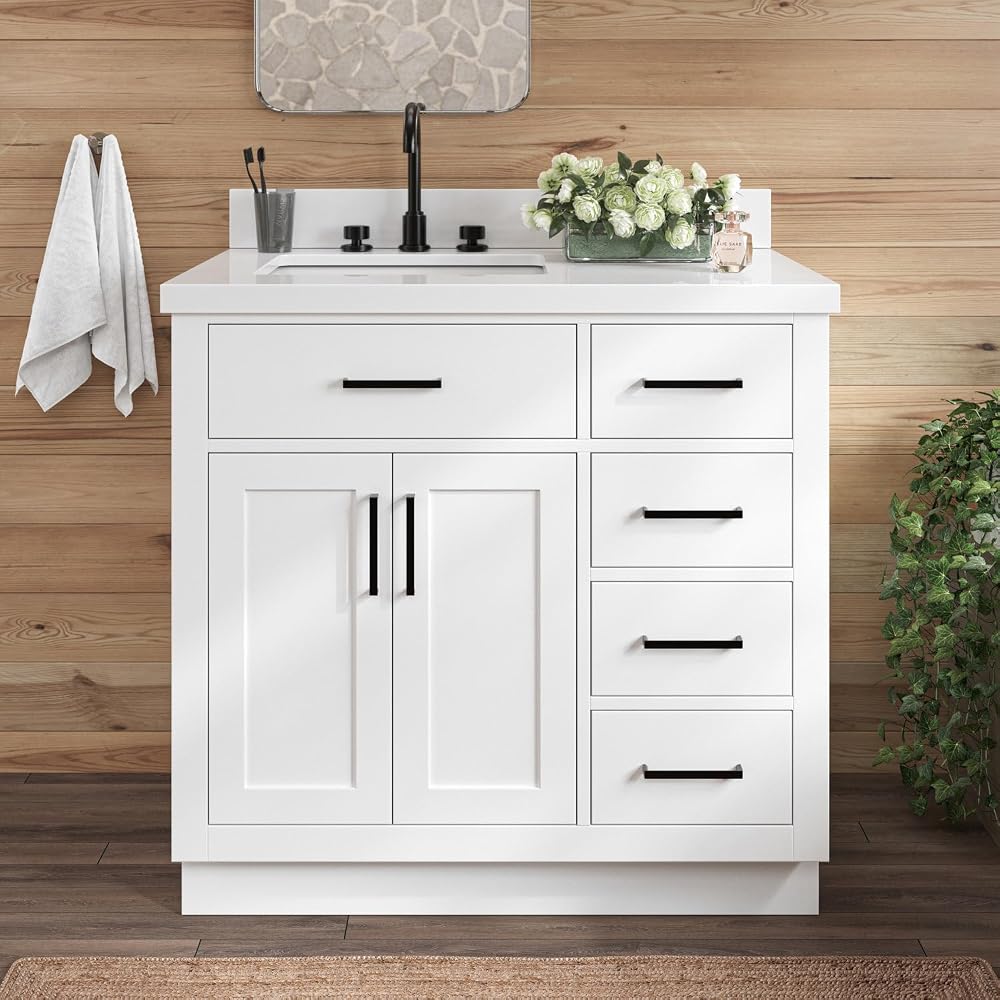
A practical guide to the best 36 inch bathroom vanity: freestanding, floating, and set styles, plus depth, materials, and budget.
A 36 inch vanity sits in a useful middle ground. It gives you a full single sink with real counter space on both sides, yet it still fits bathrooms where a 48 inch or 60 inch cabinet would crowd the door swing and the walkway. Finding the best 36 inch bathroom vanity for your room comes down to how the cabinet is built, how much storage the layout actually delivers, and whether the depth and height suit the people using it every morning.
This guide compares the main vanity styles in this size and walks through the measurements, materials, and features that matter most. Use the comparison table below to see how the styles line up, then read on for the sizing checks to run before you order.

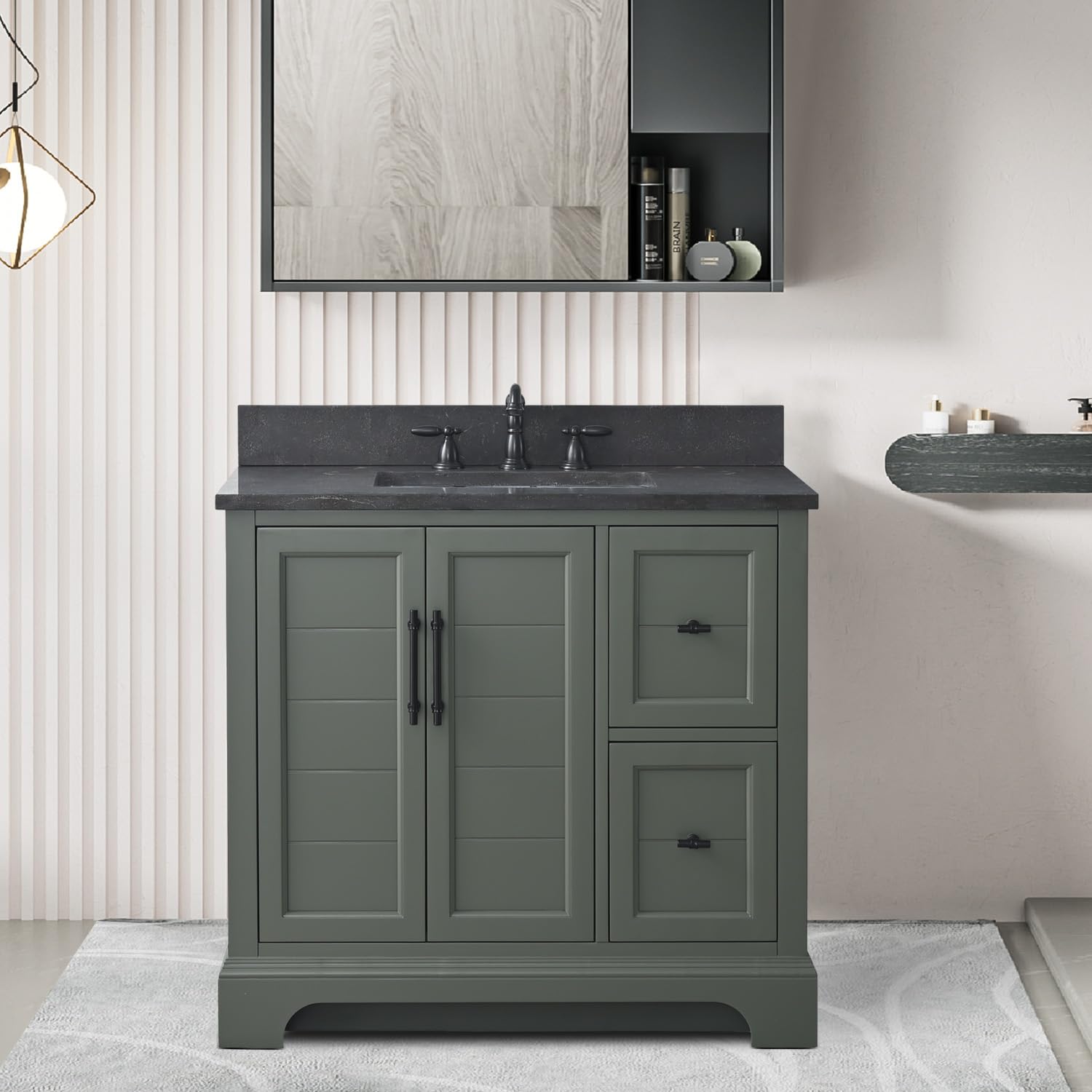

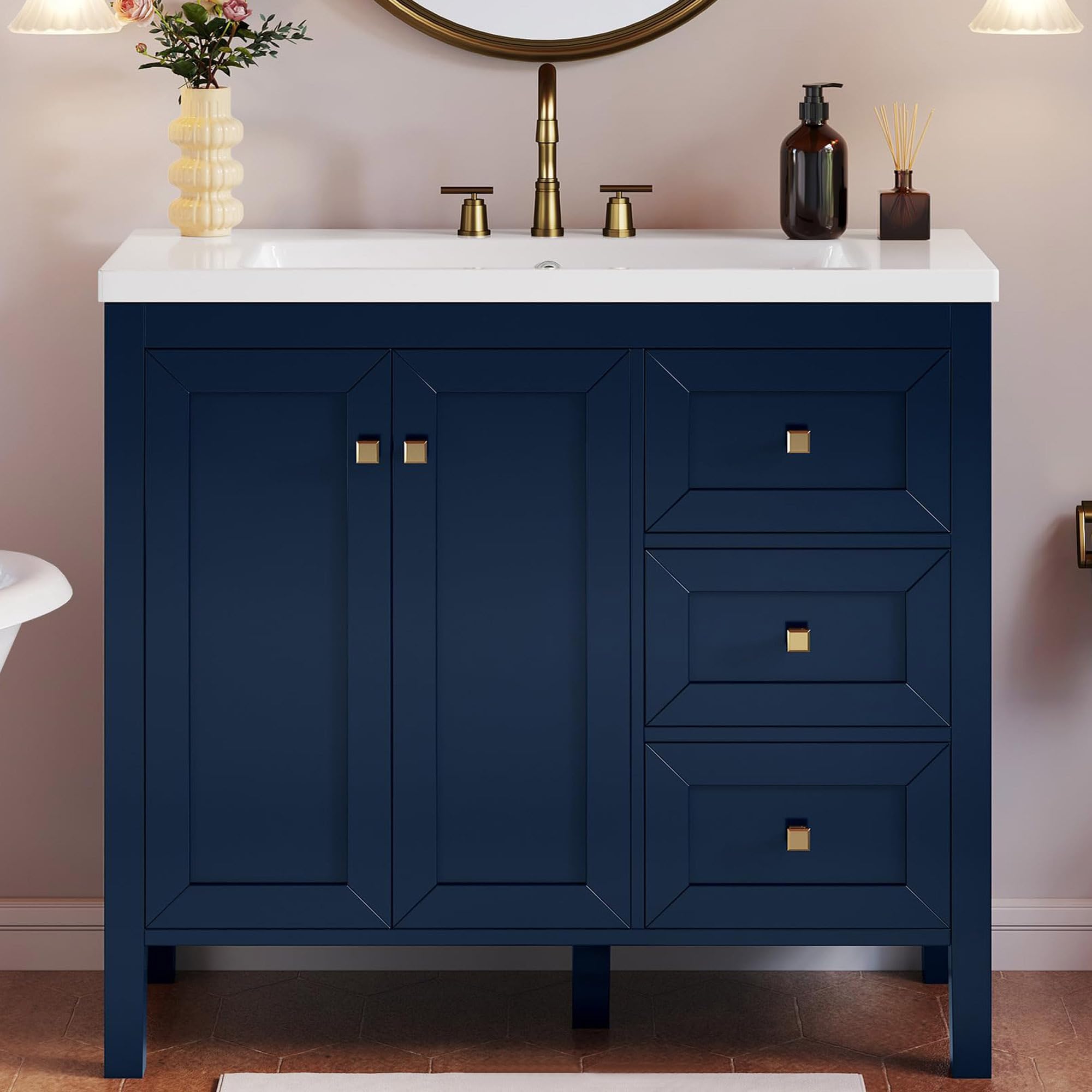
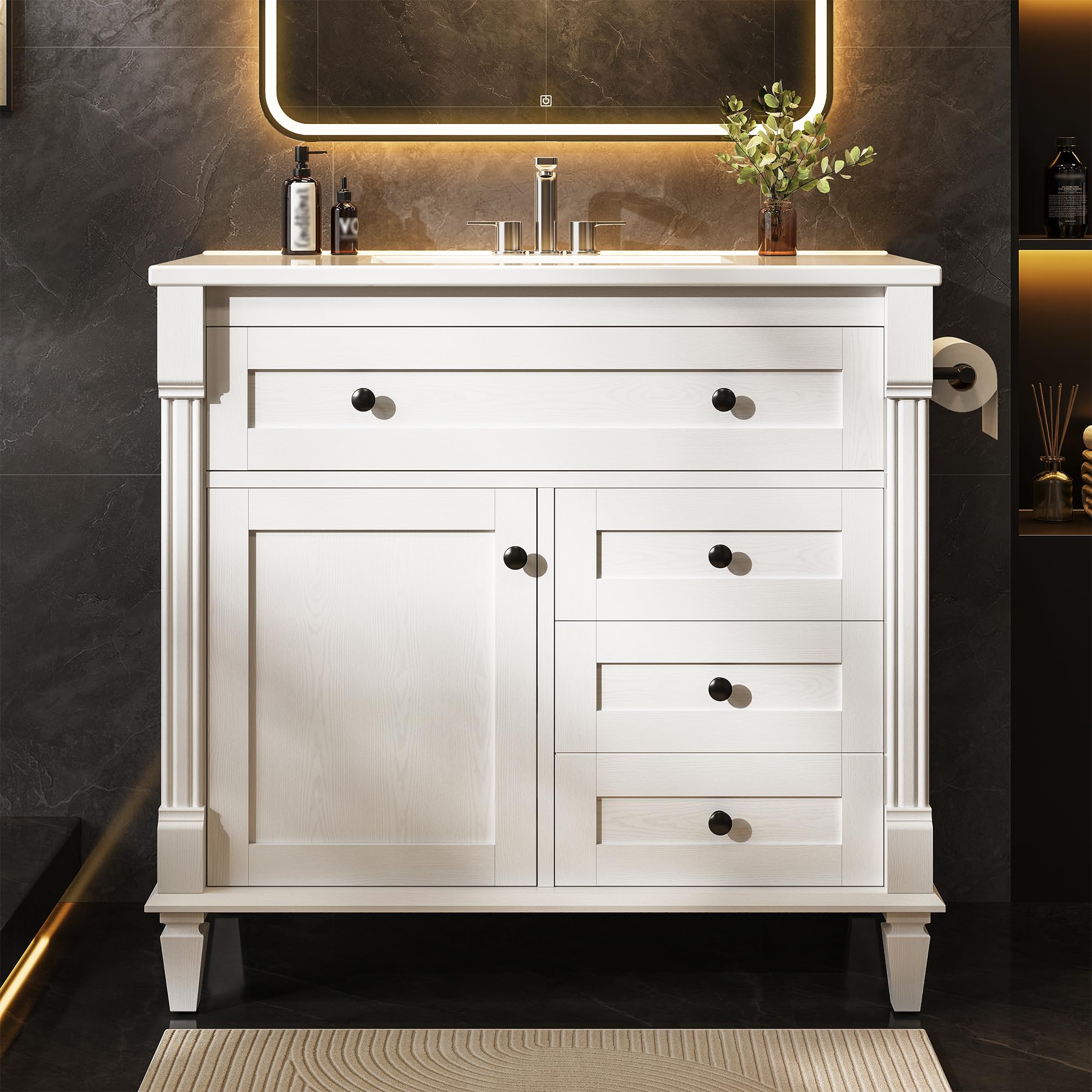
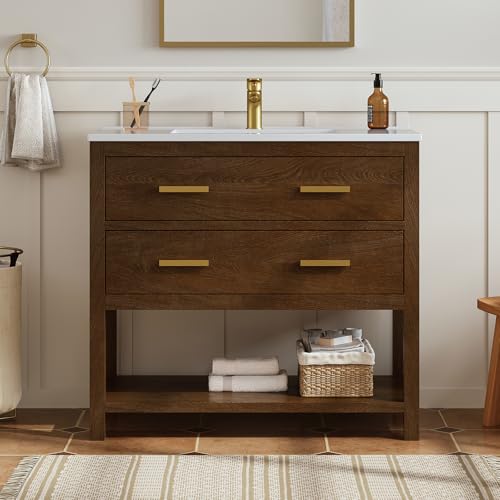
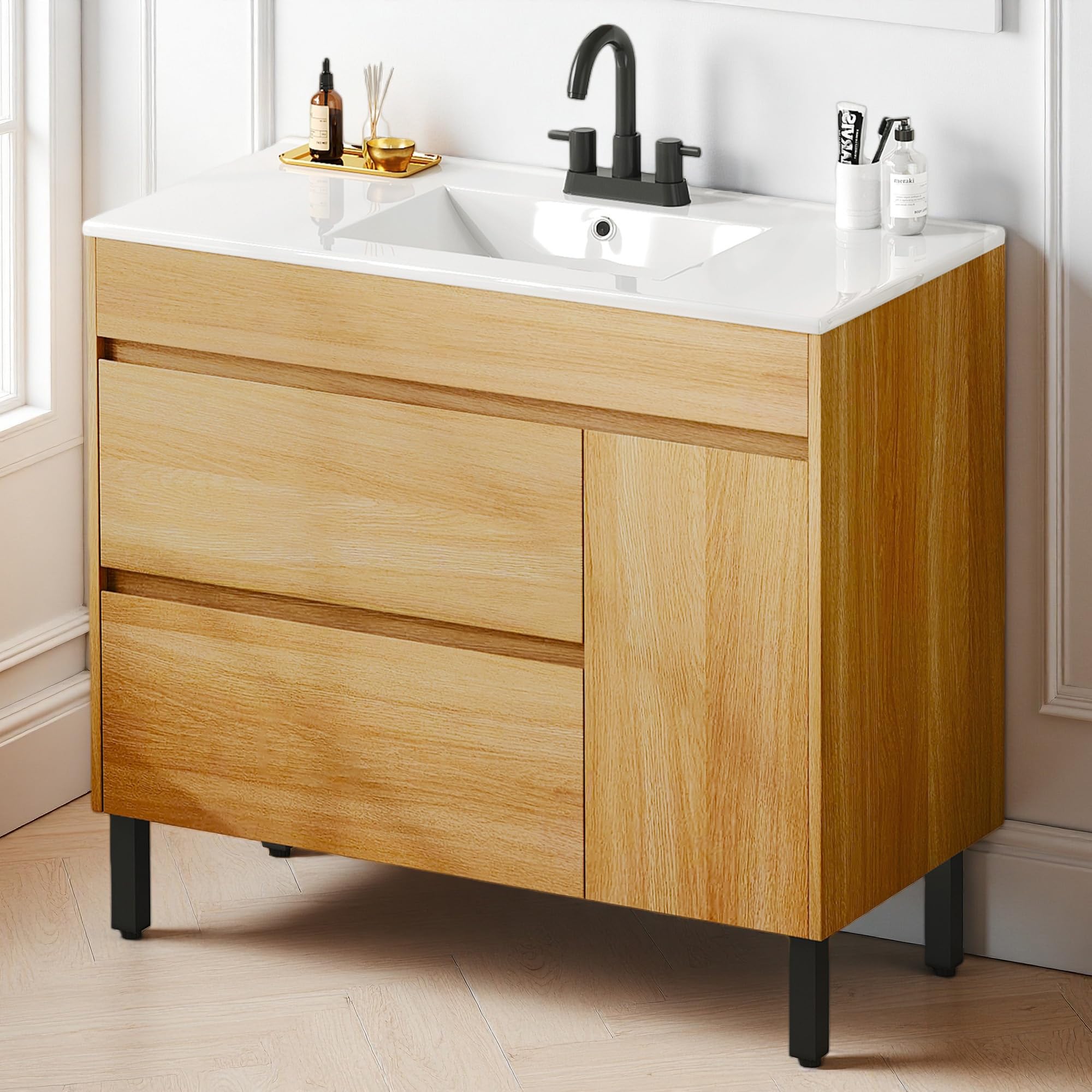
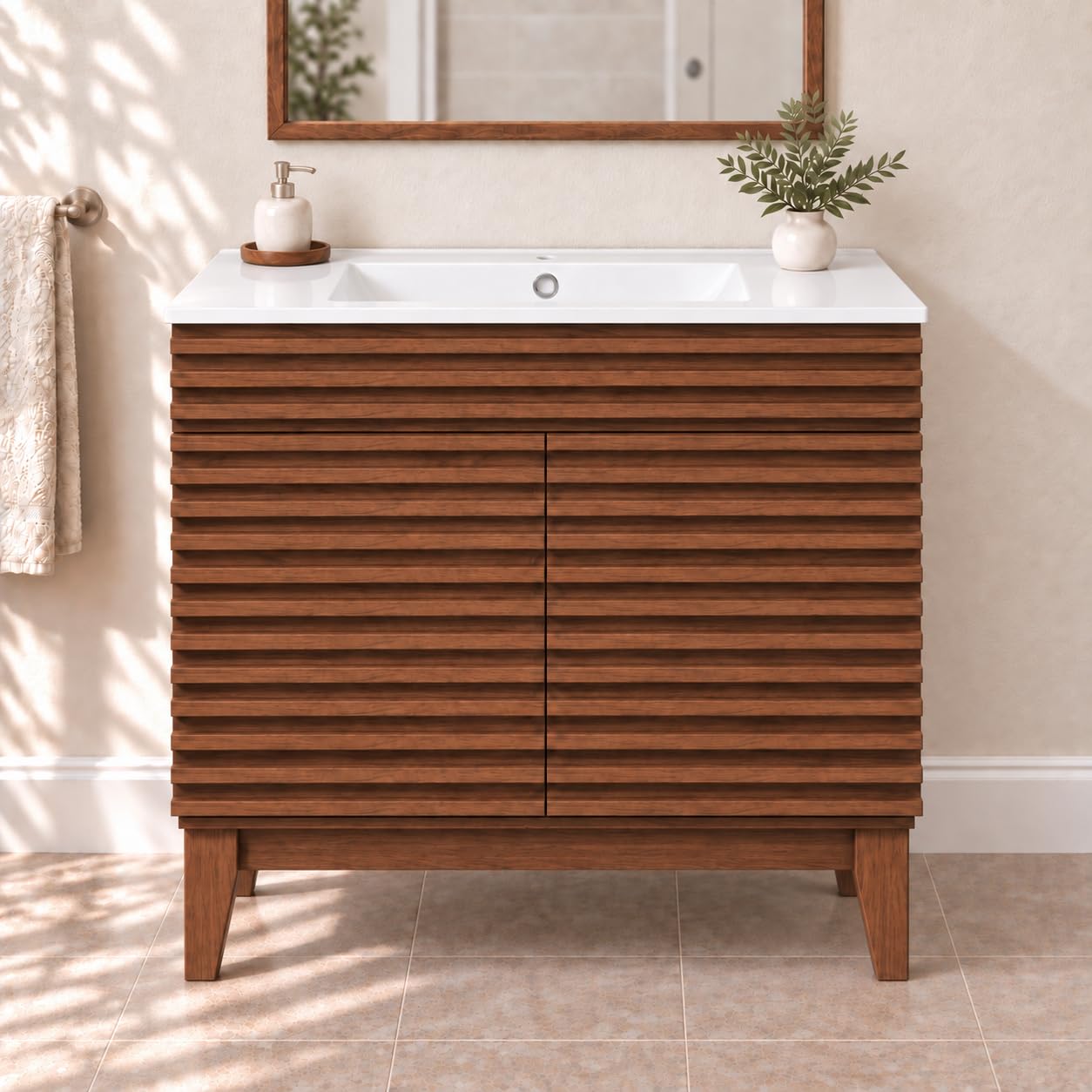
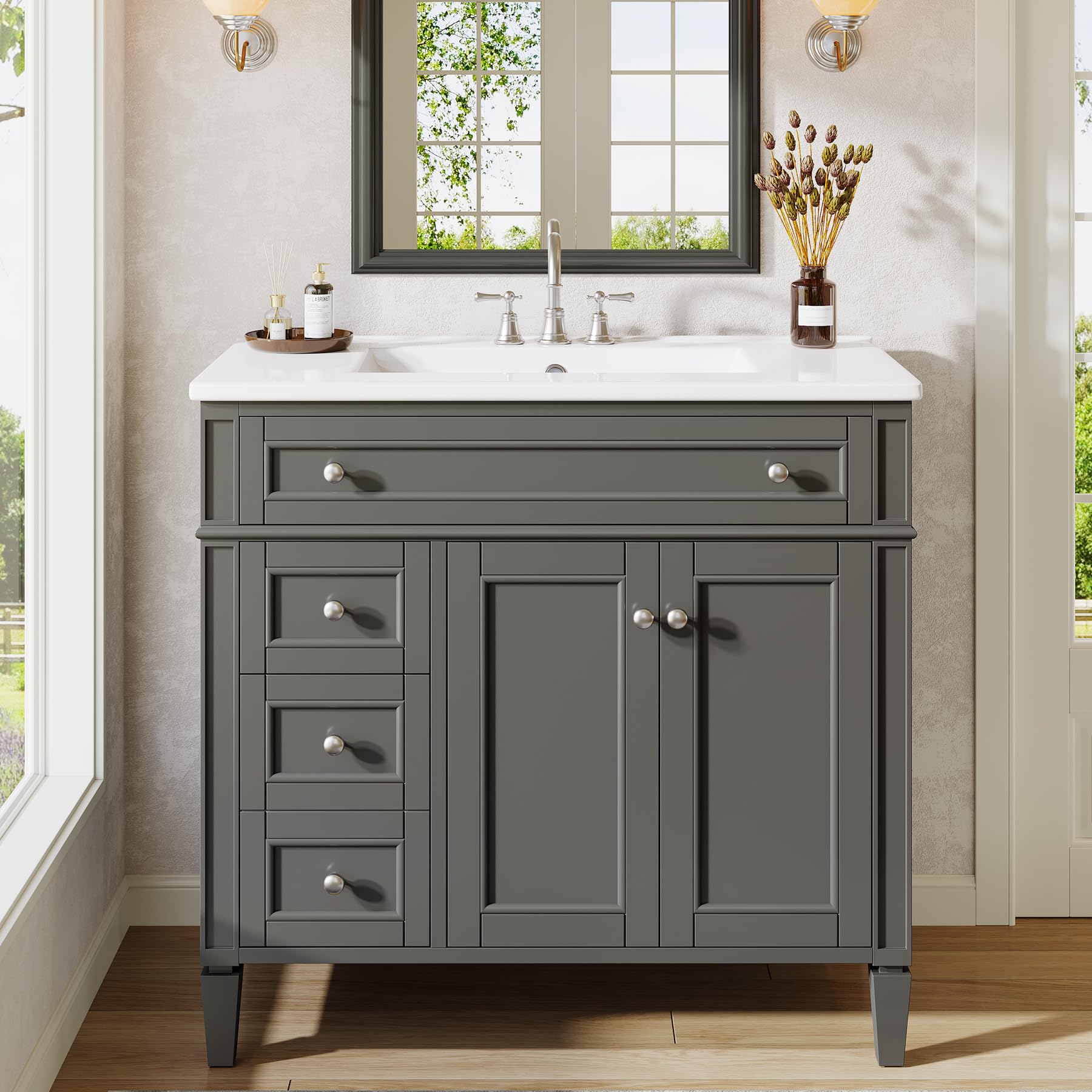
Types of 36 Inch Vanities at a Glance
Every 36 inch vanity shares the same nominal width, but the cabinet style changes how much storage you get, how the room feels, and how hard the install will be. The three styles below cover nearly everything sold in this size. If you are still deciding between sizes, our guide to the best bathroom vanity sizes and layouts is a helpful starting point.
- Freestanding: stands on legs or a solid base, hides plumbing inside the cabinet, and usually offers the most drawer and door storage.
- Floating: mounts to the wall with open floor beneath, makes a small room feel larger, and lets you set the mounting height.
- Cabinet only or full set: buy the cabinet alone and choose your own top, or buy a set with the top and sink included for a simpler install.
Three Vanity Styles Worth Comparing
Freestanding Vanities
A freestanding 36 inch vanity rests on the floor, either on furniture style legs or on a recessed toe kick base. Because the cabinet reaches the floor, you gain an extra drawer or a deeper cupboard compared with a floating unit of the same width. The enclosed body also hides the water lines and drain neatly. The trade off is visual weight. A floor standing cabinet makes a compact room feel a little smaller, and dust collects around the base, so choose this style when storage matters more than an airy look.
Floating Vanities
A floating vanity bolts to the wall studs and leaves the floor fully visible underneath. That open strip of flooring makes a narrow bathroom read as wider, and you can mop right under the cabinet without working around legs. Mounting height is yours to choose, so taller households can set the counter higher than standard. The limits are real, though. Storage drops because the cabinet is shallower in feel and often drawer only, and the wall must carry the full loaded weight, so solid blocking or studs behind the mounting rail are not optional.
Cabinet Only Versus Sets With a Top and Sink
This is a buying format choice rather than a style choice, and it affects both budget and install day. A cabinet only purchase lets you pair the base with a stone, quartz, or cultured marble top of your choosing, which is ideal when you want a specific counter material or an unusual faucet spread. A complete set arrives with the top and sink already fitted, so the parts are guaranteed to match and you skip a separate counter order. If a matched set appeals to you, compare the options in our guide to the best bathroom vanity with sink before deciding.
How to Compare 36 Inch Bathroom Vanities
Comparing vanities in this size works best when you judge them on the same short list of criteria. Start with fit: the true cabinet width, the depth, and the counter height. Next look at build quality, meaning the cabinet box material, the drawer construction, and the hardware. Then weigh storage layout, because two cabinets with identical outside dimensions can hold very different amounts. Finally, check what the install involves and what the warranty covers.
How to Choose the Right Bathroom Vanity
Size and Form Factor
Measure the wall space first, then check the depth. Most 36 inch vanities run about 21 to 22 inches deep, which suits a standard bathroom, but a shallower 18 inch cabinet can rescue a tight room where the door swings inward. Leave at least 21 inches of clear floor in front of the vanity so you can stand comfortably, and confirm that drawers and doors open fully without hitting the toilet or the door trim. Width labels can also mislead, because some brands measure the countertop rather than the cabinet, so verify the cabinet box width in the spec sheet before you commit.
Counter Height and Everyday Comfort
Vanity height is the closest thing this product has to adjustability, and it changes how the sink feels in daily use. Older cabinets often sit about 32 inches high, while comfort height models reach about 36 inches including the top, which reduces bending for most adults. A floating vanity gives you the most freedom here because you choose the mounting height during installation. For a bathroom used by children, a lower cabinet or a sturdy step stool is the safer match. Think about who stands at this sink every day, and let their height settle the number.
Materials and Durability
Cabinet material decides how a vanity ages in a humid room. Solid wood and plywood boxes resist moisture far better than particle board or MDF cores, which can swell when water seeps into an unsealed edge. Drawers tell the same story: dovetail joints and metal sides outlast stapled corners. For finishes, look for sealed edges around the sink cutout and a finish that covers the inside of the cabinet, not only the doors. If a wood cabinet is your preference, our roundup of the best wood bathroom vanity options explains the species and finishes that hold up best near water.
Features Worth Paying For
A few features earn their cost quickly. Soft closing drawers and doors protect the cabinet and end slamming in an early morning bathroom. A drawer with a cutout shaped around the drain pipe turns dead space under the sink into storage for bottles and grooming tools. An included backsplash guards the wall behind the faucet. Features to skip include decorative hardware you plan to replace anyway and built in electrical outlets if your wiring would need an electrician to support them, because that visit can cost more than the feature itself.
Assembly and Warranty
Vanities ship in three states: fully assembled, mostly assembled with the top separate, or flat packed for you to build. A fully assembled cabinet saves hours and arrives square and solid, but it is heavy and awkward to move up stairs, so measure your hallway turns before choosing one. Flat packed models cost less to ship and are easier to carry in, yet the finished strength depends on your assembly care. Whatever the format, read the warranty for what it covers on the finish and the hardware.
How Much Should You Spend?
Budget shapes material and hardware quality more than it changes the basic shape. Under about $200, expect MDF construction, basic hinges, and a cabinet only format. Between about $200 and $500 you will find plywood boxes, soft closing hardware, and many sets with a top included. From about $500 to $1000, finishes improve, drawers get stronger joinery, and stone tops become common. Above about $1000 you are paying for solid wood, premium stone, and finer hardware. Spend first on the cabinet box and the top, because those are the parts you cannot upgrade later without replacing the whole unit.
Is a 36 Inch Bathroom Vanity the Right Size for You?
Choose 36 inches when one person uses the sink at a time but wants counter room for toiletries, a hair dryer, and a soap dish without crowding. It suits primary bathrooms in apartments and smaller homes, guest bathrooms, and hall bathrooms shared by children. Step down to a 30 inch or smaller cabinet if your clear floor space falls under 21 inches, because comfort at the sink matters more than counter width. Our guide to the best small bathroom vanity covers those compact options. Step up to 48 inches if two people regularly get ready at the same time, since a single 36 inch sink cannot serve both well.
Common Mistakes to Avoid
- Measuring only the wall width and forgetting depth, so the cabinet blocks the door swing.
- Assuming the labeled width is the cabinet width when the brand measured the countertop instead.
- Ignoring the drain position, then finding the drawers cannot close around the existing pipe.
- Choosing particle board for a steamy bathroom with no fan, which invites swollen edges within a few years.
- Ordering a fully assembled cabinet that cannot make the turn at the top of the stairs.
- Forgetting the faucet spread, so the faucet you own does not match the holes drilled in the top.
FAQ
What is the best 36 inch bathroom vanity?
The best choice is the one that matches your plumbing, your storage needs, and your room measurements rather than a single model for everyone. A plywood freestanding cabinet with soft closing drawers suits most households, while a floating unit serves small rooms that need visual space. Use the product table above to compare styles side by side, then confirm the cabinet box width and drain clearance against your bathroom before ordering.
What size bathroom vanity do I need?
Start with the wall you have, then work backward. A single sink needs at least 30 inches to feel usable, and 36 inches adds comfortable counter space on both sides of the bowl. Two sinks need about 60 inches or more. Also budget the floor in front of the cabinet, because vanity size is really about standing room as much as storage. Our bathroom vanity buying guide walks through the full measuring routine, including toilet clearance and door swing checks.
How long does a 36 inch bathroom vanity last?
A plywood or solid wood vanity in a ventilated bathroom commonly serves for about 15 to 20 years, while an MDF cabinet in a damp room may show edge swelling much sooner. Lifespan depends less on the size than on water discipline: wipe spills off the counter edge, keep the sink seal sound, and run the exhaust fan after showers. Small habits like these add years, because most vanity failures start as slow moisture damage rather than sudden breakage.
Is a 36 inch bathroom vanity worth it over a smaller size?
For most single sink bathrooms, yes, because the extra width over a 30 inch cabinet buys counter space you use every day, plus a wider drawer stack. The price jump between the two sizes is usually modest compared with the cost of the overall remodel. It is not worth it when the larger cabinet steals the clear floor space you need to stand comfortably, so let your tape measure make the final call rather than the product photos.
How do you clean a 36 inch bathroom vanity?
Wipe painted or wood cabinets with a soft cloth and mild soap, then dry the surface so moisture does not sit in the joints. Avoid abrasive pads and harsh sprays on the finish, and clean stone tops with a gentle cleaner made for sealed stone. Hair and dust gather fastest around the toe kick and behind the faucet, so add those spots to your weekly routine. Our step by step article on how to clean a bathroom vanity covers stain removal for common counter materials in more detail.
What should I check before a 36 inch vanity is delivered?
Walk the delivery path from the door to the bathroom and measure every tight turn, doorway, and stair landing, especially for a fully assembled cabinet. Photograph your existing water lines and drain height, and keep those measurements with the order confirmation. Check the cabinet for shipping damage before the driver leaves, because a cracked corner is far easier to resolve on delivery day than after installation.
Final Thoughts
A 36 inch vanity rewards careful measuring. Match the style to your room, freestanding for storage, floating for visual space, or a complete set for a simpler install, and put your budget into the cabinet box and the counter material first. Do that, and the best 36 inch bathroom vanity for your home stops being a guess. Look back at the product table above, run your measurements once more, and order with confidence.