Best 6 Burner Gas Cooktop: Buying Guide (2026)
Disclosure: We may earn a commission when you buy through links on this page, at no extra cost to you. As an Amazon Associate I earn from qualifying purchases. Learn more

Built in, rangetop or center griddle: how to match a 6 burner gas cooktop to your cutout, cookware and hood.
Sunday dinner at a busy house rarely uses one pot at a time. Pasta water, a sauce, vegetables, and a pan of chicken can all be going at once, and a four burner top runs out of room fast. That is exactly the moment the best 6 burner gas cooktop earns its place, giving you space to cook for family and guests without stacking pans or cooking in shifts.
This guide helps you choose by the things that matter at home: the space you have, how many people you cook for, and what you can spend. The comparison table below sums up the main layout types side by side. If you are still weighing burner counts, start with our guide to the best gas cooktop for the wider picture.




Quick Answer: Three Layout Types in 30 Seconds
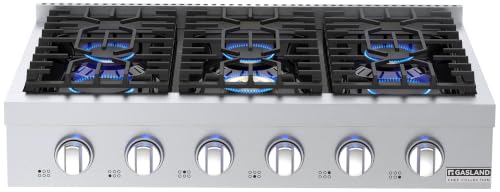
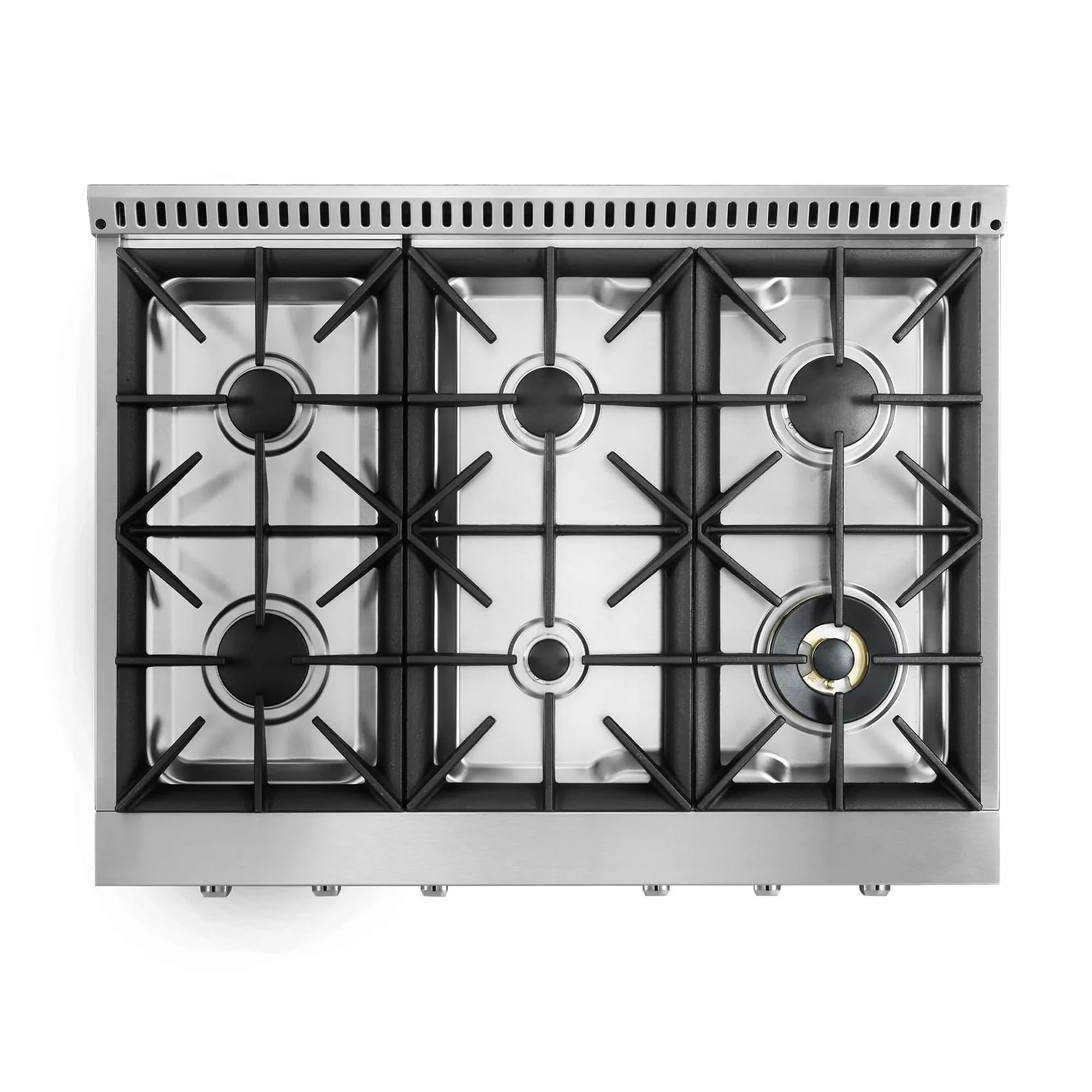
Almost every 6 burner model falls into one of three layout families. A standard 36 inch built in layout suits most family kitchens and replaces a common cutout size. A rangetop style layout puts the controls on the front face and gives burners more room, which helps when big pots run side by side. A layout with a center griddle swaps one burner zone for a flat cooking surface that suits weekend breakfasts and grilled sandwiches.
None of the three is better for everyone. Pick by the pans you use most and the counter space you can give up, then check the details in the checklist below before you spend anything.
Before You Buy: A Quick Checklist for Choosing a Gas Cooktop
A 6 burner top is a long lived appliance, and a wrong choice is hard to undo once the counter is cut. Work through these points in order and most buying regrets disappear.
Size: Match It to Your Space
Six burners need width, so nearly all models are built for a 36 inch cabinet run, and a few larger homes use 48 inch versions with a griddle as well. Smaller kitchens with 24 inch or 30 inch openings cannot take six burners without new cabinets and counter work. If your opening is 36 inches, you are in the sweet spot, and our guide to the best 36 inch gas cooktop covers that size in depth. Measure the opening you have, not the top you want, and let that number lead.
Which Type Fits Your Routine
Built in drop in models sit flush in the counter with knobs on top, which keeps the look calm and leaves the front edge clear. Rangetop style models stand taller, put knobs on the front, and feel closer to a range in daily use. Our explainer on gas cooktop vs rangetop walks through the trade offs of each format. Most models are set up for natural gas, and most can be converted to propane with a kit, so confirm the fuel at your address before you order.
Features Worth Paying For, and Ones to Skip
Continuous cast iron grates are worth the money, since you can slide a heavy pot between burners instead of lifting it. Sealed burners are worth it too, because spills stay on the surface where you can wipe them up. A true simmer burner that holds a low, steady flame helps with sauces and rice. A center griddle is worth it only if your family cooks pancakes, eggs, or smash burgers often. Skip paying extra for smart controls and app links, since knobs do the same job with less to go wrong.
Measurements and Compatibility With Your Setup
Check four numbers before you buy: cutout width and depth, counter thickness, clearance above the top for your hood or microwave, and the gas line position in the cabinet below. Large stock pots need about 24 inches of clear height under a hood to lift lids off safely. Also confirm your gas line size can feed six burners at once, since an undersized line can starve the far burners when everything runs together. Your installer can verify this in one short visit before the unit arrives.
Certifications and Safety Standards
Look for a listing from a recognized testing lab such as CSA or ETL on the rating plate, which shows the unit meets North American gas appliance standards. A range hood that vents outside matters as much as the cooktop itself, since gas burners release moisture and combustion gases into the room. If you ever smell gas with all knobs off, leave the house and call your gas utility from outside. Never try to find a leak with a flame.
DIY vs Pro Installation Cost
Swapping a like for like unit over an existing gas line is a short job, while a new line, a shutoff valve, or propane conversion adds time and parts. Many local codes require a licensed installer for gas work, and permits may apply. Our breakdown of gas cooktop installation cost shows what each part of the job tends to run. Budget for installation from the start, since a top that sits in its box helps nobody.
Realistic Budget Ranges
Most family grade 6 burner models sell for about $700 to $1,500. Spending more, about $1,500 to $3,000, buys heavier grates, stronger power burners, and thicker stainless steel that shrugs off dents. Below about $700, expect thinner metal, lighter grates, and fewer simmer options. Under $200, $300, or $500 price points you may see in search results apply to small portable units, not to a full size six burner top, so treat those listings with care.
Types Compared: How 6 Burner Layouts Differ
This section compares the three layout types on the factors that shape daily cooking, so you can match a type to your home and then shop within it.
Standard 36 inch built in layout. Burners sit in three rows of two, knobs run along the front edge of the top surface, and the unit drops into a standard cutout. This is the easiest type to fit into an existing kitchen and the simplest to clean around. It suits families who cook several dishes at once on weeknights and want no learning curve.
Rangetop style layout. The front panel carries the knobs, the surface sits higher, and burner spacing tends to be more generous for oversized pans. It needs more depth and height in the cabinet run, so it fits planned remodels better than quick swaps. It suits keen home cooks who use wide pans and want controls that stay clear of steam and splashes.
Center griddle layout. A flat griddle plate sits between two columns of burners, giving up one cooking zone for a surface that handles breakfast foods, tortillas, and seared vegetables for a crowd. The griddle lifts out for washing on most designs, though it adds weight. It suits households that host brunch or cook flat top style meals several times a week.
What to Look For When Comparing Models
Weigh fit and compatibility first, then build quality and finish, burner layout, safety listings, and warranty length. Maker specifications, owner feedback about daily use, and service network coverage in the United States are the best sources. A model that is hard to get parts for in your state is a weaker pick, since a cooktop should serve a household for many years.
Is a 6 Burner Gas Cooktop the Right Size for You?
Six burners make sense when three or more pans run at the same time on a regular basis, or when your household cooks for six or more people most days. Big families, keen meal preppers, and homes that host often get real value from the extra space. The burners you do not use still help, because wide spacing keeps handles from crowding and lids from clashing.
If you usually cook one or two pans for two people, a smaller top will serve you just as well and cost less to buy and run. In that case, look at our guide to the best 30 inch gas cooktop instead. Be honest about your busiest normal week, not the one holiday meal a year, and the right size becomes clear.
Common Buying Mistakes to Avoid
- Ordering from the countertop width instead of the cutout size, which can leave a unit that will not drop in.
- Forgetting hood capacity, so a weak vent fan leaves cooking smells and moisture hanging in the kitchen.
- Skipping the fuel check and finding on delivery day that the home uses propane while the unit ships set for natural gas.
- Paying for a griddle or smart features your family will rarely use, while skimping on grate quality you touch every day.
- Ignoring knob placement, then finding that large pan handles block the controls you need most.
Cost of Ownership and Care
Running costs stay modest, since gas is used only while you cook, and there are no filters or pads to replace on a schedule. Your main costs over the years are a service call now and then, replacement igniters or knobs, and cleaning supplies. Keep burner caps seated flat and dry after washing, since a damp or tilted cap can click or light unevenly. Our step by step guide on how to clean a gas cooktop covers the weekly routine that keeps flames even and surfaces free of baked on spills.
Your Questions, Answered
What is the most reliable gas cooktop brand?
No single brand wins for every home, since reliability depends more on model design and local service than on the badge. Simple units with fewer electronics tend to need fewer repairs over their life. Before you buy, check that a service company near you stocks parts for the brand you choose, since fast local repair matters more than national reputation when your main cooking surface stops working.
How do you clean a gas cooktop?
Wait until the grates are cool, lift them off, and soak them in warm soapy water while you wipe the surface. Lift each burner cap, clear the small ports with a soft brush, and dry every part fully before you put it back. Avoid flooding the igniters with water, since moisture there is the most common cause of endless clicking after a deep clean.
Is a gas cooktop worth it?
For cooks who value instant heat changes and visual control of the flame, yes, a gas top still earns its keep. It also works during a power outage for basic cooking with a match or lighter, which electric tops cannot match. The trade off is ventilation: you need a hood that vents outside to manage moisture and combustion gases, and that cost belongs in your decision.
How long does a gas cooktop last?
Most gas cooktops serve a household for about 15 years, and simple designs with cast iron grates often run longer. Igniters and burner caps are the parts that wear first, and both are cheap to replace. A unit that needs frequent service calls for ignition faults after year ten is usually nearing the point where replacement makes more sense than another repair.
What size gas cooktop do I need?
Start from your cabinet run and cutout, then match burner count to how many pans you run at once. A 30 inch top with four burners suits most couples, while a 36 inch top is the practical entry point for six burners. If your largest pan is wider than 12 inches, measure burner spacing as well, since two wide pans on one side can crowd each other even on a big top.
What is the best 6 burner gas cooktop?
The best choice is the layout type that fits your cutout, your fuel type, and your cooking habits, with sealed burners and continuous grates at a price your budget holds. For most families that means a standard 36 inch built in layout. Homes that cook with oversized pans daily may prefer the rangetop style instead. Use the product table above to compare current options against those criteria.
Final Thoughts
A six burner top changes daily cooking only if it fits your space, your fuel, and the way your family actually eats. Match the layout type to your pans, keep ventilation in the plan, and the best 6 burner gas cooktop for your home stops being a guess. Check the product table above once more against your measurements, and order with confidence.