Best 50 ft Garden Hoses (2026): Types and Buying Guide
Disclosure: We may earn a commission when you buy through links on this page, at no extra cost to you. As an Amazon Associate I earn from qualifying purchases. Learn more

A buying guide to the best 50 ft garden hose: rubber, hybrid, expandable and metal types compared on materials, fittings and storage.
A 50 ft length sounds simple until you face rubber, vinyl, expandable and metal options that all promise easy watering. The right best 50 ft garden hose for your yard depends on how far your beds sit from the spigot, how often you coil and store the hose, and how much weight you want to carry. The comparison table below sums up the main types, and this guide walks through materials, diameter, fittings and storage so you can match a hose to your space with confidence.
Shorter hoses leave you stretching to reach back corners, while much longer hoses add weight, cost and tangles you do not need. Fifty feet hits a middle ground for many suburban yards, patios and raised bed layouts. What separates a hose you enjoy from one you fight with is build quality at the fittings, a wall material suited to your climate, and a diameter that keeps flow strong.





Hose Types at a Glance
The table below compares the common types sold in this length on weight, storage and durability. Use it as a starting point, then read on for the details that decide daily use, such as fitting metal, wall thickness and how each material handles sun and cold.
| Type | Weight and storage | Durability notes | Suits you if |
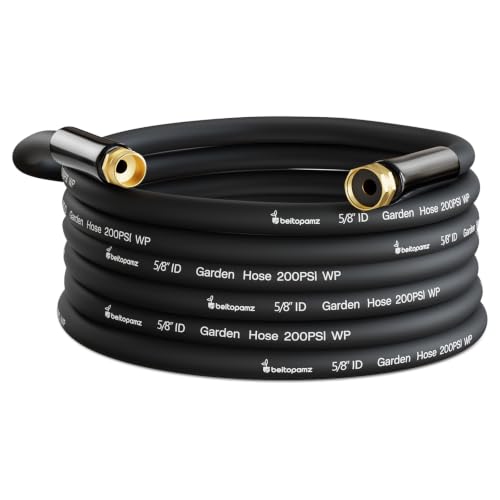
| Rubber | Heaviest, coils in large loops | Thick walls resist abrasion | Daily use, stored outdoors |
| Vinyl | Light, coils easily when warm | Low cost, stiffens in cold | Small beds, tight budget |
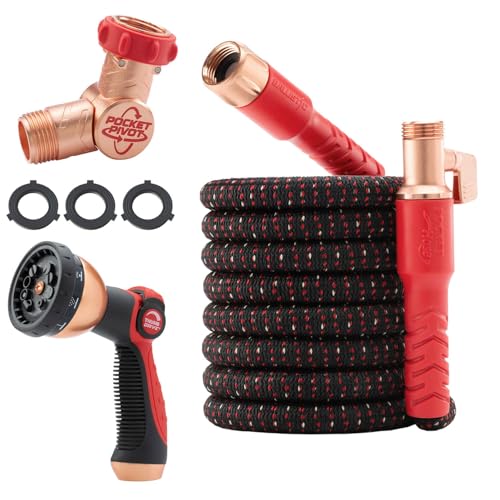
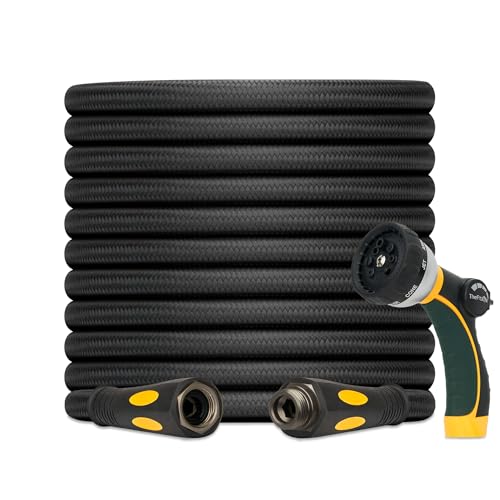
| Expandable | Very light, shrinks when drained | Fabric cover wears on concrete | Tight storage, short trips |
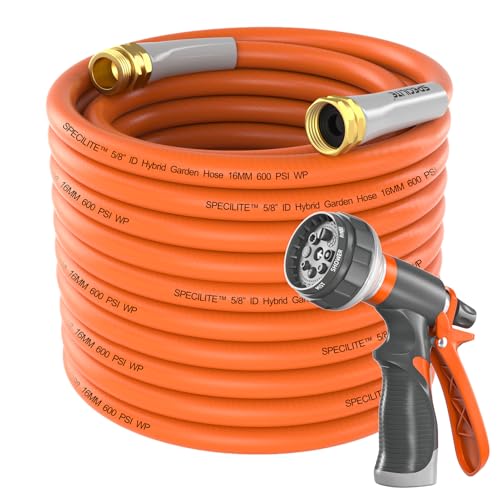
| Hybrid and polyurethane | Light, coils with little memory | Flexible in cold, strong for weight | Low weight plus strength |
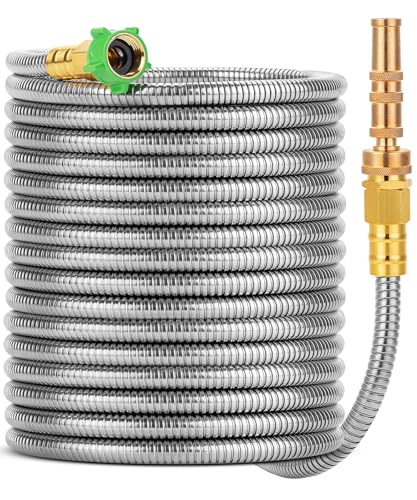
| Metal sheathed | Medium, resists tangles | Sheath guards inner tube | Dragging across gravel |
Three Hose Types Worth Considering in This Length
Instead of chasing a single winner, group your shortlist by type. Each type below covers a different balance of weight, toughness and price, and each can be right in this length when material and fittings are well made.
Rubber Hoses for Daily Heavy Use
Rubber is the traditional choice when the hose lives outdoors and gets dragged across soil, stone and driveway edges daily. Thick walls shrug off abrasion, tolerate hot water from a sun warmed line, and stay flexible in cool mornings when vinyl turns stiff. The trade off is weight, since rubber is the heaviest option to carry and coil. Choose it if you value service life over easy carrying, and look for solid brass fittings with thick crush resistant ends.
Lightweight Expandable and Hybrid Hoses for Easy Handling
Expandable models grow to full length under water pressure and shrink back when drained, so they store in a pot or small bin and weigh very little. Hybrid hoses blend rubber and plastic to keep weight down while staying flexible in cold weather. If carrying comfort matters most, compare options in our guide to the best lightweight garden hose before you decide. With either style, check the inner tube material and fitting quality, since light construction fails first at the ends.
Premium Polyurethane and Metal Options for Rough Ground
Polyurethane hoses pair low weight with strong walls and are often sold as safe for filling drinking water containers, which matters for campers, boats and pet bowls. Metal sheathed hoses wrap a flexible inner tube in linked steel armor that slides over gravel and resists punctures from thorns. Both types cost more than basic vinyl, and both reward you with easier coiling and fewer leaks at the bends. Pick this group if your hose crosses rough ground daily or fills a tank where material safety matters.
What Matters Most When Comparing Options
We compared types in this length on five factors you can verify from maker specifications and patterns in verified buyer feedback: build materials and weather resistance, size and capacity, assembly quality at the fittings, durability under dragging and sun exposure, and warranty length. A hose that scores well on paper but uses thin plastic fittings will still disappoint, so treat the ends as seriously as the tube itself.
How to Choose the Right Garden Hose
Size and Form Factor
Diameter controls flow more than length does at this size. A 5/8 inch bore is the standard fit for most home spigots and delivers strong flow for sprinklers, spray nozzles and filling buckets. A 3/4 inch bore moves more water and suits large sprinklers, while a 1/2 inch bore feels lighter and works for patio pots and small beds. Form also matters, since round hoses coil onto reels, flat hoses store in slim cassettes, and coiled hoses spring back to a compact shape near the spigot.
Type
Match the type to your ground and storage rather than to a label. Expandable hoses win on storage, rubber wins on toughness, and hybrid and polyurethane designs split the difference with low weight and good cold weather flex. Vinyl costs the least and suits light seasonal use, while metal sheathed designs protect the inner tube where dragging is unavoidable. For a direct comparison, see rubber vs vinyl hose for how the two common wall materials differ in weight and flex.
Features Worth Paying For
Solid brass fittings are the feature most worth your money, since they resist corrosion, seal well against washers, and survive being dropped on concrete. A bend restrictor at the spigot end reduces kinking where the hose leaves the faucet, and a thick washer improves the seal without heavy tightening. Bundled nozzles and reels add convenience, but judge them after the hose itself. If you plan to feed a washer for siding or a driveway, check our guide to the best garden hose for pressure washer on flow and fitting fit.
Weather Resistant Materials
Sun and temperature shape how long any hose lasts outdoors. Rubber and hybrid walls tolerate heat and stay flexible in cool weather, while basic vinyl can stiffen in the cold and soften in strong heat. Expandable fabric covers can fade and fray if left in full sun all season, so shaded storage extends their life. Where nights freeze, choose a wall rated to stay flexible at low temperatures and drain the hose fully, since trapped water expands as it freezes and can split even a strong tube.
Size for Your Space
Measure before you buy by walking a rope or tape from the spigot along the path you actually water, including turns around corners and raised beds. Add a few feet of slack so the hose reaches without pulling tight against plants or the fitting. Fifty feet serves most yards where the farthest bed sits within about 40 feet of the spigot once bends are counted. If your walk shows a much longer path, a longer size will serve you better.
Assembly and Anchoring
Assembly is simple but worth doing with care. Thread the female end onto the spigot by hand until the washer seats, then snug it a quarter turn with pliers only if it weeps. Avoid crossing the threads, since a damaged start leaks for the life of the fitting. Guide the first coil onto a reel or wall hook so the hose leaves the spigot in a gentle curve, and set a hose guide at the corner of beds so dragging pulls the hose around soil instead of across plants.
Care and Off Season Storage
Drain the hose after the last watering of the season, coil it in loose loops, and store it under cover where sun and freezing air cannot reach it. Keep the ends joined or capped so insects and dirt stay out over winter. For the full end of season routine, follow how to winterize a garden hose before the first hard freeze. During the season, coil the hose after use instead of leaving it across hot paving, and loosen kinks by hand.
How Much Should You Spend?
Basic vinyl options in this length often cost about $20 to $35 and suit light seasonal watering. Mid range rubber, hybrid and reinforced designs at about $35 to $70 usually bring brass fittings and thicker walls. Premium polyurethane and metal sheathed models at about $70 to $120 add low weight, strong armor or drinking water safe materials. Spend toward the top if the hose lives outdoors all season, and toward the bottom if it serves a small patio and stores indoors.
Is a 50 ft Garden Hose the Right Size for You?
This length fits the classic suburban layout, with one spigot serving lawn edges, flower beds and a vegetable patch in a single run. It also suits patio homes where storage is limited and a longer hose would spend its life in a tangled pile. If your farthest bed sits well beyond your measured path, compare this size with the options in our guide to the best 100 ft garden hose rather than stretching a shorter hose tight. Renters and camper owners also like this length, since it coils into a single bin and reaches most site hookups without excess line underfoot.
FAQ
What is the best 50 ft garden hose for most yards?
For most yards, a 5/8 inch rubber or hybrid hose with solid brass fittings gives the best balance of flow, durability and handling. Rubber suits daily use and outdoor storage, while a hybrid design cuts weight for frequent coiling. Expandable models suit small spaces best. Whichever type you pick, a warranty of several seasons and replaceable washers tell you more about lasting quality than wall color or bundled nozzles.
What size garden hose do I need for a typical home?
Start with length based on your measured path, then pick diameter for flow. Most homes do well with 50 feet and a 5/8 inch bore, which runs sprinklers and nozzles without a weak stream. Step up to a 3/4 inch bore for large sprinklers, and step down to 1/2 inch for balcony pots. Buying slightly longer than your bare measurement prevents pulling tight around corners.
How long does a garden hose last with regular use?
Service life depends on material and storage more than on brand. A rubber or polyurethane hose drained and stored under cover can serve for many seasons, while thin vinyl left in full sun may crack within a few seasons. Expandable models often have the shortest life if dragged over concrete. Watch for leaks at the fittings, bulges and stiff sections, since those signs appear well before a full failure.
Is a garden hose worth buying in a longer length instead?
A longer hose is worth it only when your watering points truly need the reach. Extra length adds weight, cost and pressure loss, and the unused portion spends its life coiled where it can kink. Two shorter hoses joined for occasional long runs can be smarter for some yards. If you water one compact space, a single 50 ft hose keeps handling and storage simple.
How do you clean a garden hose inside and out?
Rinse the outside with plain water and a soft cloth, then flush the inside by running water through the open hose until it runs clear. For a musty smell after storage, a brief flush with a mild soap solution followed by a long clear rinse helps, and the hose should dry fully before coiling. Clean the fitting threads with an old toothbrush so grit does not damage the washer seal in spring.
What makes a garden hose brand reliable over time?
Reliability shows up in details you can check before buying. Look for solid brass fittings instead of thin plated metal, a stated burst pressure rating, replaceable washers, and a warranty that covers leaks at the ends. Brands that publish wall material, diameter and temperature range clearly tend to support their hoses better than brands that list only length. Standard threads also make nozzle and repair parts easy to find later.
Final Thoughts
The product table above pulls the main types together, and the right pick comes down to your ground, your storage and how often you water. Rubber rewards daily users, lightweight designs reward small spaces, and premium materials reward rough dragging. Whichever type you choose, the best 50 ft garden hose is the one with sound fittings, a wall suited to your climate and a length you measured rather than guessed. For a wider look at every length, see our guide to the best garden hose before you order. Prices can change, so check the product page before ordering.