Best 150 ft Garden Hoses (2026): Types, Materials and Buying Tips
Disclosure: We may earn a commission when you buy through links on this page, at no extra cost to you. As an Amazon Associate I earn from qualifying purchases. Learn more

How to choose the best 150 ft garden hose: hose type, fittings, flow, weight and storage for a long reach.
A hose that stops twenty feet short of the back fence turns every watering job into a chore, and joined hoses leak at the coupling. A single 150 ft hose solves the reach problem, but it also brings real trade offs in water pressure, weight, and storage that shorter hoses never raise. The best 150 ft garden hose for your yard is the one that balances those trade offs well, and the product table on this page lists current options so you can see the differences at a glance.
This guide walks through the types you will find at this length, the fittings and materials that decide how long a hose survives, and how to tell whether 150 ft is truly the size your property needs. If you are still weighing hose styles in general, our overview of the best garden hose options covers the broader category before you commit to this extra long size.
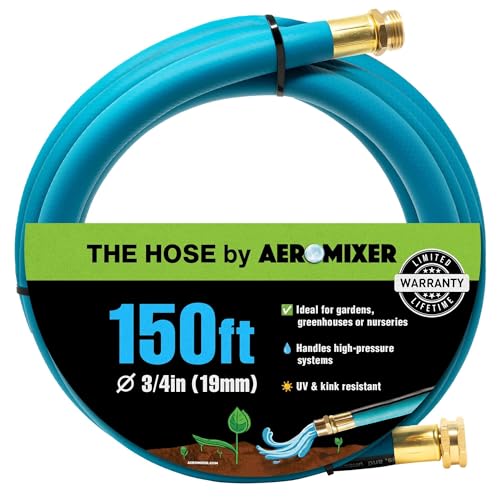
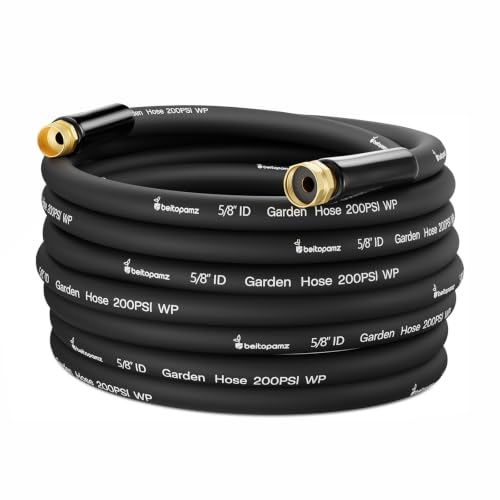

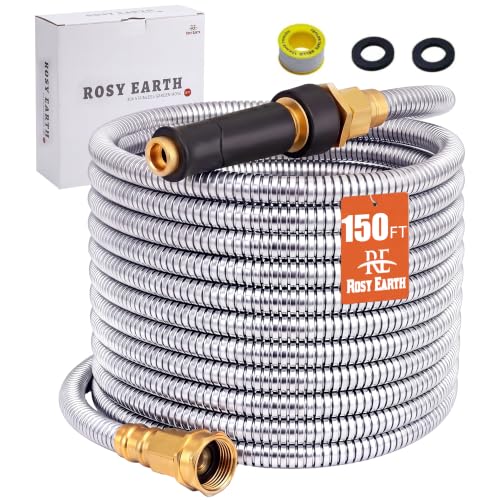
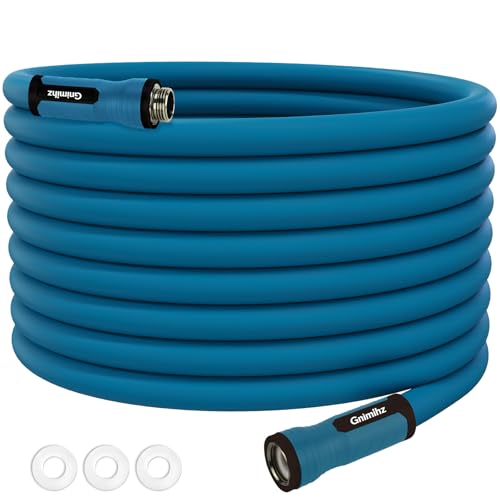
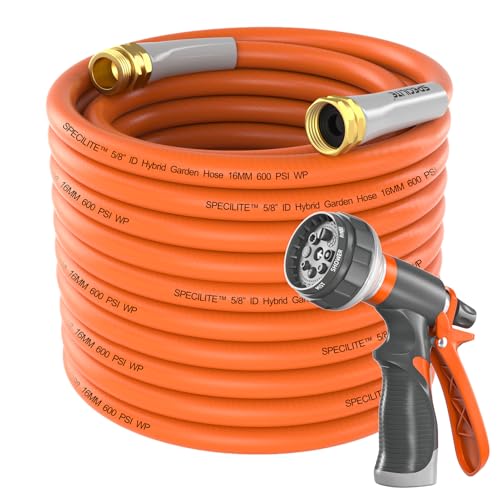

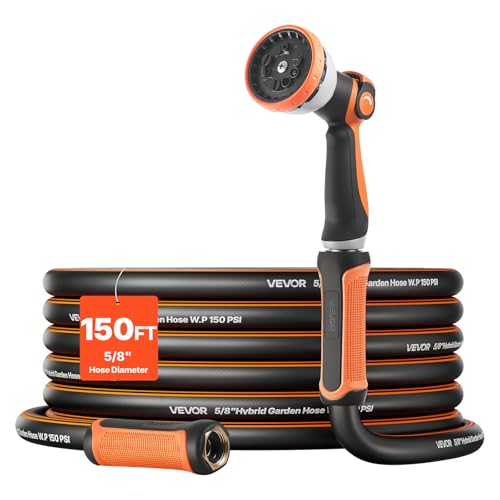
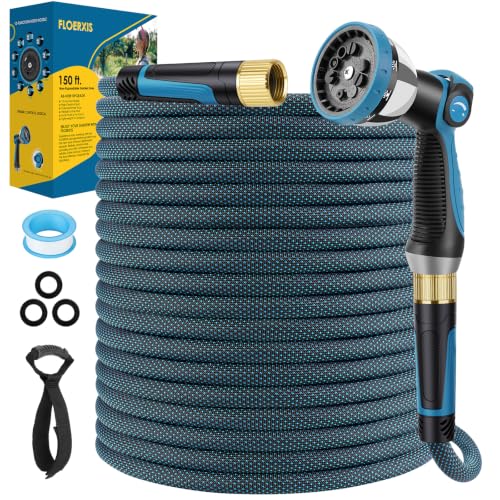

Types of 150 ft Garden Hoses Compared
At 150 ft, the material matters more than it does on a short hose, because every foot adds weight, friction, and chances to kink. Three broad types dominate this size, and each one suits a different kind of yard and a different tolerance for hauling and coiling after every use.
Expandable Hoses for Light Handling
Expandable hoses shrink to a fraction of their working length when the water drains out, so a 150 ft version can rest in a bucket or a small bin instead of filling a large reel. The inner tube stretches under pressure while a fabric outer cover protects it from scrapes. The limits are durability and pressure, since the stretchy core and cover handle abrasion, dragging over concrete, and sharp stones poorly over time.
Rubber and Hybrid Hoses for Daily Work
Traditional rubber hoses and newer hybrid polymer hoses stay at full length all the time and tolerate rough ground, hot sun, and frequent use better than any other type. A 150 ft rubber hose is genuinely heavy, often the heaviest load you will pull around the yard, but it shrugs off driveway crossings and tool sheds full of sharp edges. Choose this group when the hose will live outdoors and work often.
Lightweight Fabric and Metal Hoses
A middle group uses thin walls, fabric jackets, or spiral metal shells to keep a long hose manageable for people who cannot haul a full rubber coil. If low weight is your top priority at any length, the options in our guide to the best lightweight garden hose show how much weight each design saves. These lighter builds trade some burst strength and lifespan for that easier handling, so match them to gentle, mostly flat yards.
How to Evaluate a Hose at This Length
Listings for long hoses lean on length as the headline number, yet length alone tells you almost nothing about daily use. A fair comparison looks at the wall material and its weather resistance, the inner diameter that controls flow, the fitting metal, the rated burst pressure, and the warranty terms behind the hose. The sections below explain how each of those factors changes watering on a large property.
How to Choose the Right Garden Hose
Size and Form Factor
Garden hoses come in lengths from 25 ft to 150 ft, and the 150 ft size exists for lots where the spigot sits far from beds, orchards, or a barn. Diameter matters as much as length, with 5/8 inch as the common household size and 3/4 inch offering more flow for sprinklers and filling tanks. A 1/2 inch hose at this length restricts flow sharply, so it suits only gentle watering.
Type and Intended Use
Match the type to the hardest job the hose will face, not the easiest one. Rubber and hybrid hoses suit daily farm, garden, and wash down work where the hose crosses gravel and pavement. Expandable models suit hand watering on lawns and patios where they can rest between uses. Flat hoses store in tight spaces but need full unrolling before use and dislike sharp bends. Metal shell designs fit yards with thorns, rocks, or chewing pets.
Length, Pressure, and Flow
Water loses pressure as it travels, and friction inside the hose wall causes that drop, so a 150 ft run delivers noticeably gentler flow at the nozzle than a 50 ft run from the same spigot. A wider inner diameter offsets much of the loss because the water moves with less resistance. If strong flow at full reach matters most, pick the 3/4 inch diameter and keep the path as straight as you can.
Features Worth Paying For
Solid brass fittings are the upgrade that pays off longest, since they resist crushing, seal well with a fresh washer, and survive years of threading on and off the spigot. Thin plastic or soft aluminum fittings bend and leak far sooner. A storage reel sized for 150 ft keeps the hose off the ground and makes coiling far less work. Nozzles are minor extras, since any standard thread nozzle fits. Pay for fittings and storage first, and treat bundled nozzles as a bonus.
Weather Resistant Materials
Sunlight breaks down cheap vinyl faster than any other force, leaving it stiff and cracked after a few summers outdoors. Rubber and quality hybrid walls carry additives that slow that damage, and fabric covers on expandable hoses shield the inner tube from direct sun. Cold tolerance matters in northern yards, where stiff walls crack when you force a bend on a frosty morning.
Size for Your Space
Measure before you buy, walking the longest path the hose must travel from the spigot to the farthest bed, tree, or trough, then add a little slack for turns around corners. Many yards that feel huge need only 100 ft, and our guide to the best 100 ft garden hose covers that shorter option if your tape says the run is modest. Buy the length your longest real route demands, not the longest length on the shelf.
Assembly and Anchoring
Setting up a 150 ft hose means more than screwing it onto the spigot. Unroll the full length in the sun for an hour before the first use, since warmth relaxes the factory coils and reduces early kinks. Seat a rubber washer inside the female fitting before you thread it on, and tighten by hand until snug. A reel anchored near the spigot, or a sturdy wall hanger set into a stud, keeps the coil from pulling fittings sideways.
Care and Off Season Storage
Drain the hose before you coil it, because trapped water adds weight and can split the wall if it freezes. Coil in large loops that follow the natural curve of the hose instead of forcing tight turns that set permanent kinks. Store the coil indoors or under a covered reel once the season ends, out of direct sun and away from solvents and sharp tools. A full guide on how to winterize a garden hose covers draining and storage steps before the first hard freeze.
How Much Should You Spend?
Basic vinyl and small expandable models at this length start at about $30 to $50, and they fit light, occasional watering on gentle ground. The middle band, about $50 to $100, buys hybrid walls, brass fittings, and warranties that make daily use realistic. Premium rubber and specialty drinking water safe hoses can run about $100 to $180 at 150 ft, and the extra money goes to wall thickness, fitting quality, and longer coverage.
Is a 150 ft Garden Hose the Right Size for You?
Choose this length when one spigot must serve a deep lot, a large garden, livestock water, or a long driveway wash area, and when moving the hose between two spigots is not an option. It also fits properties where a pressure washer works far from the house, and in that case our guide to the best garden hose for pressure washer explains the flow and fitting needs that pairing adds.
Skip this size when two shorter hoses on two spigots already reach everything, since shorter runs keep pressure higher and coiling easier. Gardeners with limited grip strength or shoulder trouble should weigh the loaded weight seriously, because a water filled rubber hose at this length can strain joints on every outing. For them, an expandable or lightweight fabric type keeps the reach while cutting the load to something manageable.
FAQ
What is the best 150 ft garden hose?
The right answer depends on your longest run and your ground, and that is why this guide compares types instead of naming one winner for every yard. Measure your route first by laying a rope or tape along the path the hose will actually take, around beds and corners rather than in a straight line. Then match the type to your surface, rubber or hybrid for rough ground and expandable for lawns. That match matters more than any single award label.
What size garden hose do I need?
Diameter decides flow more than any other single choice, and 5/8 inch serves most homes well while 3/4 inch feeds sprinklers and fills stock tanks faster. One detail buyers miss is that nearly all hose fittings use the same standard garden hose thread, so diameters swap freely at the spigot and nozzle. Problems start only when you join a hose to irrigation parts or pumps that use pipe thread instead. Check the thread type on any pump or filter before assuming a direct fit.
How long does a garden hose last?
A cared for rubber hose can serve about eight to ten seasons, hybrids and metal shell designs often reach five to eight, and expandable models commonly last two to four because the inner tube fatigues with every stretch cycle. Watch for the warning signs of age near the fittings, where bulging, soft spots, or fine cracks appear first. A hose that bulges under pressure can burst without further warning, so retire it rather than patching that section.
Is a 150 ft garden hose worth it?
It earns its cost when a single run from one spigot replaces the daily routine of joining, draining, and moving shorter hoses, which wears couplings and wastes water at every imperfect seal. It is harder to justify as a spare for rare jobs, where a borrowed or rented extra length handles the few days a year you need it. Think in terms of uses per season rather than the purchase price alone. Weekly use across a big property makes the long hose the cheaper tool over time.
How do you clean a garden hose?
Stretch the hose out straight, run clean water through it until the flow runs clear, then wipe the outside with a cloth and mild soap to lift algae, soil, and fertilizer residue. Rinse the fittings and pick grit out of the threads with an old toothbrush so the washer can seat flat. Our step by step guide on how to clean a garden hose adds a vinegar soak for hoses that smell stale inside. Let the hose dry fully before coiling, because a damp coil mildews in storage.
What is the most reliable garden hose brand?
No single brand wins for every material, and a name alone tells you less than the warranty terms, the fitting metal, and whether spare washers and parts are easy to find. Read the warranty for what it excludes, since coverage that skips kinks and sun damage protects you from little. Favor the maker whose stated specs and coverage match your use, and keep the receipt with the hose paperwork.
Final Thoughts
A 150 ft hose is a commitment in weight, storage, and pressure loss, and it rewards buyers who measure first and choose the wall material for their roughest ground. Use the product table above to compare diameters, fitting metals, and weights across the types this guide covered. When the length fits your longest route and the type fits your surface, the best 150 ft garden hose turns a two hose struggle into one calm walk to the far corner of your yard.