
Best 4x5 Field Cameras: What Actually Matters Before You Buy for 2026
Disclosure: We may earn a commission when you buy through links on this page, at no extra cost to you. As an Amazon Associate I earn from qualifying purchases. Learn more
Learn how to choose the best 4x5 field cameras with clear guidance on movements, bellows, weight, lens boards, and film backs before you spend.
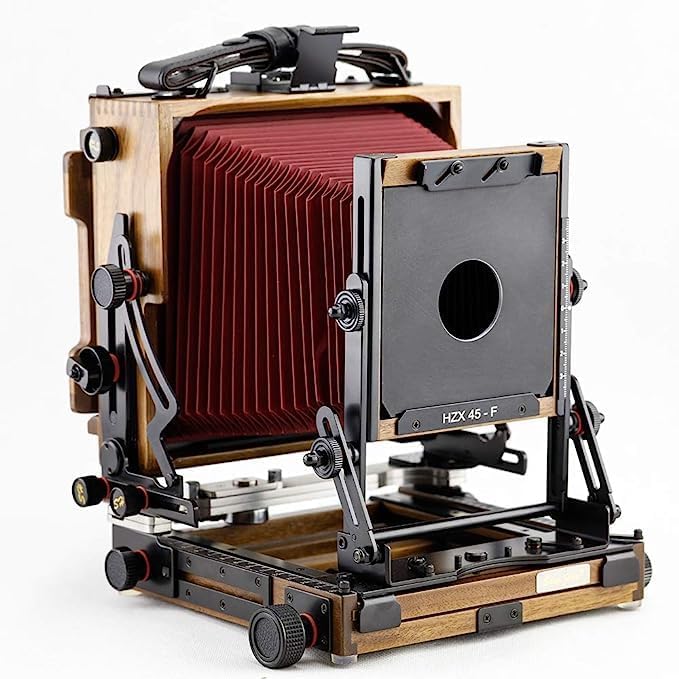
A 4x5 field camera is a folding large format film camera that gives you a huge negative, full manual control, and movements you cannot get from smaller formats. Choosing among the best 4x5 field cameras is not about automation or speed, because these cameras offer neither. It is about weight, bellows range, and movements.
This guide uses a clear checklist so you can judge any model on the same points. Use the comparison table below to see how options differ, then match those differences to your subjects, your tripod, and your budget.

Who Should Buy a 4x5 Field Camera?
Field cameras fold flat for transport, open onto a bed or baseboard, and use individual sheets of 4 by 5 inch film. That slow workflow rewards planning and punishes rushed shooting, so the format suits some photographers far better than others.
Landscape Photographers Who Walk to Their Viewpoints
If you hike or work along trails and coastlines, a folding body that closes into a compact box matters more than extreme movements. Look for lower weight, a closed position that shields the ground glass, and controls you can use with gloved hands. A camera you leave behind because it is too heavy delivers no image quality at all.
Architecture and Portrait Photographers Who Use Movements
If you photograph buildings, interiors, or controlled portraits, you need front rise and tilt to manage vertical lines and the plane of focus. Check that movements are generous enough for your lenses and lock without shifting. For this work, a slightly heavier and more rigid body is often a better trade than the lightest model in the product table above.
Film Photographers Moving Up From Medium Format
If you already shoot roll film and want larger negatives and movement control, a field camera is the natural next step without monorail bulk. Start with one versatile lens.
Key Features to Compare
This checklist replaces the usual digital camera checklist, because a field camera has no sensor, no autofocus, no image stabilization, and no video mode. Image quality comes from film, lens, and focus accuracy. That is why the best 4x5 field cameras are separated by mechanical details rather than electronics.
Bellows Extension and Focusing Range
Bellows extension sets both your longest usable lens and your closest focusing distance. A longer maximum extension, often around 300 mm or more, lets you use moderate telephoto lenses and focus closer, but it can sag or catch wind outdoors. A short minimum extension matters too, because wide angle lenses need the standards close together, and a body that cannot compress enough will force you to buy a recessed lens board or a bag bellows.
Camera Movements at the Front and Rear Standards
Movements are the main reason to choose this format. Front tilt and swing control the plane of sharp focus, and front rise and shift reframe without tilting the camera. Check the range in degrees and millimetres, and whether movements are geared or friction based. Also confirm that each movement returns to a clear zero position, because repeatable neutral settings save time and film.
Weight, Folded Size, and Rigidity
Weight and rigidity pull in opposite directions. Wooden bodies are often lighter, while metal bodies tend to feel more rigid, although individual designs vary more than materials suggest. What matters is whether the standards stay locked once set. A light camera that flexes when you insert a holder will cost you sharpness, so value solid locks over a small saving in weight.
Build Material and Bellows Condition
On a used camera, the bellows are the first thing to inspect, because pinhole light leaks can fog every sheet and bellows replacement can cost as much as the body. Extend the bellows fully in a dark room and check from inside with a small light. Also look for cracks and patches.
Lens Board and Lens Compatibility
A field camera body is only half a system, because the lens carries the shutter and the aperture. Most lenses mount on flat lens boards, and many models accept the common Linhof style board, which makes used lenses easier to find. Confirm the board size and the largest rear element the front standard can accept. A lens that is too large or heavy will limit movements and strain the front standard.
Ground Glass, Fresnel, and the Film Back
You compose and focus on the ground glass, so its brightness affects every shot. A Fresnel screen can brighten the corners and help focusing with slower wide angle lenses in dim light. The back should accept standard 4 by 5 sheet film holders securely and sit flat so focus stays accurate. Many bodies also accept a Graflok style back for roll film holders, so confirm the back type before you buy holders.
How the System Fits Together Before You Buy
A common error is to spend the whole budget on the body and discover that lenses, holders, and a tripod still need to be bought. Plan the system as a whole. One lens around 150 mm is a sensible start, a lens around 90 mm suits interiors and broad landscapes, and a lens around 210 mm suits portraits and tighter views.
Your tripod must hold the camera steady between focusing and exposure, when you close the shutter and insert the holder. Choose a head rated well above the combined weight of camera and heaviest lens. If you are still comparing formats, see our guide to the best 4x5 cameras for how field models differ from monorail designs.
Film holders, a dark cloth, a loupe, and a cable release are essential rather than optional. Budget for a few holders so you are not reloading after every two sheets, and check used holders for worn light traps. Also allow for film and processing costs per sheet, which change how selectively you shoot compared with the best digital cameras that make each extra frame nearly free.
Quick Buyer Checklist
Before you order, answer each point honestly for the exact model you are considering. A single no answer should point you to the accessory or compromise that resolves it.
- Does the bellows range cover both your shortest and your longest planned lens?
- Are front tilt, swing, and rise enough for the subjects you shoot most?
- Can you carry the body, one lens, holders, and tripod for your typical walk?
- Does the camera take a common and easy to find lens board size?
- Does the back accept standard sheet film holders, and roll film holders if you want them?
- Is the ground glass bright enough for your slowest lens in low light?
- Have you budgeted for holders, a loupe, a dark cloth, and a cable release?
- Does your tripod support the full working weight without creeping?
If several answers are unclear, compare models in the product table above on those exact points rather than on price alone. For a wider view of folding options, see our guide to the best field cameras and note where other formats change the weight and cost balance.
Common Mistakes to Avoid
- Buying the lightest body when you need generous movements, so buildings and close subjects cannot be corrected as planned.
- Choosing a lens before checking board size and front standard limits, so the lens cannot be mounted or cannot use its full image circle.
- Ignoring bellows condition on a used camera, so light leaks fog film until the bellows are replaced.
- Using a tripod rated only for the body weight, so the setup drifts when a heavy lens and holder are added.
- Loading film holders in bright or dusty conditions, so dust spots and accidental exposure ruin sheets before shooting begins.
- Forgetting bellows extension exposure compensation at close distances, so near subjects come out underexposed.
Buying Used: Red Flags to Watch For
A good used body can be excellent value, but vague listings deserve caution. Treat the following as reasons to ask for more photos, or to walk away.
- Photos that never show the bellows fully extended, which can hide pinholes and tears.
- A ground glass that is cracked, replaced with plain glass, or missing its grid and Fresnel screen.
- Movement locks that slip, focusing tracks with grit or bent sections, and knobs replaced with mismatched hardware.
- No mention of which lens board or film holders are included, so the true cost to start shooting stays hidden.
- A price far below similar listings, with a seller who cannot confirm the back type or bellows state.
If you are new to film formats, learning basic handling on a simpler system first can help. See our guide to the best starter cameras for lower cost ways to build focusing and exposure habits before committing to sheet film.
Care and Maintenance for Your 4x5 Field Camera
Care for this camera is mechanical care, not electronic care. Store it folded in a dry padded case, away from damp rooms where bellows material and wooden panels can suffer. Before each outing, extend the bellows, check the corners for new pinholes, and blow dust from the folds with a hand blower rather than wiping grit across the material.
Clean the ground glass gently with a soft cloth made for optics, and never press hard on it, because the etched surface scratches easily. Keep sand away from the focusing mechanism and check that knobs tighten smoothly. Store film holders empty, clean, and out of strong light, and replace holders with worn light traps.
After rain or coastal spray, open the camera indoors and let every part dry fully before folding it away. Have a bellows with growing light leaks repaired promptly, because one leak can waste a whole box of film. Handled this way, a sound body with no battery or sensor to age out can serve for decades.
Frequently Asked Questions
How heavy is a 4x5 field camera to carry all day?
Most 4x5 field camera bodies weigh about 3 to 6 pounds alone, before lens, holders, and tripod. A one lens field kit often reaches about 12 to 18 pounds in total. For long mountain days, your pack and tripod choice matter as much as body weight.
What lens should a beginner choose for a 4x5 field camera?
Start with one lens around 135 mm to 150 mm on a 4x5 field camera, because that range feels natural for landscapes, buildings, and general subjects and keeps the front standard stable. Add a wider or longer lens only after you know which subjects you return to, because each added lens also needs its own board.
Can a 4x5 field camera use roll film instead of sheet film?
Yes, many models can use roll film through a holder that fits a Graflok style back and shoots formats such as 6 by 9 cm or 6 by 12 cm on 120 film. That lowers the cost per frame while you learn focusing and movements. Confirm the holder matches your back before buying, because spring backs without Graflok fittings may not accept every holder.
How do you focus a 4x5 field camera accurately?
You focus a 4x5 field camera on the ground glass under a dark cloth, moving a standard until the subject is sharp and checking corners with a loupe. Work with the lens wide open for the brightest screen, apply tilt first and then refocus, because tilt changes the plane of focus. Stop down only after focus is set.
Is a 4x5 field camera a good choice for learning photography?
A 4x5 field camera teaches composition, exposure, and focus discipline well, because every step is manual and deliberate. The trade off is cost per sheet and a slower pace that frustrates some learners. If you value that process, the background in our guide to the best cameras for photography can help you place large format in your learning path.
Final Thoughts
The right choice comes down to three things: a bellows range that covers your lenses, movements that match your subjects, and a weight you will actually carry. Check those points against the comparison table above and budget for holders and a tripod. Chosen that way, the best 4x5 field cameras reward patience with negatives of remarkable detail and control.


