Best 4x5 Cameras 2026: Types Compared and How to Choose
Disclosure: We may earn a commission when you buy through links on this page, at no extra cost to you. As an Amazon Associate I earn from qualifying purchases. Learn more
Compare the best 4x5 cameras by type, from folding field cameras to monorails, with notes on movements, lenses, film holders, and system cost.
Choosing among 4x5 cameras confuses newcomers because the cameras look alike while behaving very differently in the field and in the studio. Every model in this class exposes one sheet of film at a time, yet weight, movements, and setup speed vary enormously. This guide compares the best 4x5 cameras by type first, so the differences are clear before you spend anything.
The comparison table in the first section lines the types up side by side. After it, each type gets its own section, followed by the system parts, running costs, and care habits that shape the real price of shooting this format.
Best 4x5 Cameras: Types Compared
Stated plainly, a 4x5 camera is a sheet film camera: each exposure is a single sheet of film, 4 by 5 inches, carried in a light tight holder. The front standard holds the lens and the rear standard holds the ground glass, and the two move independently. Those movements govern perspective, because rise, fall, tilt, and swing let you keep building verticals straight or hold focus across a slanted plane. Among the best cameras for photography, this is the class built around deliberate control rather than speed.
The working pace follows from the format. You compose on the ground glass, focus with a loupe, close the shutter, insert the holder, and pull the dark slide, so one photograph takes minutes rather than seconds. That one sheet at a time pace governs how you work: fewer frames, each one planned before the shutter opens.
| Type | Best For | Pros | Cons | Typical Price |
|---|---|---|---|---|
| Field camera | Landscape and travel | Folds flat, light to carry, quick to set up | Limited rear movements | about $400 to $2,500 |
| Monorail camera | Studio and architecture | Full movements on both standards, precise geared controls | Heavy, slow to pack and carry | about $250 to $1,500 |
| Press camera | Handheld and reportage style work | Fast handling, rangefinder focusing on many models | Small movement range, aging shutters and bellows | about $300 to $900 |
| Travel wide camera | Architecture on location | Fixed cone body, very fast to use with one lens | Little or no movement, lens choice fixed | about $800 to $2,000 |
Field Cameras
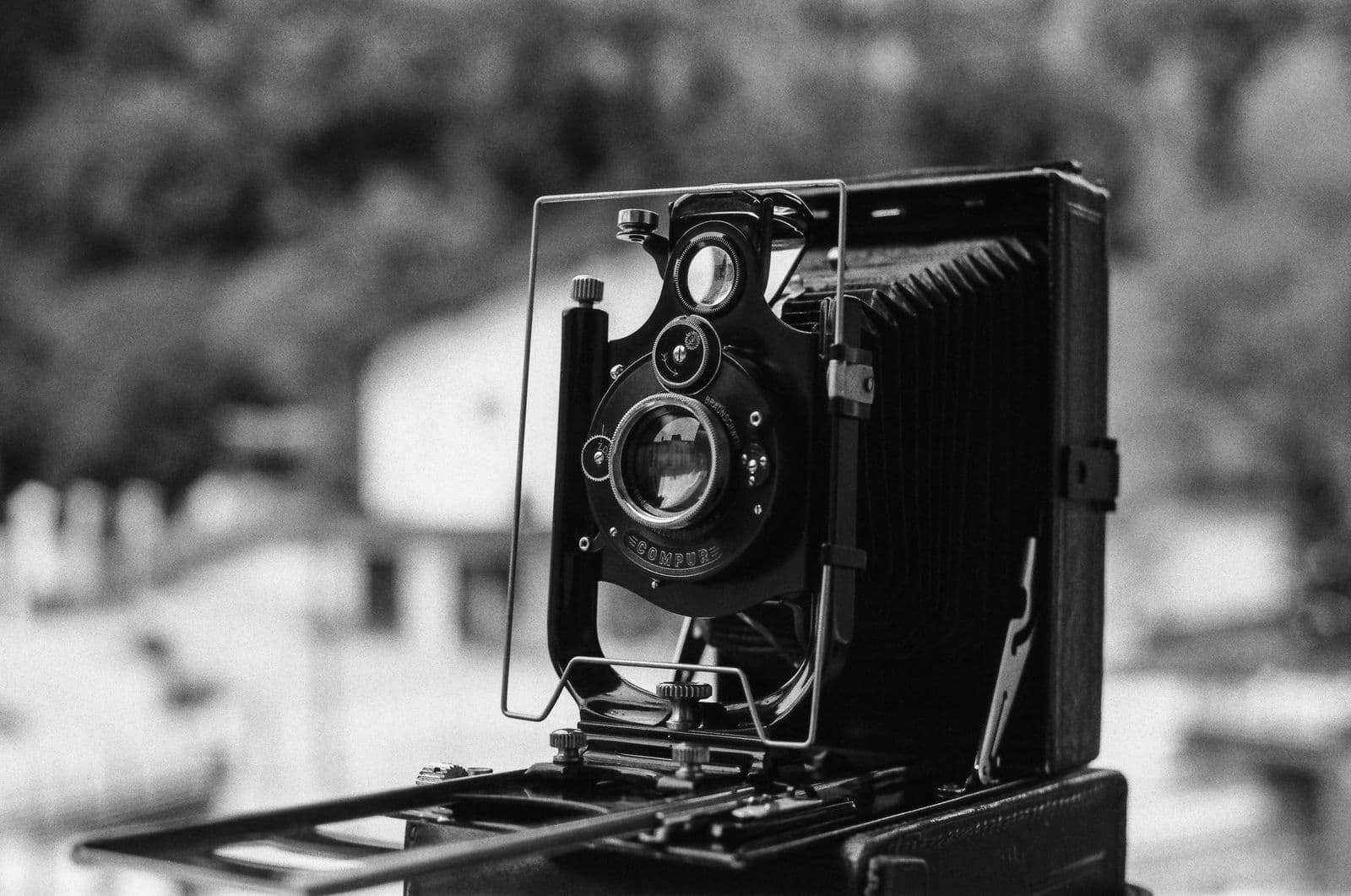
Field cameras fold into a flat, self protecting box, usually in wood or metal, and carry easily in a backpack. Most offer generous front rise and tilt but limited rear movements, which suits landscape work where the camera stays level. Weight runs about 3 to 6 pounds for the body alone. If hiking to your subjects is the norm, start your search with best 4x5 field cameras and compare folding designs first.
Monorail Cameras
A monorail mounts both standards on a single rail, giving full rise, fall, shift, tilt, and swing at front and rear with geared precision. That range makes it the studio and architecture benchmark, and interchangeable bellows and rails adapt it to very long or very short lenses. The cost is bulk: rails pack into a hard case and the full kit is a deliberate load. Used monorails are plentiful and often the cheapest entry into serious movements.
Press Cameras
Press cameras were built for speed in the news era, with folding beds, wire frame finders, and on many models a coupled rangefinder for handheld focusing. Movements are minimal, usually a little front rise and tilt, and ground glass composing is still available when the pace allows. They reward photographers who want a large negative with a faster, more casual handling style. Check bellows and rangefinder accuracy carefully on any example this old.
Handheld and Travel Wide Cameras
Travel wide cameras use a rigid cone or helical mount matched to one wide lens, often around 65 to 90 mm, and focus by scale or a small rangefinder. With no bellows to extend and almost no movements, they are the fastest 4x5 cameras to use on location. Architects and interior shooters value the speed and the natural perspective of a fixed wide lens. The fixed lens is both the appeal and the limit.
Field Camera or Monorail: Which Should You Choose?
Choose by where the camera will live. A field camera wins on carrying weight, packed size, and setup speed, and its movements cover most landscape and travel subjects. A monorail wins on movement range, precision, and lens flexibility, and it stays set up in a studio where weight never matters. Price rarely separates them, since used monorails often cost less than used field cameras, so your tripod and your subjects should make this decision, not the specification sheet.
How to Choose the Right 4x5 Camera
One boundary first. A 4x5 camera is a film tool with a slow, manual workflow; if you need instant files and autofocus, best digital cameras are a different product class built for speed, not for movements and sheet film. Within the film class, the four factors below decide satisfaction.
Movements and Lens Coverage
Movements only work when the lens projects an image circle larger than the film. A lens that barely covers 4x5 at rest may vignette the moment you add rise or tilt. When reading lens listings, look for the stated image circle at a small aperture and allow margin above the about 153 mm diagonal of the film itself. Generous coverage is the detail that quietly decides whether your architecture shots stay clean at full rise.
The Full System Around the Body
The body is only one line in the budget. A working kit also needs a lens already mounted on a lens board that fits your camera, film holders, a sturdy tripod with a head rated for the load, a loupe, a dark cloth, and a cable release. Stated plainly, the lens board, the film holders, and the tripod belong to the total spend, and beginners regularly underbudget them. If assembling a system is new to you, the broader advice in our guide to best starter cameras on budgeting beyond the body applies here too.
Lenses and Focal Lengths
On 4x5, about 150 mm behaves like a normal lens, about 90 mm is a clear wide angle, and about 210 mm suits portraits and compressed landscapes. Most photographers start with one normal or mild wide lens and add a second only after a season of shooting. Shutter condition matters more than glass fashion: speeds should sound even and the aperture blades should move smoothly. Buyers comparing best quality cameras across formats will find that here, quality means mechanical honesty rather than electronics.
Weight, Bulk, and Carrying
Add up the whole kit before committing: body, two lenses, five holders, tripod, and accessories usually total about 12 to 20 pounds. That figure decides whether the camera actually leaves the house. A lighter field kit you carry weekly beats a heavier monorail kit that stays in a closet. Pack the kit into your real bag and walk with it before deciding.
How to Make Your 4x5 Camera Last Longer
- Inspect bellows for pinhole light leaks in a dark room with a flashlight inside the camera each season, and patch or replace them early.
- Store the camera dry and folded loosely, since compressed damp bellows grow mildew and stiff folds.
- Clean the ground glass and lens surfaces with a lens cloth only, and keep film holders dust free with a blower before loading.
- Exercise leaf shutters at every speed a few times each month so lubricants do not settle and slow the timing.
- Keep holders in sealed bags away from grit, because one grain of sand inside a holder scratches film and prints light spots.
4x5 Cameras: Your Questions Answered
How much should I spend on a first 4x5 camera?
Plan on a system total of about $700 to $1,200 for a sound used setup: a body at about $300 to $600, one lens, several holders, and a tripod you may already own. Spending it all on the body leaves nothing for holders, and holders decide how much you can shoot per outing. Hold back a film and processing allowance too, because sheet film costs a few dollars per exposure once developing is counted.
What does a 4x5 camera need besides the body?
Beyond a lens on the correct board and film holders, you need a light meter, a focusing loupe of about 4x to 6x power, a dark cloth large enough to seal out daylight, and a cable release. A changing bag matters if you load holders away from home. None of these items is exotic, but missing any one of them stops a shoot entirely, so build the checklist before the first outing.
How many film holders should a beginner buy for a 4x5 camera?
Start with three to five holders, which give you six to ten sheets per outing. That count matches the format: a careful session rarely produces more good frames than that, and each sheet is loaded in darkness at home. Buy holders in matched condition, check the light traps and hinges before loading valuable film, and number them with tape so any light leak can be traced to one holder instead of ruining trust in all of them.
Is a used 4x5 camera a sensible first purchase?
Yes, most first 4x5 cameras are used, because the format has been mature for decades and mechanical bodies age slowly. The checks that matter are bellows integrity, smooth and complete movements, a ground glass without cracks, and a shutter that fires evenly at slow speeds. Budget for a bellows replacement or shutter service on older examples, and buy from sellers who accept returns, since a flashlight check at home reveals leaks no listing photo can show.
How long does one 4x5 photograph take to set up?
Expect about five to fifteen minutes per photograph once the tripod is placed: level the camera, compose upside down on the ground glass, focus, set movements, meter, close the shutter, insert the holder, and expose. Tripod leveling is the step beginners rush, and a slightly tilted rail quietly eats the movement range you need later. Many photographers find the slow pace improves their smaller format work too, because every frame becomes a decision.
The Bottom Line
Pick the type by where you shoot, confirm the movements and lens coverage your subjects need, and budget for the full system rather than the body alone. Chosen with that discipline, the best 4x5 cameras reward patience with negatives of remarkable detail and control.