Best 48 Inch Bathroom Vanity: Buying Guide (2026)
Disclosure: We may earn a commission when you buy through links on this page, at no extra cost to you. As an Amazon Associate I earn from qualifying purchases. Learn more

Freestanding, floating or cabinet with top: how to choose a 48 inch bathroom vanity for your plumbing, storage and budget.
A 48 inch vanity sits in a sweet spot. It gives you a generous counter and real storage, yet it still fits many standard bathrooms without crowding the toilet or the door swing. Choosing the best 48 inch bathroom vanity comes down to how the cabinet is built, how the drawers and doors use the space around your plumbing, and whether the height and layout suit the people who use the room every day.
This guide compares the main types side by side and walks through the measurements, materials, and features that matter most. Use the comparison table below to see how the types differ, and read our wider guide to the best bathroom vanity if you are still weighing other sizes.


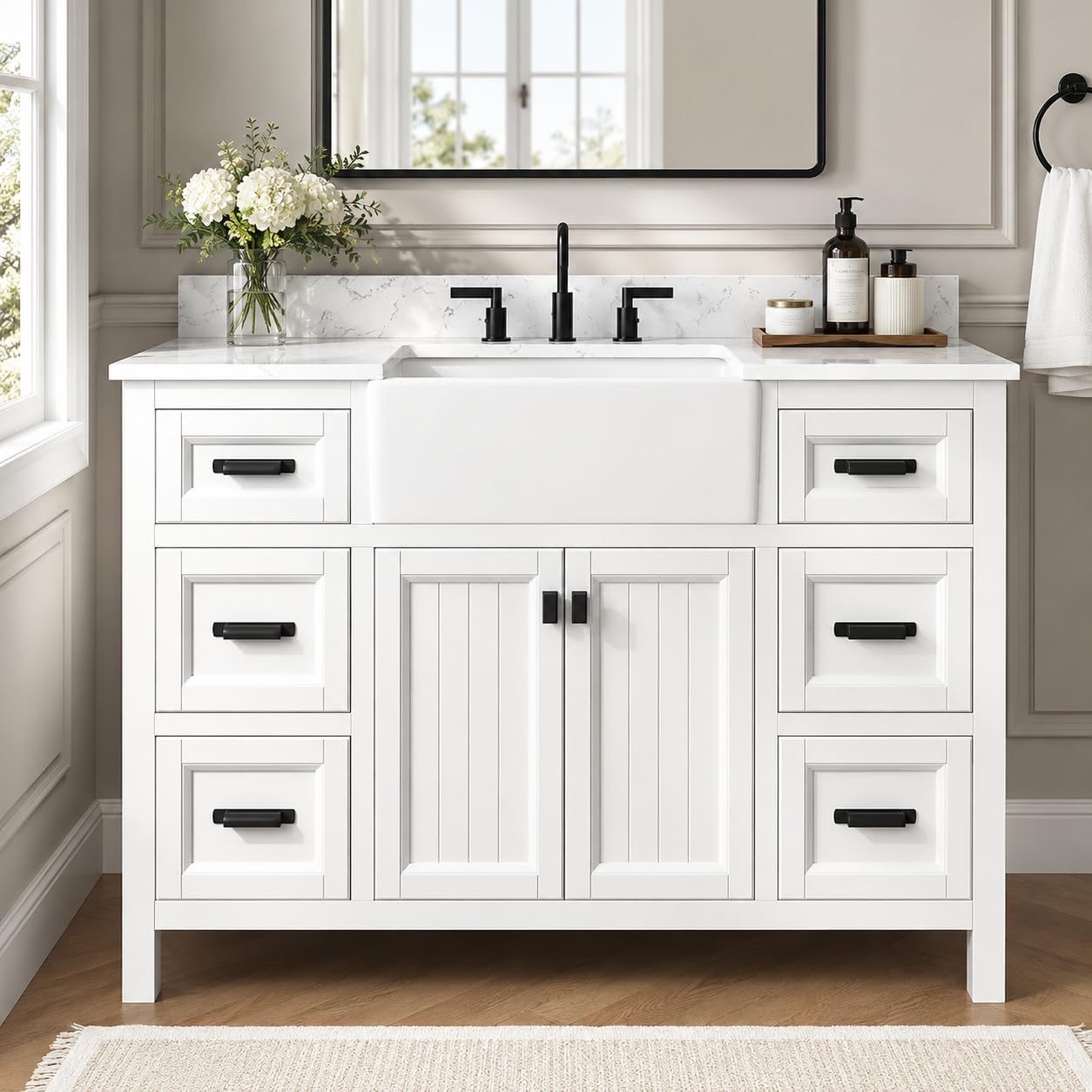


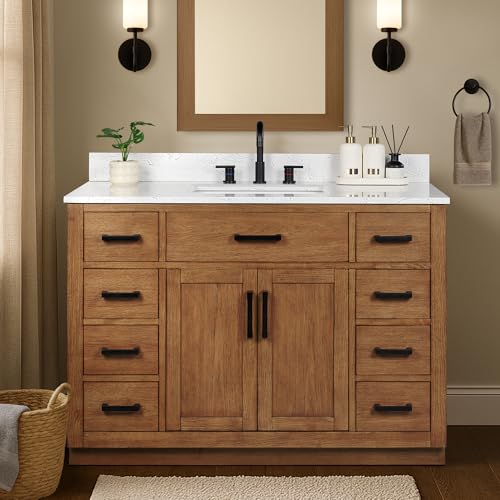
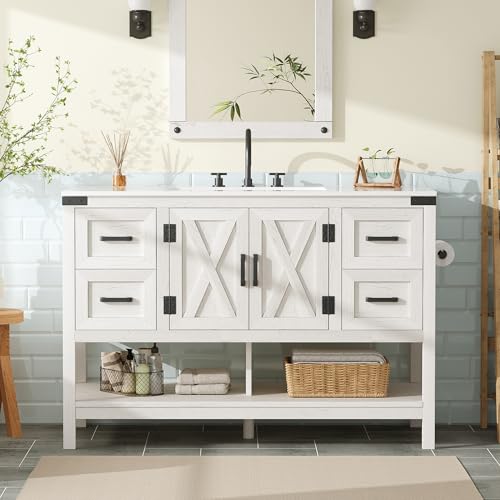
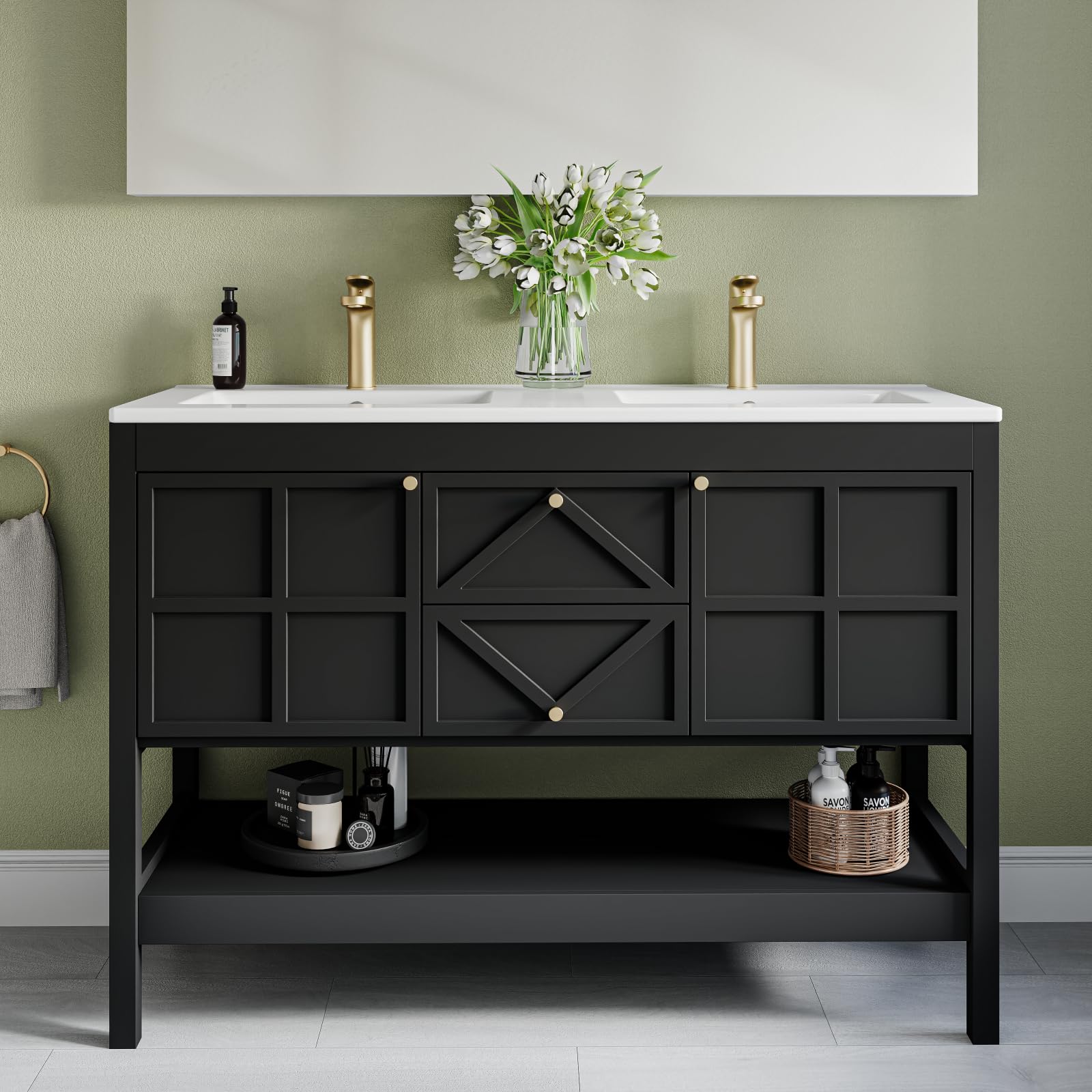

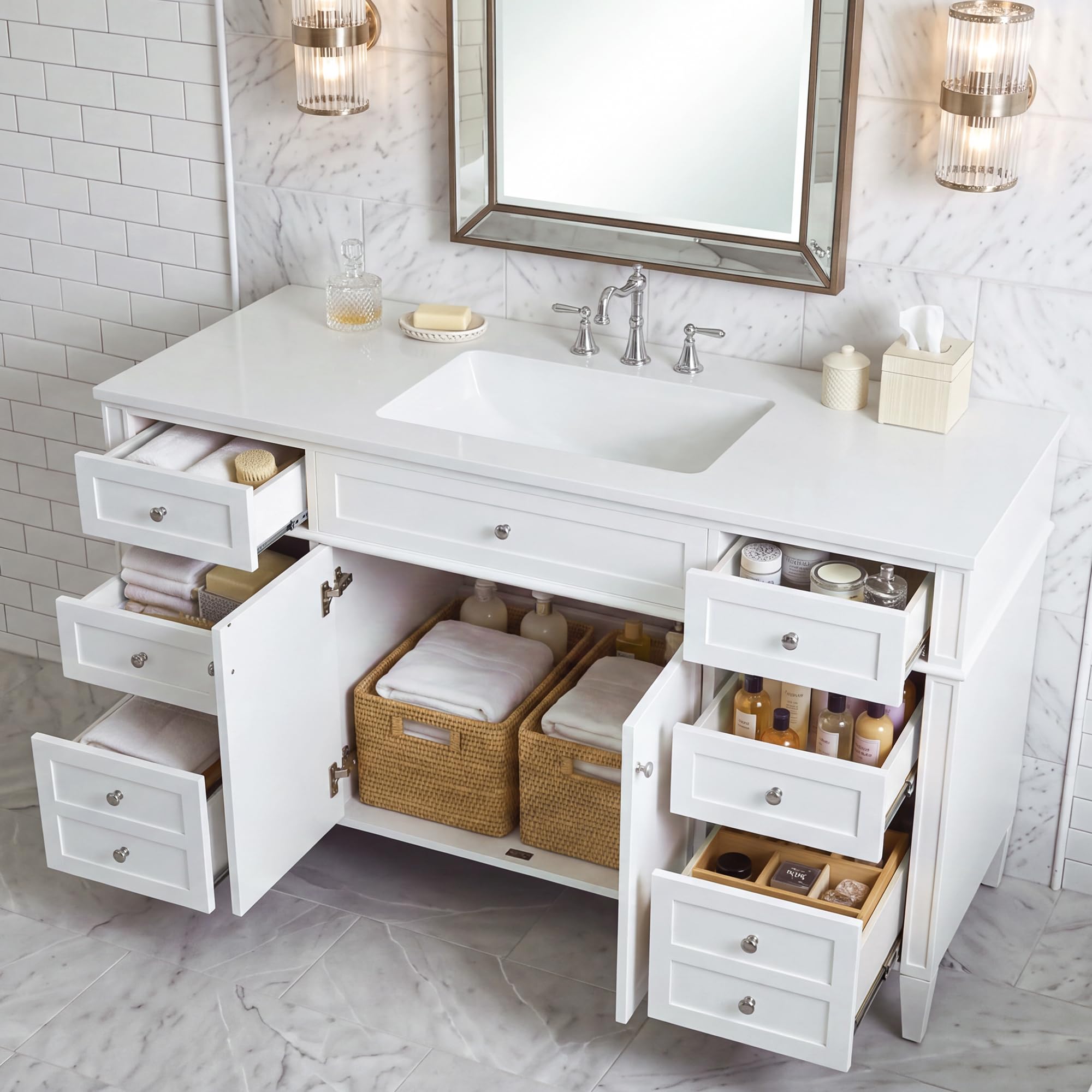
Vanity Types at a Glance
Most 48 inch models fall into three groups, each suiting a different room and budget.
- Freestanding cabinets rest on legs or a solid base, install against any finished wall, and usually offer the deepest storage.
- Floating cabinets hang on the wall, open up the floor, and make cleaning underneath simple.
- Cabinet and top sets arrive with a counter and sink included, while cabinet only models let you pick your own top.
Three Types Compared
Freestanding Cabinets
A freestanding cabinet is the easiest type to install because it stands on the floor and only needs securing to the wall studs for safety. The full depth base gives room for stacked drawers beside the sink plumbing, and a solid plinth hides dust underneath. Legged versions feel lighter in a small room and let warm air from a floor vent pass below. Choose this type for the most storage per dollar and a simple install.
Floating Cabinets
A floating cabinet mounts to wall studs through a rear rail or frame, so the wall must be flat and the studs must fall where the fixings need them. Because the floor stays visible, the room looks larger and mopping takes seconds. Storage is a little shallower than a floor standing cabinet of the same width, and heavy stone tops need a mounting system rated for the load. Choose this type for a modern look or easier cleaning.
Cabinet Only Versus Cabinet With Top and Sink
Buying the cabinet alone lets you pair it with any counter material and basin shape, which helps when you need a specific faucet drilling pattern. A set with the top and sink included costs less than buying the parts separately in most cases, and the pieces are made to fit each other. The trade off is choice, since sets limit you to the top finishes the maker offers. Decide this early, because it changes both your budget and your parts list.
What to Compare Between Vanities
The criteria below come from manufacturer specification sheets and from the questions buyers ask most often: cabinet construction, drawer layout around the drain, counter materials, total height, mounting method, assembly effort, and warranty terms. Each factor is explained in terms of what you can check on a product page or measure in your own bathroom before you order.
How to Choose the Right Bathroom Vanity
Size and Form Factor
The 48 inch figure is the cabinet width, but depth and height decide comfort. Depths usually run about 18 to 22 inches, and a deeper cabinet can crowd a narrow room, so leave clear walking space in front. Heights range from about 30 to 36 inches including the top, and taller cabinets reduce bending for most adults. If two people get ready at once, a single wide sink with counter space on both sides often works better at this width than two small basins.
Type and Layout
Beyond the three types above, look at how the front is organized. Drawers give better access than doors for daily items, but the top drawer must be shaped to clear the drain and supply lines. A mix of two drawers and one door cabinet balances both needs. Single sink layouts dominate at 48 inches because the counter space on each side is genuinely useful.
Features Worth Paying For
Soft closing drawer slides and door hinges are worth the small extra cost because they cut noise and protect the cabinet finish from repeated slamming. Full extension slides let you reach items at the back of a deep drawer without kneeling. An adjustable shelf inside a door cabinet helps fit tall bottles, and a finished interior resists moisture stains better than raw board. A matching mirror or an LED mirror adds light where you shave or apply makeup, though a separate mirror is easier to replace later.
Counter Weight and Cabinet Load
A stone or quartz top at this width can weigh 60 pounds or more before the sink and faucet go on, so the cabinet and its mounting must be rated for that load plus the items you store. Check the stated weight capacity and spread heavy items across the cabinet rather than stacking them in one drawer. For floating models, the fixing system carries everything, so follow the maker guidance on stud spacing and fastener type exactly.
Fit Adjustments for Height and Plumbing
Adjustability on a vanity means fitting the cabinet to your room, not moving parts during use. Floating cabinets can be mounted a little higher or lower to suit taller or shorter users. Many freestanding models have leveling feet that correct small floor slopes, which keeps drawers aligned and doors closing evenly. Check the rear panel cutout size as well, because a generous opening makes it far easier to connect supply lines and the drain without cutting the cabinet yourself.
Materials and Durability
Solid wood and plywood cabinets handle bathroom humidity better than cabinets built from thin particle board with a surface film, which can swell at the edges when water sits on it. Look for sealed edges, a water resistant finish inside and out, and metal or solid wood drawer sides on better models. If natural grain matters to you, our guide to the best wood bathroom vanity covers wood species and finishes in more depth. Counter materials range from cultured marble and ceramic to quartz and stone, which resist staining but add weight.
Assembly and Warranty
Fully assembled cabinets cost more and arrive heavy, but they avoid the loose joints that can appear when flat packed panels are fastened in a hurry. If you choose a model that needs assembly, have the instructions, hardware, and a second pair of hands ready on install day. Warranty terms vary from about one year to limited lifetime coverage on hardware, so read what is actually covered, especially water damage and finish defects.
How Much Should You Spend?
Basic cabinets with a simple top often cost about $300 to $600 and suit a guest bathroom or a rental update. Spending about $600 to $1,200 usually brings plywood construction, soft closing hardware, and a better counter material. Above about $1,200 you are paying for solid wood, stone tops, and finer finishes rather than more function. Set your budget after measuring, because returns on a heavy cabinet are costly and a model that fits perfectly is worth more than a fancier one that blocks the door.
Is a 48 Inch Bathroom Vanity the Right Size for You?
This size fits best in a bathroom where one person uses the sink at a time but wants counter space for toiletries, a hair dryer, and folded towels. It suits many main bathrooms in apartments and family homes, and it is a strong upgrade from a 30 or 36 inch cabinet that leaves no landing space beside the basin. If your room is under about 40 square feet, or the vanity wall is short, stepping down to the best 36 inch bathroom vanity may keep the room comfortable.
Couples who share a morning routine in a large master bathroom often prefer 60 inches or more. And if the room is truly compact, our guide to the best small bathroom vanity shows how narrower cabinets still provide useful storage. Mark the 48 inch width with tape on the floor and stand in front of it before you commit.
Common Mistakes to Avoid
- Ordering before checking the plumbing position. If your drain sits far off center, deep drawers may not close, and you will be cutting panels on install day.
- Ignoring the door and drawer swing. A drawer that hits a trim board or a door that strikes the toilet wastes the storage you paid for.
- Choosing the top before the faucet. Faucet hole spacing is drilled for specific faucet types, and a mismatch means returning a heavy counter.
- Skipping the wall check on floating models. Weak or uneven walls lead to a cabinet that tilts forward under load.
- Forgetting the backsplash gap. Walls are rarely straight, so plan for a backsplash or a bead of sealant to close the gap behind the top.
Care and Maintenance
Wipe spills from the counter and cabinet front the same day, because standing water at seams and edges is what damages finishes over time. Use a mild cleaner and a soft cloth, and avoid abrasive pads on stone and cultured marble. Once or twice a year, check the sealant line where the top meets the wall and renew it if it has cracked, and tighten any screws that have worked loose. Fix slow drain leaks as soon as you spot dampness under the sink.
FAQ
What is the best 48 inch bathroom vanity?
The right choice depends on your wall space, plumbing position, and storage habits rather than on one universal model. A plywood or solid wood cabinet with soft closing drawers, a height that suits your household, and a top you can maintain easily will serve most buyers well. Check that the faucet drilling on the top matches the faucet style you plan to use, a detail many buyers only notice on install day.
What size bathroom vanity do I need?
Start with the wall length, then subtract space for the toilet clearance and any door swing. Leave at least about 30 inches of clear floor in front of the cabinet so you can bend and open drawers comfortably. If two people share the sink each morning, width matters less than counter space beside the basin, so a single sink layout in a wider cabinet often beats two cramped basins.
How long does a bathroom vanity last?
A well built wood or plywood vanity commonly serves for about 10 to 20 years, while cabinets made from low grade particle board may show swelling or peeling much sooner in a steamy room. Ventilating the bathroom during showers shortens the time moisture sits on the cabinet, and that habit does more for lifespan than any special coating.
Is a bathroom vanity worth it?
For most remodels, yes, because the vanity combines the sink, the main storage, and the visual center of the room in one purchase. Replacing a worn cabinet also gives you access to the shutoff valves and drain, a good moment to renew them. If your current cabinet is sound, a new top and fresh hardware can deliver much of the same change for far less money.
How do you clean a bathroom vanity?
Daily care is simple: wipe the counter with a damp cloth, dry the cabinet front after splashes, and keep toothpaste and cosmetics from sitting on the finish. For a full routine covering stone, wood, and painted finishes, see our guide on how to clean a bathroom vanity. Avoid flooding the base with mop water, because the lowest edges absorb moisture first and swell fastest.
What is the most reliable bathroom vanity brand?
Reliability tracks construction more than the name on the box. Makers that publish full material details, use metal drawer slides with stated load ratings, and offer clear warranty terms tend to stand behind their cabinets. Read recent buyer reports for patterns such as cracked tops on arrival or drawers arriving out of alignment, and treat a long record of the same complaint as a stronger signal than any single glowing review.
Final Thoughts
Measure carefully, choose the type that fits your wall and routine, and spend on cabinet construction and hardware before decoration. Do that, and the best 48 inch bathroom vanity for your home becomes an easy call. Compare your shortlist against the product table above, and read the bathroom vanity buying guide before you order.