Best 42 Inch Ceiling Fan: Buying Guide (2026)
Disclosure: We may earn a commission when you buy through links on this page, at no extra cost to you. As an Amazon Associate I earn from qualifying purchases. Learn more
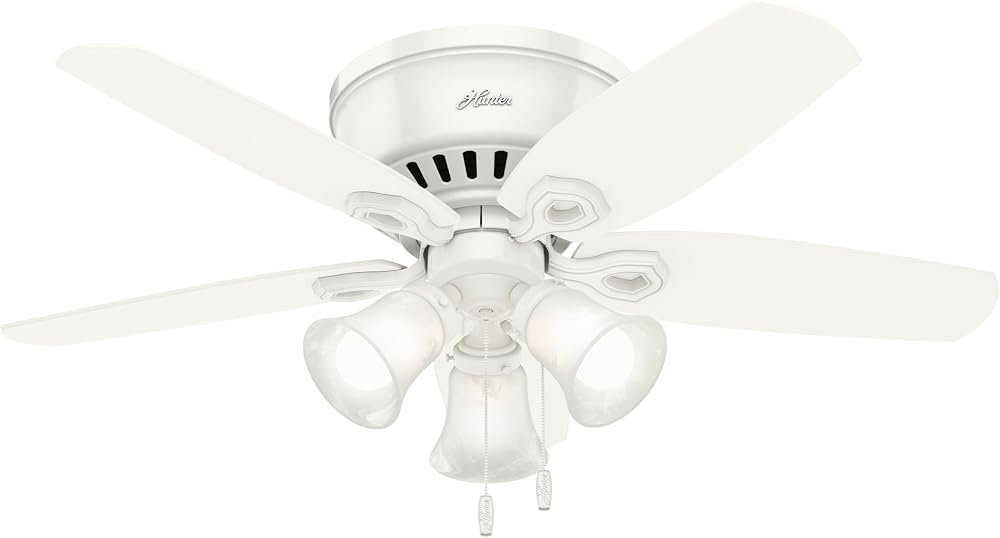
For rooms of about 100 to 144 square feet: how to choose a 42 inch ceiling fan by mount, motor, light and price.
A fan that is too large overwhelms a small room, and one that is too small leaves the air feeling still. The best 42 inch ceiling fan solves that balance problem for bedrooms, kitchens, and home offices, moving enough air without crowding the ceiling. This guide compares fan types by light output, style, mounting, and installation, and the comparison table below sums up the differences. If your room is much larger, start with our guide to the best ceiling fan sizes instead.


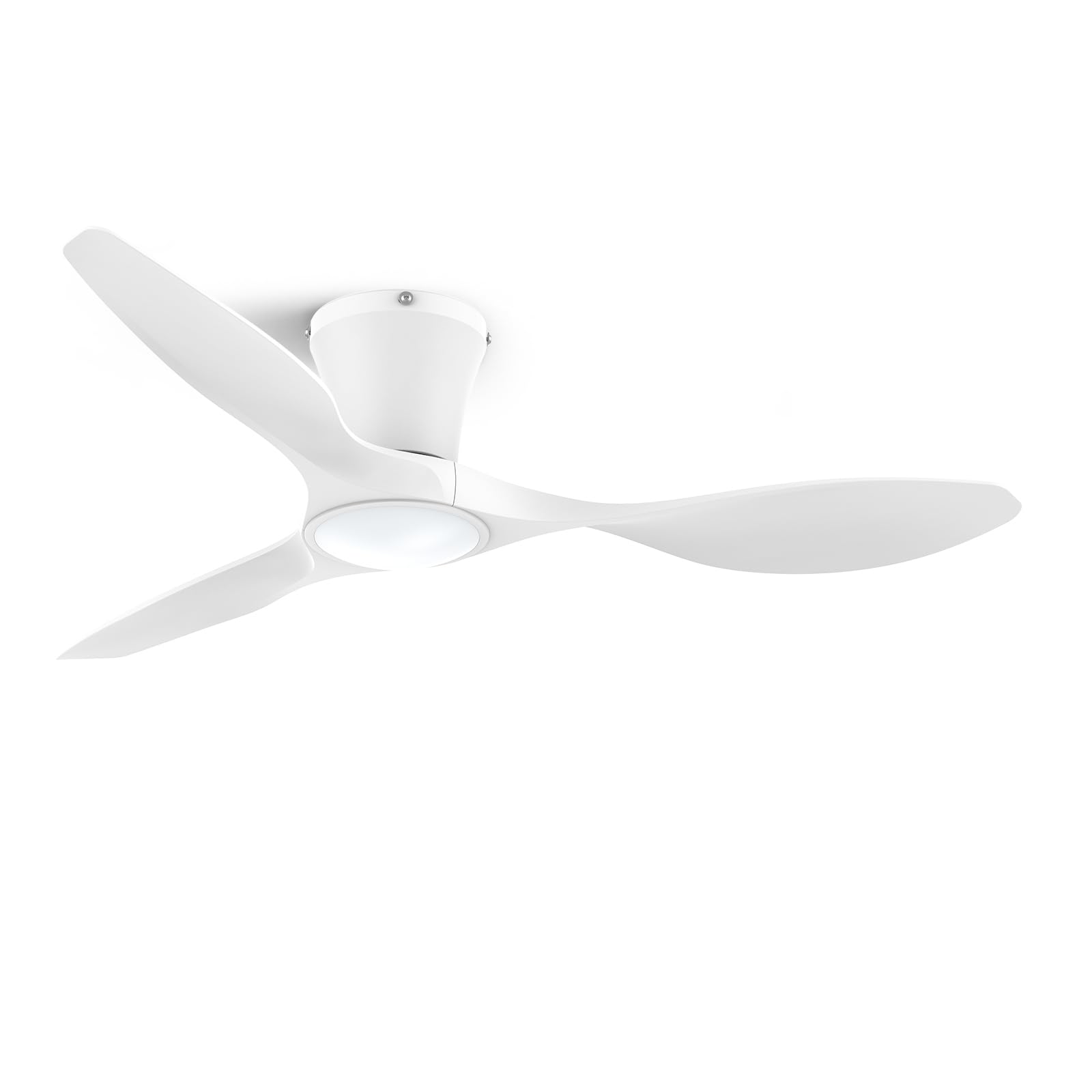

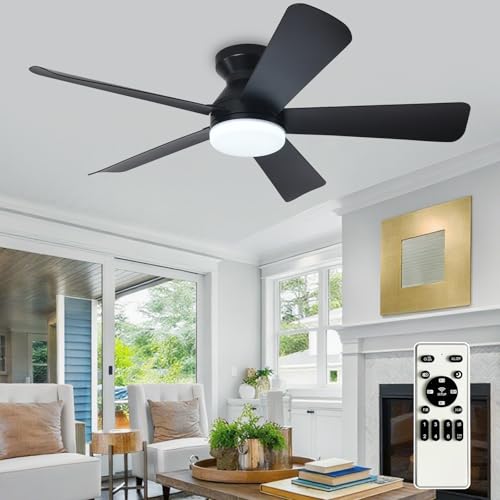
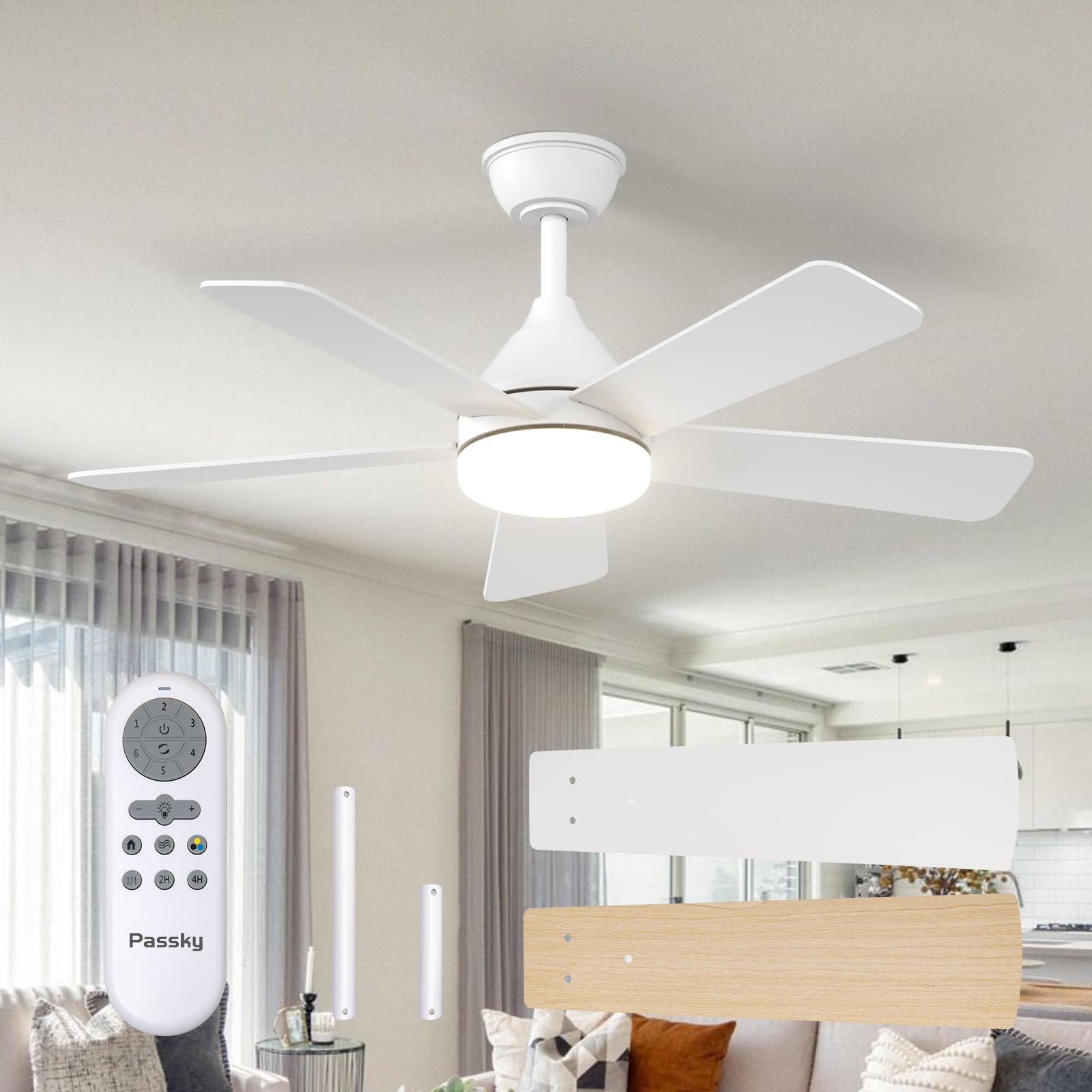

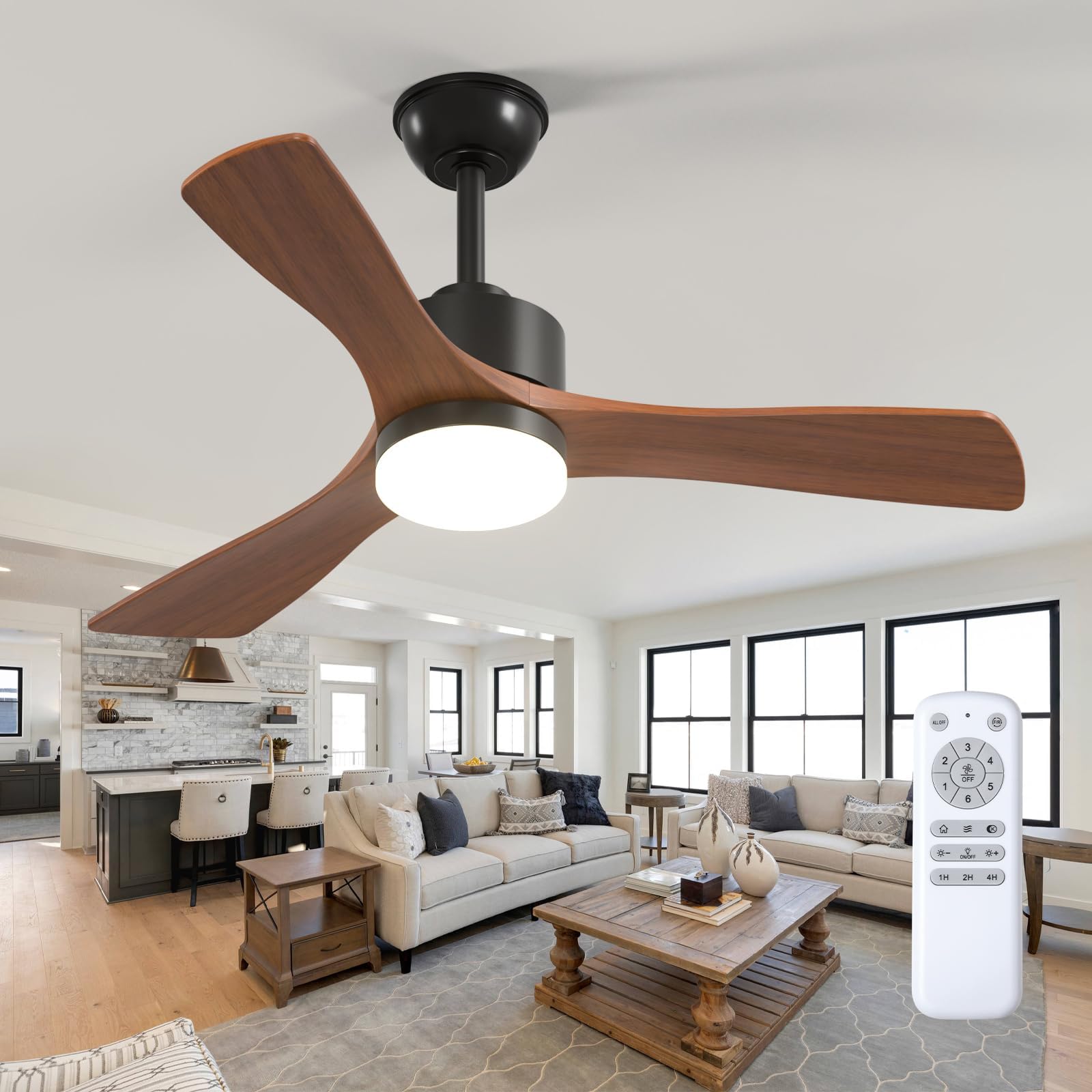
42 Inch Ceiling Fan Types at a Glance
Most fans at this size fall into three broad types, and the right one depends on your ceiling height and the room.
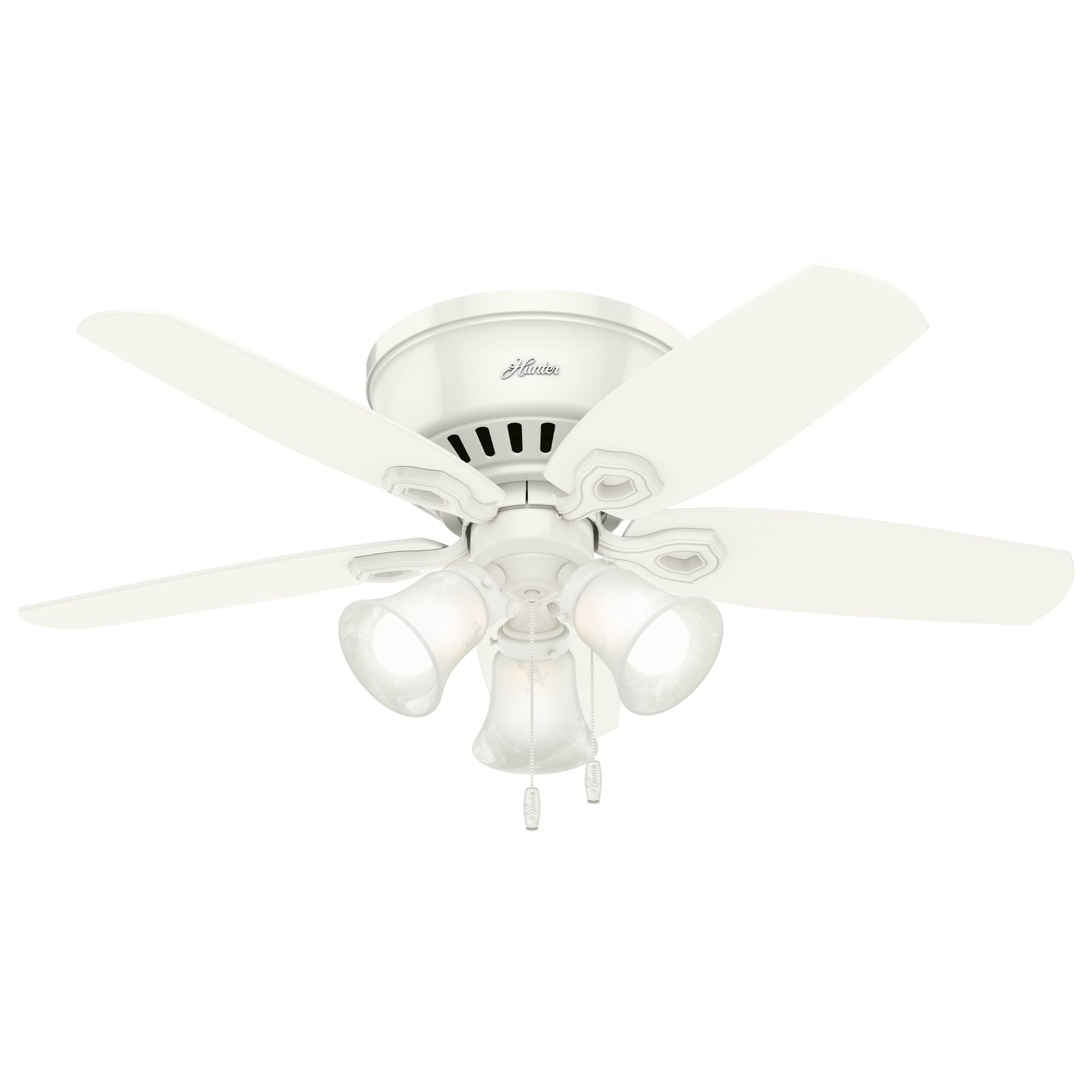
- Flush mount fans sit close to the ceiling and suit rooms with ceilings around 8 feet high, where every inch of headroom counts.
- Standard mount fans use a short downrod, work on ceilings of about 8 to 9 feet, and usually give the smoothest airflow at this size.
- Fan and light combinations replace a separate ceiling light, which helps in rooms with a single central fitting and limited wiring.
Within each type you will also choose a motor, a control style, and a finish, which matter more to daily comfort than blade count alone.
Three Types Compared in Detail
Flush Mount Fans for Low Ceilings
A flush mount model hugs the ceiling, keeping the blades at a safe height in rooms where a downrod would hang too low. Safety guidance calls for blades at least 7 feet above the floor, and a flush mount is often the only way to meet that on an 8 foot ceiling. The trade off is slightly less air circulation, because the blades sit closer to the ceiling surface. In a low ceiling bedroom or hallway, that small loss is worth the headroom and the cleaner profile.
Standard Mount Fans With a Downrod
A standard mount fan hangs from a short downrod, placing the blades at the height where they move air most effectively across the room. This type suits ceilings of about 8 to 9 feet and rooms where you spend long periods, such as a main bedroom or a study. Many models accept longer downrods later if you move the fan. Check that the rod finish matches the motor housing, because the rod is clearly visible at this height.
Quiet DC Motor Fans for Bedrooms
DC motor fans use less electricity than comparable AC motor fans and tend to run more quietly, with more speed settings and smoother low speeds. That matters at night, when a faint hum you ignore in a kitchen can disturb light sleep. The trade off is a higher price and a control board that costs more to replace than a simple switch. Our explainer on dc vs ac ceiling fan motors walks through the efficiency and noise differences in full.
How to Evaluate a 42 Inch Ceiling Fan
Judge any model on five things: how much air it moves, how bright and how warm its light looks, how well its style and finish fit your room, how involved the installation is, and what you get for the price. Use the figures on the product page rather than the marketing headline, because airflow and light output are measured in standard ways that let you compare models fairly.
How to Choose the Right Ceiling Fan
Size and Form Factor
Blade span is measured from one blade tip to the opposite tip, and 42 inches is that span, not the width of the motor housing. This size suits rooms of about 100 to 144 square feet. Larger spans such as 52 or 60 inches move more air but can look top heavy in a small room and need more clearance from walls and tall furniture. Keep at least 18 inches between the blade tips and the nearest wall so the airflow is not choked.
Type and Room Fit
Match the type to the room rather than to the photo online. A caged or enclosed blade design can suit a child room or a bunk bed setup, because the blades stay out of reach. An indoor rated fan belongs in dry rooms only, while a kitchen with cooking steam does better with a damp rated model. Style families such as modern, farmhouse, and traditional change the look, not the cooling, so pick the finish last.
Features Worth Paying For
A remote control earns its cost when the fan hangs over a bed or a desk you cannot easily reach past. A reversible motor matters if you want gentle warm air movement in winter, because reversing the blades pushes rising warm air back down without a direct draft. A light kit is worth paying for when the room has no other central light. Skip extras you will rarely touch, such as elaborate timers, if a simpler setup keeps the price down.
Lumens and Color Temperature
Judge a built in light by lumens, not watts, because lumens state how much light you actually get. A small bedroom or office usually feels well lit with about 800 to 1,600 lumens from the fan light, paired with lamps for reading. Color temperature shapes the mood: around 2,700 to 3,000 kelvin looks warm and restful, while about 4,000 kelvin looks neutral and suits kitchens and work areas. If the figures are missing, treat the light as decorative rather than your main source.
Fixture Size and Placement
Place the fan at the center of the main seating or sleeping area, not simply at the center of the ceiling if furniture is grouped to one side. The light dome and motor add visual weight, so a compact housing suits a small ceiling better than a wide, ornate one. If you are planning a sleeping space first, our guide to the best ceiling fan for bedroom covers quiet operation and light placement for that room in depth.
Dimmable and Smart Options
Dimmable LED lights need a compatible dimmer or the fan remote, and mixing brands of control can cause flicker or a faint buzz. Smart models connect to WiFi and accept voice control through a home assistant, which is handy for adjusting speed from bed. A smart fan still needs its wall switch left on, or the app cannot reach it. If several people use the room, a plain remote in a wall cradle is often the option everyone understands.
Installation
Almost every fan at this size is hardwired, so plan on turning off the breaker and mounting the bracket to a fan rated electrical box that is secured to a joist or brace. A standard ceiling box for a light fitting may not carry the weight and vibration of a fan. Weight at this size is manageable for two people, one holding the motor while the other connects the wires. Our walkthrough on how to install a ceiling fan covers the full sequence, and a licensed electrician is the right call if your wiring is old or unlabeled.
How Much Should You Spend?
Models under $100 cover the basics: an AC motor, a pull chain or simple remote, and a modest light. Fans at about $100 to $200 usually add a better finish, a quieter motor, and a brighter light. At about $200 to $300 you will see DC motors, dimmable LEDs, and smart controls. Spending over $300 buys premium materials and design rather than much more airflow, because a 42 inch span limits how much air any motor can move.
Is a 42 Inch Ceiling Fan the Right Size for You?
For a room of about 100 to 144 square feet, such as a bedroom, a nursery, a small dining room, or a kitchen eating area, yes, this span is usually the sweet spot. It is large enough to keep air moving across a bed or a table, yet small enough that the blades clear walls and doors in a compact layout. In a low ceiling bedroom, pair it with a flush mount so the blades stay safely above head height.
Step up a size when the room passes about 144 square feet or has an open plan layout, because a 42 inch fan will leave the corners still even on its highest speed. Readers furnishing a main living space should compare spans in our guide to the best ceiling fan for living room before deciding. In a room under about 75 square feet, a wall fan or a smaller 36 inch span may feel less overwhelming.
Common Mistakes to Avoid
- Buying a 42 inch fan for a large open plan room, then running it at full speed all day and still feeling warm in the corners.
- Ignoring ceiling height, so the blades end up below 7 feet from the floor where a tall person or a bunk bed brings heads too close.
- Choosing the light by wattage alone, then finding the room too dim because the lumen output was low.
- Mounting the fan on a standard light box, which can loosen over time under the weight and vibration.
- Forgetting to check blade clearance from walls and tall cabinets, which cuts airflow and can make the fan sound louder.
FAQs
What is the best 42 inch ceiling fan?
The best choice is the model that matches your room size, ceiling height, and light needs, with a motor warranty that signals the maker stands behind it. Beyond the points above, check whether replacement remotes and light covers are sold for that model line. Parts that stay available protect your purchase, because a failed remote should not force you to replace a fan that still runs well.
What size ceiling fan do I need for a long and narrow room?
For a long and narrow room, one fan rarely serves both ends well, even if the total area looks right for a single size. Two smaller fans spaced along the length of the room usually give more even airflow than one 42 inch fan in the middle. If wiring for two fans is not practical, place the single fan over the area where people sit or sleep longest.
How long does a 42 inch ceiling fan last?
A ceiling fan motor commonly lasts about 10 years or more, and many keep running well past that when the blades stay balanced and the mount stays tight. The parts that fail first are usually the remote receiver, the pull chain switch, or the light kit rather than the motor itself. An ignored wobble can shorten bearing life, so tighten the blade screws and check the balance when a wobble starts.
Is a 42 inch ceiling fan worth it?
Yes for a small room, because a fan uses a fraction of the electricity of air conditioning and lets you set the thermostat a few degrees higher while feeling just as cool. The cooling comes from air moving across your skin, so switch the fan off when you leave the room. Our comparison of ceiling fan vs air conditioner running costs shows where each one makes financial sense.
How do you clean a 42 inch ceiling fan?
Turn the fan off and let the blades stop fully, then stand on a stable step ladder. Slide an old pillowcase over each blade in turn and pull it back slowly, so the dust stays inside the case instead of falling on the bed or floor. Wipe the housing and light cover with a slightly damp cloth, keeping moisture away from the canopy. Cleaning every few months also keeps dust from unbalancing the blades.
What is the most reliable ceiling fan brand?
No single brand is most reliable across every price tier, because each maker sells both basic and premium lines with different motors and warranties. A longer motor warranty, a safety listing from a recognized lab, and a support line that stocks spare parts are stronger signals than a famous name. Keep your receipt and the model number from the sticker on the motor housing, because you will need it to order an exact remote later.
Final Thoughts
Start with your room measurements and ceiling height, then pick the mount, motor, and light in that order, and the best 42 inch ceiling fan for your space becomes an easy shortlist rather than a guess. Use the product table above to compare the finalists side by side on airflow, light output, and controls, and you will end up with a fan that keeps a small room comfortable in every season.