Best 4 Step Ladders (2026): Duty Rating, Height and Safety
Disclosure: We may earn a commission when you buy through links on this page, at no extra cost to you. As an Amazon Associate I earn from qualifying purchases. Learn more

A practical guide to the best 4 step ladder: duty ratings, reach, materials and safe habits.
A kitchen cabinet just out of reach, a light bulb in a tall hallway, and a shelf in a closet can all turn a simple job into a stretch from a chair. The best 4 step ladder gives you a safer standing place than a stool and more height than a small two step model, while still folding flat for a closet or garage wall. The comparison table below groups the main types by standing height, load rating, and weight so you can see the trade offs at a glance.
This guide explains who gets the most from this size, which features change daily comfort, and where a taller or shorter ladder makes more sense.




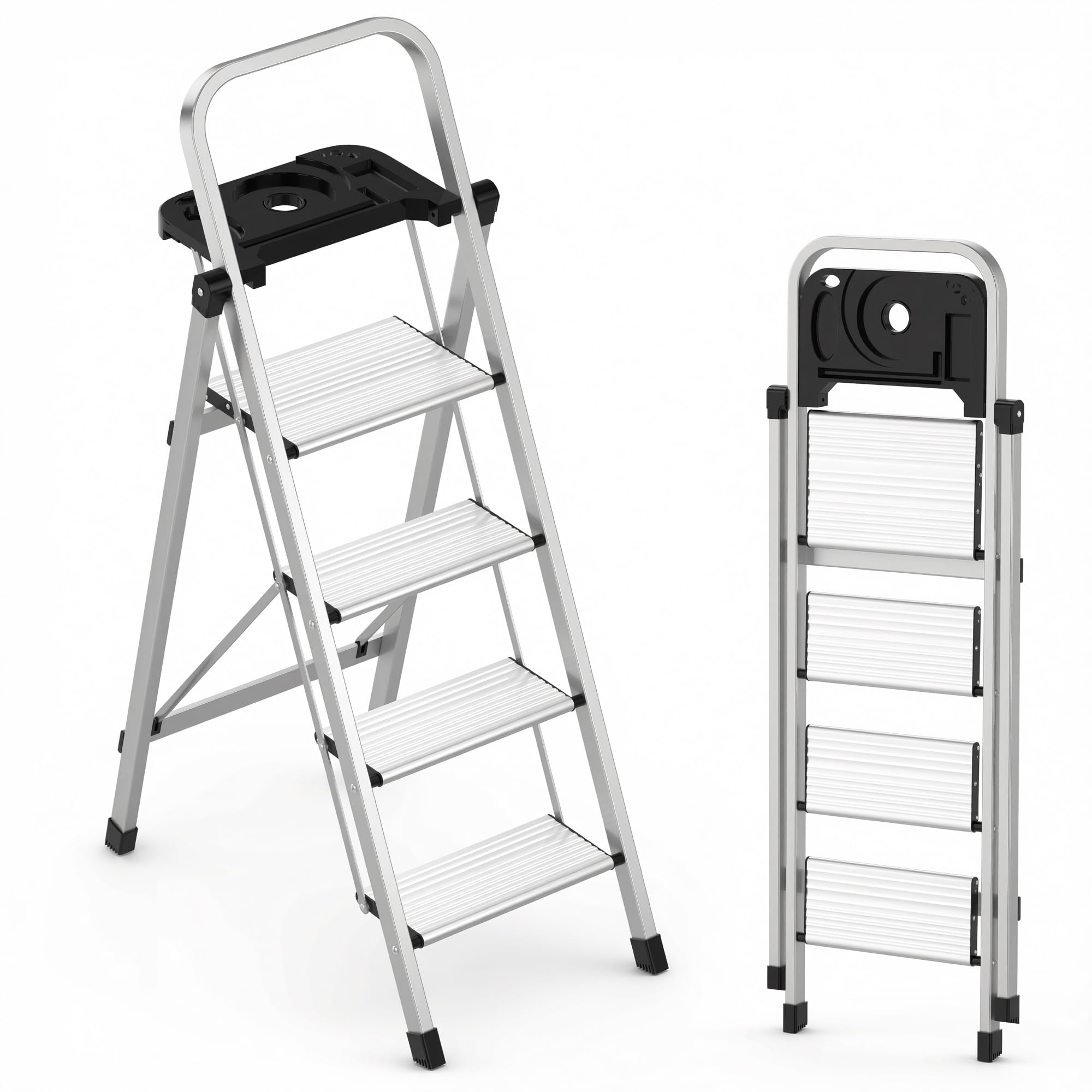


Who Should Buy a 4 Step Ladder?
Homeowners Who Handle Routine Indoor Jobs
You are a good match if most of your jobs sit just above normal reach. Changing bulbs, cleaning high windows, hanging curtains, and reaching a pantry top shelf all fit this size well. If your ceilings are about 8 to 9 feet, the top steps put the work at chest to shoulder height. Our overview of the best ladder options can help you place this size beside taller models.
Renters and Apartment Dwellers With Limited Storage
A four step model suits smaller homes because it folds to a slim profile and slides behind a door or inside a utility closet. You gain real height without storing a long extension ladder. Look for a light frame you can carry with one hand and a latch that holds the ladder closed while you move it.
Painters, Cleaners, and Light Trade Users
If you stand for longer stretches while painting trim or washing windows, step depth and a stable platform matter more than saving a pound or two. A broad top step lets both feet rest without crowding, and a tray keeps tools close so you climb down less often. Choose a higher duty rating if you carry paint and supplies up with you.
Types of 4 Step Ladders Compared
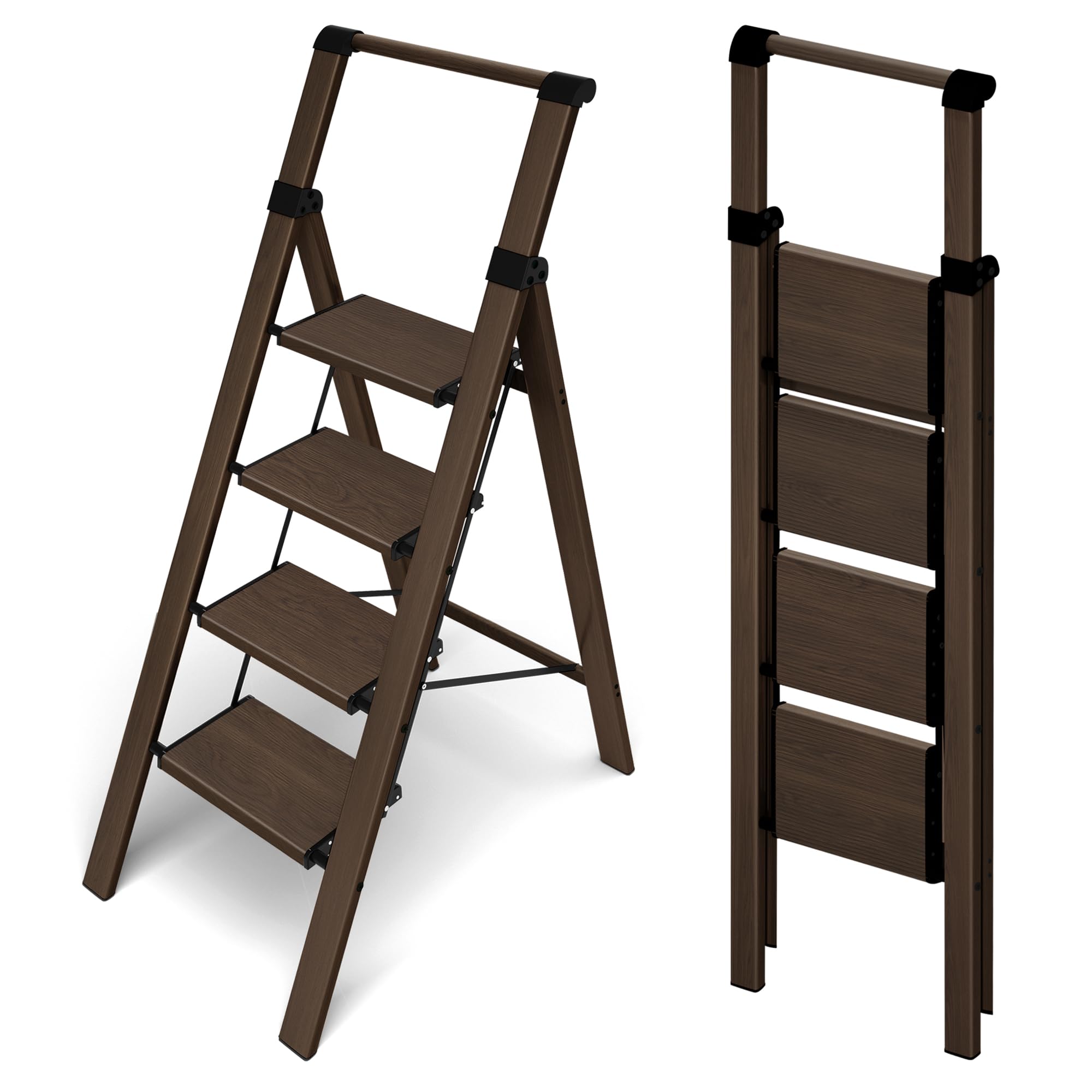
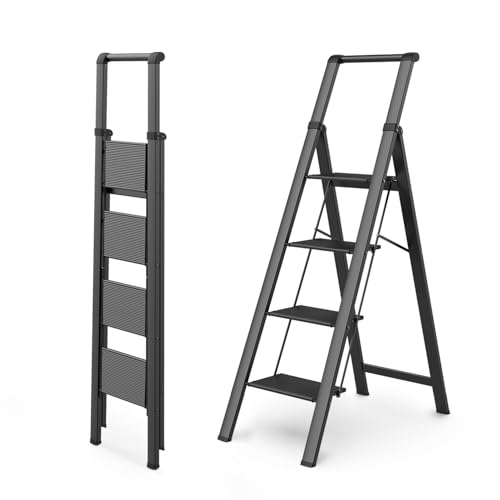
Not every four step design feels the same once you climb it. Standard folding models open into an A frame and suit most rooms. Platform models replace the narrow top step with a wide standing area, which feels calmer during longer jobs. Models with an extended front rail give your knees or hands a contact point above the top step, and compact styles trade standing comfort for the smallest folded size. Compare folded length, top step depth, and rail height in the product table above.
A standard A frame needs floor space for both sides to open fully. If you work in tight bathrooms or closets, a narrower frame will serve you better than the widest platform.
Key Features to Compare
Duty Rating and Load Capacity
Every ladder carries a duty rating that sets the total weight it can support, including you and anything you carry up. Common ratings run from light household use up to heavy duty models. Add your weight and your tools together, then leave a margin rather than buying right at the limit. A higher rating also tends to bring sturdier rails and steps, which reduces flex underfoot.
Standing Height and Safe Reach
The highest step you are meant to stand on sets your working height, not the very top of the rails. As a rough guide, a four step ladder lets an average adult reach a typical ceiling light while keeping both feet on a proper step. Measure from the floor to the item you need to touch, then check that the reach figure covers it with room to spare. Working above your head tires your arms fast.
Step Depth, Platform Size, and Tread
Deeper steps spread your weight across more of your foot, so your arches ache less during painting or cleaning. Ribbed or textured tread helps shoes grip, especially where dust and moisture collect. A full platform gives you the most room to shift your stance, but it adds weight and folded bulk. If you wear larger work boots, check step depth because narrow household steps can feel cramped.
Frame Material and Weight
Aluminum frames keep the ladder light and resist rust, which suits most indoor and covered outdoor use. Fiberglass rails weigh more but do not conduct electricity, so they are a common choice near wiring. Steel appears on some compact models and feels solid, though it is the heaviest option. Our guide to fiberglass vs aluminum ladder materials explains the strength and care differences in more detail.
Stability, Feet, and Spreader Bars
Wide feet with rubber caps grip hard floors and keep the frame from sliding as you shift your weight. Spreader bars link the front and rear sections and should lock firmly when the ladder opens, with no wobble when you test them by hand. Slight flex is normal on light models, but twisting or side sway is a warning sign. Rock the ladder gently before your first climb to confirm all four feet touch the ground.
Folding Size and Carrying Comfort
Measure your storage spot before you buy, because folded length varies more than shoppers expect. Some models fold quite slim, while platform designs can run longer. A built in handle makes a real difference when you haul the ladder to an upstairs room. Bulky hinges can also add inches that stop a closet door from shutting.
How to Choose the Right Ladder
Measure the Job Before You Shop
List the jobs you do most often and measure the height of each one. Ceiling fixtures, smoke alarms, and curtain rods all demand different reach. If one job needs much more height, keep this ladder for indoor work and read our notes on how to choose a ladder for taller outdoor tasks. Buying for your most common job keeps the ladder light enough that you will actually use it.
Match the Form to the Task
Short tasks such as swapping a bulb favor a light standard model you can open in seconds. Longer tasks such as painting favor a platform with a tray, even at a higher price. If compact storage is your priority, see our guide to the best ladder for home use, where folded size gets as much attention as reach. For height in a stairwell or outdoors, the best telescoping ladder may fit better than any step ladder.
Features Worth Paying For
An extended rail above the top step is worth paying for if you often work with both hands, since it gives your legs a steady contact point. A molded tray with slots for brushes, screws, and a paint can saves repeated trips down. Locking spreader bars and oversized feet also earn their cost. Wheels rarely help on this size and only add bulk and weight.
How Much Should You Spend?
Basic household models often cost under $50 and suit light, short jobs. The middle range, about $50 to $100, usually brings deeper steps, a better tray, and a higher duty rating. Spending about $100 to $200 tends to buy a wide platform, an extended rail, and stronger rails that flex less. Pay for rating and stability first, then comfort features.
Is a 4 Step Ladder the Right Size for You?
For most homes with ceilings around 8 to 9 feet, this size hits a sweet spot. It reaches high shelves, light fixtures, and the tops of windows, yet it stays short enough to open in a bedroom without hitting the ceiling. It falls short for roof edges and tall gutters, where you need a taller ladder. Review our safe setup advice in how to use a ladder before you work beyond normal indoor reach.
If you feel uneasy on a narrow top step, a platform model at this same step count will feel far more secure than a taller ladder. If several adults will share it, buy for the heaviest user plus tools, not for the lightest user.
Common Mistakes to Avoid
- Standing on the top cap or the highest rung that the maker marks as off limits, which removes your balance point and invites a fall.
- Leaning out to the side to reach a spot instead of climbing down and moving the ladder, which shifts weight past the rails.
- Setting up on a rug, drop cloth, or uneven ground, so one foot rests lower and the frame rocks as you climb.
- Ignoring the duty rating and carrying heavy paint cans or tool bags that push the total load past the limit.
- Using a damaged ladder with a bent rail, cracked step, or missing foot pad instead of taking it out of service.
- Opening the ladder without locking both spreader bars, so the rear section can fold while you are standing on it.
How to Make Your 4 Step Ladder Last Longer
Wipe steps and feet after dusty or wet jobs so grit does not grind into hinges and tread. Store the ladder indoors, folded and latched, away from direct sun and damp corners that corrode fittings. Check rivets, locks, and spreader bars every few months and replace worn foot pads when they crack. Keep paint off labels so ratings stay readable. If a rail bends or a step cracks, retire the ladder rather than trying to patch it.
FAQ
What is the best 4 step ladder for most homes?
For most homes, the best choice is a folding aluminum model with a duty rating that covers the heaviest user plus tools, deep textured steps, and locking spreader bars. That mix balances weight, stability, and price. Before you order, confirm the listing shows a current safety certification label and a stated maximum standing height.
What size ladder do I need for a 9 foot ceiling?
A four step ladder usually covers a 9 foot ceiling for bulbs, alarms, and vents, since an adult's reach adds a good distance above the highest standing step. Taller users gain a little more, while shorter users gain less. If the fixture sits in a recessed can or a deep tray ceiling, measure that extra depth and consider whether you would be working above shoulder height, which is a sign to size up.
How long does a 4 step ladder last?
A well kept household ladder can serve for many years, often a decade or more, because it has no motor or battery to wear out. Its real life span depends on storage, load habits, and hinge wear. Inspect it twice a year for loose rivets and worn feet. A ladder stored outdoors ages far faster, so indoor storage is the simplest way to extend its life.
Is a 4 step ladder worth it if I own a step stool?
Yes, if you find yourself stretching from the stool or stacking items to gain height. The extra steps raise you to a level where common fixtures sit at chest height, and the rails give you something to steady against. A stool still wins for quick, low jobs such as reaching a kitchen shelf. Many households keep both and grab the stool for one minute tasks and the ladder for anything near the ceiling.
How do you clean a 4 step ladder?
Start with the ladder open and locked on a flat surface. Brush loose dirt from steps and hinges, then wash with warm water and a small amount of mild soap, using a cloth rather than a pressure sprayer. Dry every joint before folding, since trapped moisture speeds up corrosion on steel fittings. Avoid harsh solvents, which can damage fiberglass rails and soften the rubber on the feet.
What should I check before trusting a ladder brand?
Look past the name and check the rating label, the stated load capacity, and whether the model meets current ladder safety standards. A maker that publishes clear specs, replacement feet, and warranty terms gives you more to rely on than a famous logo alone. Also read recent buyer comments for reports of wobble or broken latches on the exact size you want.
Final Thoughts
Choose by reach, rating, and step comfort first, and let price settle the close calls. The best 4 step ladder pick should feel steady the moment you step up, fold small enough for your storage spot, and carry your weight plus tools with room to spare. Use the product table above to compare platform and standard types, then match your choice to the jobs you measured.