Best 4 Inch Paring Knife (2026): Blade, Handle and Care
Disclosure: We may earn a commission when you buy through links on this page, at no extra cost to you. As an Amazon Associate I earn from qualifying purchases. Learn more

Choose the best 4 inch paring knife with advice on straight, stamped and forged styles and daily care.
Picture a weekday evening in a small kitchen. Dinner is half started, the cutting board is crowded, and you still need to peel potatoes, trim beans, and hull a handful of strawberries. A big chef knife feels clumsy for all of that, which is exactly where the best 4 inch paring knife earns its drawer space. This size gives you a little more blade than the shorter options, so in hand work and quick board work both feel natural.
This guide is written for real homes rather than professional kitchens. It walks you through choosing by kitchen space, the number of people you cook for, and your budget. Start with the comparison table below, then use the checklist that follows to narrow your choice with confidence.





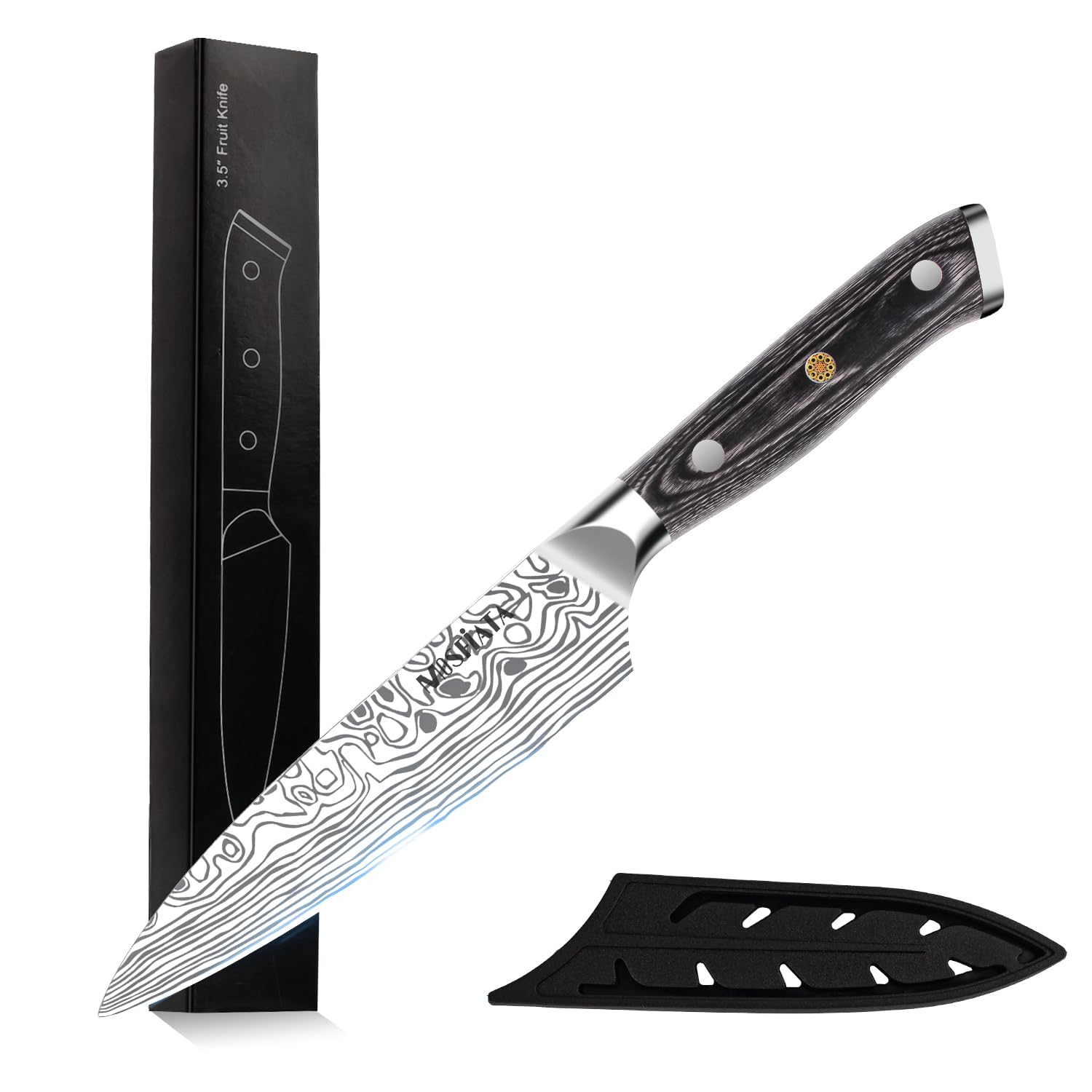
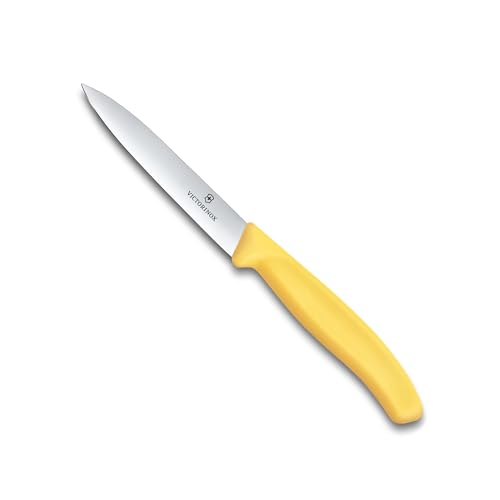
Quick Answer: The Short Version
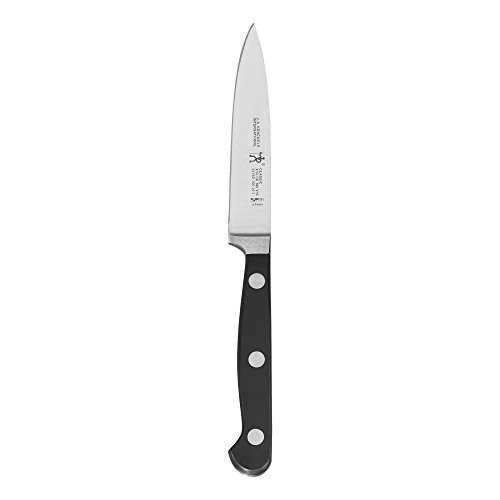
If you want one answer before the details, here it is. Most homes do best with a classic straight edge 4 inch paring knife in stainless steel, with a handle that fills your palm without feeling bulky. If your household slices a lot of tomatoes and citrus, a serrated version deserves a look, and our guide to the best serrated paring knife explains when those teeth help. If you cook often and value a very keen edge, a Japanese style blade is the upgrade path.
Before You Buy: A Quick Checklist for Choosing a Paring Knife
Six factors decide whether a paring knife becomes your daily driver or sits forgotten in the drawer. Work through them in order and you will rule out most poor matches early. For a broader view of the category, our overview of the best paring knife covers the full range of sizes and styles.
Size: Match It to Your Space and Your Hands
Paring knives usually run from about 3 inches to 4 inches of blade. A 3 inch blade feels nimble for peeling held in the hand, but it runs out of edge quickly on a board. A 3.5 inch blade splits the difference and suits smaller hands. The 4 inch length adds slicing room for jobs like sectioning grapefruit or trimming a chicken breast, which is why it fits family kitchens where one knife covers many tasks. In a compact kitchen with a small board, that extra reach stays manageable.
Which Type Fits Your Routine
Straight edge blades handle the widest range of prep and can be resharpened at home, so they suit most households. Serrated blades bite into tomato skins and crusty rolls, though they need a special sharpener later. Ceramic blades stay sharp for a long time and never rust, but they chip if twisted or dropped; the best ceramic paring knife suits careful cooks who mostly cut produce. A curved bird beak shape is a specialist for peeling round fruit. Buying a set makes sense only when you truly use more than one shape.
Steel Type and Hardness
Most paring knives use stainless steel, which resists rust and tolerates a quick rinse and dry routine. Hardness controls the trade off between sharpness and toughness. Softer steel dulls sooner but sharpens fast and shrugs off rough use. Harder steel holds a fine edge much longer, yet it can chip if you pry or twist the blade. For a family knife that several people use, the middle ground is the safer bet.
Blade Geometry: German vs Japanese Profiles
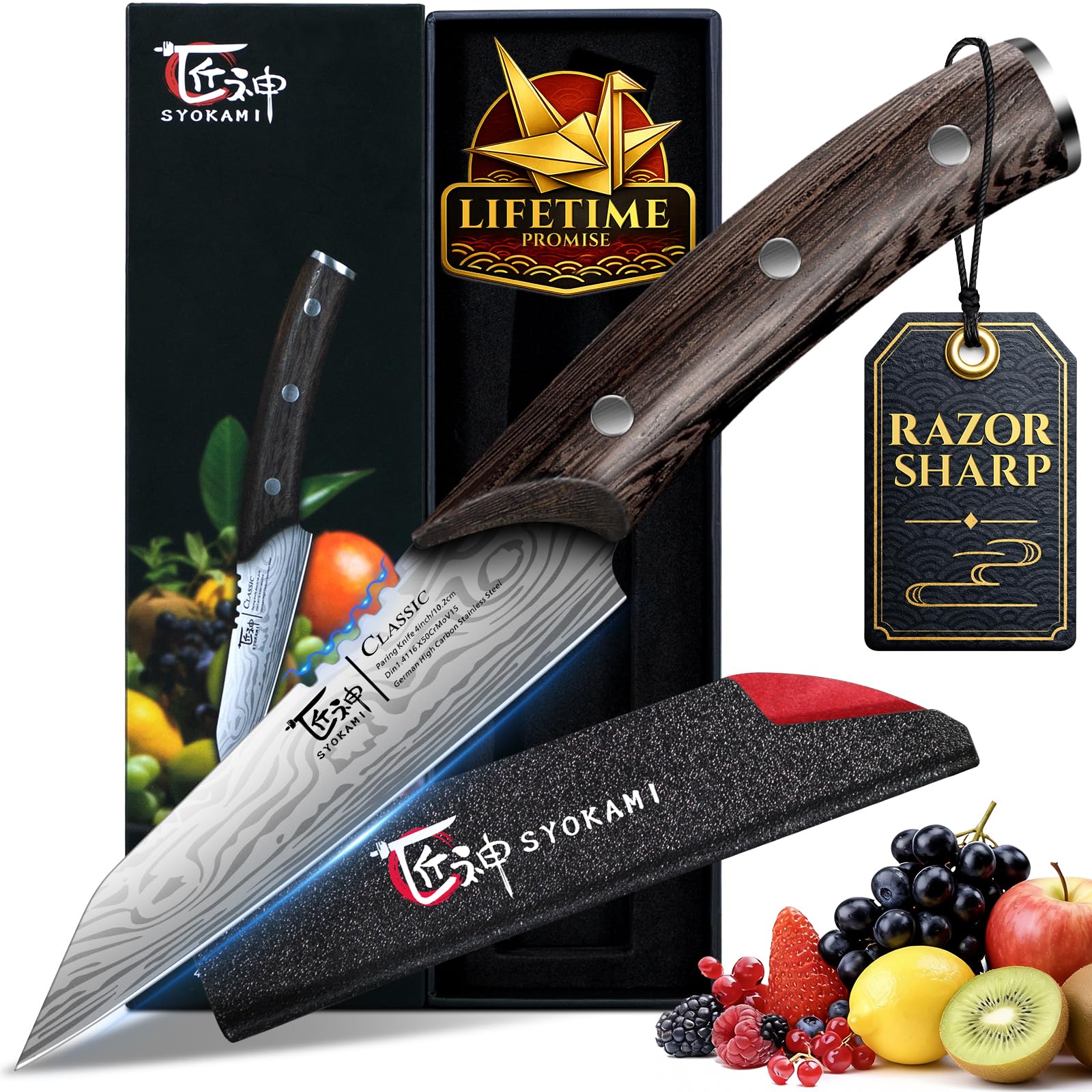
German style blades tend to be thicker, with a gentle curve along the edge and a sturdier tip. They feel planted during board work and forgive a bit of rocking motion. Japanese style blades are thinner, with a flatter profile and a finer edge angle, so they glide through onions and herbs with less wedging. Our dedicated guide to the best japanese paring knife digs into that style if it appeals to you. For a 4 inch knife used in the hand, thinness matters more than toughness.
Handle, Bolster, and Balance
A paring knife is often held with your fingers curled around the handle and your thumb guiding the food, so handle shape matters more than handle material. Look for a smooth surface with no sharp seams, and enough length that your smallest finger stays on the grip. A bolster, the thick collar where blade meets handle, adds finger protection for less confident cooks, though it can get in the way when you sharpen the full edge. Balance should sit near the bolster area, so the knife feels neutral rather than tipping toward the tip or the butt.
Realistic Budget Ranges
Prices spread widely, but the steps between tiers are easy to understand. Under $10 you get a simple stamped blade that works fine for light daily prep and asks little of you if it is lost or damaged. In the range of about $10 to $20, handles improve, steel gets a bit harder, and edges arrive sharper. Between about $20 to $50 you pay for forged construction, better balance, and fit and finish that make the knife pleasant for years. Above that, gains are mostly about edge retention and feel.
Three Types Compared: Which Style Fits Your Home
Rather than naming specific models, this section compares the three construction styles you will meet at every price level. Match the style to your household first, and the purchase becomes much easier.
Classic Straight Edge: The Default for Most Homes
A straight edge stainless blade is the most forgiving choice for a shared family knife. It peels, trims, slices garlic, and opens packaging without complaint, and anyone can maintain it with a basic honing rod and an occasional sharpening. The main trade off is that it needs that maintenance more often than harder blades. For homes with several cooks of mixed skill levels, this style keeps everyone happy.
Stamped and Lightweight: The Low Cost Route
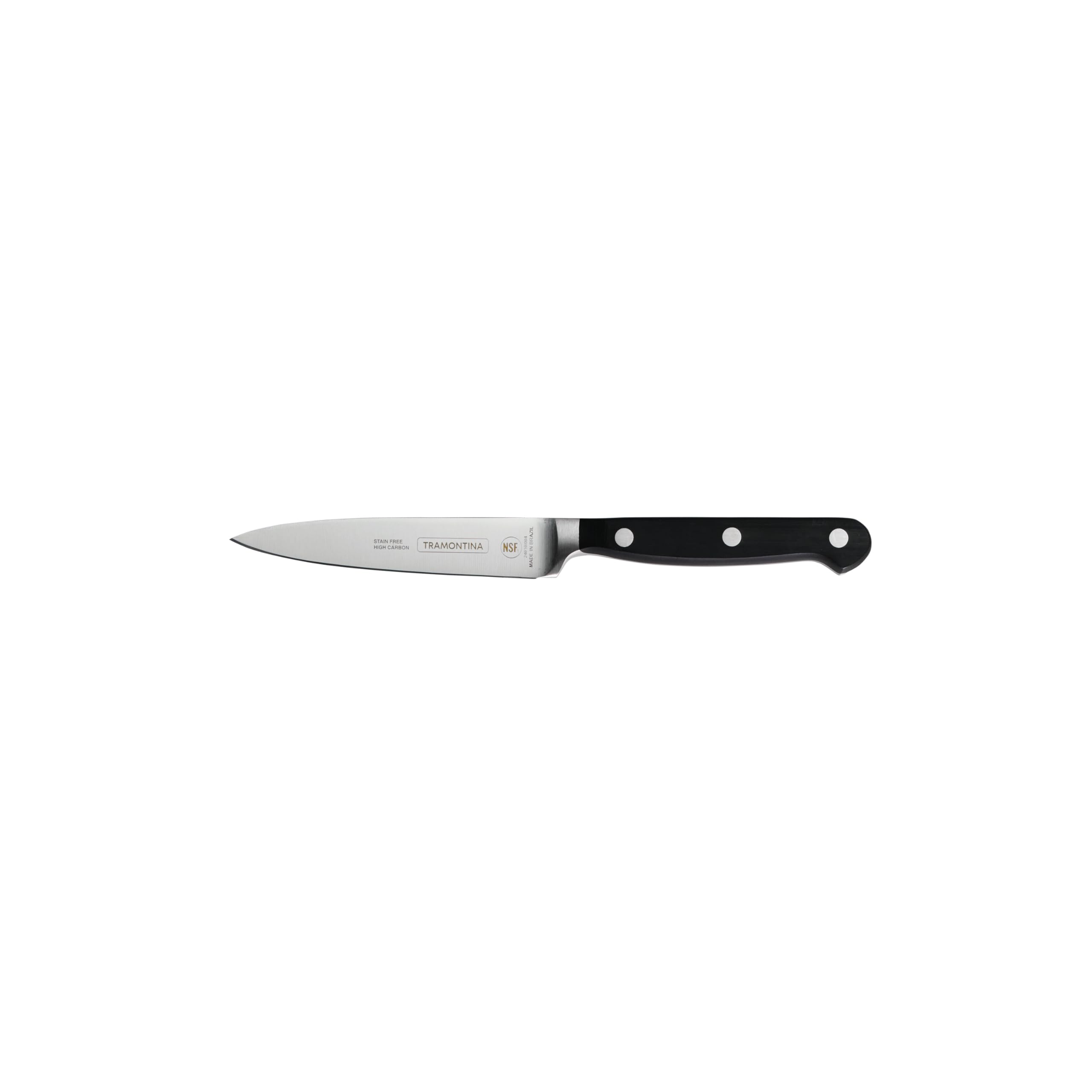
Stamped blades are cut from a flat sheet of steel, so they are thin, light, and inexpensive. That lightness is a genuine plus for peeling held in the hand, where a heavy knife tires your wrist during a big batch of potatoes. The trade offs are flex during board work and a handle that feels basic. For a first apartment or a second knife kept for messy jobs, this style makes practical sense and costs little to replace.
Forged Blades: The Long Term Investment
Forged knives start from a single piece of steel shaped under pressure, which usually means a bolster, a full tang inside the handle, and a reassuring heft. The edge tends to stay keen longer, and the balance helps during longer prep sessions. You pay more up front, and the weight can feel like too much for small hands. Households that cook daily and keep one good knife for a decade tend to get their money back through years of steady service.
How to Compare 4 Inch Paring Knives
Compare the styles above on five criteria: steel and edge retention, balance and comfort in the hand, sharpness as delivered, day to day maintenance, and value for the money. The evidence is manufacturer specifications and patterns in verified buyer feedback about durability, comfort, and care. Home fit guided every judgment, since a knife that suits a single keen cook can frustrate a busy family of five.
Is a 4 Inch Paring Knife the Right Size for You?
Choose 4 inches if your paring knife splits its time between your hand and the board. The extra length over a 3 inch blade makes slicing strawberries, trimming fat, and cutting cheese smoother, while the knife still turns easily for peeling. If you mostly peel apples held over the sink, a shorter blade may feel safer. Technique matters as much as size, so it is worth reading up on how to use a paring knife with a proper grip before blaming the knife for awkward results. Households cooking for four or more usually appreciate the added edge during batch prep. For that kind of cooking, the best 4 inch paring knife is the one that feels natural in your hand.
Common Buying Mistakes to Avoid
- Choosing by blade length alone and ignoring handle fit, which leads to a knife that feels awkward in your grip and gets left in the drawer.
- Buying a multi piece set for a small kitchen, which fills limited drawer space with shapes you never reach for.
- Picking the hardest steel available when several family members share the knife, which raises the risk of chipped edges from rough handling.
- Forgetting the cost of upkeep, since a serrated or ceramic blade that you cannot sharpen at home adds sharpening fees later.
- Storing the knife loose among other utensils, which dulls the edge quickly and makes every later task harder than it should be.
Cost of Ownership and Care
The purchase price is only the start. A straight edge knife asks for a honing rod and, once or twice a year, a proper sharpening, and learning how to sharpen a paring knife at home removes the cost of sending it out. Wash paring knives by hand and dry them right away; the dishwasher bangs the edge against racks and other tools, and detergents are harsh on handles. Store the blade in a block, on a magnetic strip, or with a simple sheath so the edge stays protected. With that modest routine, a decent 4 inch paring knife should serve a home kitchen for many years.
Your Questions, Answered
What is the most reliable paring knife brand?
Reliability comes less from a logo than from consistent steel, honest specifications, and a warranty the maker actually honors. Established kitchen brands tend to publish hardness ratings and offer replacement policies, which is a good sign. Check recent buyer feedback for patterns about handles loosening or tips bending, since a single bad review means little.
How do you clean a paring knife?
Wash the knife in warm soapy water right after use, especially after cutting citrus or tomatoes, since acid left on the edge can dull and stain it. Use the soft side of the sponge along the flat of the blade. Dry it fully before storing, because a damp blade tucked into a block can develop rust spots even when the steel is stainless. Never leave a paring knife soaking in the sink, where it hides under suds.
Is a paring knife worth it if you already own a chef knife?
Yes, for most home cooks, because the small blade does jobs a chef knife does clumsily. Coring strawberries, deveining shrimp, trimming Brussels sprouts, and cutting garnish all go faster with a short, light blade you can turn in your hand. A chef knife forces those tasks onto the board and adds risk when the tip is longer than the food. If your cooking rarely involves detail work, you may use it less, but the low cost makes the gap in your kit easy to fill.
How long does a paring knife last?
A well kept paring knife can last a decade or more, because the blade loses very little metal during normal sharpening. The usual reasons for early replacement are a chipped edge from twisting, a cracked handle, or a tip bent by prying open packaging. Watch for a knife that needs honing every few uses to feel sharp, since that can signal the edge has been ground too thin over the years. When sharpening no longer brings back a clean bite on tomato skin, it is time to replace it.
What size paring knife do I need?
Start with 4 inches if you want one knife for both board work and in hand tasks. Choose 3 to 3.5 inches if your hands are small or you mostly peel and core while holding food over a bowl. A simple check helps: grip the handle in the shop or picture your hand around it, and check that all four fingers fit without crowding. If you cook for a crowd and slice often, the longer blade repays you in fewer strokes per item.
Final Thoughts
For most households, the best 4 inch paring knife is a straight edge stainless model with a comfortable handle, bought at a price that matches how often you cook. Tight budgets are well served by simple stamped blades, while daily cooks who keep one knife for years will appreciate a forged upgrade. Look back at the product table above, match the type to your space and routine, and you will end up with a small knife that handles half the jobs in your kitchen.