Best 36 Inch Kitchen Sinks: The Buyer Checklist for 2026
Disclosure: We may earn a commission when you buy through links on this page, at no extra cost to you. As an Amazon Associate I earn from qualifying purchases. Learn more

A buyer checklist for the best 36 inch kitchen sinks: bowl depth, gauge, mounting style, faucet fit, warranty, and care basics.
A 36 inch sink is a serious commitment because it shapes your counter cutout, your cabinet fit, and how comfortable daily washing feels for years. This guide scores the best 36 inch kitchen sinks against one clear checklist, so you can compare bowl layout, steel gauge, mounting style, and faucet fit without guessing.
Work through the criteria below in order, note where your kitchen sets hard limits, and then use the comparison table below to see which sink profiles match your notes.





How We Evaluate 36 Inch Kitchen Sinks
Every criterion below has a simple pass mark. A sink that clears most of them will serve you well, while one weak score in fit or installation can outweigh strong scores everywhere else, so weigh the fit related points first.
Faucet Style (Pull Down, Pull Out, Touchless, Commercial)
Your faucet and sink must work as a pair. A wide single bowl pairs well with a pull down sprayer that can sweep every corner, while a divided bowl often suits a pull out sprayer with a shorter hose path. Touchless models help when your hands are covered in raw food residue, and tall commercial style faucets need a deep bowl to control splash. Before you buy either piece, read our guide to the best kitchen sinks and faucets so the pairing logic is clear.
Warranty
Look for a limited lifetime warranty that covers defects in material and finish for the original owner. Short warranties of one to five years on a sink at this size are a weak sign, because a 36 inch bowl is costly to remove and replace once the counter is cut. Check whether the warranty covers the finish as well as the bowl itself, and keep your receipt and the care instructions, since damage from harsh cleaners is usually excluded. Strong coverage is one reason shoppers compare options in our guide to the best quality kitchen sinks before ordering.
Reach, Height, and Clearance
Measure three things before you fall for a finish. Spout reach should land the water stream near the center of the bowl, roughly 8 to 11 inches on most setups. Faucet height must clear any window sill, shelf, or cabinet trim behind the sink. Bowl depth matters too: 9 to 10 inches swallows stockpots and sheet pans, but very deep bowls can strain shorter users who must lean forward. Write your three numbers down and treat them as fixed limits, not preferences.
Valve Cartridge and Durability
The faucet valve decides how the pairing feels after years of daily use. A ceramic disc cartridge resists wear, seals smoothly, and rarely drips, while older compression valves need washer changes and can develop a slow leak at the handle. For the sink itself, durability shows up in steel gauge: 16 gauge stainless is noticeably stiffer and quieter than 18 or 20 gauge, and it resists dents from dropped pans. Ask for the gauge in writing if a listing hides it.
Installation and Hole Count
Count the holes in your counter or sink deck before you order anything. A single hole faucet can use a deck plate to cover a three hole spread, but the plate must suit the sink deck width. Undermount sinks need a solid surface counter and a cabinet that truly fits a 36 inch bowl, so confirm the minimum cabinet size, often 39 inches or more. If undermount appeals to you, our notes on the best undermount kitchen sinks explain the counter and support rail details that installers check first.
Finish and Material
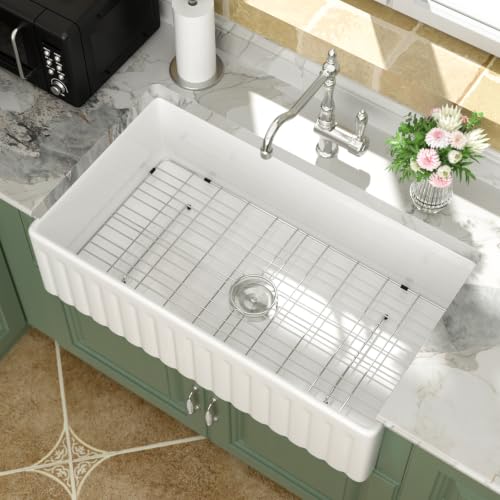
Material drives noise, staining, and upkeep more than any other choice. Stainless steel is light, heat tolerant, and forgiving on price, while granite composite resists scratches and dulls sound, and fireclay brings a classic farmhouse look at far greater weight. Finish on the faucet should be lead free certified and, ideally, resistant to fingerprints if you dislike wiping. For a deeper comparison before you decide, see our guide to the best material for kitchen sinks and match the material to how hard your household cooks.
Spray Modes and Flow Rate (GPM)
Flow rate shapes both rinsing power and water bills. Most kitchen faucets run at 1.5 to 1.8 GPM, and California rules cap new models at 1.8 GPM, so a listing that promises far more deserves skepticism. A steady stream mode fills pots, a wide spray rinses produce and plates, and a pause button helps when you move the sprayer outside the bowl. WaterSense labeled faucets use less water without feeling weak, which matters when a big bowl tempts you to run the tap longer.
Three Sink Profiles That Pass Our Checklist
Instead of naming models, use these three profiles to sort the product table above. Each profile describes a type of sink that clears the checklist for a different household, along with the price tier where that type usually sits.
Best Overall Profile
The strongest all around profile is a single bowl undermount sink in 16 gauge stainless steel with sound pads and a gently sloped floor toward the drain. It handles sheet pans flat, rinses clean, and pairs with almost any pull down faucet. Expect this tier at around $300 to $600 for the sink alone. The trade off is installation cost, since undermount fitting and counter support add labor. Shoppers who prefer this material can compare notes in our guide to the best stainless kitchen sinks for gauge and finish details.
Best Value Profile
The value profile is a top mount or dual mount sink in 18 gauge stainless or durable composite, usually around $150 to $300. Dual mount edges let you drop it into an existing cutout, which saves counter work and makes it the easiest route for a refresh on a budget. You give up some stiffness and sound damping compared with thicker steel, and the rim collects crumbs that an undermount edge would let you sweep straight in. For renters and first time renovators, that trade is often worth it.
Best Compact Profile
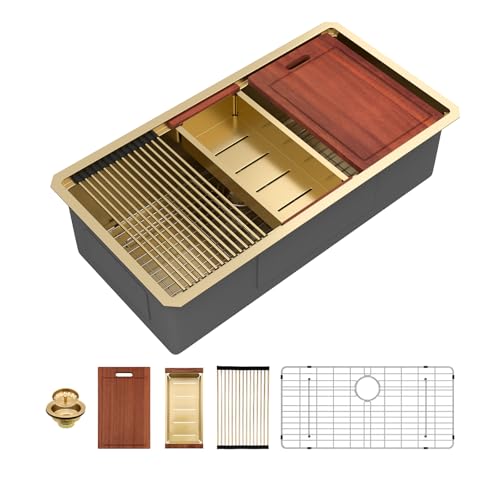
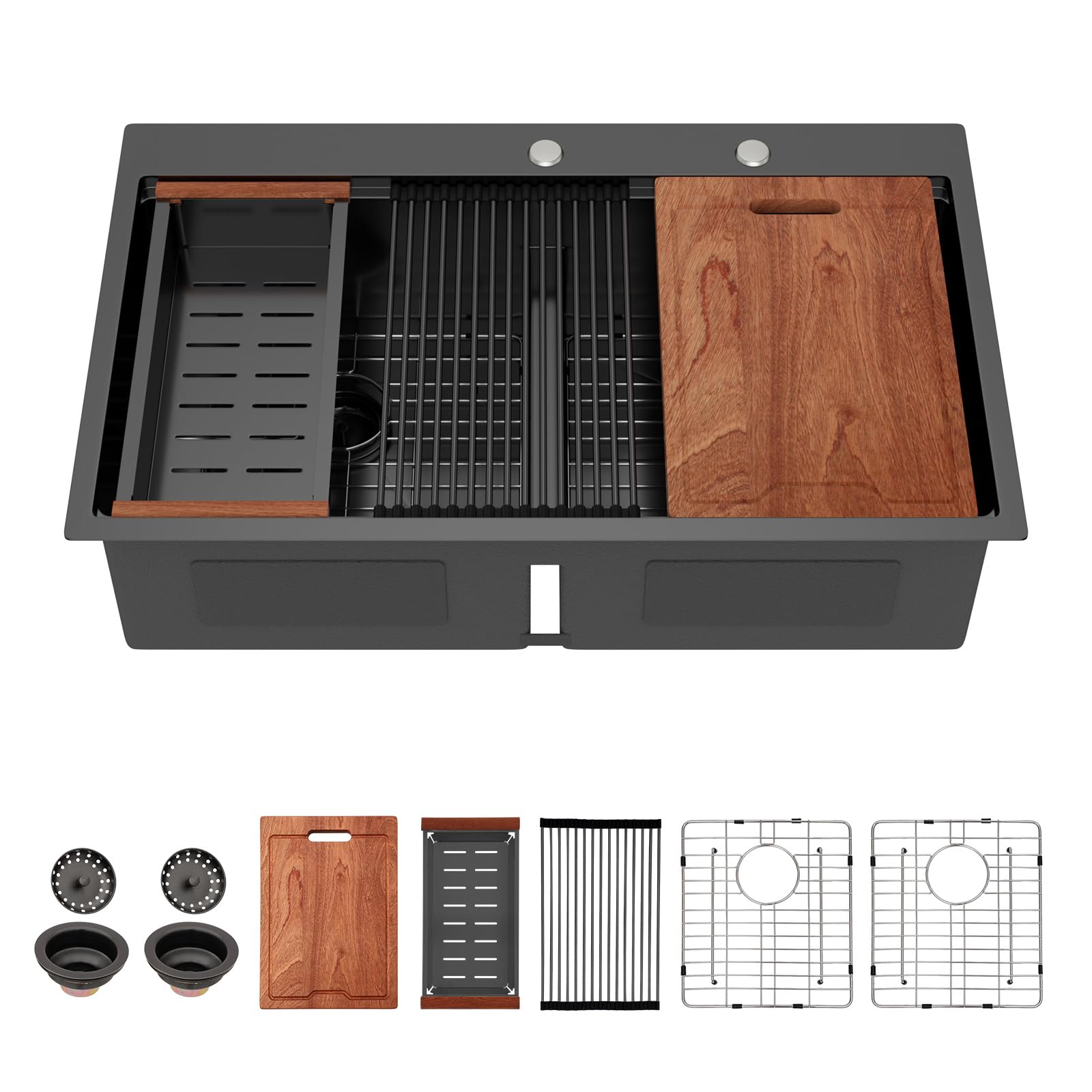
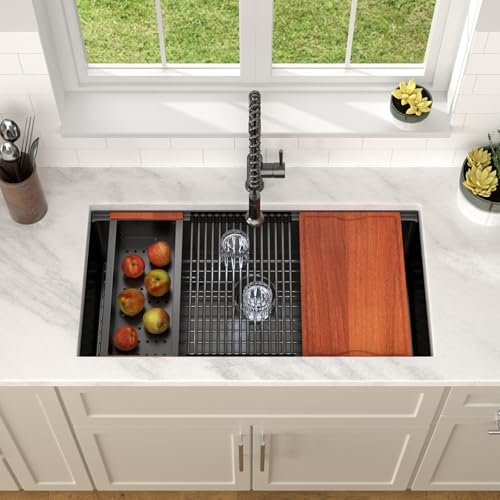
Compact here means efficient inside the same 36 inch width, not a smaller sink. Look for a low divide double bowl or a single bowl with a built in ledge for cutting boards and drying racks, usually around $250 to $500. The ledge turns the bowl into extra counter space, which is gold in a small kitchen, and a low divide still lets long pans rest across both sides. The limitation is accessory fit, since ledge widths vary by brand and add on pieces must match exactly.
Quick Buyer Checklist
Answer each question honestly before you order. Every no is a measurement or a listing detail to resolve first.
- Does your base cabinet meet the minimum size the maker lists for a 36 inch bowl?
- Have you measured the counter cutout or confirmed who will cut it?
- Do the faucet holes in your counter match the faucet you plan to use?
- Is the steel 16 or 18 gauge, stated clearly in the specs?
- Does the spout reach land near the center of the bowl?
- Is the faucet certified lead free with a ceramic disc cartridge?
- Does the warranty cover both the bowl and the finish for the original owner?
- Have you planned for clips, strainers, and a grid that may be sold separately?
Red Flags to Watch For
Walk away, or at least pause, when you spot these signs. A listing that never states the steel gauge usually hides thin metal that drums and dents. Missing lead free or flow rate certification suggests the faucet pairing was never tested to current standards. A warranty of only one year on a sink of this size signals low confidence from the maker. Prices far below the normal tier for the material, paired with reviews that repeat the same phrases, point to a product that will cost more in replacement than it saves today. Finally, vague bowl dimensions that skip interior measurements make fit a gamble.
How to Make Your 36 Inch Kitchen Sink Last Longer
Small habits protect a big sink. Clean the faucet aerator every few months by unscrewing it, rinsing out grit, and soaking it in vinegar if flow slows. Wipe finishes with mild soap and a soft cloth, and skip abrasive pads that scar steel and dull composite. Dry the bowl after heavy use to limit water spots and mineral film. Check the supply lines and drain seals under the sink twice a year for slow leaks, because a hidden drip can swell a cabinet floor long before you notice a stain.
Frequently Asked Questions
Are touchless faucets worth it?
Touchless faucets are worth it if you cook with messy hands often and want to keep the handle clean. The sensor needs batteries or an outlet under the sink, so plan power access before you buy. One point buyers miss: most models still include a manual handle override, which matters during a power outage or sensor fault, so confirm that feature on any model you consider for a wide sink.
What finish is easiest to keep clean?
Brushed stainless and brushed nickel hide water spots and fingerprints best in daily use. Matte black shows pale mineral marks, and polished chrome shows every splash, so both need more wiping. A useful extra check is whether the finish carries a spot resistant coating from the maker, since that treatment, more than the color itself, decides how a faucet looks after a month of family cooking.
Can I install a kitchen faucet myself?
Yes, most confident home owners can swap a faucet in an afternoon with a basin wrench and plumber tape. The sink itself is a different job, since a 36 inch undermount bowl needs counter support and careful sealing. One detail that saves frustration: photograph the supply line layout before you disconnect anything, and buy new supply lines rather than reusing old ones that may leak at the seals.
How long do kitchen faucets last?
A quality kitchen faucet usually lasts 15 to 20 years, and a ceramic disc cartridge is the main reason for that span. Hard water shortens life by building scale inside the cartridge and aerator, so homes with very hard water may see closer to 10 years. Replacing the cartridge on a well made faucet costs far less than a new unit, which is why parts availability from the maker matters at purchase time.
Our Verdict
Start with fit, then gauge, then faucet pairing, and the rest of the decision gets simple. Measure your cabinet and cutout, insist on stated steel thickness and a ceramic disc valve, and match the sprayer style to your bowl layout. Do that, and the best 36 inch kitchen sinks in the comparison table above will narrow to one or two clear matches for your kitchen and your budget.