Best 36 Inch Dog Crates (2026): Types, Sizing and Safety
Disclosure: We may earn a commission when you buy through links on this page, at no extra cost to you. As an Amazon Associate I earn from qualifying purchases. Learn more

Sizing, safety and type advice for the best 36 inch dog crate, from wire to plastic and furniture styles.
A 36 inch crate sits in a tricky middle ground. It is roomy for many medium dogs, tight for some large dogs, and far too big for a young puppy without a divider. Picking the best 36 inch dog crate means matching the inside space to your dog, then choosing a build that fits your home and routine. The comparison table below sums up the main types so you can see the tradeoffs at a glance.
This guide walks through wire, plastic, and furniture style options, the sizing math that matters, and the safety details that separate a calm den from a frustrating purchase. If you are still comparing sizes, start with our guide to the best dog crate and then come back here.



Types of 36 Inch Dog Crates at a Glance
Three build types dominate this size. Wire crates give you airflow, visibility, and a folding frame that stores flat. Plastic crates give you enclosed walls, a calmer feel for nervous dogs, and a shell that suits travel rules more often. Furniture style crates hide the crate inside a cabinet that doubles as a side table, which suits living rooms where a wire frame looks out of place.
None of these types wins on every point. Wire is the easiest to clean and the lightest for its size. Plastic holds warmth better and blocks visual triggers. Furniture style models look best but weigh and cost the most. Your dog temperament, travel habits, and crate location should decide the type first.
Three Types Compared in Detail
Wire crates for airflow and flexible use
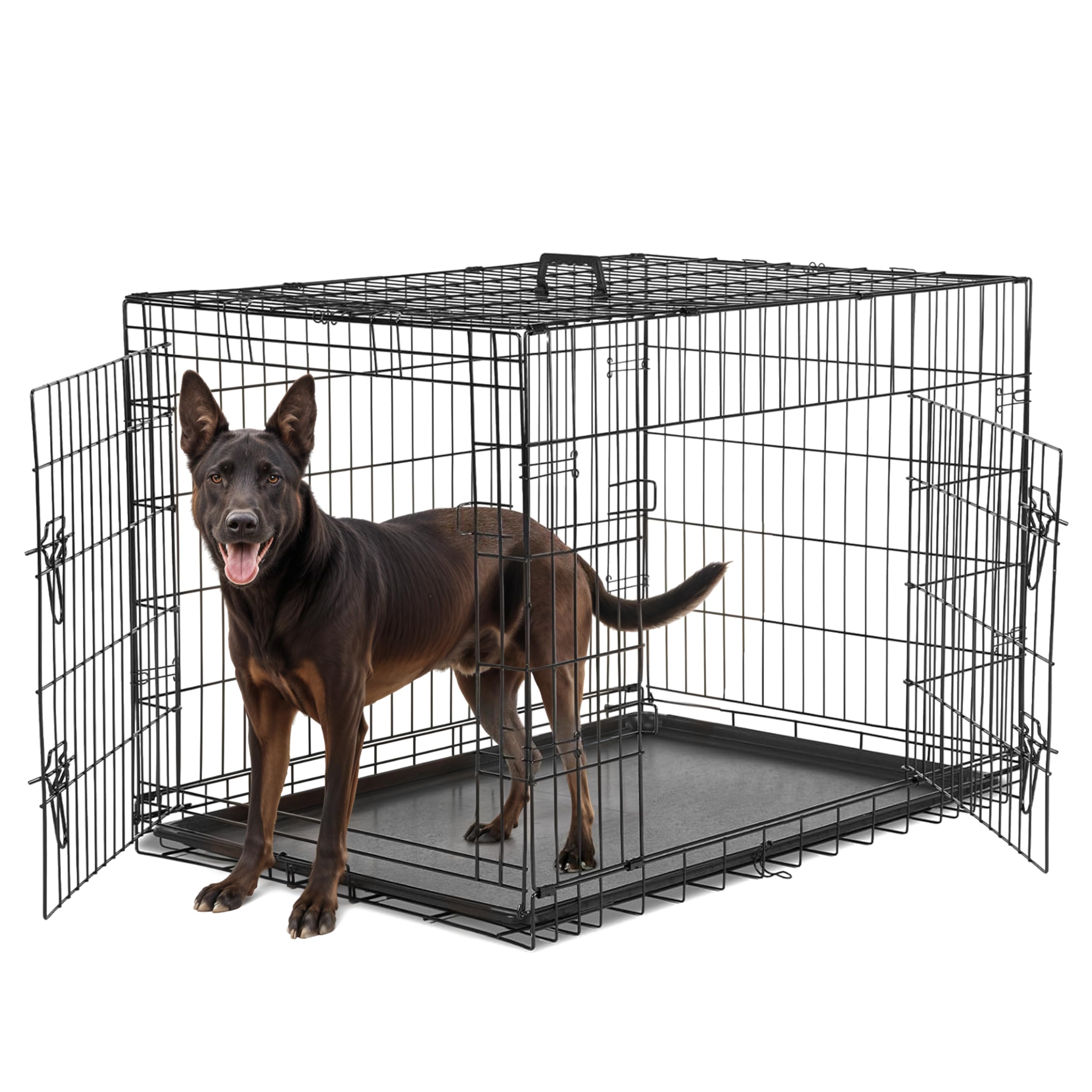
Wire models are the default choice for home training because you can see your dog, your dog can see you, and air moves freely on warm days. Most fold flat without tools, use one or two doors, and include a removable tray and a divider panel that lets one crate grow with a puppy. The weak points are rattling panels and exposed bars that a determined chewer can bend.
Plastic crates for calm and travel
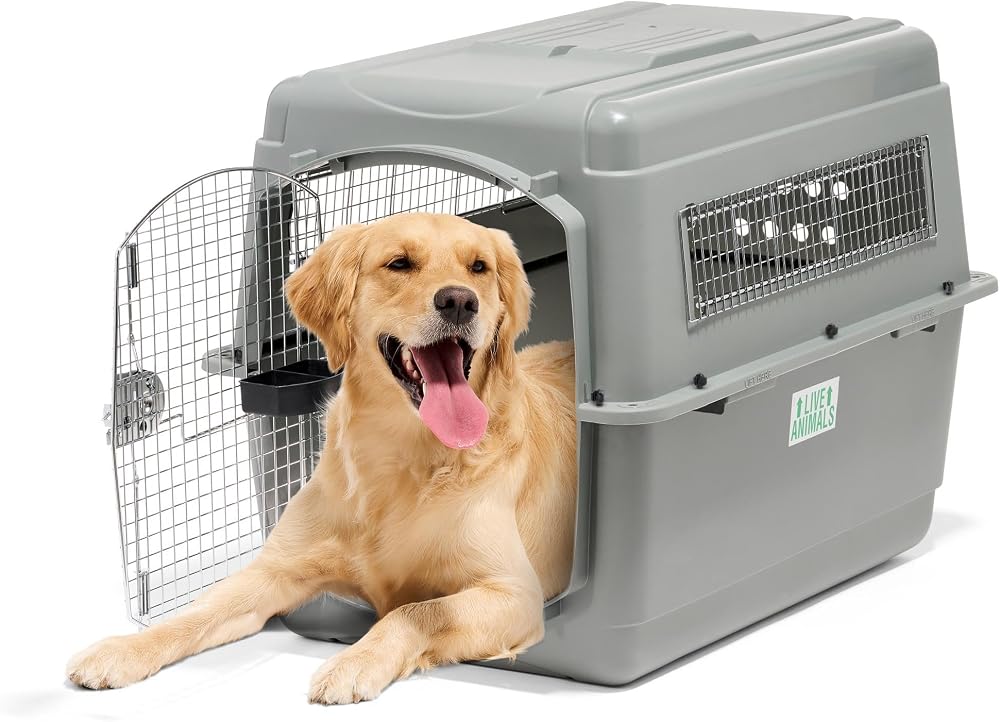
Plastic models enclose your dog on three sides, which can settle dogs who react to movement outside the crate. The solid shell also contains shedding and small spills better than open wire. Many split into top and bottom halves for storage and meet common airline cargo rules, though you must confirm the rules with your airline before any flight. Ventilation is weaker than wire, and the inside can feel warm in summer.
Furniture style crates for living spaces
Furniture style models wrap steel bars or wire panels inside a cabinet frame with a flat top you can use as a table. They suit dogs who are already crate trained and calm, because the wood parts are not built to resist strong chewing or pawing. You gain a piece of furniture and lose portability, since these models are heavy and rarely fold. Measure your doorway and the exact floor spot before ordering.
How to Judge a 36 Inch Crate
Judge every model on five points in the same order. Start with size and fit, because a crate that is too small or too large fails no matter how strong it is. Next check durability in the frame, door, and latch, since those parts take daily stress. Then look at safety and materials, ease of cleaning, and value. Use maker specification sheets for exact inside dimensions, because outside dimensions can differ by an inch or more between brands. Read buyer reviews for patterns rather than single stories.
How to Choose the Right Dog Crate
Size and form factor
Crate sizes step up in a ladder of 24 inch, 30 inch, 36 inch, 42 inch, and 48 inch lengths for small, medium, large, and extra large dogs. The 36 inch step is the largest size that still fits in many car cargo areas and apartment corners without dominating the room. Form matters as much as length. A tall narrow crate suits a dog who sits up often, while a lower wider crate suits a dog who sprawls on one side.
Type
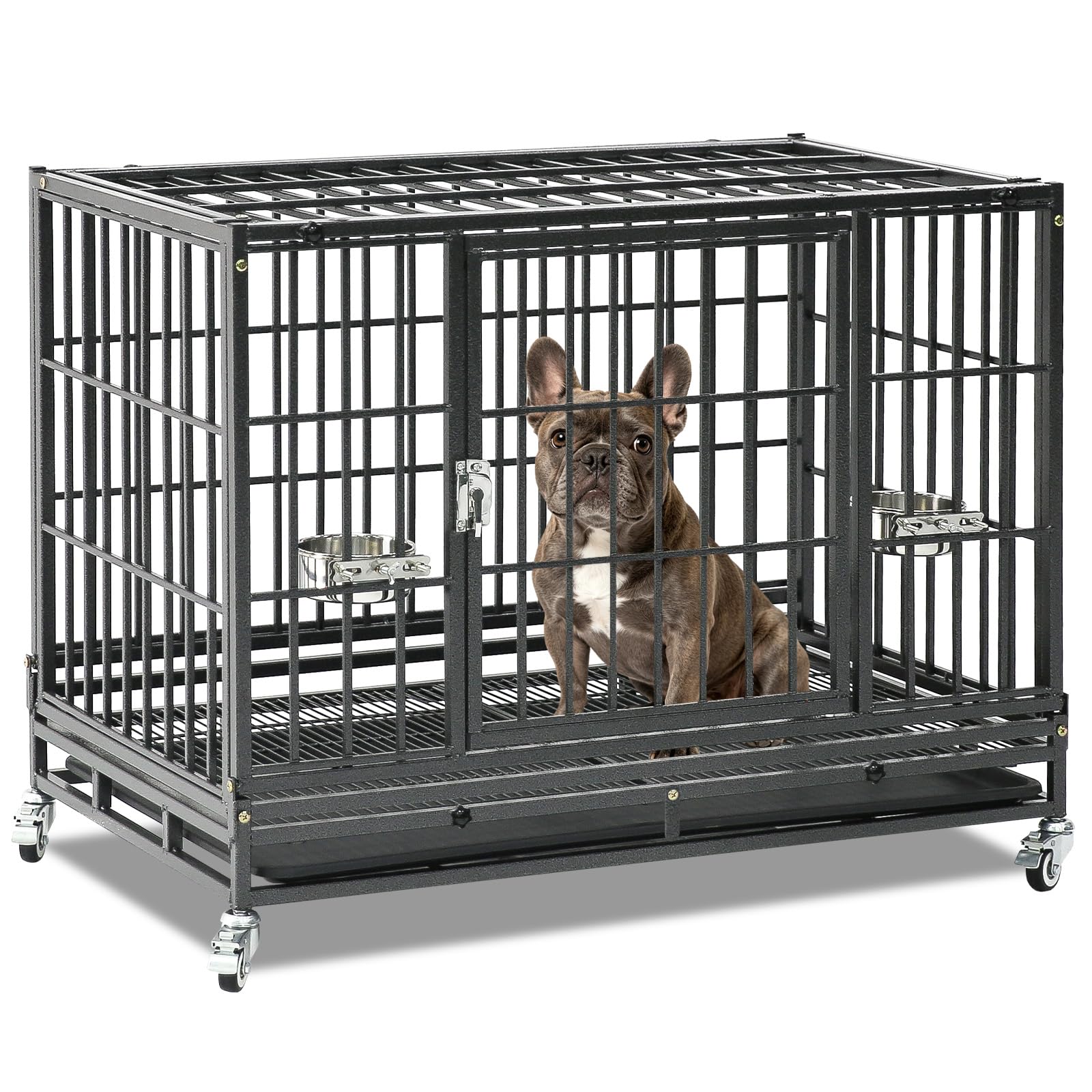
Beyond the three main types above, you will see soft sided crates, heavy duty steel crates, and escape proof designs aimed at anxious dogs. Soft sided models are light and suit calm dogs on short trips, but fabric walls cannot stand up to chewing or digging. Heavy duty steel uses thicker bars and stronger latches at a much higher weight and price. If travel is a regular part of your life, compare the options in our guide to the best travel dog crate before you commit to a home only model.
Features worth paying for
A divider panel is worth paying for if your dog is still growing, because it keeps the sleeping area snug and supports house training. A leak proof tray with raised edges is worth it for puppies and older dogs alike. A washable bed sized to the crate floor adds comfort, though you should skip thick bedding for dogs who chew fabric. A cover can calm a dog who settles better in dim light, but it reduces airflow, so use one only in cool rooms.
Sizing for your pet
Measure your dog twice. For length, measure from the tip of the nose to the base of the tail and add about 2 to 4 inches. For height, measure from the floor to the top of the head or ears, whichever is higher, and add about 2 to 4 inches. Your dog should be able to stand, turn around, and lie down with legs stretched out, but should not have room for a separate toilet corner. If your dog falls between sizes, our guide on what size dog crate do i need will help you decide whether to size up.
Materials and chew resistance
Wire crates use steel with a powder coat or similar finish that resists rust in normal indoor use. Thicker wire and closer bar spacing resist bending and keep small paws from slipping through. Plastic shells use molded resin that shrugs off dents but can crack if dropped on a hard edge in cold weather. Wood frames are the easiest material for a dog to damage. For a strong chewer, look for smooth welds and a door frame that does not flex when you press on it.
Cleaning and odor control
Daily cleaning should take minutes, not a full scrub. A tray that slides out without lifting the whole crate is the biggest convenience in this size class. Wipe wire frames with a damp cloth, wash trays with warm soapy water, and let every part dry fully before bedding goes back in, because trapped moisture lets odor build up. For a full routine after an accident, follow our guide on how to clean a dog crate.
Safety
Check the latch first. A good latch needs two motions or a firm lift to open, so a pawing dog cannot pop it with one swipe. Run your fingers along door edges, bar ends, and tray corners and reject any model with sharp points or rough welds. Bar spacing should be narrow enough that head and paws cannot wedge between bars. Remove collars before crate time to prevent snagging, and place the crate away from cords and heaters. If your dog panics or injures teeth or paws on the bars, stop and talk with your veterinarian or a certified trainer about a safer plan.
How much should you spend?
Basic wire models often cost about $40 to $80 and cover training and everyday home use well. Sturdier wire and most plastic models sit at about $80 to $150, where you gain thicker materials and better latches. Furniture style and heavy duty steel models run about $150 to $400 or more, driven by cabinet work and steel weight rather than extra room. Spending more makes sense when the crate doubles as furniture or must contain a strong anxious dog. It does not buy a better fit, so confirm your sizing first.
Is a 36 Inch Dog Crate the Right Size for You?
For many medium to large dogs, such as many border collies, Australian shepherds, and smaller Labradors, the best 36 inch dog crate gives enough room without wasting floor space. It can still fail at either end of that size range. A compact muscular dog may fit the length but need more height, while a lean tall dog may clear the height but curl tightly to fit the floor. Puppies of large breeds will outgrow it, so a 42 inch model with a divider may be the smarter single purchase.
Consider the alternatives honestly. A playpen gives a puppy more play room but far less of the den effect that supports house training, and our comparison of crate vs playpen explains where each tool works best. A smaller dog who rattles around in 36 inches will feel more secure in a 30 inch crate. Material matters too. Our breakdown of wire vs plastic dog crate designs shows why the same footprint can feel roomier in open wire and more enclosed in plastic.
FAQ
What is the best 36 inch dog crate?
There is no single winner for every dog. A wire model with a divider suits most homes and growing puppies, a plastic model suits travel and dogs who settle better with enclosed walls, and a furniture style model suits calm trained dogs in shared spaces. Match the inside dimensions to your dog first, then pick the type that fits your routine.
What size dog fits in a 36 inch dog crate?
Most medium to large dogs fit, provided their nose to tail length plus a few inches stays under the inside length and their standing height clears the inside height. Breed alone is a poor guide because two dogs of the same breed can differ by several inches. Measure your dog standing and lying down, then compare those numbers with the inside dimensions on the specification sheet.
How long does a 36 inch dog crate last?
A sound wire or plastic crate can serve for the life of your dog if the frame stays straight and the latch keeps its firm action. Inspect welds, bar ends, and the tray every few months. Replace the crate if a door no longer closes squarely, if a crack spreads in a plastic shell, or if rust weakens a bar, because a gap at the frame is where an escape attempt usually starts.
Is a 36 inch dog crate worth it for a puppy?
Yes, if the crate includes a divider and your puppy will grow into this adult size. The divider keeps the living space snug, which supports house training, and you move it back as your puppy grows. Without one, a small puppy may sleep at one end and toilet at the other. For a puppy who will stay small as an adult, a smaller crate is the better fit from the start.
How do you clean a 36 inch dog crate?
Take out bedding and the tray, shake loose hair and debris outside, then wash the tray with warm water and a pet safe cleaner and dry it fully. Wipe bars or shell walls while the tray dries, and wash bedding on a warm cycle. One point many owners miss is the latch and hinges, where grime can make a latch stick, so wipe those parts and test the door before your dog goes back in.
What is the most reliable type of 36 inch dog crate?
Reliability comes from build details more than from a brand name. Look for thick wire or a rigid shell, smooth welds, a latch that needs deliberate action to open, and a tray that does not crack at the corners. Read recent buyer reviews for repeated complaints about the same part, since a pattern of latch or tray failures tells you more than any single rating.
Final Thoughts
Start with measurements, not with a breed chart. Confirm the inside length and height against your dog, choose wire for airflow and flexibility, plastic for calm and travel, or a furniture style build for a shared living room, and spend for latch and tray quality before looks. When those pieces line up, the best 36 inch dog crate becomes a safe den your dog chooses for naps, not just a box you close at night. Revisit the product table above before you order.