Best 35mm Film Cameras of All Time in 2026: Every Type Explained
Disclosure: We may earn a commission when you buy through links on this page, at no extra cost to you. As an Amazon Associate I earn from qualifying purchases. Learn more
Compare 35mm film camera types by focus, metering, lens choice and cost, and learn how to judge the 35mm film cameras of all time for your own style.
Choosing a film camera can feel confusing because decades of models share the same film size while working in very different ways. The best 35mm film cameras of all time earned their reputations through reliable mechanics, strong lenses and handling that still makes sense today. Match each type to your style.
Start with how you like to shoot, not with fame or price. A camera you carry daily will give you better photographs than a celebrated model that stays at home.
Types of 35mm Film Cameras Compared
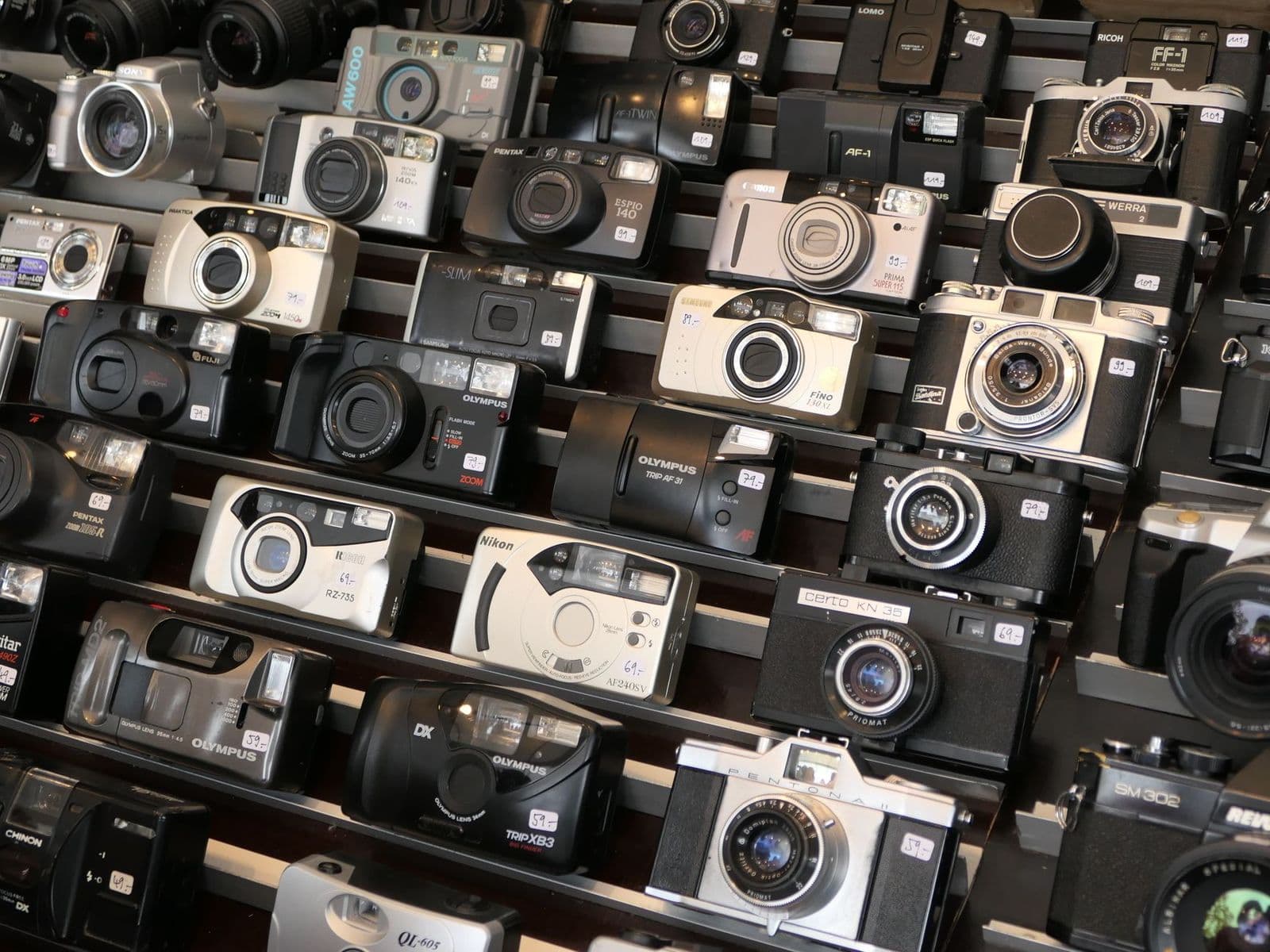
Three broad types cover nearly every serious 35mm film camera you will meet. They load the same film, yet differ in how you view, focus and control exposure.
Single Lens Reflex Cameras
A single lens reflex camera shows you the scene through the taking lens, so what you see in the finder is close to what the film records. Interchangeable lenses cover wide street views and tight portraits alike. These cameras tend to be larger and louder than the other types. Choose this type if lens choice and precise framing matter most.
Rangefinder Cameras
A rangefinder camera uses a separate viewing window and a bright focusing patch that you align inside the frame. Because no mirror moves during exposure, the camera stays quiet and compact, and the bright finder works well in dim rooms. Framing is less exact for close subjects. If you enjoy older manual designs, see our guide to the best vintage film cameras 35mm for more on this era.
Point and Shoot Compacts
A point and shoot compact handles focus and exposure for you, with a fixed or zoom lens in a body that slips into a jacket pocket. That simplicity suits travel and family events where speed matters more than control. Most give you no manual override, and their electronics can be hard to repair. Accept that a failed circuit board can end a compact for good.
Who Should Buy Which 35mm Film Camera Type?
Your habits point to a type faster than any specification list can. Match yourself to one group below first.
Learners Who Want to Understand Exposure
You learn fastest on a manual reflex camera, because you set aperture and shutter speed yourself and see the effect on the next roll. Start with one standard lens and one film stock for several rolls, and keep brief notes on settings.
Travelers and Street Photographers Who Value Quiet Handling
You move through crowds and shoot quickly, often in low light, so a compact rangefinder or an advanced compact suits you well. Small size helps people relax sooner, and a quiet shutter draws less attention. Check finder brightness before you buy, because a dim patch slows you down at dusk.
Portrait and Family Photographers Who Want Lens Choice
You care about flattering focal lengths, so a reflex system with affordable portrait lenses is your natural home. One body covers group shots and close portraits alike. If you shoot children who move quickly, weigh autofocus carefully, because manual focus on a running child tests even patient photographers.
Key Features to Compare
The best 35mm film cameras of all time tend to share sound basics rather than long feature lists. Compare these five factors in order.
Lens Mount and Lens Availability
The lens mount decides which lenses fit your camera, and it shapes your total budget more than the body price does. Popular mounts have plentiful used lenses at fair prices. Scarce mounts can leave you stuck with one lens or paying collector prices for a second. Before you buy a body, price the lenses you actually want.
Focusing System and Finder Clarity
Manual focus cameras rely on a split image screen or a rangefinder patch, and each suits a different pace. Autofocus models are faster with moving subjects but depend on aging motors and electronics. Look through the finder before buying: a bright, clear view matters more than a long specification sheet. If you wear glasses, check the full frame.
Metering and Exposure Control
A built in light meter guides your choices, while automatic modes can set aperture, shutter speed or both for you. Manual control teaches you the most, while aperture priority speeds you up in changing light. Ask what happens when the battery dies: some cameras keep one mechanical speed as a backup, and others stop entirely.
Shutter, Build and Ease of Repair
Cloth and metal shutters both work well when serviced, and a top speed of about 1/1000 of a second covers most daylight shooting. Metal bodies shrug off knocks, while plastic bodies cut weight. Widely owned models are easier to service because technicians know them and parts remain available.
Size, Weight and Battery Dependence
A heavy camera takes poor photographs on a long walk, simply because you left it behind. Weigh the body with the lens you will use most. Note the battery type too, because some older meters need uncommon cells, while many mechanical cameras need a battery only for the meter.
How to Check a Used 35mm Film Camera Before You Buy
Most cameras in this class are now bought used, so a calm inspection protects your money. If you are comparing listings, see our guide to the best used 35mm film cameras alongside these checks. Open the back and inspect the light seals: crumbling foam is cheap to replace, but it signals poor storage. Fire the shutter at every speed and listen for slow speeds that drag.
Check the lens against a bright light for haze or fungus, and feel the focus ring for grit. Test the meter against a phone light meter app, and look in the battery chamber for green corrosion. Budget for fresh seals and a service on any camera with an unknown history. If several bodies compete, our guide to the best 35mm film cameras ever can help you rank them.
Best 35mm Film Cameras for Specific Needs
Two needs come up again and again in this market: keeping total cost down, and getting reliable autofocus.
Best Affordable 35mm Film Cameras of All Time
Judge the best affordable 35mm film cameras of all time by total cost, not body price alone. Less famous reflex systems often sell for far less than celebrated names while using the same film. Simple reusable cameras cost the least, and our guide to the best reusable film cameras 35mm explains that entry route. Keep money aside for film and processing.
Best Autofocus 35mm Film Cameras of All Time
If moving subjects fill your rolls, the best autofocus 35mm film cameras of all time are the later electronic reflex models and smarter compacts. Judge them by focus speed in low light and whether manual override feels usable. Test the specific camera before buying, because aging motors vary between copies.
Common Mistakes to Avoid
These errors cost film buyers money and good photographs every season.
- Buying a famous body with a hazy lens gives you soft photographs no film stock can fix.
- Ignoring the service cost turns a cheap camera into an expensive one within a month.
- Choosing a scarce lens mount leaves you unable to find the lenses you wanted.
- Skipping a test roll hides light leaks and shutter faults until an important trip.
- Leaving old batteries inside invites corrosion that kills the meter and its contacts.
How to Make Your 35mm Film Camera Last Longer
Clean the lens with a soft lens cloth and a blower, never your shirt, because grit in fabric can mark the coating. Store the camera in a dry, padded bag away from heat, and remove batteries before long storage.
Exercise the shutter every month or two so slow speeds stay honest, and wind on gently. Replace light seals when you first see flakes inside the back, before they reach the film. If the camera sits unused for a year, run one test roll before trusting it with a trip.
Frequently Asked Questions
How much should I spend on my first 35mm film camera?
Plan on about $100 to $300 for a sound used body and standard lens, plus a service if the history is unknown. Spending less often means worn seals or a tired meter, while spending more usually buys condition rather than better photographs.
Which 35mm film camera type is better for low light shooting?
A rangefinder or reflex camera with a fast lens is better for low light than most compacts. Fast glass gathers more light, and a bright finder helps you focus in dim scenes. Slow shutter speeds demand a steady hand, so brace your elbows. Grain rises with faster film, but a sharp grainy frame beats a blurred clean one.
Is a smartphone enough instead of a 35mm film camera?
A smartphone is enough for quick records, but it does not replace a film camera for most buyers here. Film slows you down, limits each roll to a set number of frames and gives scans a look phone processing does not copy. If the process itself is the pleasure, film earns its place.
Can I still buy film and processing for a 35mm camera?
Yes, you can still buy fresh 35mm film and get it processed at many local and mail order labs. Color and black and white stocks remain in regular production, and labs return scans by download as well as prints. Ask about scan size before ordering, because small scans limit later printing.
What should first time 35mm film buyers check on a camera listing?
First time buyers should check whether the seller fired the shutter at all speeds and tested the meter, not just cleaned the outside. Ask for photos of the lens glass and battery chamber, where faults hide. A short return window is worth more than a small discount.
The Bottom Line
Choose your type first, then judge condition, lens choice and service support before you chase a famous name. A clean working camera beats a celebrated one waiting for parts. Compare types and prices one last time.
With those checks done, the best 35mm film cameras of all time narrow down to the one that fits your hands, your subjects and your budget. Buy that camera, load it, and finish your first roll soon.