Best 30 Inch Bathroom Vanity (2026): Forms, Tops and Storage
Disclosure: We may earn a commission when you buy through links on this page, at no extra cost to you. As an Amazon Associate I earn from qualifying purchases. Learn more

Choose the best 30 inch bathroom vanity with advice on freestanding and floating forms, tops, drawers and budget.
A 30 inch vanity sounds simple until you start measuring. You need enough counter space for daily washing, enough storage for towels and toiletries, and a cabinet that still leaves room for the door to swing and for you to stand comfortably. The best 30 inch bathroom vanity is the one that fits your plumbing, your floor space, and the way you actually use the room each morning.
This guide compares the main types in this size, then walks through cabinet height, drawer layout, materials, weight capacity, and assembly. Use the comparison table below to see how the types differ at a glance.


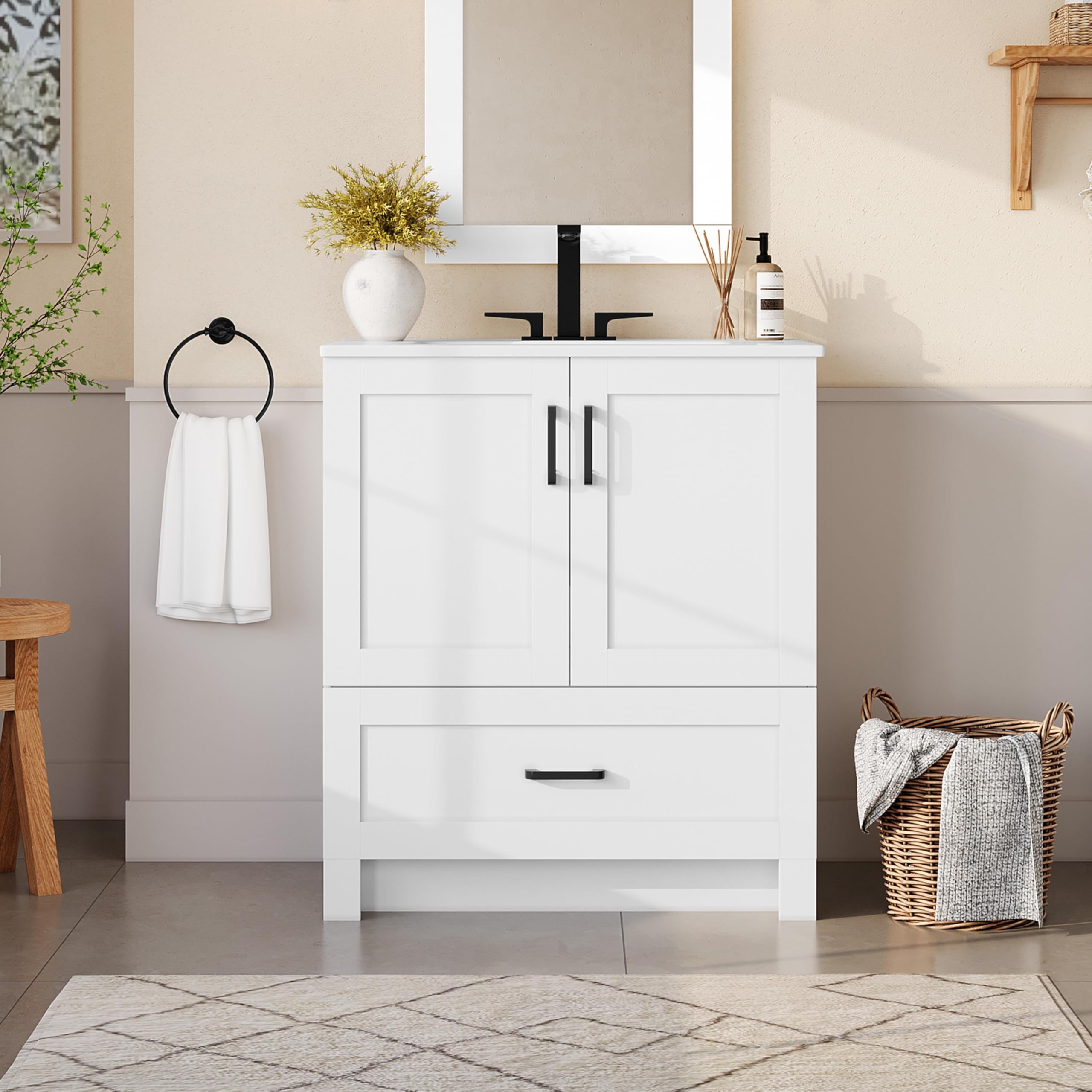

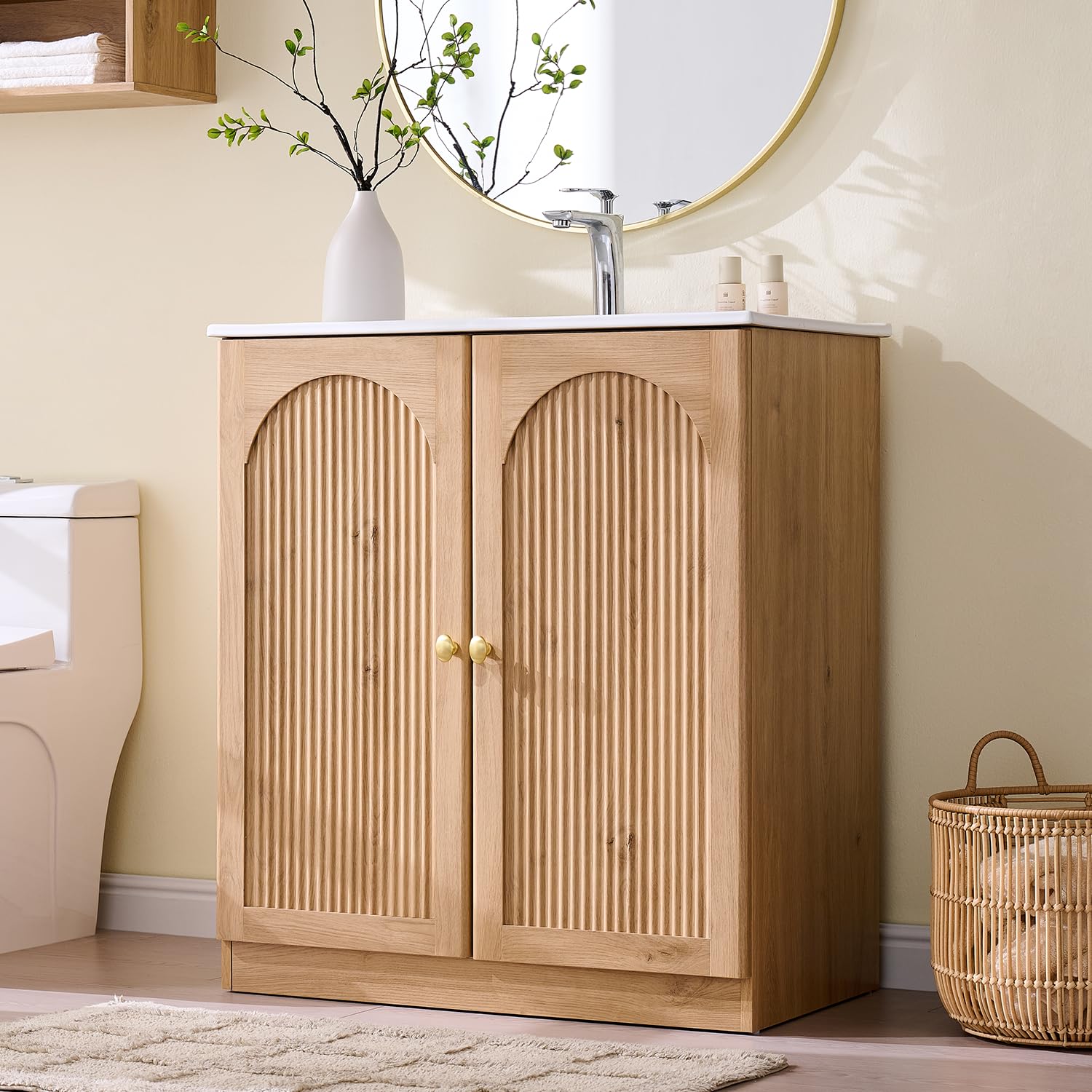

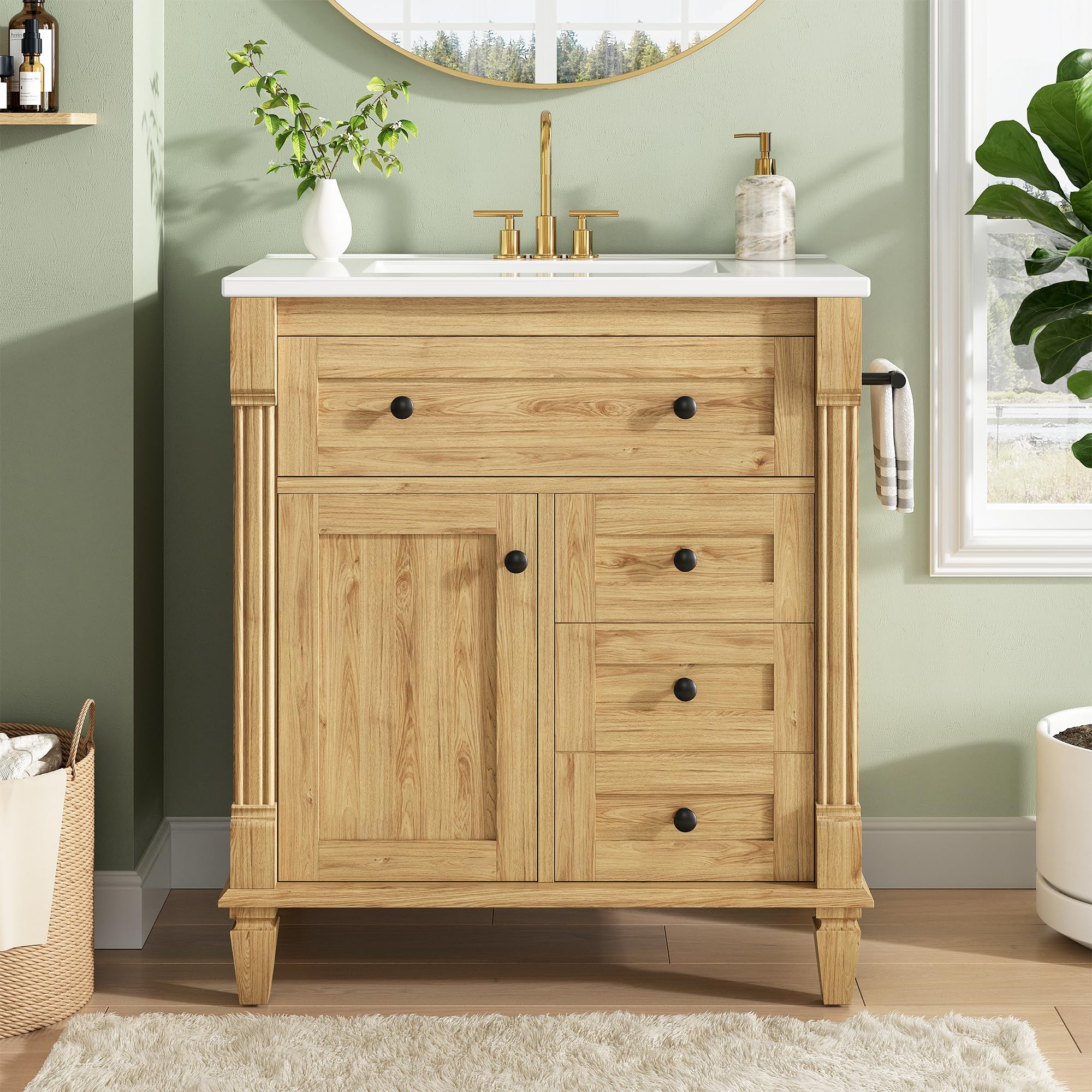


Types Compared in the 30 Inch Size
Start with the three forms you will see most often in this width. Each suits a different layout, plumbing setup, and storage need. Once you know your form, choices about tops and finishes become easier, and you can compare the wider market in our guide to the best bathroom vanity options.
Freestanding Vanities
A freestanding vanity rests on the floor on legs or on a solid base, much like a piece of furniture. It is usually the easiest to install because the cabinet hides most plumbing and the weight sits on the floor rather than on wall studs. It also tends to offer the deepest storage. Choose this form when your floor is level, your plumbing comes through the floor or low on the wall, and you want a straightforward swap for an older vanity.
Floating Vanities
A floating vanity mounts to the wall and leaves open floor beneath the cabinet. That open space makes a small room feel larger, makes cleaning the floor simpler, and lets you set the height to suit the users in your home. The trade off is that the wall must carry the full weight of the cabinet, top, and sink, so solid blocking and stud anchoring matter. Storage is often shallower too.
Vanities Sold with an Integrated Top
Some 30 inch vanities arrive as a cabinet only, while others include a top with a sink molded into a single piece. An integrated top removes the job of matching a top and sink to the cabinet, and it has no seam where grime can collect. A cabinet only option gives you more freedom to pair a stone or quartz top with an undermount or vessel sink. Decide early, because this choice changes your total cost, your faucet hole needs, and the assembly work that remains.
How to Evaluate a 30 Inch Bathroom Vanity
Judge every candidate against the same five points so your comparison stays fair. Look at comfort and access, which covers counter height, knee room, and how easily you can reach the back of drawers and shelves. Check build quality and materials, then confirm the stated size and the weight the cabinet and top can support. Finally, weigh how much assembly is required and what the warranty actually covers, including finish, hardware, and structural parts.
Base your judgment on manufacturer specifications for dimensions, materials, and load limits, and on patterns in verified buyer reviews, such as repeated notes about drawer alignment or finish wear. Be wary of any listing that hides the depth, the height, or the plumbing cutout size, since those numbers often decide whether the vanity fits at all.
How to Choose the Right Bathroom Vanity
Measure first, choose the form second, and only then spend time on finishes and extras. For a broader walkthrough, the bathroom vanity buying guide covers planning a full remodel.
Size and Form Factor
Width gets the attention, but depth and height decide comfort. Most 30 inch vanities run about 18 to 22 inches deep and about 32 to 36 inches tall, and a deeper cabinet can crowd a narrow room even when the width fits on paper. Measure wall to wall, then check door and drawer swing against trim and the toilet. If your room is larger, compare this size with the options in our guide to the best 36 inch bathroom vanity before you commit.
Type
Beyond freestanding and floating forms, you will see corner units and narrow depth units made for tight rooms. Style labels such as modern, farmhouse, and traditional describe door fronts, legs, and hardware rather than structure, so choose the structure first and the look second. A corner unit can rescue an awkward layout, but its odd interior stores less than a standard rectangular cabinet. For most single sink rooms, a standard rectangular form makes the best use of the space.
Features Worth Paying For
Drawers usually serve you better than a single open cabinet, because you can see and reach small items without kneeling. Soft close hinges and drawer slides are worth paying for, since they cut noise and reduce wear. An included mirror or medicine cabinet adds storage without using floor space, and lighting built into a mirror helps in rooms with weak overhead light. Skip paying extra for decorative hardware you plan to replace, and skip shelving inserts if your toiletries are mostly tall bottles.
Body Size and Weight Capacity
Think about both the people using the vanity and the load it must carry. A stone top with a ceramic sink is heavy before you add anything, and the cabinet, its mounting, and your floor or wall must support that weight plus stored items. Check the stated load limit when one is given, and be careful with floating units, where capacity depends on anchoring into studs or blocking. Taller users often prefer a counter near the upper end of the usual height range, while shorter users and children reach a lower counter more easily.
Adjustability
Adjustable legs on a freestanding unit help you level the cabinet on an uneven floor, which keeps doors aligned and stops the top from rocking. Adjustable shelves let you fit tall bottles on one level and small items on another, and removable drawer dividers help you organize as needs change. On a floating unit, the mounting height itself is the adjustment, so decide the finished counter height before drilling. Adjustable hinges also let you correct small door alignment issues after installation.
Materials and Durability
Solid wood handles humidity well and can be repaired, but it costs more and can still swell if water sits on it. Engineered wood and medium density fiberboard with a good moisture resistant finish cost less and stay flat, yet a chipped edge can let moisture in and cause swelling. If you lean toward timber, our guide to the best wood bathroom vanity explains grades and finishes. For tops, ceramic and cultured marble are easy to wipe and resist staining, while quartz and granite feel more solid but add weight and price. A smooth, sealed finish matters more than the material name alone.
Assembly and Warranty
Vanities range from fully assembled cabinets that only need a top and faucet to flat packed units that take an afternoon of work. A fully assembled unit costs more and is harder to move through narrow doors, but it avoids loose joints and alignment problems. A flat packed unit is easier to carry, though its strength depends on how carefully you build it. Read the warranty before you buy, and note whether it covers structure, finish, and hardware for the same period.
How Much Should You Spend?
Budget models at about $200 to $500 usually pair an engineered wood cabinet with a basic top and simple hardware, and they suit a guest room or a rental. Spending about $500 to $1000 typically gets you better drawer hardware, a thicker top, and a finish that holds up longer. Above about $1000, you are mostly paying for solid wood, stone tops, and finer finishing rather than extra function. Set your budget after pricing the faucet, drain parts, and any plumbing changes, because those extras sit outside the vanity price.
Is a 30 Inch Bathroom Vanity the Right Size for You?
This size hits a useful middle ground. It gives one person a comfortable washing station with real counter space beside the sink, plus meaningful storage below, yet it still fits in many smaller bathrooms where a 36 inch or 48 inch unit would crowd the room. If your room is truly tight, compare it with the options in our guide to the best small bathroom vanity, where 24 inch units may leave you more standing room.
Choose 30 inches when you have a single user most of the time, when your wall run is roughly 32 to 40 inches, and when you want daily storage without extra furniture. Step down if door swing or a nearby toilet leaves less than about 15 inches of clear space in front, and step up if two people get ready at the same time. A powder room used only for hand washing can often go smaller.
FAQ
What is the best 30 inch bathroom vanity?
The right answer depends on your plumbing, your wall strength, and how you store things, rather than on a single model. For most buyers, a freestanding unit with drawers, soft close hardware, and a sealed top offers the best balance of easy installation and daily convenience. Floating units suit modern rooms with strong walls, and integrated tops suit buyers who want fewer parts to match. Use the criteria in this guide to judge any candidate you are considering.
What size bathroom vanity do I need?
Start by measuring the full wall run, the depth from the wall to the front edge you can allow, and the location of your water lines and drain. A useful extra check is the path into the room, since a fully assembled cabinet must pass through doorways and around any turns in the hall or stairs. Leave clear floor space in front of the vanity for standing and bending, and confirm that drawers and doors can open fully without striking the toilet or the door trim.
How long does a bathroom vanity last?
A well made vanity in a ventilated bathroom often serves for about 10 to 20 years, and the top usually outlasts the cabinet hardware. The most common early failures are finish damage around the sink edge, swollen panels under a slow leak, and worn drawer slides. Checking under the sink a few times a year for drips adds more years to a vanity than any special cleaning product, because small leaks caught early rarely reach the cabinet panels.
Is a bathroom vanity worth it?
Replacing a worn or poorly fitting vanity is usually worth it when the old unit wastes space, stores little, or has water damage that will spread to the floor. The gain is practical rather than cosmetic alone, since a better drawer layout and a comfortable counter height improve every morning routine. It is less worth it if your current cabinet is solid and only the faucet or hardware looks dated, because those smaller updates cost far less and solve the visible problem.
How do you clean a bathroom vanity?
Wipe the cabinet and top with a soft cloth and a mild cleaner, then dry any standing water around the sink and faucet base instead of letting it sit. Avoid soaking the cabinet base and avoid harsh abrasive pads, which dull sealed finishes and open the surface to moisture. For step by step care by material, see our notes on how to clean a bathroom vanity, which cover stone, ceramic, and painted finishes separately.
What is the most reliable bathroom vanity brand?
Reliability in this category tracks construction more than a name, so look for signs you can verify on any brand. Those signs include a clear warranty that covers structure and hardware, replacement parts that the maker still supplies, consistent drawer and door alignment in buyer photos, and honest published dimensions and materials. A maker that hides its cabinet material or gives no load guidance for a floating unit is telling you something. Favor brands that answer those basic questions clearly over brands that rely on styling alone.
Final Thoughts
Start with your measurements, pick the form that suits your walls and plumbing, and then spend your money on drawers, hardware, and a finish that can handle daily water. Do that, and the best 30 inch bathroom vanity for your home becomes an easy call rather than a guess. Look back at the product table above to compare the types side by side, and check the current price and specifications on the product page before you order.