Best 3 Stage Whole House Water Filters (2026): What Each Stage Does and How to Size It
Disclosure: We may earn a commission when you buy through links on this page, at no extra cost to you. As an Amazon Associate I earn from qualifying purchases. Learn more

Understand each stage and choose the best 3 stage whole house water filter for your water, pipes and budget.
A best 3 stage whole house water filter treats every drop of water as it enters your home, so sediment, chlorine taste, and odor are handled before water reaches a single faucet or shower. The catch is that stage counts alone tell you little. What matters is what each stage actually removes, how fast the system flows when two showers and a washing machine run at once, and whether the housings fit the space near your main line.
This guide walks through the three stages one by one, the features that change daily use, and the measurements to take before you order. Use the comparison table below to line up flow rates, port sizes, and cartridge types side by side, then read on for the details that decide whether a system suits your water.

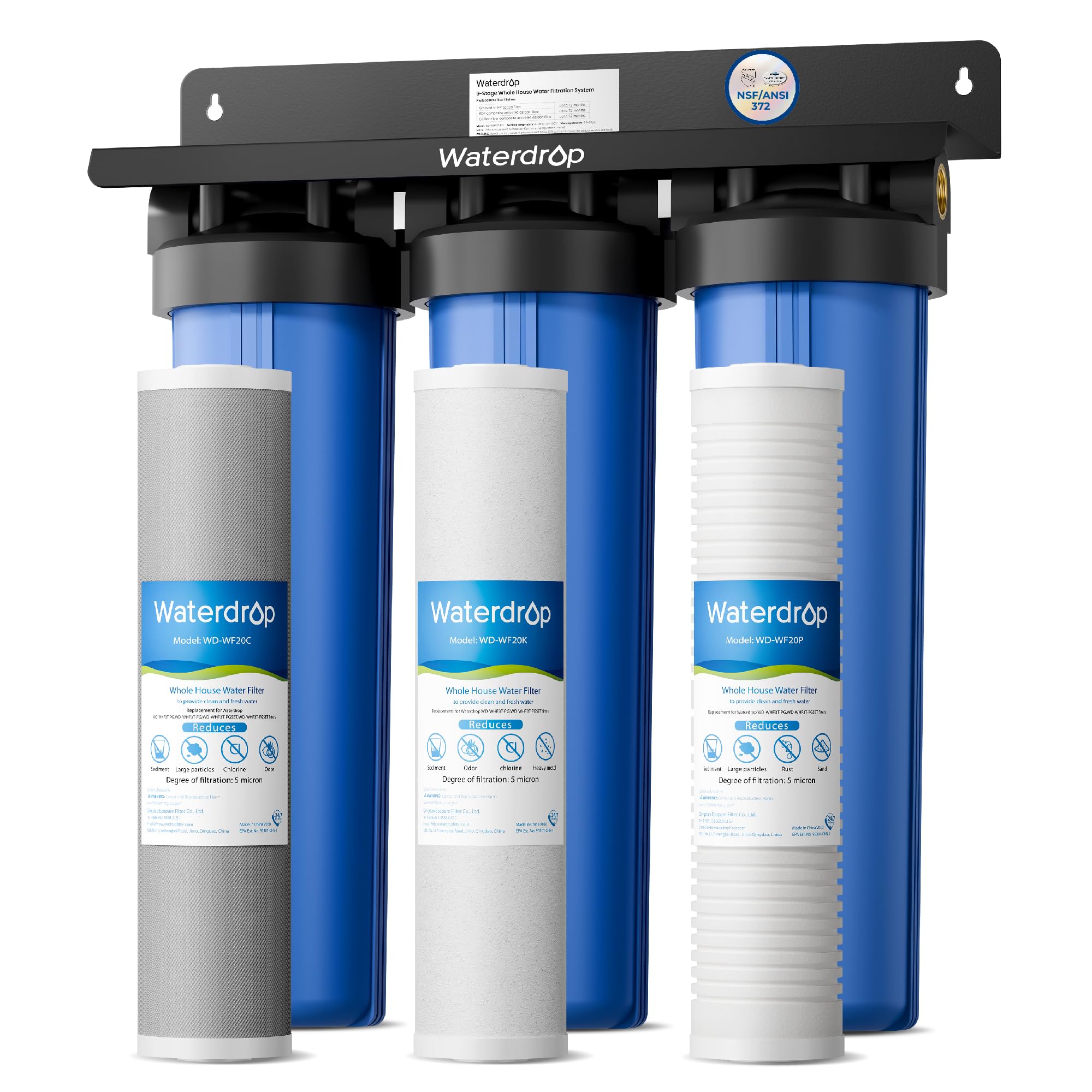
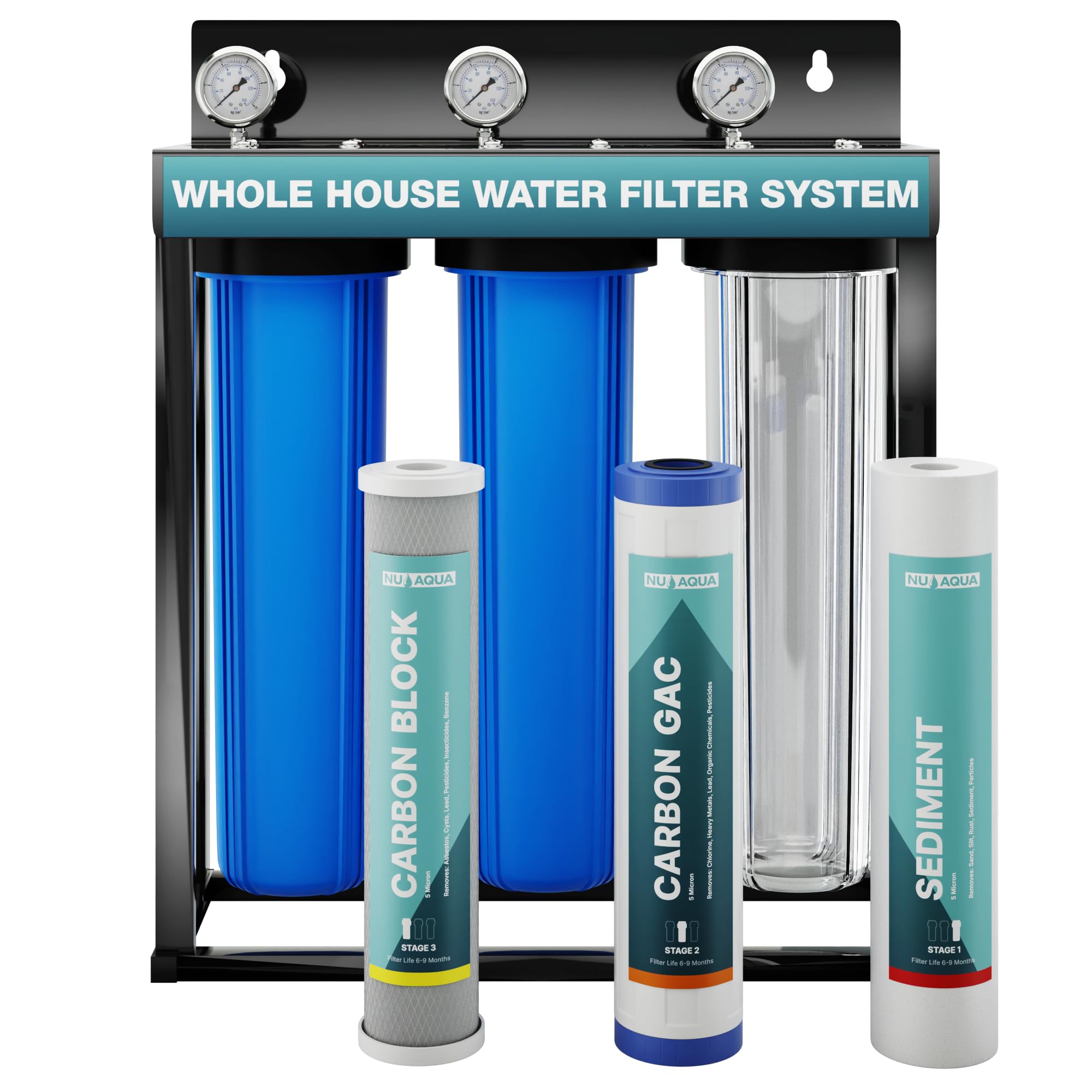
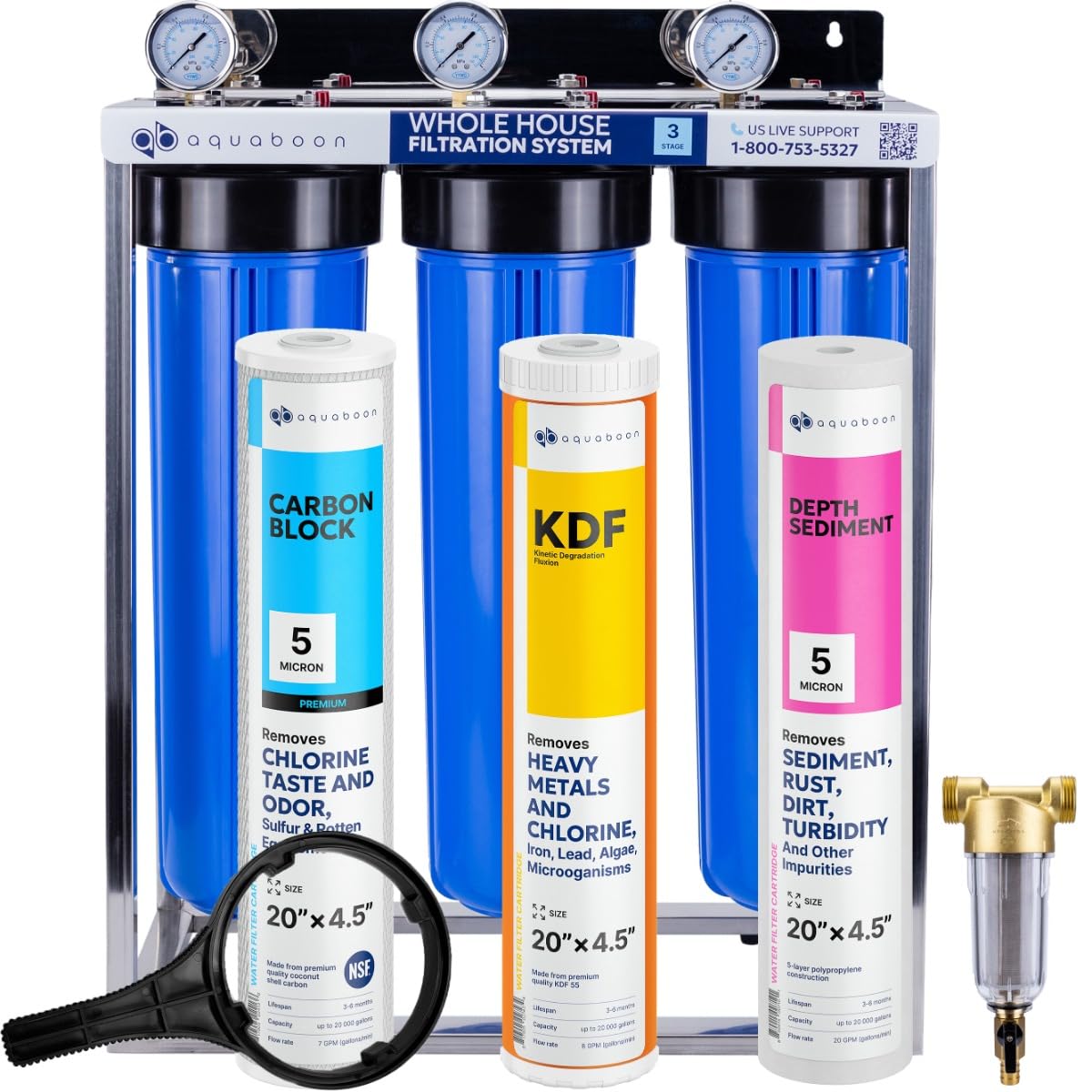

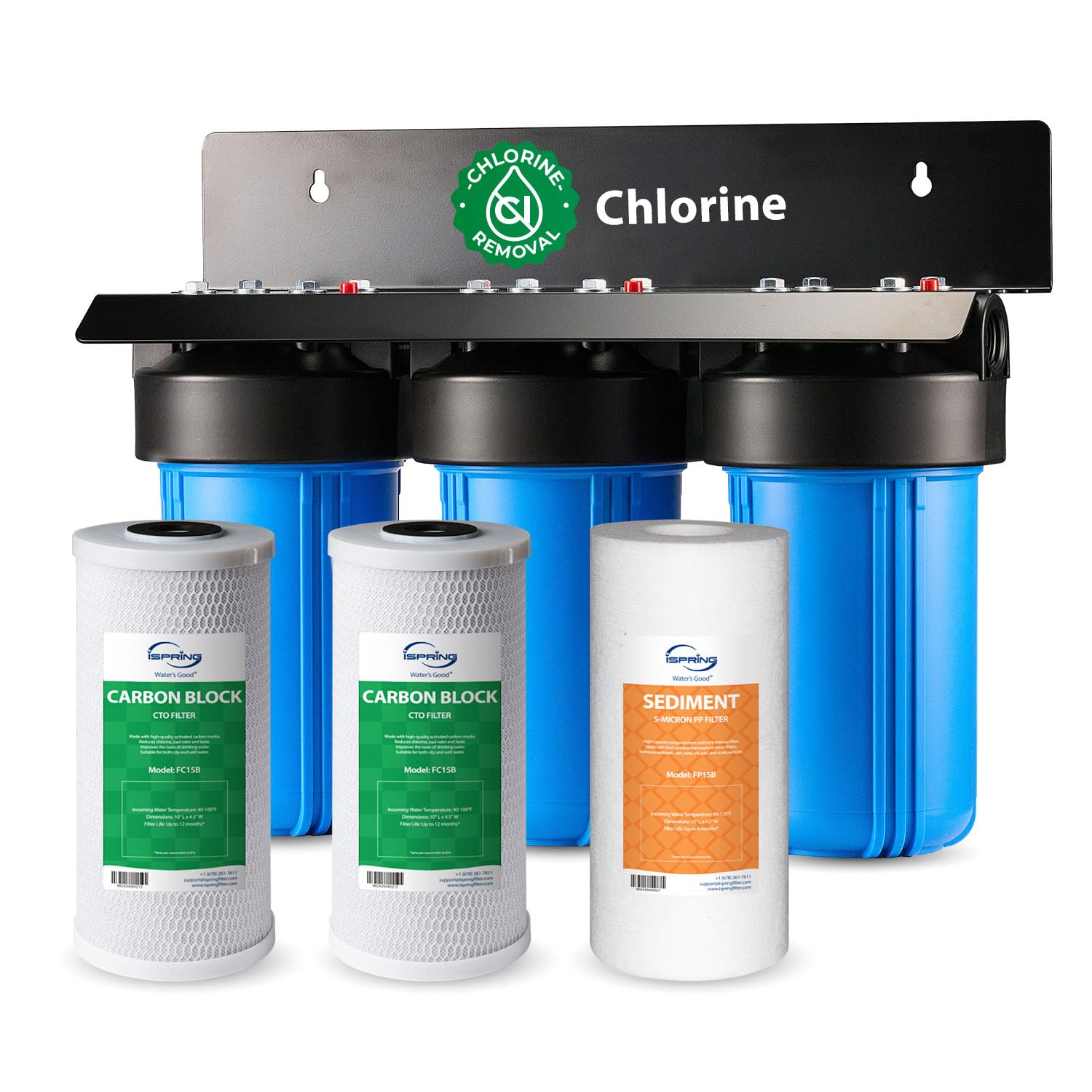


What the Three Stages Do at a Glance
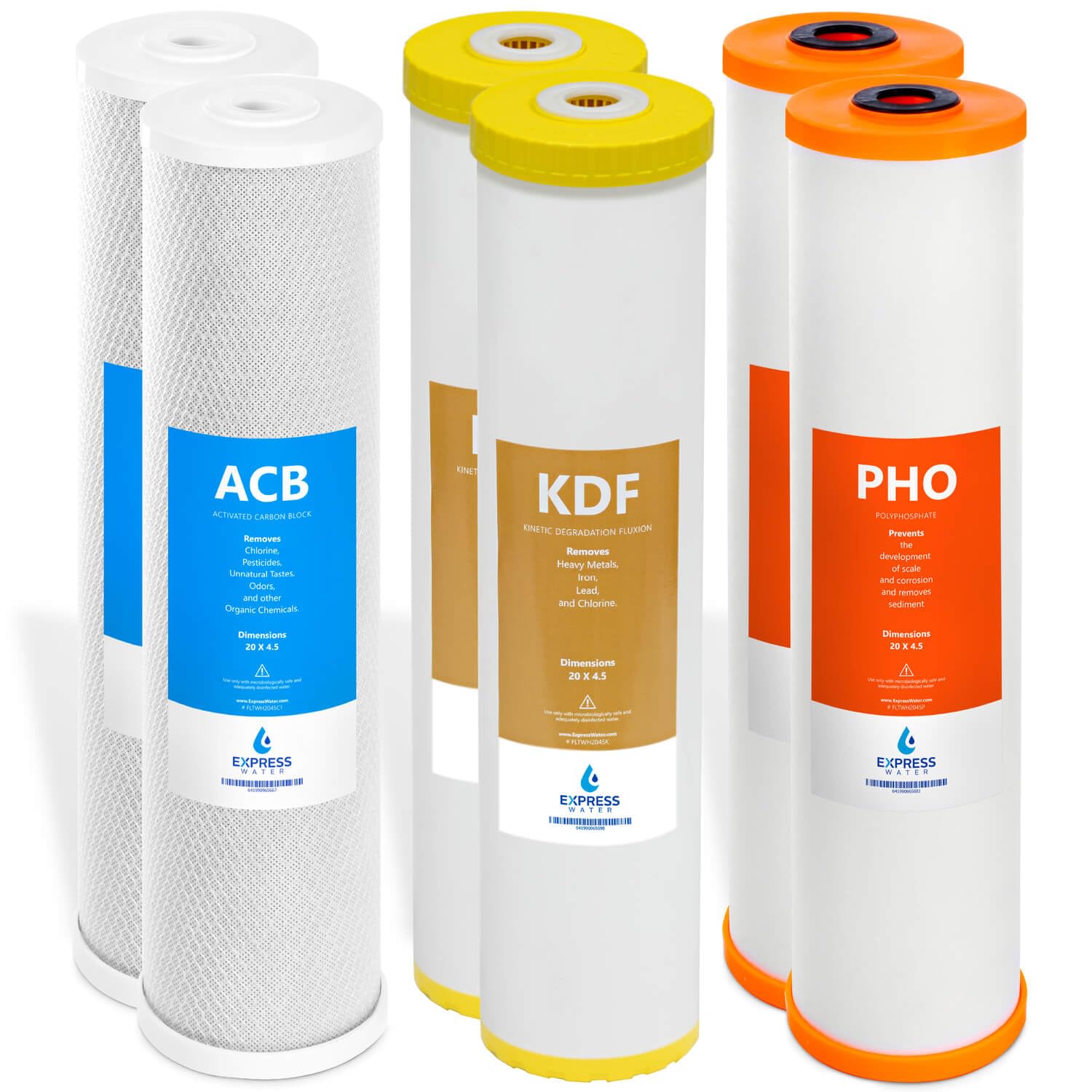
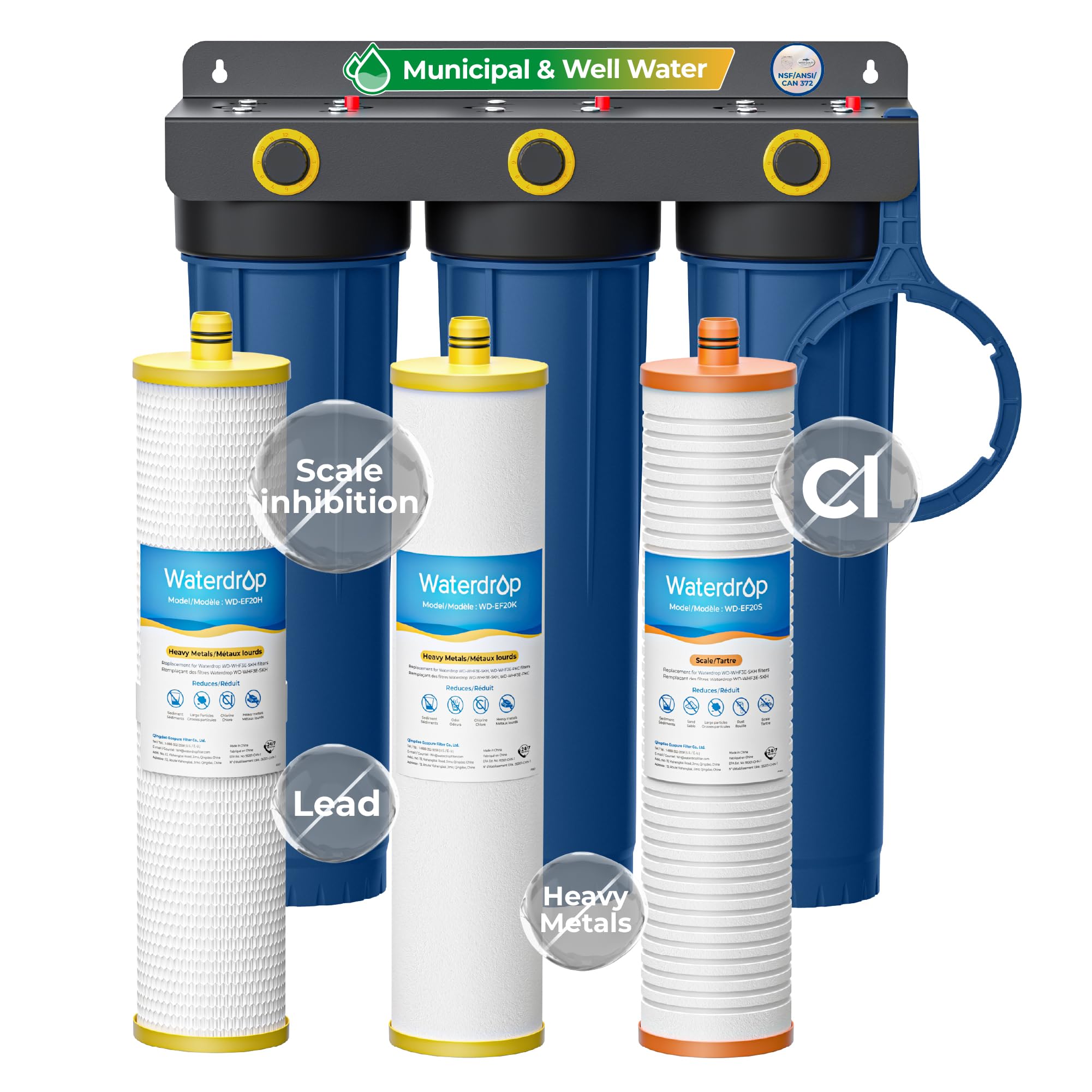
Every 3 stage system follows the same basic logic. Water passes through a sequence of cartridges, and each one catches a different size or type of contaminant so the next stage can work on cleaner water. If one stage is weak or missing, the stages after it clog faster and lose effect.
Stage One: Sediment Capture
The first housing almost always holds a sediment cartridge, often rated at about 5 to 20 microns. It traps sand, silt, rust flakes, and other particles that would otherwise coat the carbon stages and shorten their life. Homes on well water lean on this stage the hardest, because wells can send bursts of grit after heavy rain or pump work. A clear housing here helps, since you can see loading at a glance and plan a swap before flow drops.
Stage Two: Carbon Treatment for Taste and Odor
The middle stage is usually activated carbon, either granular carbon or a carbon block. Carbon is where chlorine, chloramine in some rated models, and the chemicals behind bad taste and smell are reduced. A carbon block gives more contact time and finer filtration, while granular carbon tends to allow higher flow with less pressure loss. City water users often find this stage makes the most noticeable difference, because treated municipal water arrives with chlorine already in it.
Stage Three: Final Polishing and Specialty Media
The third stage varies the most between systems. Some use a second, finer carbon block for extra polishing. Others use specialty media aimed at specific problems, such as media blends for iron and manganese or cartridges rated for lead reduction. This is the stage to match to your water test results rather than to marketing claims. If your water has no iron, an iron focused third stage adds cost and pressure loss while solving a problem you do not have.
How to Compare 3 Stage Whole House Water Filters
No single model is ranked here. Instead the guide compares systems on the criteria that decide fit: installation and compatibility with standard plumbing, build quality of the housings and fittings, the contaminants each stage is rated to reduce, flow rate at realistic household demand, certifications, and warranty length. Those points come from manufacturer specification sheets and published certification listings, so you can verify every claim on the product page before ordering.
How to Choose the Right Whole House Water Filter
Type: Match the System to Your Water Source
Start with where your water comes from. City water usually needs sediment and carbon treatment for particles, chlorine, taste, and odor, and a standard 3 stage setup covers that well. Well water is less predictable, and a test may show iron, sulfur odor, or low pH that a basic system cannot fully handle. Readers with private wells should also read our guide to the best whole house water filter for well water, because wells often need added treatment before or after the main stages.
Features Worth Paying For
A few options earn their cost. A bypass valve lets you route water around the system during cartridge changes, so the house is never fully without water. A pressure gauge on the inlet and outlet shows when cartridges load up, which turns guesswork into a quick glance. Large housings, often called big blue style, hold more media and suit larger homes. A UV light add on or a salt free conditioner solves a specific problem rather than improving basic filtration, so add one only if your water report calls for it.
Measurements and Compatibility With Your Setup
Measure before you buy. Note your main line pipe size, most often 3/4 inch or 1 inch, and confirm the system ports match or plan for reducer fittings. Check the space near the main shut off, since a 3 stage rack needs room for the housings plus clearance below them to drop each sump during a cartridge change. Also count your bathrooms and peak demand. A system rated at about 10 to 15 gallons per minute suits most family homes without a noticeable pressure drop.
Certifications That Matter
Look for NSF ANSI numbers printed next to specific claims rather than vague badges. Standard 42 covers taste, odor, and chlorine reduction, while Standard 53 covers health related contaminants such as lead and certain chemicals when a cartridge is certified for them. Standard 372 relates to lead content in the wetted parts themselves. A system can use certified components without the full system holding a certification, so read which level applies. For concerns about PFAS chemicals, our guide to the best whole house water filter for pfas explains what ratings to look for.
DIY vs Pro Installation Cost
A confident home plumber can fit one of these systems in a few hours with a pipe cutter, fittings, and a mounting surface, since the work is a cut into the main line plus secure wall mounting. If your main line is in a tight crawl space or you are not comfortable soldering or pressing fittings, a plumber is the safer route. Our breakdown of whole house water filter installation cost shows what pros typically charge, and the step by step in how to install a whole house water filter shows the full process before you decide.
How Much Should You Spend?
Under about $200, expect compact systems with smaller housings and shorter cartridge life, suited to small homes or single bathroom properties. Between about $200 and $500 sits the main range, with larger housings, better flow, and bypass valves included. From about $500 to $1000, you gain specialty third stages, higher flow ratings, and longer warranties. Above about $1000 usually means bundled extras such as UV or conditioning. Cartridges are an ongoing cost at every level, so price a full replacement set before you commit.
3 Stage vs Other Whole House Water Filters: Pros and Cons
A single stage carbon filter costs less and fits tight spaces, but it loads with sediment quickly because nothing protects it, and it offers no specialty stage. A 2 stage system adds that sediment protection and covers most city water needs. The third stage earns its place when you want finer polishing or targeted media for a measured problem, such as iron staining covered in our guide to the best whole house water filter for iron.
Reverse osmosis treats water far more deeply, but at whole house scale it wastes water, needs storage, and costs far more to run, so it is usually fitted at one drinking tap instead. A softener addresses hardness minerals, which filters do not remove, so homes with very hard water may need both rather than a choice between them. For a wider view across all formats, see our overview of the best whole house water filter options.
- Pro: layered treatment, so each cartridge lasts closer to its rated life
- Pro: a specialty third stage can target one measured problem in your water
- Con: a larger rack, more floor or wall space, and three cartridges to replace
- Con: each added stage adds some pressure loss at high demand
FAQs
What is the best 3 stage whole house water filter?
There is no single answer, because the right system depends on your water test, pipe size, and household flow demand. A city water home fighting chlorine taste needs strong carbon stages, while a well home needs sediment capacity first. Match the third stage to a measured contaminant, confirm the flow rating covers your bathrooms, and check that replacement cartridges are easy to buy. The system that fits those points is the right one for your house.
Are 3 stage whole house water filters worth it?
They are worth it when your water has more than one issue, such as sediment plus chlorine taste, or taste plus a targeted concern like iron staining. The layered design also protects the carbon stages, which can lower how often you replace them. If your only complaint is chlorine taste in otherwise clean city water, a simpler setup may do the same job for less money and less space, so let your water test and your complaints decide.
How long does a whole house water filter last?
The housings and rack can serve for many years if seals are kept clean and the unit stays out of freezing conditions. The cartridges are the consumable part. Sediment cartridges often need changing every few months, while carbon stages commonly last about 6 to 12 months depending on water use and chlorine levels. A steady drop in pressure at busy times is the most practical signal that a change is due, even before any schedule says so.
Is a whole house water filter worth it?
It is worth it if you want treated water at every tap, including showers and laundry, rather than only at a kitchen filter. Treated water at every tap suits showers and laundry as well as the kitchen, and sediment capture keeps grit away from water heaters and appliances. If your concern is drinking water only, a smaller tap or fridge filter costs less. Whole house treatment makes sense when the problem shows up in more than one room.
How do you clean a whole house water filter?
The cartridges are replaced rather than cleaned, but the housings do need attention at each swap. Shut off the water, release pressure with the relief button if fitted, then unscrew each sump and wash it with warm water and a mild soap. Check the O ring for flattening or cracks, and apply a small amount of food grade silicone lubricant before refitting. Never use harsh solvents on the sump, since they can weaken the plastic and cause leaks later.
What is the most reliable whole house water filter brand?
Reliability has less to do with a logo and more to do with build details you can check. Thick housings, brass reinforced inlet and outlet ports, and a metal mounting bracket all hold up better than thin all plastic fittings. Long warranties with cartridge availability over many years also matter, because a system is only reliable while you can still buy its cartridges. Judge any brand on those points, plus local support, rather than on name recognition alone.
Final Thoughts
The right best 3 stage whole house water filter is the one whose stages match your water test, whose flow rating covers your busiest hour, and whose cartridges you can afford to replace on schedule. Start with the sediment and carbon basics, add a specialty third stage only for a problem you have actually measured, and use the product table above to confirm port size and dimensions before ordering.