Best 3 Piece Knife Sets in 2026: Trio Styles and Buying Guide
Disclosure: We may earn a commission when you buy through links on this page, at no extra cost to you. As an Amazon Associate I earn from qualifying purchases. Learn more
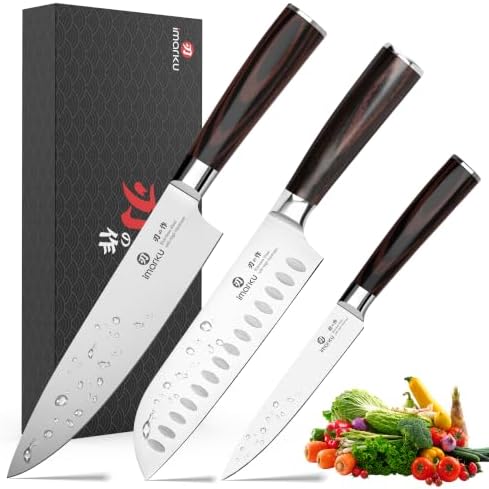
Compare the best 3 piece knife set styles by steel, blade shape, handle comfort and storage to cover everyday cooking with three knives.
Your drawer holds a dull chef knife, a tiny paring knife with a loose handle, and a serrated knife you reach for only for bread. Dinner prep takes longer than it should, and tomatoes crush instead of slicing cleanly. A focused trio fixes that problem without filling your counter. The best 3 piece knife set for your home depends on your space, how many people you cook for, and how much upkeep you will actually do. Read the trio styles below to see the main types side by side, then work through the checklist that follows.

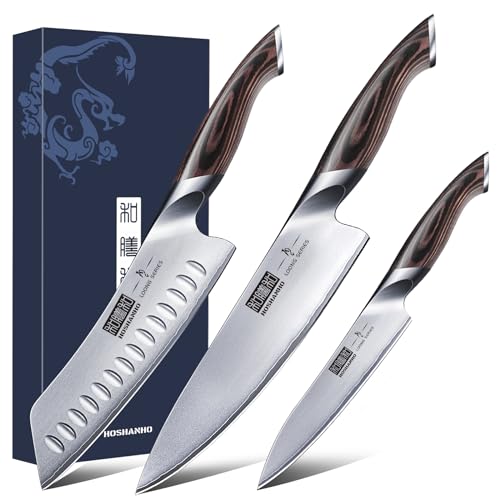
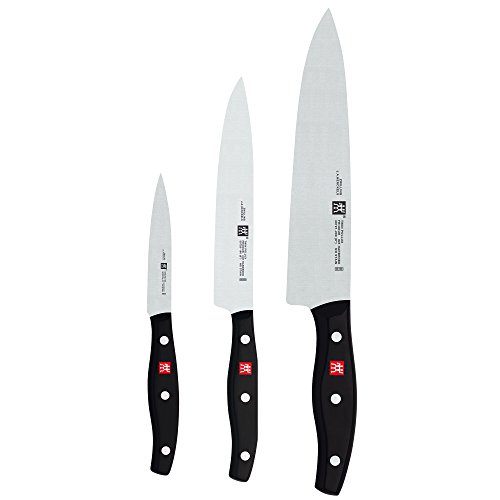


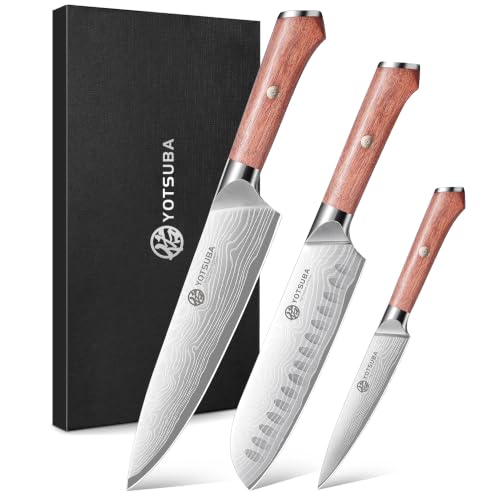
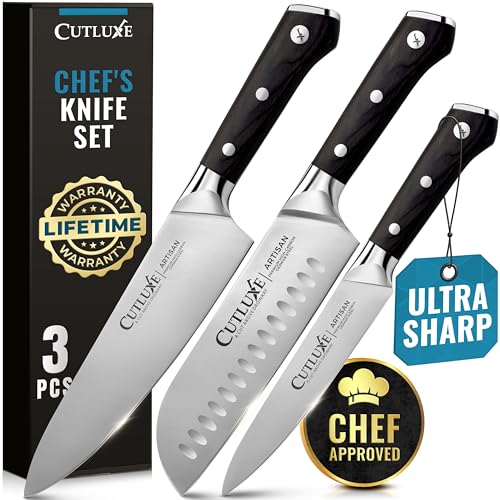
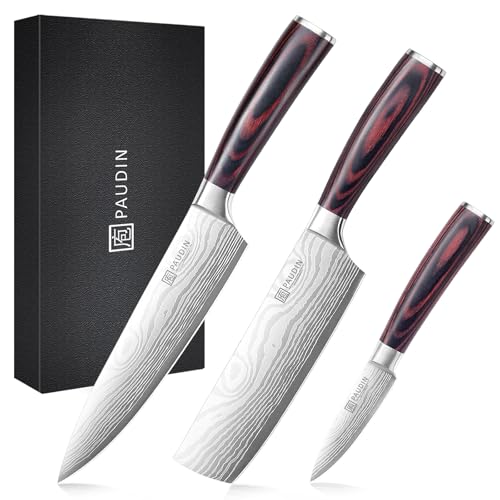
Quick Answer: What a Good Trio Gives You
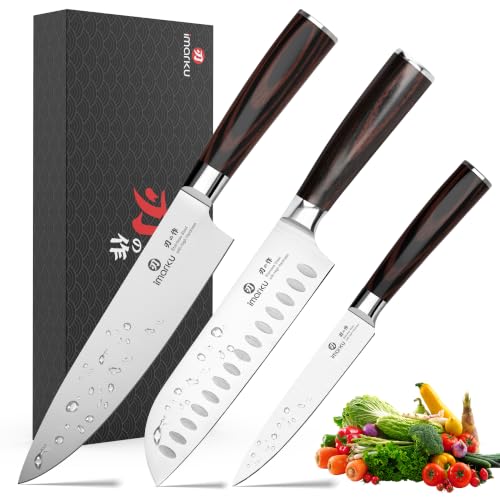
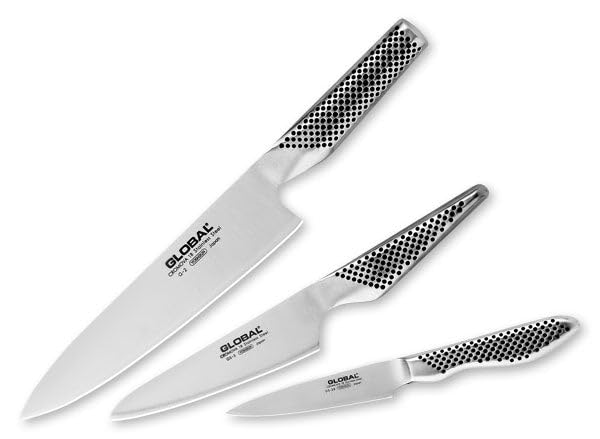
A strong trio covers almost all daily cutting. You get a large chef knife or santoku for chopping and slicing, a midsize utility knife for sandwiches and fruit, and a small paring knife for peeling and trimming. If those roles are filled with sound steel and comfortable handles, you rarely need more for weeknight cooking for two to four people.
Before You Buy: A Quick Checklist for Choosing a Knife Set
Size: Match It to Your Space
Start with where the knives will live. A block set needs counter depth and clearance under upper cabinets, and a tall block can crowd a small kitchen. A trio in individual sheaths fits in a drawer and suits apartments, small homes, and shared kitchens where counter space is shared. Larger sets with 7, 10, or 15 pieces add steak knives, shears, and specialty blades, but they also demand more storage. If you are comparing a compact trio with a full best block knife set, measure your counter and drawer first, then decide if extra pieces earn that space.
Which Type Fits Your Routine
German style knives tend to feel sturdy, with thicker blades and a curved edge that suits rocking through herbs and root vegetables. Japanese style knives tend to feel lighter, with thinner blades and straighter edges that suit precise slicing and push cutting. Stainless steel resists rust and fits busy homes that want low fuss care. High carbon steel can take a very fine edge but needs prompt drying. Forged blades are shaped from one piece of steel and often feel solid and balanced, while stamped blades are cut from a sheet and often feel lighter and cost less.
Features Worth Paying For, and Ones to Skip
Pay for protective storage, a handle shape that fills your hand without hot spots, and steel you can sharpen at home. Sheaths, a magnetic strip, or an in drawer organizer all protect edges better than loose drawer storage. Skip paying extra for large piece counts padded with tools you already own, for decorative finishes that chip, and for built in sharpeners you may never use correctly. If a sharpener matters to you, read about whether a self sharpening knife block worth it claim holds up for your routine before you spend more for that block.
Steel Type and Hardness
Hardness is listed as HRC on the Rockwell scale, and it shapes how an edge behaves. Softer steel, often around 54 to 57 HRC, dulls sooner but is quick to restore and less likely to chip when it meets bone or a frozen squash. Harder steel, often around 58 to 62 HRC, holds a fine edge longer but asks for gentler technique and a finer sharpening stone. Neither end is better for every home. Match hardness to your habits: frequent rough use favors toughness, while careful slicing favors edge retention.
Blade Geometry: German vs Japanese
Geometry is about thickness and edge angle, not just origin. A thicker blade with a wider edge angle pushes through dense foods and wedges less fragile, so it forgives twisting and prying a little more. A thinner blade with a narrower edge angle glides through onions, fish, and ripe fruit with less drag, but it can chip if you twist it in a hard rind or scrape food sideways across a board. Your board matters too. Wood and soft plastic boards are kinder to thin edges than glass or stone boards, which dull any knife quickly.
Handle, Bolster and Balance
Hold the description up against how you grip. Most home cooks use a pinch grip, with thumb and forefinger on the blade just ahead of the handle. A full bolster, the thick band between blade and handle, can crowd that grip, while a half bolster or no bolster leaves more room. Balance should feel neutral, near where blade and handle meet, so the knife does not feel tip heavy during long chopping sessions or handle heavy when you lift the tip for detail work. Wet hand comfort matters as well, since a slick rounded handle can shift during use.
Realistic Budget Ranges
At under $50, expect stamped stainless blades, simple handles, and edges that need frequent honing, which can still suit a first apartment. In the about $50 to $100 range, you often gain forged options and better handles. Around $100 to $200, steel quality and fit improve further. Above about $200 to $300, you pay mostly for premium steel and craftsmanship rather than extra ability for basic tasks. Set your budget after you choose steel and storage, not before.
Three Types Compared: Which Trio Style Suits Your Home
Instead of chasing a single winner, compare trio styles by the home they serve. A German style trio with a chef knife, utility knife, and paring knife suits cooks who rock chop, work through root vegetables, and want a forgiving edge. Its blades usually tolerate a steel honing rod well and feel reassuring for newer cooks who are still building knife skills and confidence at the board each evening.
A Japanese style trio often swaps the chef knife for a santoku, with its flatter edge and lighter feel. It suits cooks who push cut vegetables, slice fish and boneless meat thinly, and value precision over heft. If that direction appeals to you, our guide to the best japanese knife set explains the broader category, though a trio keeps the cost and storage footprint much smaller for a compact kitchen.
A stainless, low upkeep trio suits shared homes, busy parents, and anyone who knows knives will sometimes sit in the sink longer than they should. Look for rust resistant steel, handles without deep seams that trap food, and sheaths for drawer storage. A household that cooks daily for a larger family, or that regularly breaks down whole chickens and large roasts, may outgrow any trio and should compare it with a broader best knife set before deciding that three pieces are enough.
How to Evaluate a Trio Before You Order
Read the listing in a set order. First, confirm the three roles and blade lengths, since some trios replace the utility knife with a serrated knife that is harder to sharpen. Second, note the steel name and hardness if given, and check whether care is hand wash only. Third, check what storage is included, because buying a strip later adds cost. Finally, scan buyer comments for repeated notes about handle size or rust spots, since patterns matter more than one glowing comment.
Is a 3 Piece Knife Set the Right Size for You?
For one or two cooks making varied meals, three well chosen knives cover chopping, slicing, sandwich prep, fruit, and garnish work. You will miss a long serrated blade only if you bake crusty bread often, and you will miss steak knives only if you serve steak to guests regularly. Both gaps can be filled later with single purchases, which is cheaper than buying a large set now on speculation. Cooks who host often or want a spare chef knife may prefer five pieces instead.
Common Mistakes to Avoid
- Buying by piece count alone, so you pay for filler tools while the main chef knife has poor steel and a handle that hurts your hand.
- Choosing a block before measuring, so the set blocks a cabinet door or forces you to store your most used knife in a crowded drawer.
- Putting good knives in the dishwasher, where heat, detergent, and rattling against racks dull edges and can damage handles over time.
- Using a glass or stone cutting board, which blunts a fresh edge in a single session and makes even a quality trio feel dull.
- Ignoring your grip size, so a large handle tires a smaller hand or a slim handle feels unstable for a larger hand during long prep.
Cost of Ownership and Care
The purchase price is only part of what a trio costs you. Budget for a honing rod for weekly alignment, a whetstone or professional sharpening a few times a year, and storage that keeps edges from knocking together. Hand wash and dry each knife right after use, even stainless steel, since lingering moisture and food acids can stain blades. Store knives on a magnetic strip, in a block, or in sheaths, never loose in a drawer. Replacing one damaged knife from a trio is usually simple, while replacing a whole large set after neglect costs far more, which is a quiet financial advantage of starting small.
Sharpening is a skill worth learning slowly. Our guide on how to sharpen kitchen knives walks through stone grits and angles, and it is worth reading before your new edges ever go fully dull, since maintaining an edge is far easier than rebuilding one from scratch.
Your Questions, Answered
How should you store a 3 piece knife set without a block?
Use a magnetic wall strip, an in drawer tray with slots, or individual blade sheaths. All three keep edges apart and visible, so you grab the right knife without digging. A strip also frees drawer space. Keep it away from steam, and dry each knife fully before it goes back, since trapped moisture can cause spotting.
Can a 3 piece knife set handle a whole chicken?
Yes, with care. Use the chef knife to cut through joints by feel rather than forcing through bone, and use the utility knife for trimming around the cavity. A trio lacks a dedicated boning knife, so work slowly and keep your fingers curled away from the edge. If you break down poultry every week, adding one flexible boning knife later makes more sense than replacing the whole trio with a large set.
How often should you hone vs sharpen kitchen knives?
Honing realigns a slightly bent edge and can be done weekly or before a big prep session, using light pressure and few strokes per side. Sharpening removes metal to create a new edge and is needed only when honing stops restoring bite, often a few times a year for home use. A simple test helps: if the blade slips on tomato skin after honing, it is time to sharpen rather than hone harder.
What blade lengths make the most sense in a trio?
Most homes do well with a chef knife or santoku around 7 to 8 inches, a utility knife around 5 inches, and a paring knife around 3 to 4 inches. That spread covers board work, midsize tasks, and in hand work without overlap. If your board is small, a 7 inch main knife feels easier to control in tight space, while taller cooks with large boards often prefer the longer reach of 8 inches.
Are expensive trios safer than cheap trios?
Price alone does not make a knife safer. Safety comes from a sharp edge that does not slip, a handle that stays secure in a wet hand, and storage that keeps blades covered. A costly thin blade used carelessly can chip and cut just as easily as a cheap one. Spend more for better steel and fit if you cook daily, but judge safety by grip, sharpness, and your own habits at the board.
Final Thoughts
A small set done well beats a large set bought in a hurry. Choose steel that matches your upkeep habits, a main blade shape that fits how you cut, storage that fits your kitchen, and a price that leaves room for a stone and a good board. For most homes, the best 3 piece knife set is simply the trio you will keep sharp, store safely, and reach for without thinking. Look back at the product table above, compare the three styles against your space and household size, and pick the one you will maintain. Our notes on how to store kitchen knives will help any trio last longer.