Best 20x80 Binoculars for Astronomy in 2026: How Budget, Midrange and Premium Tiers Differ
Disclosure: We may earn a commission when you buy through links on this page, at no extra cost to you. As an Amazon Associate I earn from qualifying purchases. Learn more

Compare 20x80 binoculars for astronomy by price tier, with clear guidance on optics, exit pupil, coatings, weight and mounting before you spend more.
Prices for this size span a wide range, and higher price does not always mean a better view. The best 20x80 binoculars for astronomy pair strong light gathering with clean optics and a mount that holds 20x magnification steady. This guide shows where extra money helps and how to read the comparison table below.
A 20x80 model magnifies the sky 20 times through 80 mm objective lenses, so it reveals faint clusters and nebulae that smaller glasses miss. That power comes with real weight and shake, and most owners use a tripod for every session.



Who Should Buy 20x80 Binoculars for Astronomy?
Choose this size for the targets and setup below, not only for the larger numbers on the box.
Backyard Observers Who Chase Faint Clusters and Nebulae
You stay in one place for most of a session, so weight matters less than the view itself. From a yard with moderate light pollution, this size pulls in the Orion Nebula, the Andromeda Galaxy and dense star fields along the Milky Way with clear shape. A reclining chair and a tall tripod let you sweep slowly without losing a target.
Viewers Who Prefer Two Eyed Comfort Over a Telescope
You want an upright and natural view with both eyes on the same scene. A binocular shows the Moon and wide double stars in a relaxed way, and you need no powered mount or long alignment routine. You accept a narrower field than a small telescope offers at low power, and in return you get simple pointing and quick packing.
Beginners Who Will Use a Tripod From the First Night
You are new to the sky but willing to set up a mount every time you observe. That habit makes 20x a workable starting power, and a simple star chart can guide you from bright targets to fainter ones. If you would rather skip the mount, see our guide to the best astronomy binoculars for beginners for smaller, easier sizes.
Key Features to Compare
When you shop for the best 20x80 binoculars for astronomy, work through these points in order, because a bright image still fails if your eyes cannot merge it or your mount shakes.
Exit Pupil and Light Gathering From the 80 mm Objectives
The exit pupil is the beam of light that leaves each eyepiece, and for this size it is 4 mm, found by dividing 80 by 20. A 4 mm pupil suits dark adapted eyes well and keeps extended objects like nebulae at good surface brightness. The large objectives gather far more light than a 50 mm glass, which is why faint stars fill rich fields. A darker site rewards this size most.
Prism Glass and Lens Coatings That Protect Contrast
Most models in this class use Porro prisms, and BaK 4 glass gives a rounder and brighter exit pupil than BK 7 glass, which can shade the edges. Fully multi coated optics cut reflections and lift contrast on the Moon and on Jupiter. Edge sharpness also separates tiers, since budget glass may show soft edges on bright stars while better glass holds stars tight across more of the field.
Field of View and Eye Relief for Comfortable Sessions
Expect a true field of about 3 to 3.5 degrees, wide enough for most clusters and the full Moon, but too narrow to take in the whole Pleiades at once. If that tight view sounds limiting, see our guide to the best 10x50 binoculars for astronomy for a wider and lighter alternative. Eye relief of about 15 to 18 mm lets most users see the full field, and glasses wearers should favor the longer end.
Focus Style, Collimation and Interpupillary Distance
Center focus models use one wheel for both eyes plus a diopter ring for your weaker eye, which suits shared use. Individual eyepiece focus suits solo astronomy well, since focus at infinity rarely changes during a night. Collimation matters more than either style, because barrels that point in slightly different directions force your eyes to pull two images together and cause strain. Check that the interpupillary range, often about 56 to 72 mm, fits your eye spacing.
Weight, Weather Sealing and Tripod Mounting
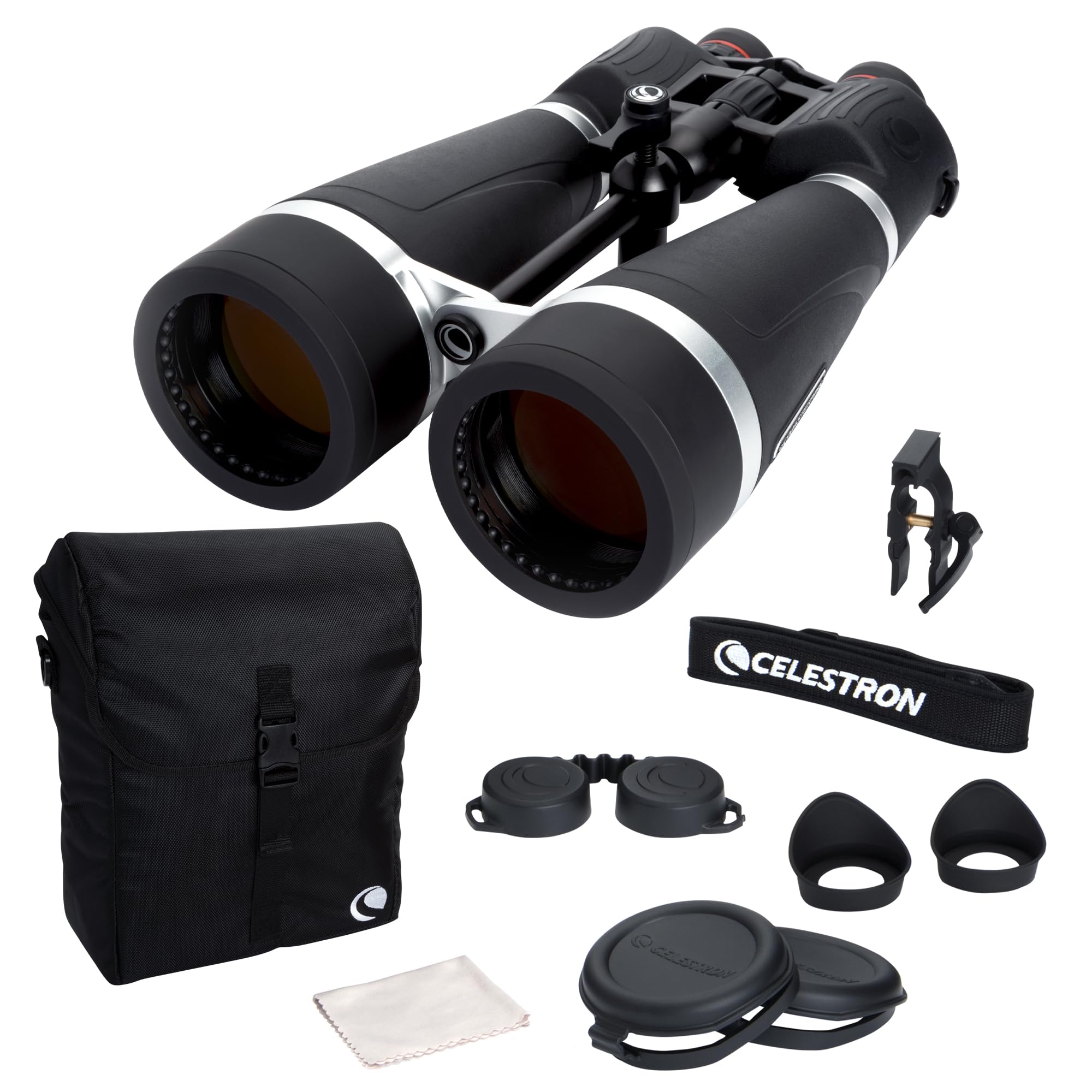
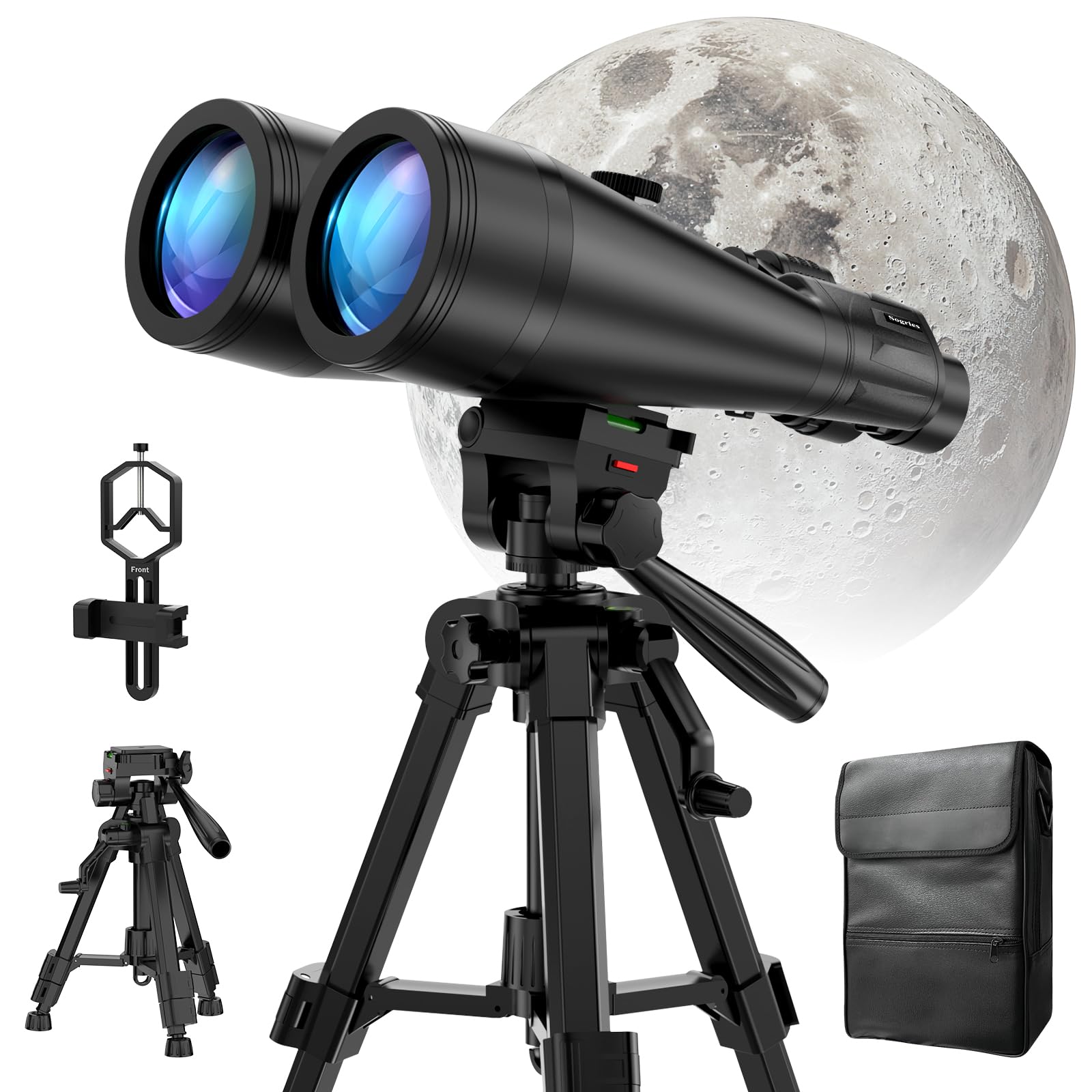
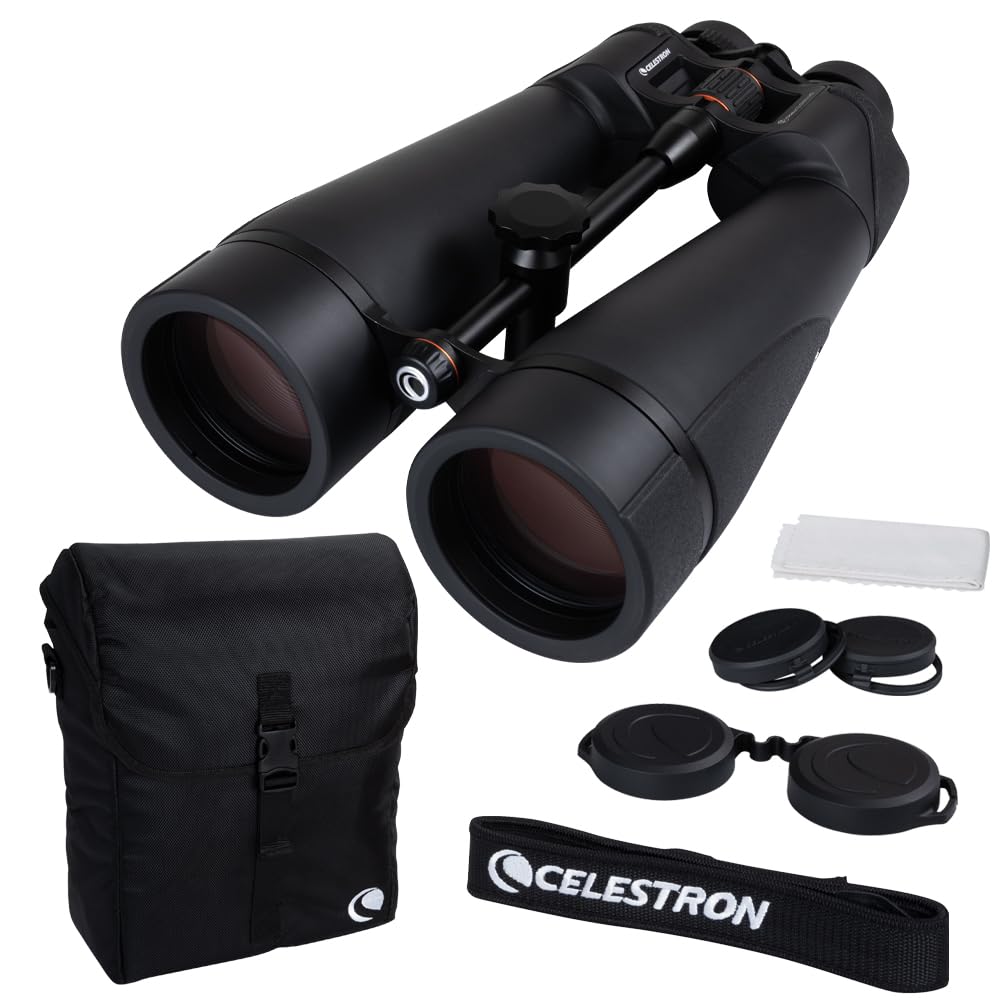
Most models in this size weigh about 4 to 6 pounds, so hand holding works only for a brief look before shake hides detail. If you hoped to skip a mount, see our guide to the best handheld astronomy binoculars instead. A center adapter on a tall and stiff tripod handles targets up to about 45 degrees well, while high targets call for a parallelogram mount. Waterproof and nitrogen filled bodies resist internal fog in cold air.
How Coatings, Build and Alignment Change Across Tiers
Price tiers in this class map closely to coatings, build quality and alignment on arrival. For a broader view of this size beyond astronomy use, see our guide to the best 20x80 binoculars before you settle on a tier.
Budget Tier: Bright Views With Basic Refinement
Models at about $90 to $160 give you the full light gathering of the size, often with multi coated optics and BK 7 or entry BaK 4 prisms. Views of the Moon and bright clusters can please, but edge sharpness and collimation vary more at this level. Buy from a seller with an easy return path, check alignment on the first clear night and plan to replace the basic adapter.
Midrange Tier: Cleaner Contrast and a Stronger Mount Path
Models at about $170 to $320 usually add fully multi coated optics, BaK 4 prisms and better stray light control, so nebulae stand out more clearly. Bodies feel stiffer, focus wheels turn with less play and most include a sturdier adapter and a better case. Weather sealing is more common here, and alignment tends to hold through normal travel. For most backyard observers this tier gives the largest real gain.
Premium Tier: Sharper Edges and a Build Made to Stay Aligned
Models at about $350 to $700 focus on refinement rather than raw light gathering, since the aperture stays the same. Expect flatter fields with stars sharp farther from center, stronger housings that protect collimation and, on some models, low dispersion glass for cleaner views of the Moon and planets. You also pay for better quality control. This tier suits frequent observers who notice edge flaws.
Common Mistakes to Avoid
These errors are common with this size, and each one costs you part of the view.
- Holding a 20x80 binocular by hand for a full session makes the image dance and hides faint detail.
- Buying on magnification alone ignores the narrow field and makes finding targets slow and frustrating.
- Using a short tripod forces you to bend your neck for high targets and ends sessions early.
- Skipping the collimation check during the return window leaves you stuck with a sample that causes eye strain.
- Ignoring eye relief as a glasses wearer cuts off the edge of the field and wastes part of the view.
- Storing the binocular while dew still covers the lenses invites spots and fungus that dull contrast.
Care and Maintenance for 20x80 Binoculars
Keep dust off the glass with a soft blower before you touch any surface, and use a clean microfiber cloth only when a smudge remains. Keep caps on when you move the binocular, and carry it in its case rather than loose in a car, since one hard knock can shift collimation. Store it dry at room temperature, away from direct sun.
After a dewy night, leave the binocular uncovered indoors until every surface feels dry, then cap and store it. Check the tripod adapter for looseness before each session, and tighten fittings by hand only. Wipe the body with a lightly damp cloth. If stars ever look doubled after a drop, seek a service check, since barrel alignment needs proper tools.
FAQ
What does 20x80 mean on binoculars for astronomy?
The numbers mean 20 times magnification through objective lenses that measure 80 mm across. That pairing favors faint and compact targets over wide sweeps. One practical check is target fit, because an object wider than about 3 degrees will spill past the edge of the field even though it looks small to the naked eye.
Can you hold 20x80 binoculars for astronomy without a tripod?
You can hold this size for a quick look, but a tripod is needed for serious viewing. Bracing helps for short checks, and leaning your elbows on a car roof or lying back in a reclining chair can steady a bright target for a minute. Treat those tricks as a preview only, and mount the binocular to study detail or share the view.
What can you see with 20x80 binoculars for astronomy on a clear night?
You can see lunar craters along the terminator, the four bright moons of Jupiter and hundreds of stars in open clusters. Saturn shows a clear oval shape that hints at its rings, though fine ring detail needs a telescope. Under a dark sky you can also trace the Andromeda Galaxy and the Lagoon Nebula, and split some wide double stars.
Do 20x80 binoculars for astronomy work for daytime viewing?
Yes, this size works in daylight for distant ships, raptors and ridges, but it is rarely the best tool for the job. Heat shimmer over land often limits sharpness long before the optics do, so the full 20x power can look soft at midday. The weight and narrow field also make tracking moving subjects hard.
How do you check collimation on 20x80 binoculars for astronomy at home?
You check collimation by viewing a distant straight edge, such as a roof line, and slowly moving the binocular away from your eyes while you keep looking at it. A well aligned sample keeps the line as one image, while a poor sample lets it split into two offset lines. Repeat the check on a bright star, since point sources reveal small errors.
Final Thoughts
Match this size to a mount you will really use, then choose your tier by coatings, prism glass and build quality rather than by magnification claims. Budget glass can start you well if you check alignment early, and premium glass rewards frequent use. Use the product table above to compare weight and price, and choose the best 20x80 binoculars for astronomy for your sky and your setup.