
Best 2 Tier Dish Drying Rack in 2026: Buying Guide and Top Picks
Disclosure: We may earn a commission when you buy through links on this page, at no extra cost to you. As an Amazon Associate I earn from qualifying purchases. Learn more

What to look for in the best 2 tier dish drying rack: the main types, key features, realistic price ranges and mistakes to avoid before you order.
A family dinner can leave you with a stack of plates, two pans, a pile of glasses, and almost no free counter to put them on. That is exactly the problem a second level solves. The best 2 tier dish drying rack for your home stacks drying space upward instead of spreading it across the counter, so a full load fits in the footprint of a much smaller rack. This guide helps you choose by counter space, household size, and budget, and the product table below lets you compare current models side by side.
If you are still deciding whether two levels are even the right format, start with the basics in our guide to the best dish drying rack options, then come back here for the stacked designs and the mistakes that leave buyers with a rack that wobbles or rusts.
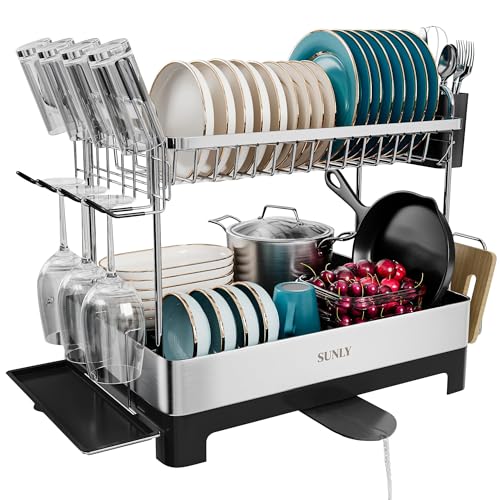


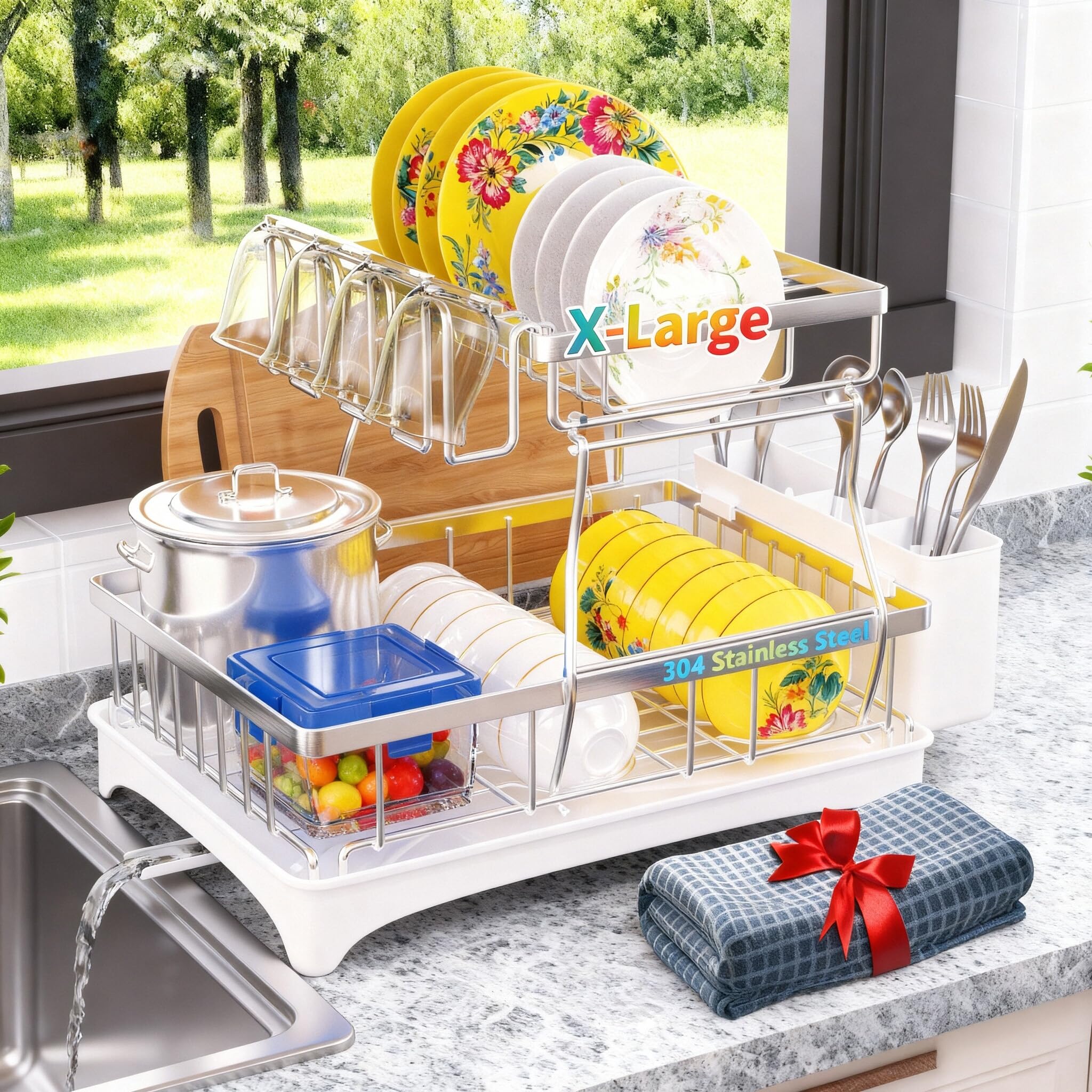

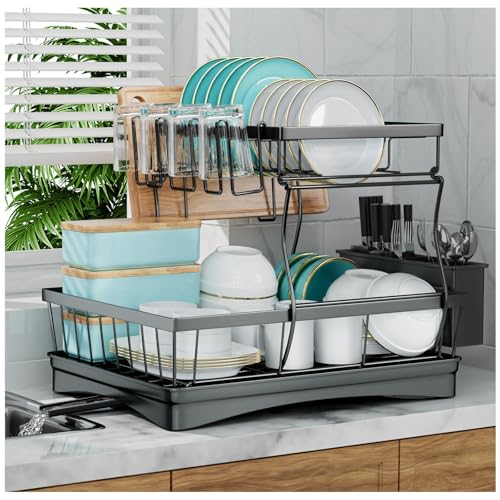
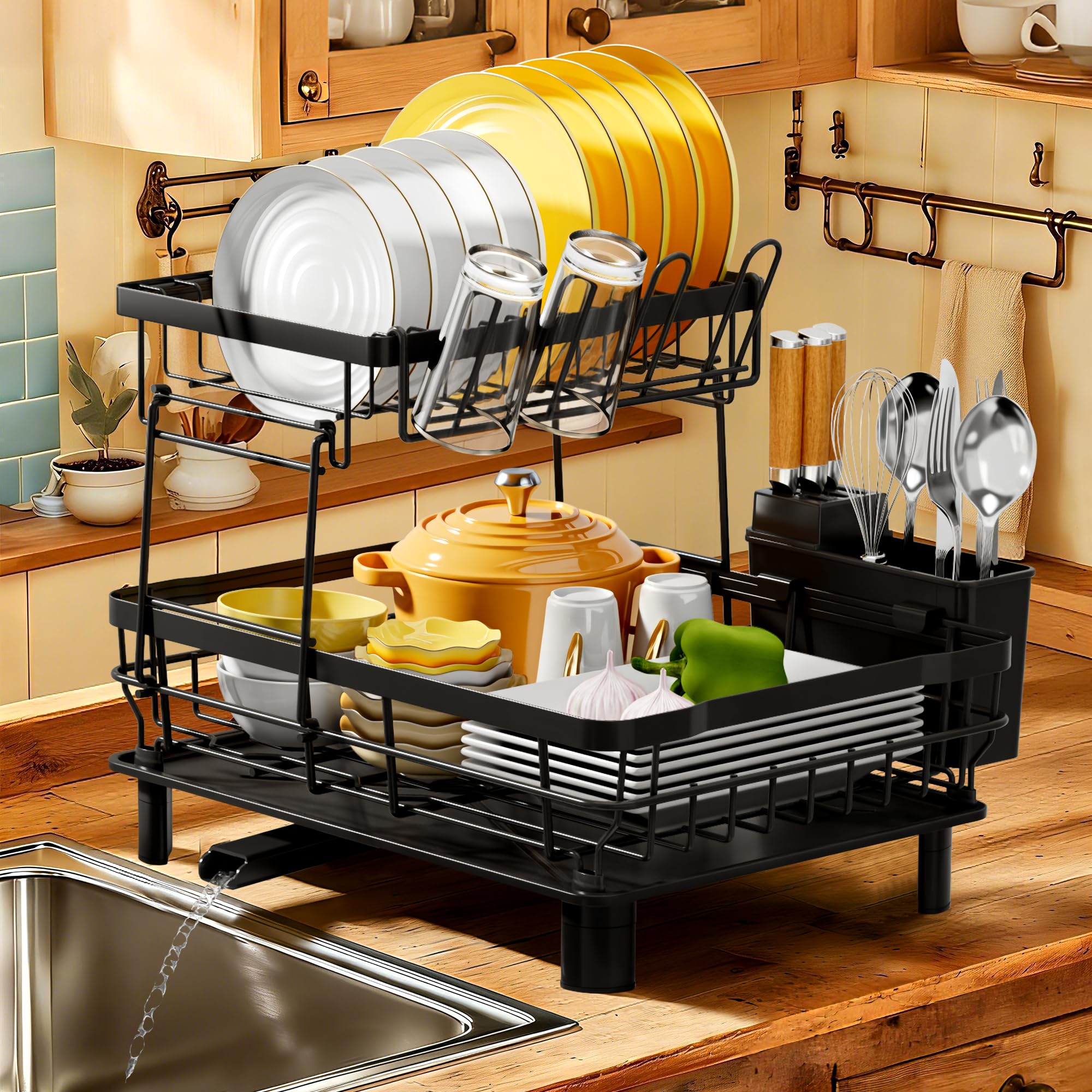

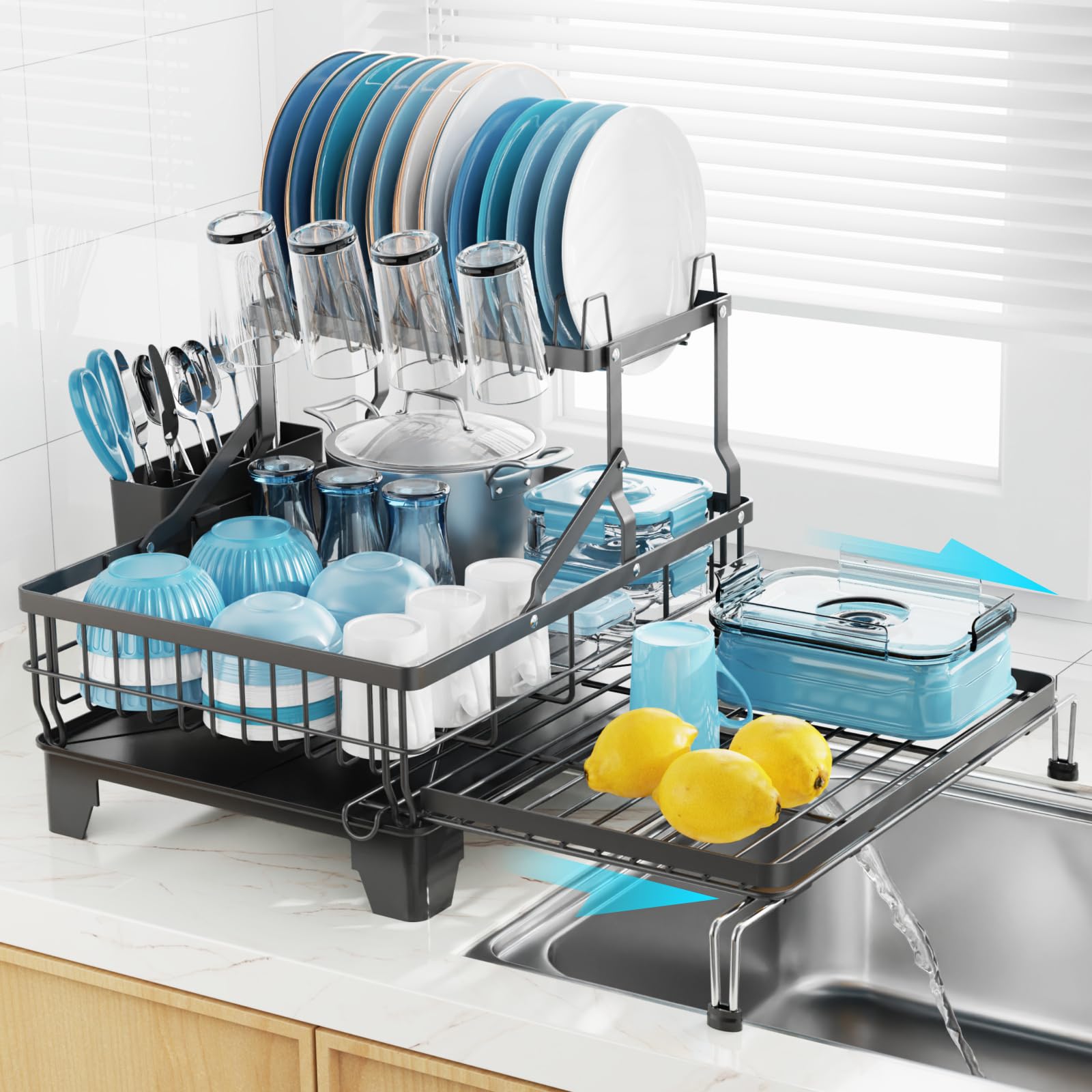


Quick Answer: What Matters Most in a 2 Tier Rack
Three things decide whether a two level rack works in your kitchen. First, the footprint has to fit your counter with room to spare, because a rack that crowds the sink makes washing up harder, not easier. Second, the frame must stay steady when the top level holds heavy plates, since all that weight sits high. Third, water needs a clear path down to a tray or spout, or puddles will gather under the lower level. Get those three right and the rest is preference.
Before You Buy: A Quick Checklist for Choosing a Dish Drying Rack
Size: Match It to Your Space
Measure the counter area beside your sink before you shop, then compare it with the rack footprint rather than the drying capacity. Most two level racks run about 16 to 24 inches wide and 11 to 13 inches deep, which is close to a standard single level rack, yet they hold roughly twice the load. Height matters just as much. Many models stand 12 to 16 inches tall, so check the gap between your counter and any wall cabinets above it. Leave at least an inch of clearance so tall plates and cutting boards slide in without scraping the cabinet doors.
Which Type Fits Your Routine
Fixed frame racks sit on the counter and suit most homes, since they need no setup and hold a full family load. Over the sink designs bridge the basin and drain straight down, which frees the counter entirely but only works if your sink width matches the frame. If your sink is small or you rent and cannot change anything around it, a best in sink dish drying rack is another route worth weighing. Collapsible two level racks fold flat for storage and fit occasional use in small apartments, RVs, and dorm rooms, though they usually feel less rigid under heavy cookware.
Features Worth Paying For, and Ones to Skip
A removable drip tray with a swivel spout is the feature most owners praise, because it sends water into the sink instead of letting it pool on the counter. A utensil holder with divided sections keeps forks and knives upright and draining, and slots sized for cutting boards stop boards from leaning against glasses. Cup holders along the side help if your household goes through many mugs. You can skip decorative finishes that add cost without adding strength, and skip extra attachments you will never attach, such as wine glass stems on a rack bought mainly for plates and pans.
Materials and Rust Resistance
Stainless steel frames resist rust longest and carry heavy loads without flexing, which is why they anchor most durable designs. If steel is your priority, compare the frames in our roundup of the best stainless steel dish drying rack models before you settle. Powder coated steel costs less and looks tidy, but once the coating chips at a joint, rust can start at that spot. Chrome plated wire is the budget option and fine for light daily loads. Plastic racks will not rust at all, though they can stain and may feel less steady when the top tier is full.
Realistic Budget Ranges
Under about $20, expect simple wire or plastic two level racks with a basic tray and no spout. They suit one or two people and light loads. Between about $20 and $50 you get sturdier steel frames, a drain spout, and a proper utensil holder, which covers most families well. Above about $50 to $100, you are paying for thicker steel, smoother finishes, larger capacity, and parts that are easier to remove and wash. Money spent there buys convenience and lifespan rather than extra drying space, so weigh it against how often you cook.
Two Tier Rack Types Compared
Fixed Countertop Frames for Daily Family Loads
The classic two level frame parks beside the sink and stays there. Plates stand in slots on one level, bowls and cups rest on the other, and a tray below catches the drips. This type suits households that wash dishes every day and want the rack ready at all times. Its weakness is permanence: it claims its counter space around the clock. In a truly tight kitchen, a drying mat may serve you better on quiet days, and our umbra udry review looks at that mat based style if you want a fold away backup.
Over the Sink Two Level Racks for Zero Counter Use
These frames stand on legs at either side of the sink, with both levels suspended above the basin. Every drop falls straight into the sink, so there is no tray to empty and no wet counter to wipe. They shine in galley kitchens and studio apartments where counter space is precious. The trade off is fit: the legs must clear your faucet, the width must match your sink, and tall items on the top level can crowd a low faucet arc. Measure twice, since a frame that rocks on uneven sink edges is worse than no rack at all.
Folding Two Level Racks for Part Time Kitchens
Folding designs collapse flat and store in a cabinet or against a wall, then open when guests arrive or a big cooking day fills the sink. They are the natural pick for RVs, small rentals, and anyone who hates permanent counter clutter. Capacity is smaller than fixed frames, and hinges are the weak point, so check that the joints lock firmly when open.
What to Look For When Comparing 2 Tier Racks
Weigh the factors that decide daily satisfaction: frame material and rust resistance, true capacity against counter footprint, drainage design, stability under a full top level, and how easily each part comes apart for washing. Manufacturer specifications, listed dimensions, and patterns in verified buyer feedback, such as repeated mentions of wobbling or trays that overflow, are the best evidence for each factor. Price only counts relative to build, since a cheap rack replaced yearly costs more than a solid one kept for years.
Is a 2 Tier Dish Drying Rack the Right Size for You?
Choose two levels if your household cooks most nights, washes bulky items like sheet pans and stockpots alongside daily plates, or has a counter run too short for a wide single level rack. Families of three or more usually fill both tiers at dinner. If you mostly wash a mug and a bowl, a compact single level rack or even a mat is simpler, and stacking space would go unused. Households that regularly dry oversized loads may instead want the broader footprint of the best large dish drying rack styles, which trade height for width.
One more check before you decide: picture your tallest everyday item, often a dinner plate at about 10 to 11 inches across, standing in the lower tier. The gap between levels must clear it with room to lift it out at an angle. If your plates are oversized or your cookware is unusually tall, bring those measurements to the product dimensions rather than trusting capacity claims like holds 20 plates, which assume standard sizes.
Common Buying Mistakes to Avoid
- Measuring only the counter length and forgetting cabinet height, so the top tier will not fit under wall cabinets.
- Ignoring the tray, then dealing with standing water that leaves mineral marks and a sour smell under the rack.
- Loading every heavy pan on the top level, which makes a light frame tippy and strains the joints.
- Buying capacity by plate count claims instead of checking slot spacing against your own plate thickness.
- Choosing chrome plated wire for a humid kitchen near the coast, where rust tends to appear far sooner.
Cost of Ownership and Care
A two level rack has no running costs, so ownership cost comes down to lifespan and small replacement parts. Trays and utensil cups sometimes crack or warp and can often be replaced for a few dollars, which beats buying a whole new rack. Weekly care is simple: empty the tray, wash it with warm soapy water, and wipe the frame dry so water spots do not build into scale. For a full routine that tackles buildup in the slots and joints, follow our step by step guide on how to clean a dish drying rack. Descaling with a vinegar soak once a month keeps steel bright in hard water areas.
Your Questions, Answered
How do you clean a 2 tier dish drying rack?
Take the rack apart if the design allows it, wash the tray and utensil holder in hot soapy water, and scrub the frame with a soft brush to reach the joints where grime collects. A soak in warm water with a splash of vinegar loosens white mineral scale on steel. Rinse, dry each part fully, and reassemble only when dry, since trapped moisture between stacked parts is what starts odors and rust spots on coated frames.
Is a 2 tier dish drying rack worth it?
It is worth it when counter space, not washing volume, is your limit, since you gain a full second drying surface without giving up more counter. It is poor value if your loads are small, because the unused top level just gathers dust and blocks light to the lower one. Think of it as trading height for width: worth it in narrow kitchens, unnecessary in spacious ones with a dishwasher doing most of the work.
How long does a 2 tier dish drying rack last?
A stainless steel frame often serves five years or more with basic care, while coated steel typically lasts two to four years before rust appears at worn joints. Plastic models usually give two to three years before they stain or crack. The tray almost always ages first, so a brand that sells replacement trays can stretch the life of the whole rack well past these ranges.
What size 2 tier dish drying rack do I need?
Start with your largest regular load rather than an average one. A household of one or two usually does fine with a compact rack about 16 inches wide, while families washing a full dinner service should look at 20 inches or more plus a board slot. Count your dinner plates: if you own more than eight, choose a model whose lower slots hold at least that many upright at once, so nothing waits in the sink for a second round.
What should I check before placing a 2 tier rack over my sink?
Measure the full width of your sink including the rim, then confirm the rack legs land on solid counter on both sides or on the rim as the design intends. Check your faucet height against the top tier, and run the tap and sprayer through their full swing to be sure nothing collides. Also confirm the sink depth: a shallow basin under a loaded rack leaves little room to rinse large items beneath it.
Final Thoughts
A stacked rack is a simple fix for a crowded counter, as long as the footprint, height, and drainage match your kitchen. Measure first, pick the material that fits your budget and your water, and favor a tray with a spout over decorative extras. If you keep those points in order, the best 2 tier dish drying rack for your home is the one that disappears into your routine, holding everything quietly while you cook. Compare your shortlist against the product table above before you order, and you will land on the right size the first time.


