
Best 15 Piece Knife Sets (2026): Buying Guide
Disclosure: We may earn a commission when you buy through links on this page, at no extra cost to you. As an Amazon Associate I earn from qualifying purchases. Learn more
What to check before you buy the best 15 piece knife set: steel, block size and what the pieces include, and which type fits your home.
A housewarming gift, a wedding registry, or a kitchen that still runs on two dull knives and a pair of scissors: these are the moments when a full set starts to look appealing. The challenge is that piece counts tell you very little on their own. Choosing the best 15 piece knife set for your home comes down to your counter space, how many people you cook for, and how much upkeep you will honestly do.
This guide walks through the checklist first, then compares the main types of sets so you can match one to your household. If you want the wider category view before narrowing down, start with our guide to the best knife set options, then come back here. The comparison table below sums up the key differences side by side.
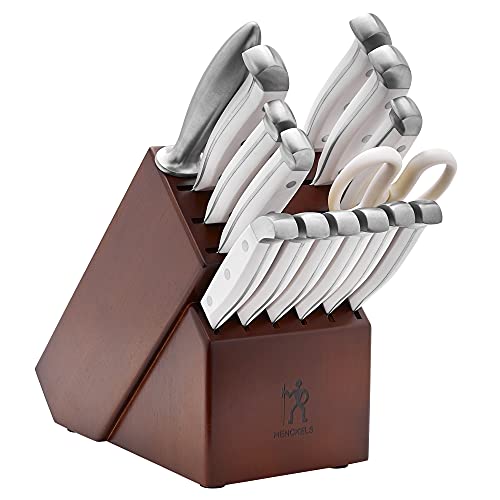


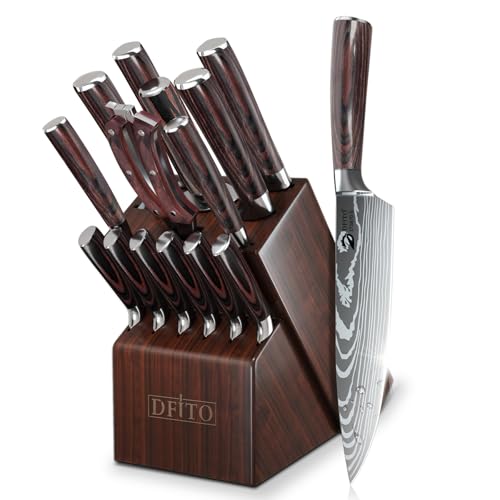
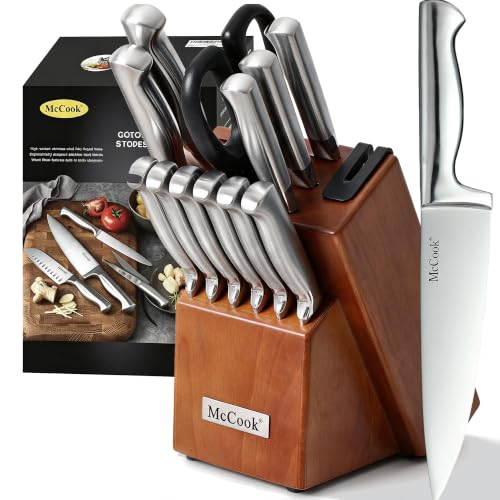


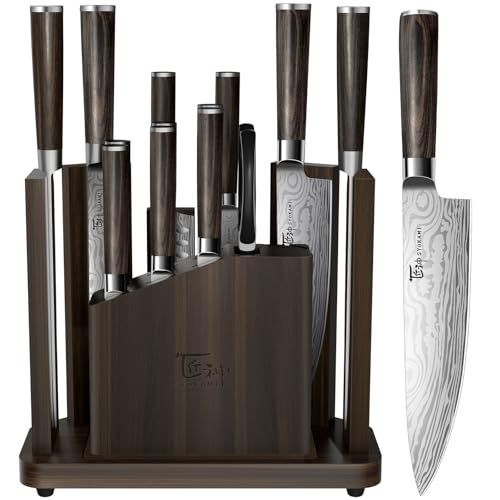
Quick Answer: The Short Version
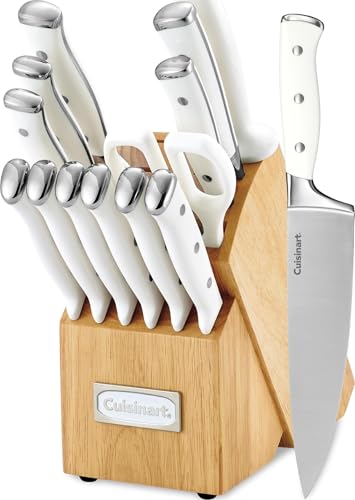
Fifteen pieces usually means five or six working knives, a run of steak knives, shears, a honing steel, and the block itself counted as one piece. That mix suits households of two to five people who cook most nights and serve steak or roasts now and then. If counter space is tight, look at slimmer blocks. If you cook daily and sharpen willingly, forged blades reward you. If budget rules, stamped blades in a tidy block cover everyday prep well at a modest price.
Before You Buy: A Quick Checklist for Choosing a Knife Set
Size: Match It to Your Space
Smaller sets of 3, 5, or 7 pieces hold only core knives and suit single cooks with little storage. A 10 or 14 piece set adds steak knives or a santoku. At 15 pieces you gain a fuller steak knife run and extras such as shears, while 20 piece sets mostly add more steak knives and specialty blades that many homes rarely touch. Measure your counter before ordering, because a block needs both footprint room and clearance above it so long blades slide out without hitting low cabinets.
Which Type Fits Your Routine
German style sets favor tougher blades that handle dense squash, bones in poultry, and heavy board work. Japanese style sets use harder, thinner blades that glide through fish and vegetables but chip more easily on hard rinds. Damascus describes a layered steel look rather than a separate performance class. Stainless steel resists rust in humid kitchens, while high carbon steel sharpens to a finer edge yet needs drying after use. Forged blades come from a single heated piece of steel, and stamped blades are cut from a sheet, which lowers cost and weight.
Features Worth Paying For, and Ones to Skip
A storage block protects edges and keeps knives visible, and a built in sharpener inside the block adds real convenience for busy homes. Before paying extra for that feature, see our answer on self sharpening knife block worth it for your habits. Steak knives earn their slots if you serve grilled meat weekly. Sheaths matter only if knives will live in a drawer. A roll bag suits cooks who travel with their tools. Skip duplicate utility knives and tiny specialty blades you cannot name a job for, since they inflate the piece count without helping dinner.
Steel Type and Hardness
Hardness is rated on the Rockwell scale, shortened to HRC. Blades around 56 to 58 HRC are softer and tougher, so they roll rather than chip and respond well to a honing steel. Blades around 60 to 62 HRC hold a keen edge longer but demand gentler handling and proper stones for sharpening. Stainless formulas add chromium for rust resistance, which matters near coastal air or in homes where knives sit in a damp sink. Match hardness to your habits honestly: an edge you maintain beats a harder edge you neglect.
Blade Geometry: German and Japanese Styles
German blades carry a curved belly that supports a rocking cut through piles of herbs and onions, and their edges are ground at a wider angle for durability. Japanese blades run flatter with a narrower angle, favoring a straight up and down cut and very thin slices of fish, cucumbers, and ripe tomatoes. Neither style is better in general; the right one matches the food you cut most and the motion your hand already knows. Readers drawn to the lighter, sharper feel can compare the best japanese knife set options after finishing this checklist.
Handle, Bolster, and Balance
A bolster is the thick collar where blade meets handle. A full bolster adds heft and guards fingers, while a partial bolster lets you sharpen the whole edge and makes the knife feel lighter at the front. Handles come in molded polymer, pakkawood, and plain wood, and the best shape is the one that stays secure in a wet hand. Balance should sit near the bolster for most cooks. If your wrist tires during long prep sessions, choose a set whose chef knife balances slightly toward the handle rather than the blade.
Realistic Budget Ranges
Sets under $50 use stamped blades and basic blocks, fine for a first apartment or a rental kitchen. Spending about $50 to $100 improves edge quality and adds better steak knives. At about $100 to $200 you find forged core knives, sturdier blocks, and more consistent grinding. Around $200 to $300 brings harder steels and refined handles. Above $300, gains shrink for most homes, and money often goes further on fewer, better individual knives instead.
Three Types of 15 Piece Sets Compared
The Classic Block Set for Most Homes
This is the standard layout: core knives, six steak knives, shears, a honing steel, and a counter block. It fits families who want everything in one place with no extra purchases, and it keeps sharp edges off drawer walls. Look for a block with slots sized to each blade so edges do not rattle. If this format appeals to you, our roundup of the best block knife set choices shows how block shapes and footprints vary between brands.
The Value Set for Tight Budgets
Value sets cut cost with stamped blades, lighter handles, and simpler blocks. For new cooks, students, and second homes, that trade is sensible: the knives still handle daily onions, chicken, and sandwiches, and replacing one costs little. The limits show up in edge life, so plan on honing often and sharpening a few times a year. Spend your savings on a decent cutting board, which protects any edge far more than a fancier box would.
The Forged Set as a Longer Term Investment
Forged sets cost more because each main blade starts as a single piece of steel shaped under heat and pressure. The result is a denser blade with a solid bolster, steady balance, and an edge that stays keen through years of daily cooking. These sets suit households that cook from scratch most nights and are willing to hand wash and hone on schedule. Buy this tier when your skills have settled and you know which knife sizes your hands reach for every day.
Our Selection Process for the Best 15 Piece Knife Sets
We judge sets on five points: how long the steel holds an edge, how the chef knife balances in hand, how keen the blades arrive from the maker, how much upkeep the set demands, and what you get for the price. Our comparisons rest on maker specifications and patterns in verified buyer feedback, such as repeated reports of loose handles or blocks that split. We weigh long term ownership cost alongside the sticker price.
Is a 15 Piece Knife Set the Right Size for You?
Count what the number really buys. Steak knives often take six slots, and the block, shears, and honing steel take three more, so your actual prep knives may number only five or six. For couples who rarely serve steak, a smaller set plus two bought steak knives can serve better and cost less. For families of four or five who host Sunday roasts, the full count earns its counter space. Solo cooks in studio apartments usually do better with a compact set and a magnetic strip on the wall.
Common Buying Mistakes to Avoid
- Buying by piece count alone, so half the budget goes to steak knives you never use.
- Skipping the counter measurement, then finding the block will not fit under your cabinets.
- Paying for features such as extra sharpeners and duplicate blades instead of better steel.
- Ignoring replacement cost, since a damaged knife from a discontinued set can be hard to match.
- Choosing very hard blades for a household that tosses knives into the dishwasher and sink.
Cost of Ownership and Care
Ownership cost stays low when you protect the edges you paid for. Hand wash and dry each knife right after use, and store blades in the block or on a strip rather than loose in a drawer; our guide on how to store kitchen knives explains the safest options for small kitchens. Hone weekly with the steel in the set, and sharpen on a stone or with a pull through sharpener a few times a year, following the steps in how to sharpen kitchen knives. Use wood or soft plastic boards, since glass and stone boards dull edges fast. A knife with a rolled or chipped edge that no longer responds to honing needs professional sharpening or replacement.
Frequently Asked Questions
Are knife sets worth it compared with buying knives one at a time?
A set costs less per piece and gives you matched handles and storage from day one, which suits new households building a kitchen from nothing. Buying one at a time lets you spend most of your budget on the chef knife you use daily and skip pieces you would never touch. If your kitchen already holds two good knives, add pieces individually. If you are starting empty, a set is the simpler and cheaper route.
How many knives should a kitchen have for everyday cooking?
Most home cooking runs on three blades: a chef knife for the bulk of chopping, a paring knife for small work in hand, and a serrated bread knife for loaves and tomatoes. Everything beyond that trio covers comfort and special jobs, such as a santoku for vegetables or a utility knife for sandwiches. A 15 piece set wraps that core in steak knives and storage, so judge it by the core, not the count.
What knives do I really need as a beginner cook?
Start with the same core trio, then notice what slows you down over the first month of cooking. Many beginners discover they want a smaller utility knife for fruit and cheese, while others never miss it. A set makes sense for a beginner who has nothing at all, because it removes guesswork and includes storage. Choose forged or stamped based on budget, and put practice and a stable board ahead of extra pieces.
What size knife set do I need for a family of four?
A family of four that cooks most dinners at home is the sweet spot for 15 pieces, because four to six steak knives get used at once and two adults may prep side by side. Households that eat out often or serve steak rarely can drop to a 10 piece set without feeling the gap. Count the seats at your table and how often two cooks share the board, then size the set to that reality.
Can I put the knives from a 15 piece set in the dishwasher?
Manufacturers often advise against it, and the reasons are practical rather than fussy. Detergent and knocking against racks dull edges, water spots stain blades, and heat plus moisture can loosen or crack handles, especially wood ones. Hand washing takes under a minute per knife: wash, dry, and return it to the block at once. That habit alone can double the time between sharpenings for a typical home set.
Final Thoughts
The right set is the one whose core knives match your food, your counters, and your patience for upkeep. Use the product table above to compare the three types against your budget, then pick the format your household will actually maintain. For most homes, the best 15 piece knife set is a classic block set with sound steel, honest piece counts, and a footprint that fits the kitchen you already have.


