Best 12x16 Gazebos (2026): Buying Guide
Disclosure: We may earn a commission when you buy through links on this page, at no extra cost to you. As an Amazon Associate I earn from qualifying purchases. Learn more

What to check before you buy the best 12x16 gazebo: roof type, frame material and anchoring, and which type fits your home.
A 12 by 16 foot gazebo is a big commitment of yard space and money, and choosing the wrong roof or frame is hard to undo once the posts are anchored. This guide helps you find the best 12x16 gazebo for your space by comparing roof types, frame materials, capacity, and assembly demands. If you want the broader picture first, see our guide to the best gazebo options in other sizes.
Rather than focus on names and models, this article compares the three main build types in this size and the measurements, materials, and costs that matter. The comparison table below sums up the types side by side so you can narrow your shortlist quickly.




The Three Types at a Glance
In this size, your shortlist will almost always fall into three groups. A hardtop model gives you a fixed metal or polycarbonate roof and the longest service life. A soft top model uses a fabric canopy on a metal frame and costs far less. A pop up model trades permanence for speed, going up and coming down for events. The sections below compare those three types on the factors that matter most at 12 by 16 feet.
Three Gazebo Types Compared
Hardtop Gazebos for Permanent Shade
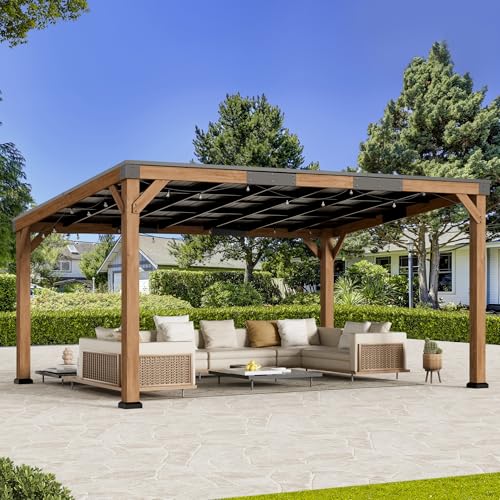
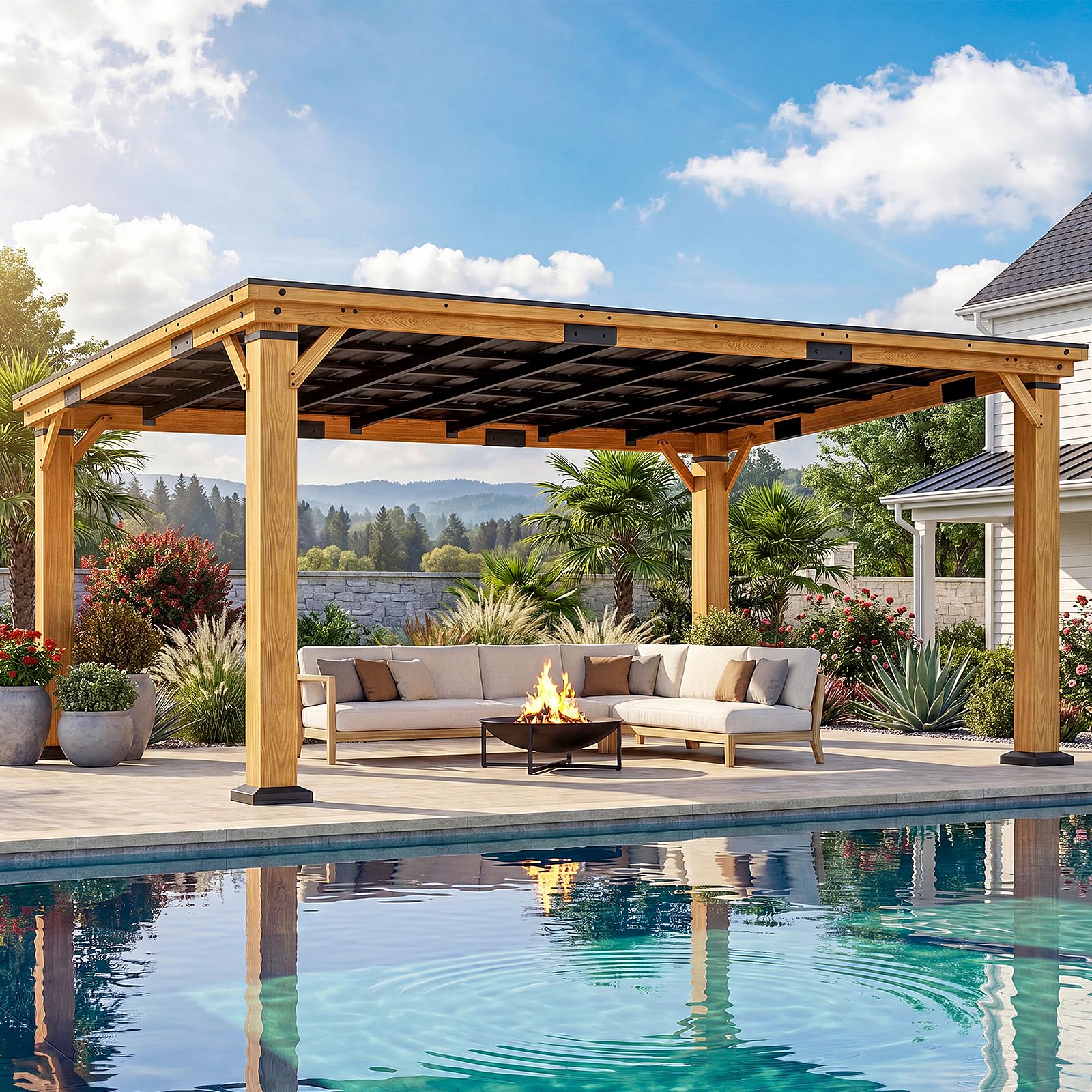
A hardtop gazebo uses rigid roof panels, usually galvanized steel, aluminum, or polycarbonate, fixed to a sturdy frame. That roof sheds rain instead of pooling it, handles snow far better than fabric, and does not need to come down each fall. The trade off is effort and cost. Assembly takes a full day or more with help, and the finished structure is meant to stay where you build it. Choose this type when the gazebo is a permanent part of your yard plan and you want shade in every season.
Soft Top Gazebos for Lower Cost Coverage
A soft top gazebo pairs a metal frame with a fabric canopy, often polyester with a water resistant coating. It costs much less than a hardtop, the parts are lighter to move, and most owners can raise the frame in a few hours. The canopy is the weak point. Sun slowly weakens fabric, seams can leak in heavy rain, and the cover should come off before winter snow or strong wind arrives. Budget for a replacement cover every few seasons. Choose this type when you want generous shade now and accept ongoing cover care.
Pop Up Gazebos for Events and Flexibility
A pop up gazebo folds open from a scissor style frame with a fabric top, and at 12 by 16 feet it is the largest and heaviest version of that design. One or two people can open it in minutes, which suits parties and temporary shade over a work area. It is not built to stay up. The frame flexes in wind, the top collects water if the pitch is shallow, and leaving it out for weeks shortens its life fast. Choose this type when the spot must return to open lawn between uses.
How We Chose What to Compare
The comparison in this guide rests on five criteria drawn from maker specifications and verified buyer feedback: build materials and weather resistance, usable size and capacity, assembly difficulty, long term durability, and warranty coverage. Each type above is judged on how those factors play out at this footprint, since a design that works at 10 by 10 feet can struggle when the roof span grows to 16 feet.
How to Choose the Right Gazebo
Size and Form Factor
A 12 by 16 foot footprint gives you 192 square feet of covered ground, and the rectangle shape suits group seating better than a square of similar area. You can fit a dining table for eight along the long axis and still leave a walkway on one side, or place a sofa set at one end and a lounge zone at the other. Smaller footprints such as 10 by 12 feet hold a table for six with little spare room, while 12 by 20 feet starts to dominate a modest yard. Check edge height too, since it decides whether tall guests can enter without ducking.
Features Worth Paying For
Mosquito netting is the feature owners in bug prone areas value most, and it should zip smoothly and reach the ground without gaps. Curtains add privacy and block low sun and wind driven rain, though they catch wind like sails, so tie them back on gusty days. A vented top lets hot air escape and reduces lift in a breeze. Hooks or tracks for lights extend use into the evening. Gutter channels on hardtop roofs are worth paying for because they direct rain to the corners instead of letting it sheet off every edge.
Weather Resistant Materials
Frame material decides how the structure ages. Aluminum resists rust and keeps the frame light enough to reposition during assembly, but it needs thicker walls to match steel for stiffness. Powder coated steel is strong and common, yet any scratch that reaches bare metal can start rust, so touch up chips promptly. Wood frames look warm and can be very rigid, but they need sealing and weigh far more. For roofs, galvanized steel panels shrug off hail and snow, polycarbonate panels weigh less and let in soft light, and fabric canopies should never be trusted under a snow load.
Size for Your Space
Measure the site before you order, and measure more than the footprint itself. Leave at least 2 to 3 feet of clear space around the posts so you can walk, mow, and open curtain panels without crowding a fence or wall. Check for overhead branches and utility lines that could clash with the roof peak. Readers planning a lawn setting will find placement ideas in our guide to the best gazebo for backyard layouts, while a slab site raises different fixing questions covered in our guide to the best gazebo for patio setups. Place the long side to block afternoon sun where you sit most.
Assembly and Anchoring
Plan on at least two adults for any permanent model in this size, and three make the roof stage far safer. Sort the hardware first, lay the frame out on the ground, and tighten bolts fully only after the structure stands square. The detailed steps in our guide on how to assemble a gazebo walk through that sequence. Anchoring is not optional at 12 by 16 feet because a roof this size catches serious wind. Bolt posts to concrete or deck footings where you can, use ground stakes plus weight bags for pop up models, and check your local rules, since some areas require a permit for a permanent structure of this footprint.
Care and Off Season Storage
Rinse the roof and frame with plain water a few times a year, and clear leaves from roof valleys before they trap moisture against panels or fabric. Let a fabric canopy dry fully before folding it away, since stored damp fabric grows mildew and stains that do not wash out. Hardtop roofs can usually stay up in winter if the maker rates them for snow, while soft tops should come down. Our guide on how to winterize a gazebo covers end of season steps in detail.
How Much Should You Spend?
Pop up models in this size are the entry point and often cost under $500. Soft top gazebos commonly run about $500 to $1000, and the extra money buys thicker fabric and a stronger frame. Hardtop models start at about $1000 and can pass $3000, with higher prices reflecting steel roof panels, larger posts, and longer warranties. Under about $200 you will not find a true 12 by 16 gazebo that holds up outdoors, only light event canopies. Set your budget by type first, then compare frames within that type.
Is a 12x16 Gazebo the Right Size for You?
Choose 12 by 16 feet if you regularly host eight to twelve people, want a dining zone and a seating zone under one roof, or plan to shelter a large hot tub or outdoor kitchen run. The rectangle covers these mixed uses better than a square because each activity gets its own end of the floor. Drop to a 12 by 12 or 10 by 12 foot model if your patio is small, since an oversized roof makes the whole yard feel crowded and can shade out nearby planting beds. Step up to 12 by 20 feet only when your gatherings run past fourteen guests.
Also weigh a gazebo against a pergola before you commit. A gazebo gives you a full roof and complete rain cover, while a pergola leaves the top partly open for climbing plants and dappled light. Our comparison of gazebo vs pergola lays out cost, shade, and upkeep for both. If you need dry cover for meals and gear, the gazebo wins. If you want an open garden feature and accept wet cushions after rain, the pergola may suit you better.
FAQs
What size gazebo do I need for a dining table and a lounge area?
For both zones under one roof, 12 by 16 feet is the smallest footprint that works comfortably. A table for eight takes roughly a 10 by 6 foot area once chairs and pull out room are counted, which leaves a strip about 10 by 5 feet at the other end for two lounge chairs and a small side table. If your table seats ten or more, move up a size, because squeezing chairs against posts makes the whole space feel cramped even though the table itself fits.
How long does a 12x16 gazebo last?
Service life depends mostly on the roof type. A hardtop frame can serve for ten years or more when anchors stay tight and rust spots get touched up early. A soft top frame often lasts as long, but the canopy itself usually needs replacing every two to four seasons because sun degrades fabric even when it looks intact. Pop up frames used only for events can last for years, while the same frame left standing all season may bend in its first strong storm.
Can a 12x16 gazebo stay up all winter?
A hardtop gazebo can stay up if its roof carries a snow rating from the maker and you brush off heavy wet snow before it builds up. A soft top gazebo should have its canopy removed for winter even in mild areas, because a single wet snowfall can stretch fabric and bend the light roof frame. Pop up models should always be stored indoors for winter. In every case, check the anchors again in spring, since freeze and thaw cycles can loosen ground fixings.
Do I need a permit for a 12x16 gazebo?
Many towns treat a permanent gazebo of 192 square feet as a structure that needs a permit, while temporary pop up models usually do not. Rules vary by city and by whether the gazebo is anchored to a footing, attached near the house, or wired for power. Homeowner association rules can add limits on height, placement, and roof color even where the city allows the structure. Check with your local building office before you pour footings or order, because moving an anchored gazebo after a complaint is costly work.
How do you clean a 12x16 gazebo roof and frame?
Start from the ground with a garden hose and a soft brush on an extension pole, working from the peak down so dirty water runs off the edges. Use mild soap only where sap or bird mess sticks, and rinse well, since soap residue on fabric can strip its water resistant coating. Avoid pressure washers on canopy fabric and polycarbonate panels, because the jet can tear seams and scratch panel surfaces. Clean in spring before the season starts and again before winter storage or winter weather arrives.
Final Thoughts
The right choice comes down to how permanent you want the structure to be. Pick a hardtop for a fixed gathering spot that shrugs off weather, a soft top for generous shade at a lower cost, or a pop up when the space must open up again between events. Measure carefully, anchor firmly, and match the roof to your climate, and the best 12x16 gazebo for your yard will serve for many seasons. Before you order, look back at the product table above to confirm which type fits your budget and your site.