Best 10 Quart Slow Cookers (2026): Size, Features and Buying Tips
Disclosure: We may earn a commission when you buy through links on this page, at no extra cost to you. As an Amazon Associate I earn from qualifying purchases. Learn more
What matters when choosing the best 10 quart slow cooker: size, features, budget and the mistakes to avoid.
Picture a Sunday where a whole team eats at your house, the oven is already full, and dinner still has to cook itself while you are out of the kitchen. That is the job a very large slow cooker does well. The best 10 quart slow cooker for your home is not the one with the most buttons. It is the one that fits your counter, feeds your group, and suits the hours you are away.
This guide helps you choose by household size, kitchen space, routine, and budget, comparing types rather than extras you will never use. Start with the product table on this page, then work through the checklist. If your meals are usually much smaller, our guide to the best slow cooker covers the full size range.


Quick Answer: The Three Types to Compare
Nearly every 10 quart model falls into one of three groups, and picking the group first makes the rest simple.
- Simple manual models use a dial with low, high, and warm. They cost the least and suit cooks who stay nearby.
- Programmable models add a timer and switch to warm on their own. They suit long workdays.
- Portable models add a locking lid and sturdy handles. They suit potlucks and team meals.
All three cook with gentle heat over many hours. The differences are timing control, transport, and price.
Before You Buy: A Quick Checklist
Work through these points in order. Size and space rule out more models than any feature list will.
Size: Match It to Your Space and Your Group
Slow cookers run from mini 2 quart models up through 4 quart, 6 quart, 7 quart, and 8 quart sizes, and 10 quarts sits at the top. Stated capacity is the brim measurement, yet food cooks best when the insert is about two thirds full, so a 10 quart cooker really holds about 6 to 7 quarts of food. That is enough stew or pulled pork for about 8 to 10 people, or one large batch to freeze in portions. If your usual recipe serves 4, this size will feel empty and food can dry at the edges.
Which Type Fits Your Routine
Manual dial models are the simplest to run, but you must be home to switch them to warm. Programmable digital models let you set the cooking hours in advance, which matters when a workday runs longer than a recipe allows. Oval inserts fit large roasts and whole birds better than round ones at this size. Portable designs travel well, while casserole style and triple cookers spread capacity across shallow or separate dishes instead of one deep pot, so they serve different jobs.
Features Worth Paying For and Ones to Skip
A timer that switches the cooker to warm protects food on days when you get home late, and a locking lid earns its cost if the cooker ever rides in a car. A temperature probe helps with large roasts, and a stovetop safe removable insert lets you brown meat in the same vessel. Skip app controls and long lists of preset programs, since low and high already cover nearly every recipe. Built in browning is pleasant but raises the price for a step you may do once a week.
Wattage, Power, and Energy Use
Large slow cookers typically draw about 200 to 300 watts, far less than a full size oven. Running one for 8 hours uses roughly 2 kilowatt hours of electricity, so the cost per meal stays modest. Energy use rises a little on high and drops on warm, but the setting should follow the recipe and food safety, not the power bill. A tight lid matters more, since lost heat makes cooking uneven.
Safety Features and Certifications
Look for a UL or ETL listing, which means an independent body has reviewed the electrical safety of the cooker. Stable feet, handles that stay cooler to the touch, and a warm setting that holds food at or above 140 degrees Fahrenheit all matter, because a full insert is heavy and hot. If insert materials concern your family, our guide to the best non toxic slow cooker explains ceramic, stainless steel, and coated options.
Counter Space and Dimensions
Measure before you order. A 10 quart oval cooker often spans about 16 inches long and 12 inches wide, and it needs clear space above the lid so steam can escape. Check the cabinet height over your counter and the shelf where it will live between uses. Also plan for weight. Ten quarts of food alone weighs about 20 pounds, plus the insert and base, so the walk from counter to table should be short and clear.
Realistic Budget Ranges
Simple manual 10 quart models often cost about $50 to $80. Programmable models with timers and locking lids usually run about $80 to $130. Prices over about $130 should buy clearly better construction, such as a heavier insert or a stronger lid seal, rather than more preset buttons. Keep a little aside for ownership costs, because a replacement insert or lid can cost a fair share of a new cooker.
Three Types Worth Comparing
Use these profiles to match a type to your household before you look at any single model.
Simple Manual Models for Everyday Batches
A manual dial cooker gives you low, high, and warm, and nothing else to program or break. That simplicity suits cooks who work nearby and anyone making big weekend batches while at home. The cooking results match fancier types, since the heating method is the same. The trade off is attention. Without a timer, a recipe that finishes at noon keeps cooking until you get to it.
Programmable Models for Workday Cooking
Programmable models add a countdown timer, a digital display, and an automatic switch to warm when the set hours end. That one feature changes who the cooker serves. Commuters and parents at evening practices can start dinner in the morning without overcooking it by supper. Some add a probe that shifts to warm when a roast reaches its target temperature. You pay more, and the electronics are one more part that can fail years from now.
Portable Models With Locking Lids for Gatherings
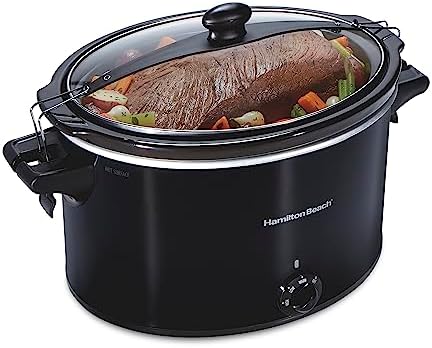
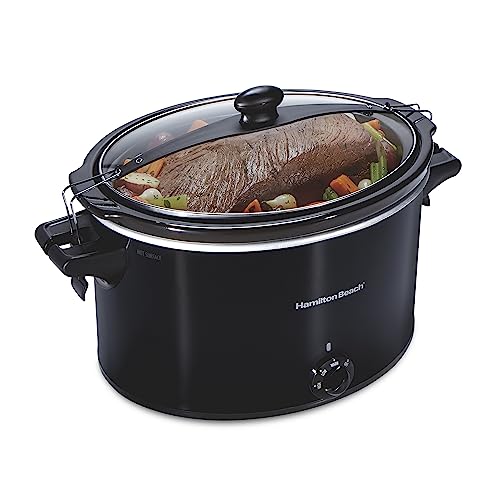
Portable models clamp the lid down with a gasket and latches, and they add wide handles for a steadier grip. They suit the cook who feeds a locker room, a church basement, or a reunion across town, because soup stays inside the pot instead of coating the car seat. The oval shape also cradles a roast for serving at the table. If your cooker will never leave your counter, skip this type and put the money toward a timer.
How We Compare These Cookers
Our comparison weighs stated and usable capacity, how evenly a cooker holds low heat, ease of use, cleaning, safety listings, and warranty length. We base judgments on manufacturer specifications and patterns in verified buyer reports, such as lids that warp or inserts that crack.
Is a 10 Quart Slow Cooker the Right Size for You?
This size earns its shelf space in a few clear cases. Large families cooking one pot dinners most nights will fill it without effort. Batch cooks who freeze soup and chili in portions use the full capacity every time, and our guide to the best slow cooker for soup shows which shapes freeze and reheat best. The oval footprint also swallows a large beef roast with room for vegetables, a point explored in our guide to the best slow cooker for pot roast.
Smaller households should think twice. A couple will rarely fill even half the insert, and small amounts dry sooner in a wide pot. If you mostly braise modest cuts and own a good oven, the comparison in slow cooker vs dutch oven may show that the pot in your cabinet covers the job.
Common Buying Mistakes to Avoid
- Buying 10 quarts for nightly dinners for two, which leaves food spread thin so it dries at the edges.
- Skipping the tape measure, then finding the cooker blocks cabinet doors or fits no storage shelf.
- Filling the insert to the brim, which leaves no room for bubbling liquid and can push hot food over the rim.
- Lifting the lid again and again, which dumps heat and adds real time to a long cook.
- Starting a large frozen roast without thawing it first, which keeps the center in unsafe temperatures too long.
- Paying for app controls while the model lacks a timer, the one feature most large households use daily.
Cost of Ownership and Care
Running costs stay low. Electricity for a long cook costs far less than the ingredients in the pot, and there are no filters or pads to replace. The real costs are a replacement insert or lid if one chips or cracks, plus optional liners if you use them. Liners save scrubbing on sticky recipes, yet the removable insert already washes easily, so many owners skip them.
Care is simple but specific. Let the insert cool before washing, because cold water on hot stoneware can crack it. Store the cooker with the lid upside down on the insert or with a cloth between lid and rim, which protects both edges from chips. Wipe the base with a damp cloth only.
Your Questions, Answered
How do you clean a slow cooker without damaging the insert?
Unplug the cooker and let everything cool fully. Wash the insert and lid in warm soapy water, and soak dried on food for 20 to 30 minutes instead of scraping it. For the white mineral ring that hard water leaves, soak the insert with equal parts water and plain white vinegar, then wash again. Never immerse the heating base. Our step by step guide to how to clean a slow cooker covers odor removal from lids as well.
Is a 10 quart slow cooker worth it for a small household?
It can be, but only when batch cooking is a real habit rather than a plan. The deciding factor most small households miss is freezer space, not appetite. A full batch yields roughly 12 to 16 portions of soup or stew, and those portions need containers and room to store them. If you will freeze and reheat that food gladly for weeks, the size pays off. If leftovers linger uneaten, a smaller cooker serves you better.
How long does a slow cooker usually last?
A well kept slow cooker often lasts about 5 to 10 years. The insert and lid usually outlive the controls, so programmable models tend to end with an electronic failure while manual models more often end with a worn switch or a cracked insert. Stop using any cooker with a frayed cord or a crack through the insert wall, because those are safety problems rather than cosmetic wear.
What size slow cooker do I need for a turkey breast or a large ham?
Measure the meat, not just its weight. A bone in turkey breast or a large ham needs an oval 10 quart insert in most cases, because the height of the cut matters as much as the pounds. The lid must close fully with room above the meat for steam, so check the tallest point of the cut against the depth of the insert before a holiday, not during it.
What is the best 10 quart slow cooker for most homes?
For most homes it is the programmable oval type with a timer, a removable insert, and a lid that latches. That mix covers workday cooking, large roasts, and safe transport without paying for browning systems or app controls. One detail worth checking is how long the warm setting runs after the timer ends, since some models shut off after a set number of hours, which changes how late you can safely get home.
Final Thoughts
Match the type to your routine first, then check size, space, and safety listings, and the right choice becomes clear. Manual models serve cooks at home, programmable models serve long days away, and portable models serve gatherings. The product table above pulls those options together so you can compare them at a glance. Choose the best 10 quart slow cooker your counter can hold and your week can fill, and it will quietly earn its place for years.