Best 10 Ft Patio Umbrella (2026): What to Look For
Disclosure: We may earn a commission when you buy through links on this page, at no extra cost to you. As an Amazon Associate I earn from qualifying purchases. Learn more

How to pick the best 10 ft patio umbrella: the features that matter, who each style suits and what to avoid.
Two umbrellas with the same listed 10 ft size can shade very different areas and handle wind in very different ways. Shape, pole position, rib strength, and fabric all change what you actually get. This guide helps you find the best 10 ft patio umbrella for your table, deck, or pool edge by focusing on build materials and weather resistance, true coverage, and setup. Compare the main types in the comparison table below, then use the sections that follow to narrow your choice before you look at the wider guide to the best patio umbrella for other sizes.





Who Should Buy a 10 ft Patio Umbrella?
Families shading a table for six to eight people
A 10 ft canopy is the size most often matched with a 54 to 62 inch table and six to eight chairs. It extends past the table edge on all sides, so people at the ends are not left in direct sun at midday. If your current 9 ft model leaves the end chairs exposed, moving up one size usually solves the problem without a much larger and heavier frame.
Deck owners who need shade without a table hole
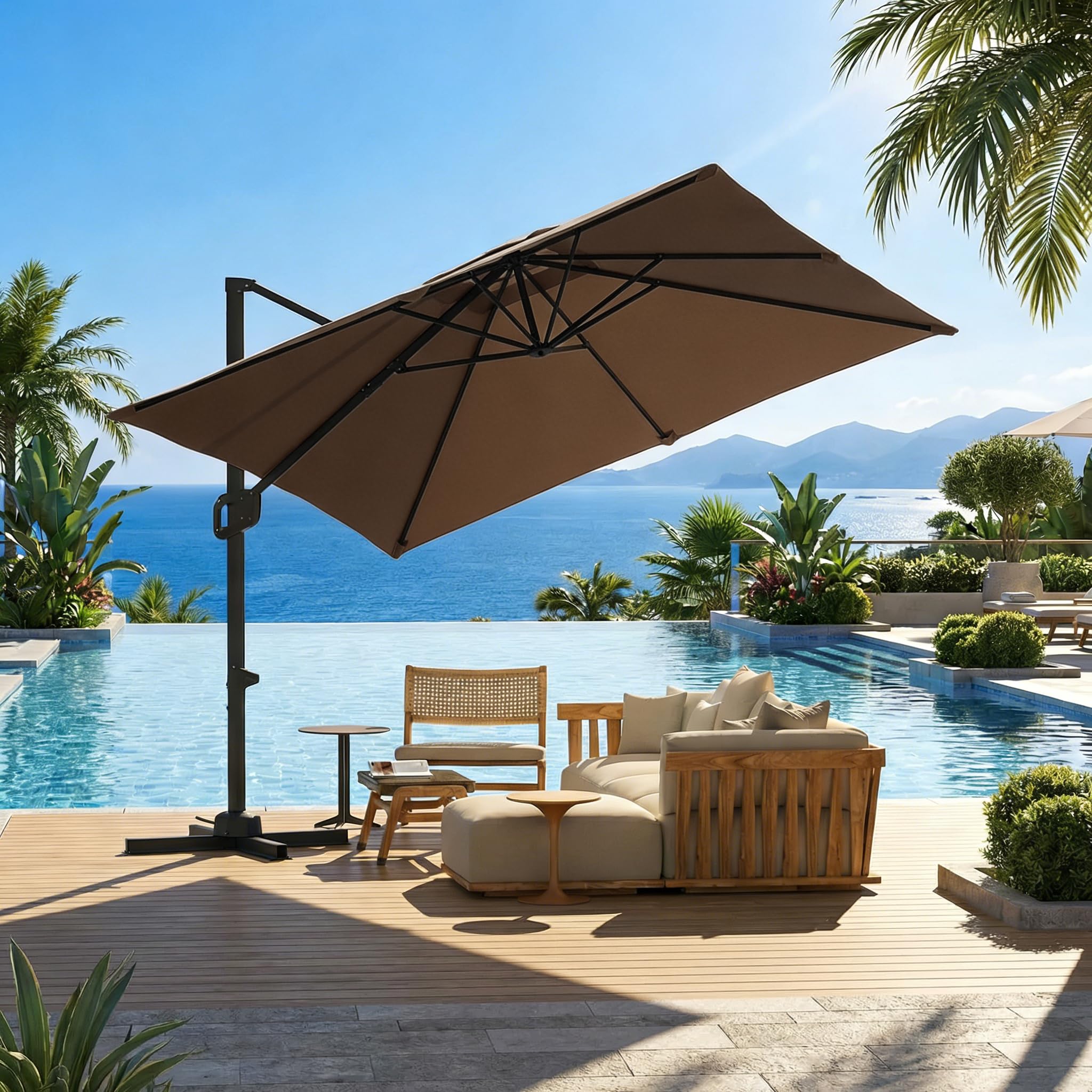
If your seating is a sofa, two lounge chairs, or a conversation set with no center hole, a center pole has nowhere useful to go. An offset design hangs the canopy over the seating while the pole stands to the side. You keep the seating area clear, and you can swing the canopy as the sun moves.
Pool and open patio users with room to spare
A 10 ft canopy also suits a pair of chaise lounges or a small dining set on an open patio, where you want shade over people and the surface beside them. Hot paving can make a space feel unusable in the afternoon, and a broad canopy lowers that glare. You do need clear space for the base and for the canopy to open without striking a wall or low branches.
Types of 10 ft Patio Umbrellas Compared
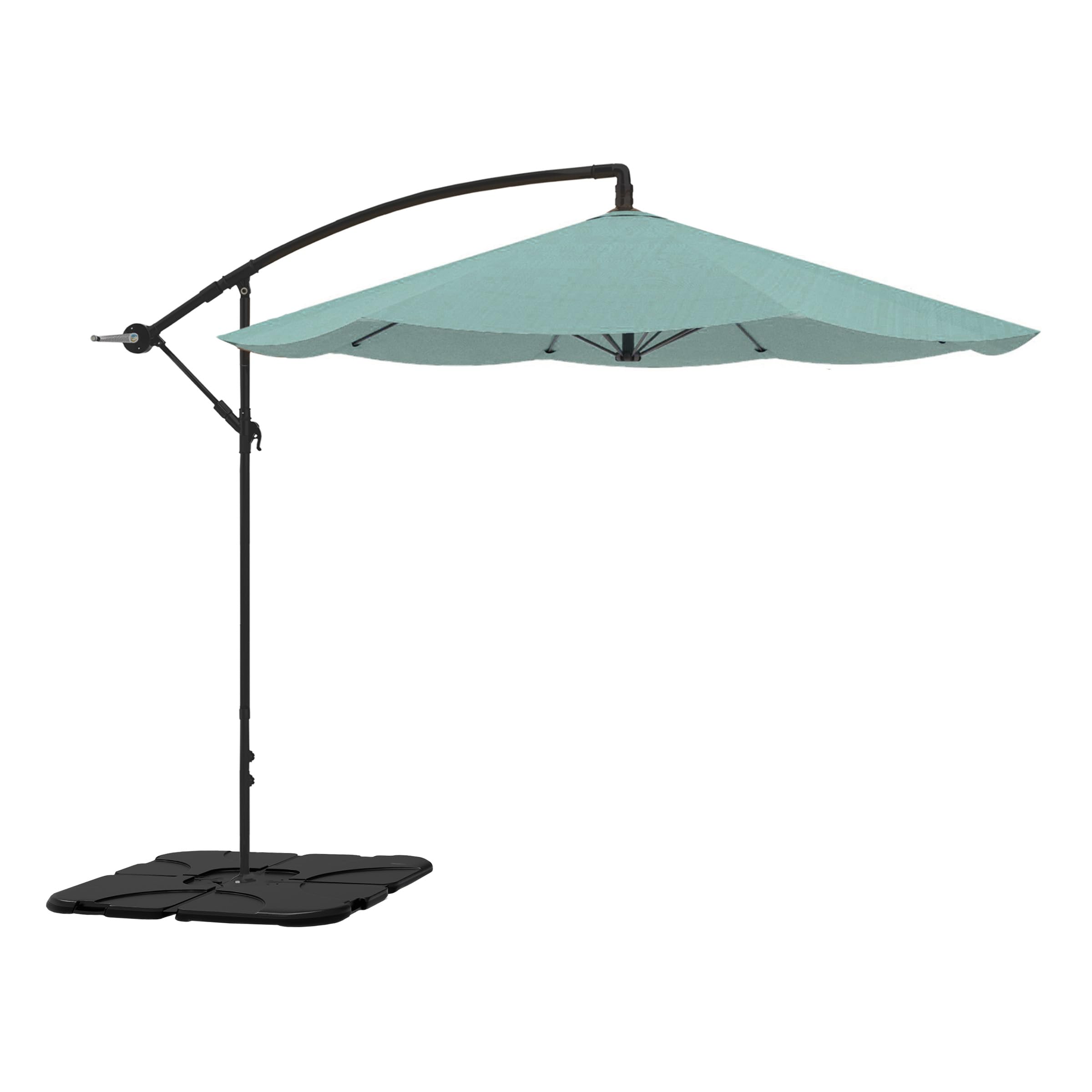
The first decision is form, and it affects price, base needs, and how you adjust shade during the day. Market umbrellas place the pole in the center. Cantilever umbrellas, also called offset umbrellas, hang the canopy from an arm on a side pole. A clear comparison of cantilever vs market umbrella designs can help if you are torn.
Market umbrellas
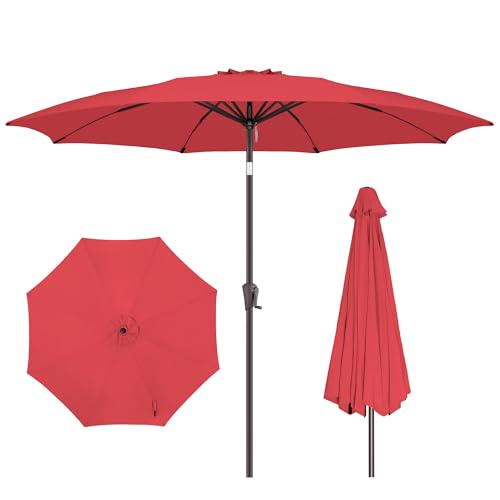
A market umbrella is the classic design, with a straight center pole that drops through a table hole or stands in a weighted base between chairs. It costs less than most offset models, it is lighter to move, and replacement parts tend to be simple. The pole does limit how you arrange furniture, and shade moves off the table as the sun drops, unless the model tilts. For a standard dining set, this is usually the most practical route.
Cantilever and offset umbrellas
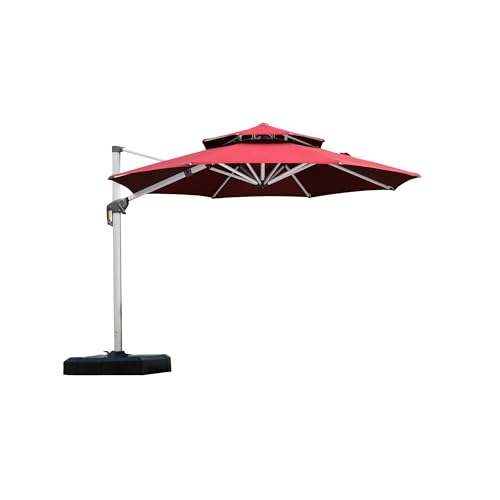
An offset model keeps the pole outside the shaded area, so a dining table, daybed, or hot tub stays fully open underneath. Most let you rotate the canopy a full circle and tilt it, which gives you more control over late afternoon sun. The trade off is weight and cost. The frame needs a much heavier base to counter the hanging load, and the moving joints need more care. If that open layout is what you want, see our guide to the best cantilever patio umbrella.
Rectangular and tilting variants
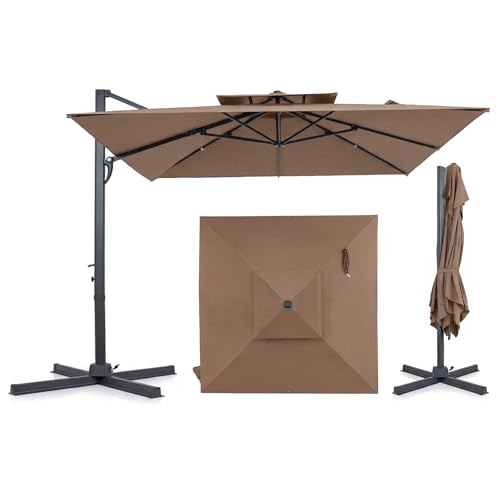
Not every 10 ft canopy is round. Rectangular canopies suit long tables and narrow decks, because they cover length without wasting width you do not have. Tilting variants appear in both market and offset forms, and tilt extends useful shade into the evening. A rectangular canopy needs careful alignment with your table, and it catches wind differently than a round one, so base weight matters even more.
Key Features to Compare
True coverage and canopy shape
Listed size can be measured across the canopy curve or straight across from edge to edge, and brands are not consistent about which method they use. A round 10 ft canopy gives you roughly 70 to 80 square feet of shade at midday, but usable shade shrinks as the sun angles in. Look for the flat width if it is listed, and picture the canopy two feet wider than your table on each side. That margin keeps shoulders and place settings out of the sun.
Frame and rib materials
Poles and ribs are usually aluminum, steel, wood, or fiberglass. Aluminum is light and resists rust, which suits most homes. Steel is strong but heavier, and any chip in its coating can let rust start. Wood looks warm with classic furniture, yet it needs more care. Fiberglass ribs flex in a gust and spring back instead of bending, which makes them a smart pick in breezy spots. Count the ribs too. Eight ribs spread load and hold canopy shape better than six.
Canopy fabric and weather resistance
Fabric decides how long the color and the shade last. Solution dyed acrylic is the most fade resistant option and holds up well season after season, though it costs more. Olefin sits in the middle, with good fade resistance at a moderate price. Polyester is the budget choice and dries fast, but it can fade within a season or two in strong sun. Whatever fabric you choose, look for a vent at the top. A vent lets hot air escape and reduces the lift that a gust puts on the frame.
Tilt and lift mechanisms
A crank lift opens this wide canopy with far less effort than a pulley and pin system, and it lets you stop at any height. Keep the crank in mind if anyone in the household finds overhead pushing hard. Tilt comes in three common forms. A push button tilt locks at set angles, a collar tilt twists near the top of the pole, and an auto tilt bends as you keep cranking. Collar and auto tilt are easier to use while seated, because you do not have to stand and reach for a button.
Base weight and stability
A 10 ft canopy acts like a sail, so the base is a safety part, not an accessory. A table adds stability to a market model, yet you still need a filled base of about 50 pounds or more for calm conditions. Freestanding market models and all offset models need much more, often 100 to 200 pounds of sand or water across the base plates. Our guide to the best patio umbrella with base explains matched options. Check whether the price includes a base, because many offset models sell it separately.
Is a 10 ft Patio Umbrella the Right Size for You?
Measure before you decide. Mark a circle or square 10 ft across on your patio with tape, then stand your furniture inside it. The canopy must clear doors, gutters, and railings as it opens, and you need walking room around the base. If the outline covers your table and chairs with a small margin, the size fits. If it swallows a small balcony or blocks a path, drop to 9 ft. If your table seats ten, a larger canopy may serve you better. A bigger canopy does not fix low evening sun, but tilt and rotation do.
Assembly and Anchoring
Most market models arrive in two pole sections that join above the crank, and setup takes minutes once the base is filled. Offset models take longer, with a frame to build, a cross base to lay out, and weights to add before the canopy goes up. Two people make the job safer, because a 10 ft canopy is awkward even when folded. A step by step guide on how to assemble a patio umbrella helps you avoid forcing joints. Fill the base before you open the canopy, tighten every bolt, then test tilt and rotation on a calm day.
Common Mistakes to Avoid
- Buying by listed size alone, without checking whether the measurement follows the canopy curve, which can leave your table ends in the sun.
- Using a light base because the umbrella felt steady on a calm morning, which invites a tip over in the first strong gust.
- Leaving the canopy open in wind or overnight, which strains ribs and joints even when no storm arrives.
- Choosing a center pole model for seating with no table hole, which forces awkward furniture layouts and wasted shade.
- Ignoring pole diameter, so the pole wobbles in a table hole or will not fit the base you already own.
- Storing the umbrella wet, which encourages mildew on the fabric and rust on steel parts.
How to Make Your Patio Umbrella Last Longer
Close the canopy when you finish using it, and use the tie strap so wind cannot work the fabric loose. Brush off leaves and dust weekly, because grit ground into wet fabric wears the surface. Wash the canopy with mild soap and lukewarm water a few times a season, rinse well, and let it dry fully while open. A detailed routine for how to clean a patio umbrella covers stains and mildew spots. Before winter, clean and dry everything, and store the canopy indoors in a dry place. Check bolts, the crank cord, and rib tips each spring, and replace a frayed cord early, since a snapped cord can drop the canopy without warning.
FAQ
Can a 10 ft patio umbrella shade a hot tub?
Yes, and an offset model is the usual choice because the pole stays clear of the tub edge and steps. Keep the canopy high enough that rising steam does not soak the underside daily, and rinse the fabric more often, because warm moist air encourages mildew. Place the base on level ground away from the tub, so nobody trips on it with wet feet.
How much wind can a 10 ft patio umbrella handle?
Most home models are meant for light to moderate breezes, and makers rarely promise a firm wind rating. Close the canopy when gusts start moving the ribs or rocking the base, and never rely on a vent to make the umbrella safe in a storm. A vent reduces lift, it does not remove it. In a breezy yard, fiberglass ribs and a heavier base matter more than any wind claim.
Does a 10 ft patio umbrella fit through a standard patio table hole?
Most table holes accept poles up to about 2 inches across, and most market poles in this size fall between 1.5 and 2 inches, so fit is usually fine. Measure both parts before you order, because a few thick wood poles exceed the common hole size. A pole that needs force will scratch its finish and stick when you lift it out.
Should I choose a round or rectangular 10 ft patio umbrella?
Choose round for a round or square table, because the shade spreads evenly in every direction. Choose rectangular for a long table or a narrow deck, because the canopy follows the shape of the space and wastes less coverage over a railing. Rectangular models need the base aligned with the long side, so setup takes care.
Can I leave a 10 ft patio umbrella outside all year?
You can leave the frame and filled base outside in mild climates, but the canopy lasts longer if you bring it in for winter. Freezing water in a base can crack the shell, so drain water filled bases before a hard freeze or switch to sand. In coastal areas, rinse salt spray off metal parts monthly, because salt speeds up corrosion.
What does a 10 ft patio umbrella usually cost?
Basic market models often fall under $100, while sturdier market models with better fabric run about $100 to $250. Offset models with rotation and tilt commonly run about $250 to $500 or more. Fabric is where extra money shows most over time, because a fade resistant canopy still looks good after cheaper polyester has gone pale.
Final Thoughts
Start with the layout. If a center pole works with your table, a market model gives you the simplest setup and the lowest cost. If you need open space under the shade, an offset model earns its higher price and heavier base. Match the fabric to your sun exposure, weight the base properly, and the best 10 ft patio umbrella for your home will give you seasons of shade. Use the product table above to compare shapes and mechanisms before you decide.