Assault AirRunner Review (2026): Is It Worth the Money?
Disclosure: We may earn a commission when you buy through links on this page, at no extra cost to you. As an Amazon Associate I earn from qualifying purchases. Learn more

Our Assault AirRunner review covers performance, design, cleaning, pros and cons, and who should buy it. Plus top alternatives. Updated 2026.
This assault airrunner review looks at a curved manual treadmill that you power with your own stride. There is no motor setting a pace for you. You speed up by moving toward the front of the curve and you slow down by drifting back. That simple idea shapes everything about cost, noise, upkeep, and who will enjoy using it.
The guide below covers design, performance, features, cleaning, and the main tradeoffs of this style. It also explains when a motorized model makes more sense. Use the comparison table below to check the basic facts side by side before you read the detail.






Quick Verdict
This style suits runners who want short hard intervals, natural pace changes, and a machine with no motor to service. It is a poor match if you want a set speed held for you, long guided programs, or a low price. The value question is simple. Will you use the freedom of a self paced belt often enough to justify a premium manual machine?
Assault AirRunner Specs at a Glance
The key facts to confirm on the product page are deck shape, belt type, user weight limit, console readings, frame material, and warranty terms for the frame, belt, and console. This is a curved deck with a slat belt rather than a flat motor driven belt. There is no top speed set by a motor, since your stride sets the pace.
Check the listed footprint and ceiling needs for your room as well. Also confirm what the console tracks, such as time, distance, speed, and calories, and whether it connects to a heart rate strap or an app that you already use.
Design and Build Quality
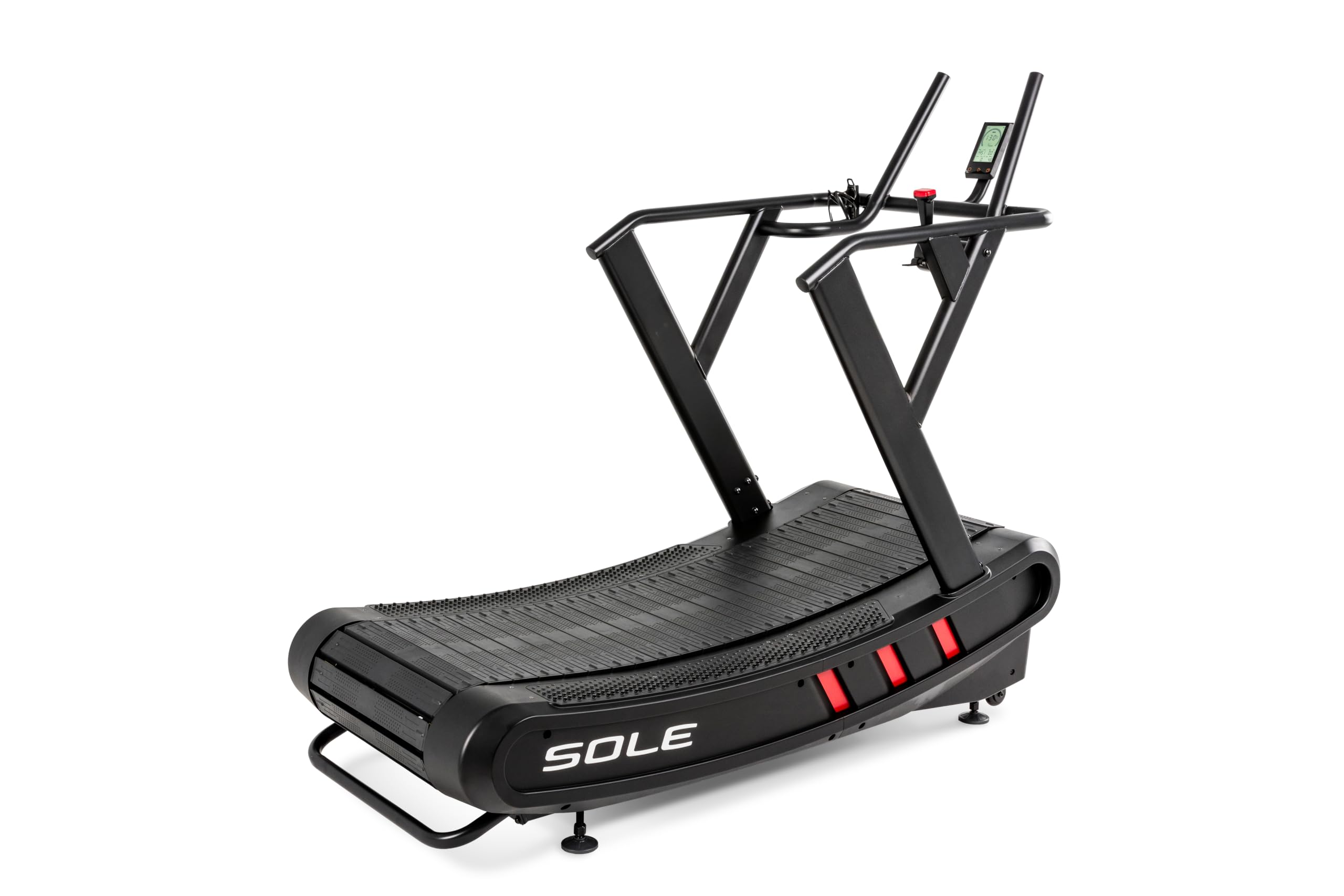
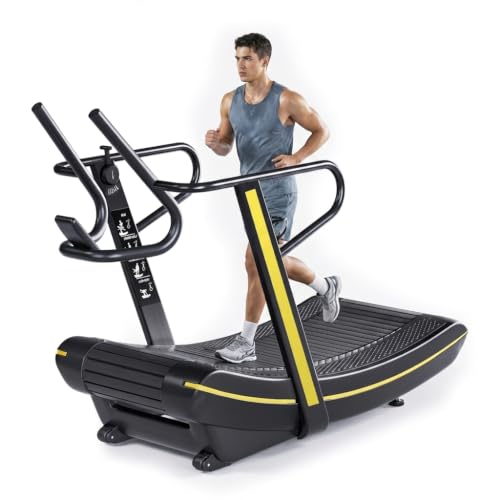
The deck curves up at the front and at the back. That curve is what lets your feet move the belt and what encourages a forefoot strike as you run. The handrails give you a place to steady yourself while you step on and off, and they help during the first sessions while you learn the pace control.
The frame is built for hard gym use, so it feels solid and planted rather than light and flexible. That solidity helps during sprints, since the machine should not rock or wander. It also means the unit is heavy to move, so plan the spot before delivery.
The look is plain and functional, with no large screen and no bulky motor cover at the front. What you see is the curve, the belt slats, the rails, and a compact console.
Performance
Performance on a manual curved treadmill feels different from performance on a motorized deck. You create the speed, you hold the speed, and your form affects both. The sections below break that experience into the parts that matter most.
Build Quality and Weight Capacity
Always match your body weight, plus any weight vest you plan to wear, against the stated user weight limit on the product page. Staying well under the limit protects the belt and the bearings and keeps the deck feeling smooth. A strong frame and a belt made of linked slats are meant to handle repeated sprint work in shared gyms.
If several people will use it, check the limit against the heaviest user, not the average user.
Footprint and Storage
A curved deck takes a full treadmill footprint, so measure your floor space, door widths, and ceiling height before you order. Leave clear space behind the deck so you can step off safely after a hard effort. The unit does not fold flat the way many home motorized models do, so treat it as a fixed piece of gym furniture.
Transport wheels help with short moves on a hard floor, but they do not make it easy to carry up stairs or store in a closet.
Features and Programs
The console on this style is basic by design. Expect readings for time, distance, speed, and calories, plus simple interval timing on many setups. You will not get the large libraries of guided classes, scenic routes, and auto adjusted incline plans that motorized models sell. Your program is the workout you plan and the effort you give.
That limits distraction, and many runners like that focus. If you need a coach on a screen to stay consistent, be honest about it now, since a simple console only helps if you will train without prompts.
Noise
There is no motor hum, but a slat belt is not silent. You will hear the belt move, your feet land, and your breathing get loud during intervals. On a hard floor, some sound can travel to the room below. A thick mat under the deck can soften vibration and protect the floor at the same time.
For apartments, think about time of day and floor type before you buy. Early morning sprints above a sleeping neighbor can cause complaints even without a motor, while walking sessions are much quieter.
Key Features
The defining feature is the curved, self paced belt. Because you drive the belt, pace changes are instant and there is no waiting for a motor to catch up. That makes short intervals and finish kicks feel natural. It also makes holding one exact speed harder, since a small change in your stride changes the belt speed right away.
The slat belt is the second feature to understand. Linked slats roll over the curve and give a firm, grippy surface. There is no thin belt to center and no deck lubrication routine like the one many motorized owners follow. In return, you accept more belt noise and a firmer feel underfoot than a cushioned flat deck gives.
The third feature is what is missing. No motor and no large display means fewer parts that can fail and no power cord limiting where the deck sits. You can place it where floor space and safety allow, without hunting for an outlet.
Ease of Use, Cleaning and Maintenance
Learning the belt takes a few short sessions. Start by walking while holding the rails, then move a little toward the front curve to gain speed. Look ahead instead of down at your feet, keep steps quick and light, and drift back to slow down. Most people need practice before the pace feels smooth and calm at faster speeds.
Cleaning is simple. Wipe sweat off the rails, console, and slats after hard sessions, since sweat left in place can damage finishes over time. Vacuum dust from around the deck and check the area under the curve, where grit from shoes collects. Keep drinks off the console so liquid cannot reach the electronics.
For upkeep, listen for new rattles, feel for rough spots as the belt rolls, and follow the maker guidance on checking fasteners and belt parts. Stop using the machine if the belt feels uneven or a slat looks damaged, and contact the maker or a qualified service tech for advice.
Assault AirRunner Pros and Cons
Here is a plain summary of the strengths and the tradeoffs of this curved manual style.
- Pro: You control pace with your stride, so speed changes feel instant and natural.
- Pro: No motor means no motor repairs and no outlet needed for the belt to run.
- Pro: The build suits hard interval work and shared gym use.
- Con: Holding one exact speed takes practice and constant attention.
- Con: The price is high for a machine with a basic console and no guided programs.
- Con: It is heavy, does not fold away, and needs a fixed floor spot.
Who Should Buy the Assault AirRunner (and Who Shouldn't)
Buy this style if you train for sports, do interval work, or coach small groups and want one deck that many athletes can use at their own pace. It also fits home gym owners who prefer simple gear, dislike screens, and have the floor space and budget for a premium manual machine.
Skip it if you mainly walk while watching shows, follow guided classes, or need a set speed for rehab style walking. Talk with a clinician about your own needs before starting hard running if you have joint, heart, or balance concerns. Also skip it if you must fold your treadmill away after each use.
If you are still comparing styles, our best treadmill guide shows how manual and motorized models differ in cost, programs, and upkeep, so you can place this style in the wider market.
Assault AirRunner vs Alternatives
The main choice is manual curved versus motorized flat. A motorized deck holds your chosen speed, often adds incline, and usually brings richer consoles and programs. That helps with long steady runs, walking at a set pace, and training plans that call for exact speeds. A manual curved deck gives you freedom of pace but asks more skill and effort from you.
For a motorized option with a strong home running focus, read a detailed sole f80 review to see how motor power, deck size, and warranty change the buying math. For a lower cost motorized option aimed at walking and light jogging, a horizon t101 review shows what you give up and what you keep at that level.
Other manual treadmills cost less, but many use a flat belt and a simpler build meant for light home use. Compare belt type, weight limit, frame strength, and warranty before you treat a lower price as the same product for less money.
Where to Buy and Best Price
Check the total cost, not just the headline assault airrunner price. Add delivery, check whether placement in your room is included, and read the return terms for large gym gear. Seasonal sale events can lower the cost of big fitness items, so an assault airrunner deal may be worth waiting for if your training can wait a few weeks.
Also confirm the warranty in writing before you pay, including who handles service in your area. Prices and availability can change, so check the product page before ordering.
FAQs
Is the Assault AirRunner worth it?
It can be worth it if your training centers on intervals and you will use it several times a week for years. The value drops fast if it sits unused or if you prefer guided runs. One extra check helps. Price the cost per planned session over the warranty period, and compare that figure with a local gym day pass.
What are common Assault AirRunner problems?
Owner reports for curved manual decks most often mention the learning curve, belt noise, and trouble holding a steady pace at first. Mechanical complaints tend to involve loose fasteners or a belt that feels rough after heavy use with dirty shoes. Clean footwear and a level floor prevent many small issues before they grow into service calls.
How long does the Assault AirRunner last?
Lifespan depends on user weight, weekly hours, and how well the deck is cleaned and checked. Gym grade frames are built for years of use, but consoles, bearings, and belt parts are wear items. Ask the seller which parts are covered and for how long, since warranty length tells you more than any general promise about durability.
What is a cheaper alternative to the Assault AirRunner?
A basic motorized treadmill or a flat manual walking deck costs less, but neither copies the curved sprint feel. If budget is the main limit, decide what you will drop first. Most buyers drop either the curved deck, the gym grade build, or the program library. Dropping the right one matters more than chasing the lowest price.
How do you clean the Assault AirRunner?
Use a soft cloth with mild soap and water on the rails and slats, then dry each part so moisture does not sit in the gaps. Never spray liquid straight at the console. Once a month, move the belt by hand through a full loop while you look for grit, small stones, or frayed edges that a quick wipe would miss.
Final Thoughts
A curved manual treadmill is a focused tool, not a general answer for every runner. This assault airrunner review comes down to fit. If instant pace control, simple upkeep, and a build made for hard intervals match your training, the premium can make sense. If you want set speeds, classes, and easy storage, a motorized model will serve you better.
Before you decide, look again at the product table above, confirm the weight limit and footprint, and reread the warranty terms. The right choice is the one you will use often.