Adjustable vs Fixed Dumbbells: Which Is Better in 2026?
Disclosure: We may earn a commission when you buy through links on this page, at no extra cost to you. As an Amazon Associate I earn from qualifying purchases. Learn more

Adjustable vs Fixed Dumbbells: we compare the key differences, pros and cons side by side so you can decide which one is right for you.
If you are weighing adjustable vs fixed dumbbells for a home gym, the short answer is this. Choose adjustable if floor space and total cost matter most, because one pair can stand in for a whole rack of weights. Choose fixed if you want the toughest build available and zero changeover time between sets.
The comparison table below sums up the main differences at a glance, and the sections after it explain each one in plain terms. If you already lean toward the compact route, our guide to the best adjustable dumbbells covers the leading styles in more depth.


Adjustable vs Fixed Dumbbells: Comparison Table
| Criteria | Adjustable | Fixed Dumbbells | Winner |
| Space needed | One pair in a storage tray | A rack holding many pairs | Adjustable |
| Weight change speed | A few seconds per change | Instant, just pick up the pair | Fixed |
| Toughness when dropped | Mechanisms dislike drops | Solid build shrugs drops off | Fixed |
| Top weight per hand | Often up to about 50 to 90 pounds | Singles go well past 100 pounds | Fixed |
| Cost for a full weight range | One purchase covers the range | Each pair adds to the bill | Adjustable |
| Feel in the hand | Longer or block shaped on some styles | Compact and balanced at every weight | Fixed |
Neither style wins every row, and that is the honest picture. Your training style, your room, and how heavy you plan to lift decide which column matters more to you.
What Is Adjustable? What Is Fixed?
Adjustable overview
An adjustable dumbbell is a single handle that can hold different amounts of weight. You change the load with a selector dial, a sliding pin, a twist of the handle, or by adding and removing plates held by a collar. Most pairs cover a range such as 5 to 50 pounds per hand and rest in a storage tray or cradle between sets. One pair on the floor does the job of many fixed pairs, which is the entire appeal for home lifters short on room.
Fixed dumbbells overview
A fixed dumbbell is one solid piece built at a single weight that never changes. The heads are cast, welded, or bolted to the handle at the factory, and you buy pairs in steps, usually 5 pounds at a time, from light pairs for raises up to very heavy singles. Most lifters store a run of them on a rack. Common builds include bare cast iron, rubber coated heads, and urethane coated heads, and the shape is either round or hex, with hex heads staying put when you set them down.
Key Differences
Build Quality and Weight Capacity
Fixed dumbbells are about as simple as gym gear gets, with no moving parts to loosen, jam, or wear out. That simplicity is why they tolerate being dropped after a hard set and still work the same years later. Adjustable models ask more of their parts, since a dial, pin, or locking plate system has to hold the load securely on every rep. Most adjustable pairs top out at about 50 to 90 pounds per hand, while fixed singles keep going well past 100 pounds. You can see how one dial based model handles a heavier top weight in our bowflex selecttech 1090 review.
Footprint and Storage
Space is where adjustable dumbbells pull far ahead. A pair sits in its tray in roughly two square feet, so it fits in a corner, a closet, or beside a desk in a spare room. A fixed run from 5 to 50 pounds means ten pairs, and ten pairs need a proper rack that can stretch four to six feet along a wall. If your gym shares space with the rest of your life, that difference alone can settle the whole decision before price even enters the picture.
Adjustment Systems and Everyday Features
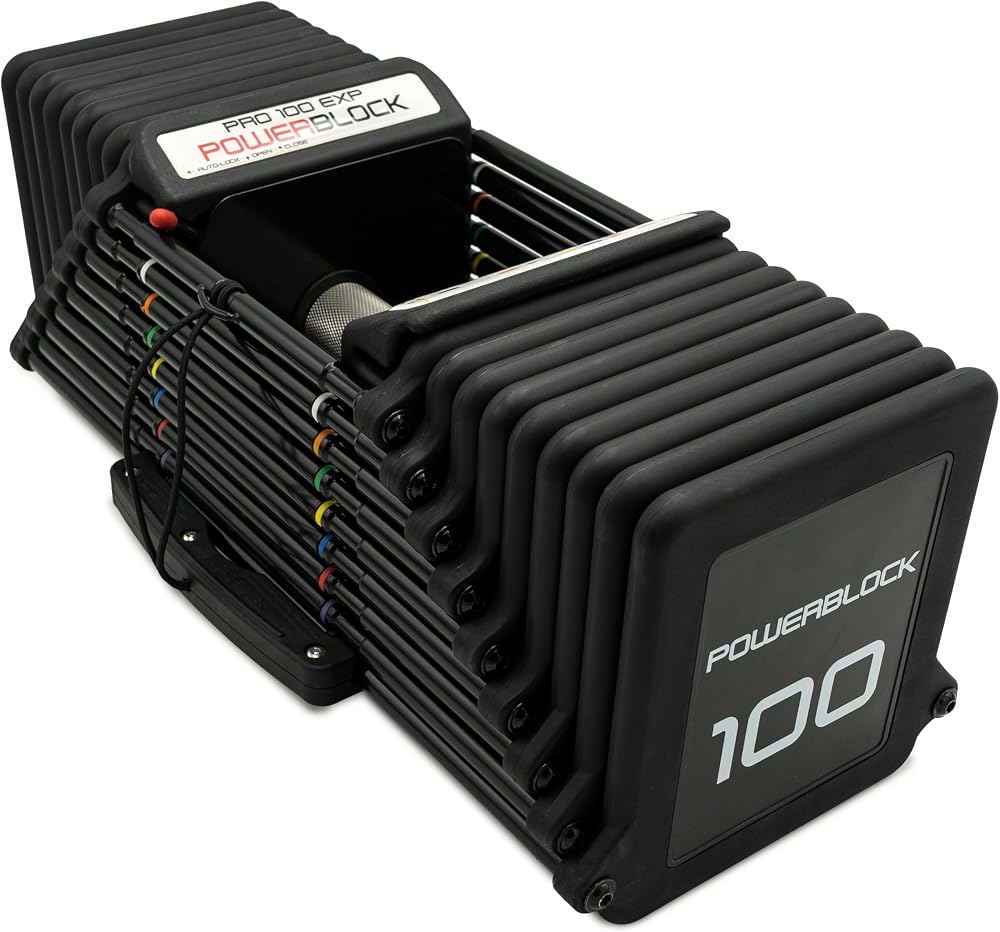
How fast you can change weight shapes how a workout feels. Dial systems let you pick a load and lift the handle out of the tray with only the plates you chose attached, a process that takes a few seconds. Our bowflex selecttech 552 review shows that dial layout up close. Pin based block designs change weight just as quickly, though the block shape feels different in the hand and can limit a few grip positions. Our powerblock elite exp review explains that trade off in detail. Plate loaded handles with collars are the slowest of the group, closer to loading a small barbell.
Noise
Adjustable dumbbells make a little more sound in use. Plates can shift slightly against each other, and dials and pins click as you set a new weight. None of this is loud, but in an apartment with thin walls or a baby asleep nearby, small sounds add up. Fixed dumbbells with rubber or urethane coated heads are the quiet option, since the coating softens the clink when you set them down on the floor or rack. Bare cast iron pairs are the loudest of all, so coating matters if quiet training matters to you.
Warranty
Warranty terms follow the same pattern as the builds themselves. Fixed dumbbells have little that can fail, so coverage tends to be straightforward and generous, often focused on defects in the casting or coating. Adjustable models usually split coverage into parts, with longer terms on the handle and frame and shorter terms on the selector parts that do the daily work. Read the fine print before you buy, and note which parts are covered, for how long, and whether dropping the dumbbell voids the claim, since many adjustable warranties exclude drop damage.
Price and Value
An adjustable pair covering 5 to 50 pounds per hand often costs about $300 to $450, and that single purchase replaces ten fixed pairs. Building the same range in fixed dumbbells can run about $800 to $1,500 once you add a rack, since you pay for every pair in the run. The math flips at the heavy end. If you only need two or three pairs at set weights, fixed pairs cost less than one adjustable set, and if you outgrow an adjustable top weight, a single heavy fixed pair is a cheaper top up than a whole new system.
Which Should You Buy?
Choose Adjustable if
Pick adjustable dumbbells if your training space is a corner of a room rather than a dedicated gym, or if you are building a gym on a set budget and want a wide weight range from one purchase. They suit lifters who train alone, move through varied loads across a session, and rarely need more than about 90 pounds per hand. Renters also tend to like them, because the whole set packs into a small space when it is time to move.
Choose Fixed Dumbbells if
Pick fixed dumbbells if you lift heavy, train hard enough to drop weights after a set, or share the gym with a partner who needs a different weight at the same moment. Circuit training and supersets also favor fixed pairs, since you can grab the next weight with no pause at all. If you have the floor space for a rack and plan to keep lifting for decades, the simple build repays you with the least upkeep of any strength gear you can own.
Other Options to Consider
One third route worth knowing about is the loadable dumbbell handle, a short bar that takes standard weight plates you may already own for a barbell. It costs little, reaches very heavy loads, and stores almost flat, but changing plates with collars is slow. It suits patient lifters with plates on hand, while most home gym owners will find one of the two main styles above more pleasant to use day after day.
FAQs
Is adjustable better than fixed dumbbells?
Neither is better for everyone, and the honest answer depends on how and where you train. One point worth adding is moving day. An adjustable pair travels in its tray and fits in a car trunk, while a fixed collection is one of the heaviest things you own and often needs a truck and a strong friend. If you expect to move homes in the next few years, that alone can tip the choice toward adjustable.
What is the main difference between adjustable and fixed dumbbells?
The core of the difference between adjustable and fixed dumbbells is that one handle changes weight while the other never does. A detail the main sections did not cover is step size. Fixed pairs come in exact steps you choose one pair at a time, while adjustable models follow the jumps built into the mechanism, and those jumps can be wider at the heavy end. If small, steady increases matter to your program, check the step pattern before you buy.
Which is easier to clean, adjustable or fixed dumbbells?
Fixed dumbbells are easier to clean. A quick wipe with a damp cloth is all a smooth cast or coated head needs. Adjustable models have grooves, dials, and plate edges that trap chalk and dust, so plan on a dry cloth and a soft brush for the mechanism, and keep water away from selector parts that can corrode. Clean chalk off after sessions in a garage gym, since damp air speeds up rust on bare metal surfaces.
Which lasts longer, adjustable or fixed dumbbells?
Fixed dumbbells last longer in most homes, often for decades, because there is nothing inside them to wear out. Adjustable models can also serve for many years if you treat the mechanism gently, set them down instead of dropping them, and always return them to their tray so the selector stays aligned. Storing an adjustable pair loose on the floor invites knocks that bend small parts, and that kind of damage is what shortens its life most.
Final Thoughts
Look back at the product table above and weigh the rows that match your life. Adjustable wins on space and total cost, fixed wins on toughness, top weight, and instant changes. For most home gyms, adjustable vs fixed dumbbells comes down to room and budget on one side and heavy, hard training on the other. Pick the style that fits the training you will actually do, and it will earn its place in your gym for years.