Aquatru vs Waterdrop: Which One Fits Your Home Better? (2026)
Disclosure: We may earn a commission when you buy through links on this page, at no extra cost to you. As an Amazon Associate I earn from qualifying purchases. Learn more
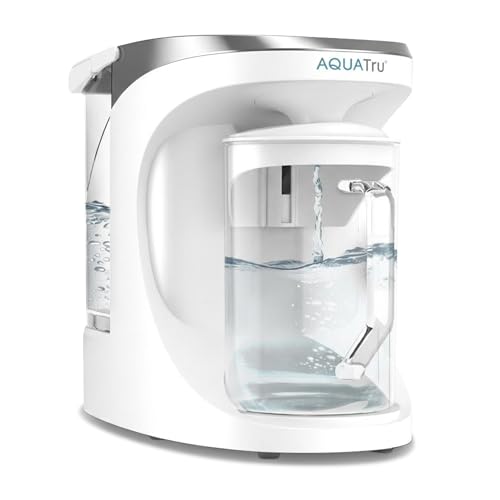
Aquatru vs Waterdrop: see how they differ in everyday use, features and value, and which one makes more sense for your home and budget.
The fridge jug is empty again, the tap water tastes faintly of chlorine, and two names keep surfacing while you shop: aquatru vs waterdrop. Both promise cleaner drinking water without calling a plumber, yet they approach the job in very different ways. Aquatru is a focused countertop reverse osmosis purifier, while Waterdrop is a broad range covering countertop units, systems under the sink, and gravity fed filters. This guide helps you choose by looking at the counter space you can spare, the number of people drinking, and the budget you have for buying and running the unit. The comparison table below sums up the headline differences.
If you are still weighing the wider category first, our guide to the best countertop water filter options sets out the main types side by side. Here the focus stays narrow. We compare only these two brands on setup, build, features, certification, warranty, and running costs, so you can match one of them to your kitchen and your household with confidence.

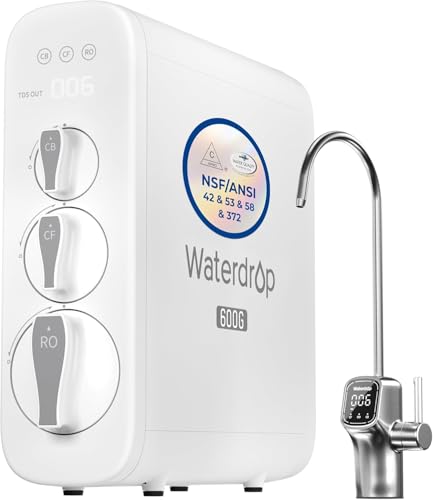

Aquatru vs Waterdrop at a Glance
The short version is simple. Aquatru sells one idea done thoroughly: a single countertop purifier design, refined over several versions, with broad third party certification. Waterdrop sells choice. Its catalogue lets you pick the format first and the filtration second, which suits homes whose layout or headcount rules out a standard countertop box. Neither approach is wrong, but they lead to very different ownership experiences, as the table shows.
| Criterion | Aquatru | Waterdrop |
| Core approach | Countertop reverse osmosis only | Countertop, under sink, and gravity fed options |
| Installation | None, plug in and fill the tank | None for countertop and gravity units, plumbing for under sink models |
| Filtration | Four stage reverse osmosis | Varies by model, reverse osmosis on most powered units |
| Filter reminders | Indicator lights on the unit | Display or calendar reminder, varies by model |
| Typical price band | About $350 to $550 | About $40 to $850 depending on type |
| Best suited to | Renters who want one proven design | Homes that want to choose a format |
Meet the Contenders: Aquatru and Waterdrop
Aquatru Overview
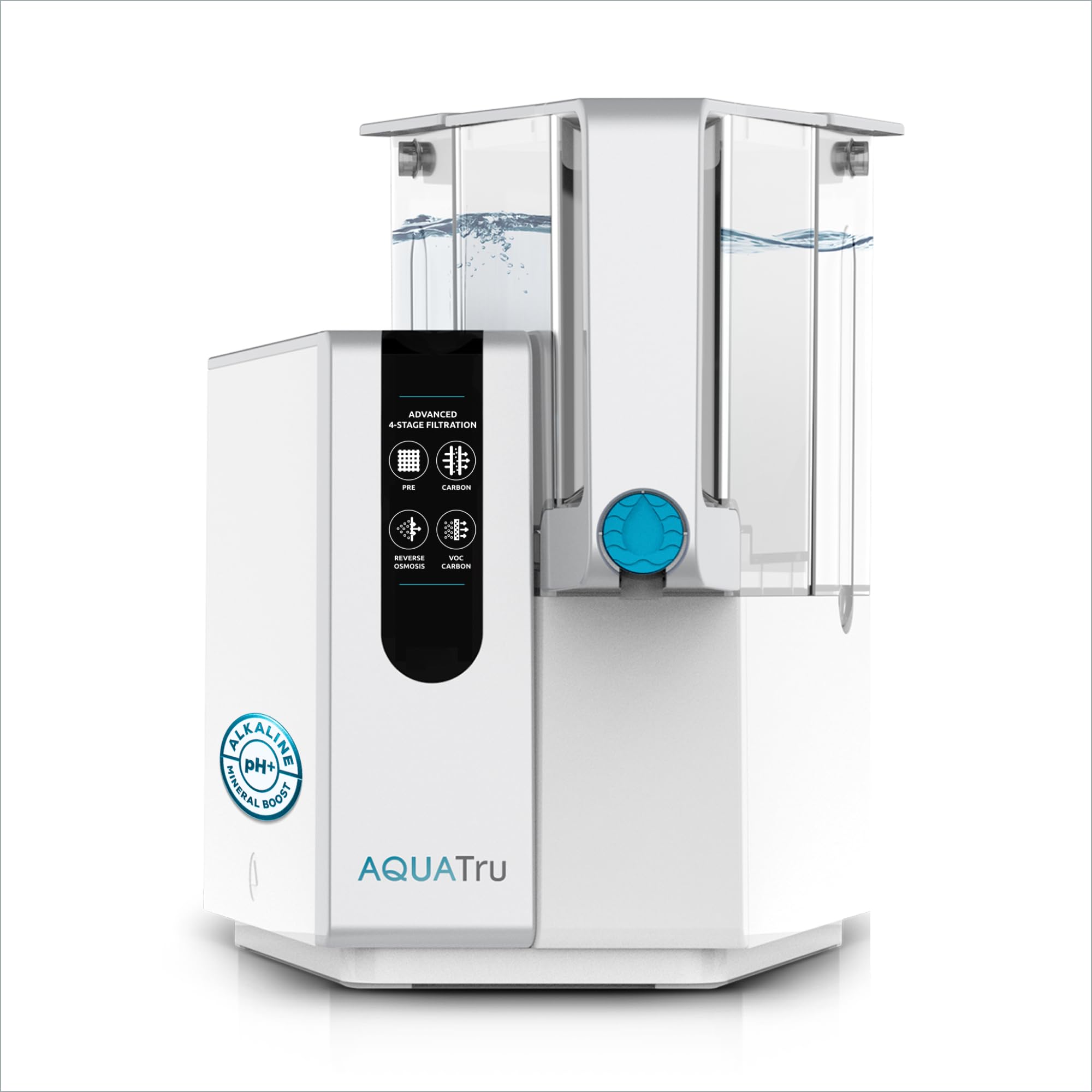
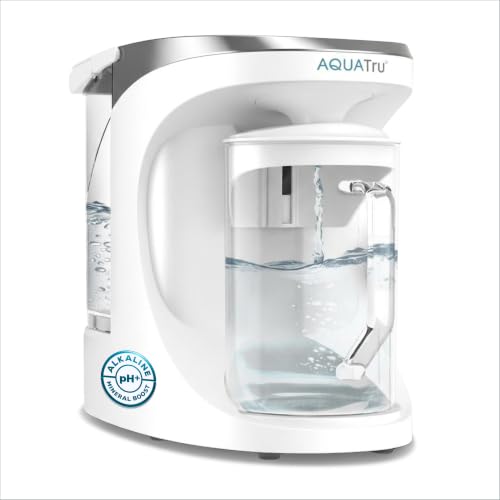
Aquatru builds countertop reverse osmosis purifiers and little else, which keeps the lineup easy to understand. You fill a removable tank with tap water, the unit pushes it through four filtration stages, and clean water collects in a second tank ready to pour. The flagship design is covered in our aquatru classic review, while the smaller version pours into a glass carafe instead, as our aquatru carafe review explains. Because nothing connects to your plumbing, the same unit can move from a rental kitchen to a dorm room to an RV without tools or landlord permission.
Waterdrop Overview
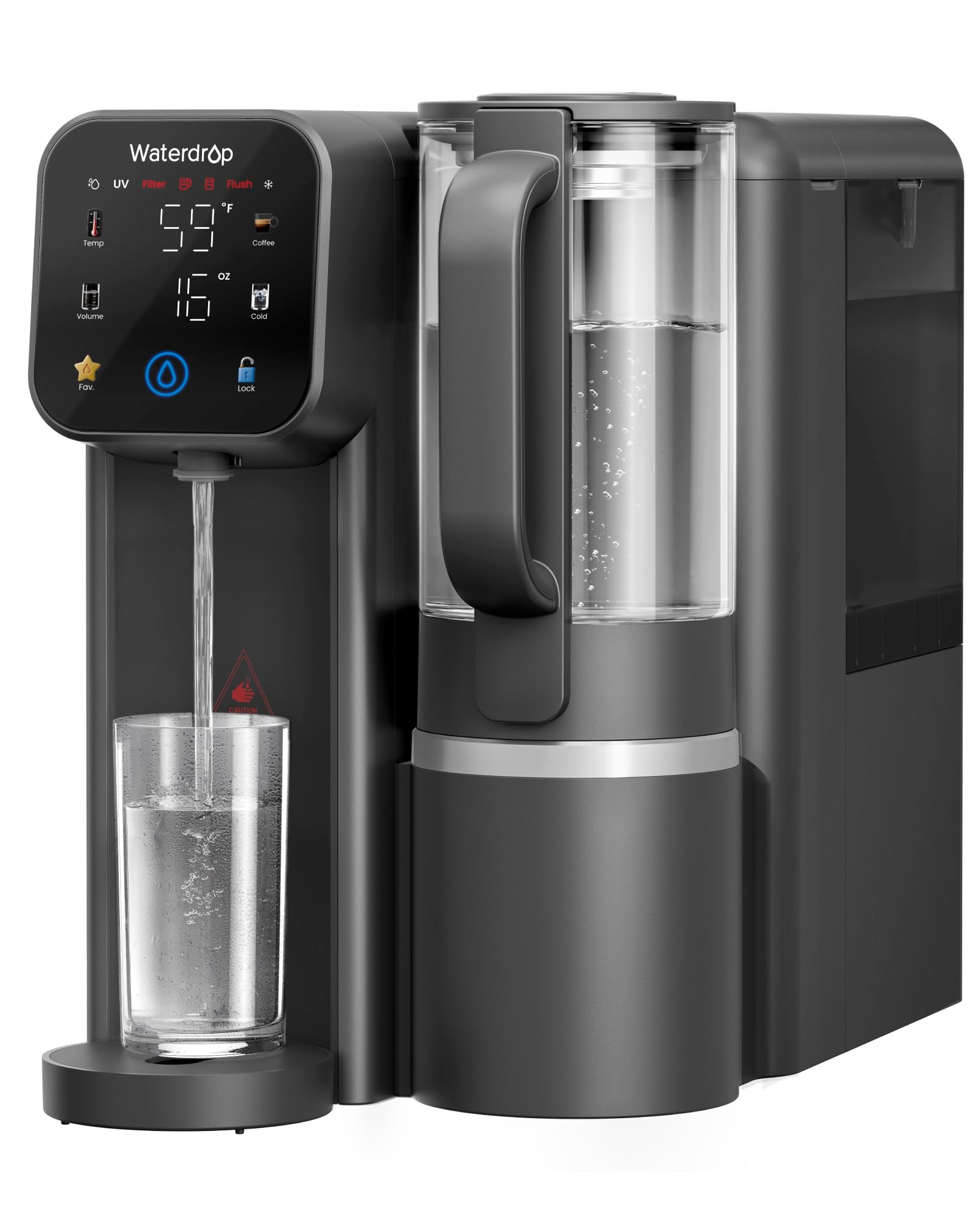
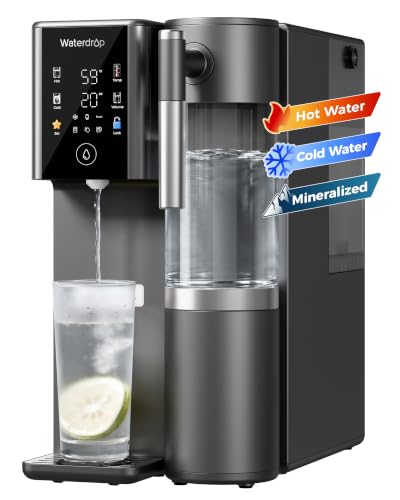
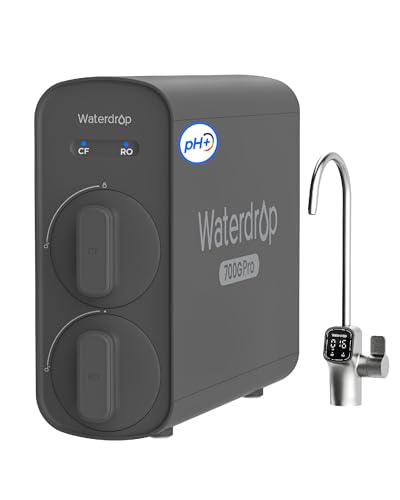
Waterdrop takes the opposite route and sells nearly every home filtration format under one brand. The range includes countertop reverse osmosis units, slim tankless systems that hide under the sink, stainless steel gravity fed dispensers, pitchers, and faucet mounted filters. That breadth matters if your kitchen has no spare counter depth, or if you would rather fill a glass at a dedicated faucet than refill a tank. The trade off is homework: filtration stages, certifications, and filter costs change from model to model, so each Waterdrop unit has to be judged on its own spec sheet rather than on the brand name alone.
Head to Head: Where They Really Differ
Installation and Compatibility
Aquatru asks for two things only: a flat stretch of counter and a nearby outlet. Since you fill the tank by hand, it works with any faucet shape, any water line layout, and any rental agreement. Waterdrop countertop and gravity models are just as undemanding, but the under sink systems are a different project. Those need a feed water connection, a drain point, and either an existing hole in the sink or permission to drill one for the dedicated faucet. Before choosing that route, measure the cabinet for the tankless body and confirm your sink deck has a spare hole or room beside the main faucet.
Build Quality and Finish
Aquatru uses molded plastic tanks and housing with a clean white finish that suits most kitchens without drawing attention. The footprint is roughly that of a large coffee maker, and the tanks lift out with one hand. Waterdrop spreads wider on looks as well as formats. Its countertop units tend to be slimmer and taller, some with a glass front panel and touch controls, while the gravity fed models are brushed stainless steel and read more like a drinks dispenser on the counter. If your filter will sit in full view of a living space, Waterdrop simply gives you more finishes and silhouettes to match your room.
Features
Aquatru keeps its feature list short and practical: indicator lights that tell you when each filter is due, a tap water tank you can see at a glance, and automatic shutoff when the clean tank is full or removed. Waterdrop countertop models often add convenience features that vary by unit, such as instant hot water at set temperatures for tea and formula, a child lock on the hot setting, a display showing water quality readings, or an ultraviolet light in the tank. None of these change how well the water is filtered, but for a busy family kitchen the hot water function alone can retire the kettle for most drinks.
Certifications
Certification is where Aquatru makes its strongest case. Its countertop purifiers are certified to NSF and ANSI standards 42, 53, 58, and 401, which together cover taste and odor, a long list of contaminants including lead, reverse osmosis performance, and newer compounds such as certain pharmaceuticals and pesticides. Waterdrop certifications are real but uneven across the range: many of its filters carry standard 42 or 53 certification, and select reverse osmosis systems add standard 58. The practical step is to match the standard to your concern. If lead or broad contaminant reduction drives your purchase, check the exact model data sheet rather than assuming the whole brand is certified the same way.
Warranty
Warranty length varies by model and seller, and the fine print decides the real value. Read what the warranty covers before you buy: some terms cover the pump and electronics but treat tanks and taps as wear parts, and some require you to register the product or keep proof of filter changes. Waterdrop stretches longer terms on some of its under sink systems, which makes sense given the plumbing involved. Whichever brand you pick, keep the receipt and the filter change dates together, because a claim is far easier when you can show the unit was maintained on schedule.
Price and Value
Aquatru units generally cost about $350 to $550 up front, and the staged filters add a yearly cost if you change them on schedule. Waterdrop pricing spans a much wider band, from about $40 for simple filters to over $400 for tankless reverse osmosis models, and its filter costs vary just as widely. The fair way to compare value is cost per year of ownership: add the purchase price to three years of filters, then divide by three. Run that math and the gap between the brands often shrinks, because a cheaper unit with frequent filter changes can cost as much to own as a pricier one with a two year membrane.
Our Recommendation for Your Home
Choosing between aquatru vs waterdrop comes down to how much deciding you want to do. Aquatru suits a home that wants the filtration question settled once, with certification doing the reassuring. Waterdrop suits a home whose space, layout, or habits point to one specific format. The two lists below translate that into household terms.
Pick Aquatru If
Pick Aquatru if you rent, move often, or simply cannot modify plumbing. It also fits households of one to four people who drink filtered water steadily through the day and are happy to refill a tank as part of the kitchen routine. The broad certification list is the deciding factor for many buyers, along with the short learning curve: two tanks, a row of indicator lights, and nothing to configure. If counter space near an outlet is available and your priority is proven contaminant reduction in a single appliance, this is the calmer purchase.
Pick Waterdrop If
Pick Waterdrop if your kitchen layout argues for a particular format. A deep family household that empties a countertop tank by lunchtime may be happier with an under sink system feeding a dedicated faucet, while a home that hosts often may prefer the large gravity fed dispenser that needs no power at all. Waterdrop also wins if instant hot water would genuinely get used daily, or if your budget sits below the Aquatru band. Just budget the extra ten minutes to verify the certification and filter costs of the exact model you are eyeing.
Not Sold on Either? One More Option
If the idea of any powered purifier puts you off, a large stainless steel gravity fed system is the quiet alternative: no outlet, no pump, no noise, and it keeps working during a power outage. The best known example in this style is covered in our big berkey review, which walks through capacity, filter life, and the counter height the unit needs. Gravity systems filter more slowly than reverse osmosis units and do not reduce dissolved solids the same way, so treat them as a different tool rather than a cheaper substitute. For a cabin, an outage prone area, or a counter with no free outlet, though, they solve a problem neither brand above fully addresses.
Your Questions, Answered
Which lasts longer, Aquatru or Waterdrop?
The appliance itself should serve for years from either brand, and what usually ends its life is a worn pump or a failed seal rather than the filtration media. Membrane life depends heavily on your feed water: hard water with heavy sediment shortens it, while softer municipal water lets a membrane reach its full rated life. Keeping the first stage filter fresh is the cheapest way to protect the membrane behind it.
Which is easier to clean, Aquatru or Waterdrop?
Aquatru has the edge for hands on cleaning because both of its tanks lift out completely, so you can wash them in the sink and reach every corner. Many Waterdrop countertop units keep the clean water in an internal tank that does not come out, which means cleaning is a wipe and flush routine instead of a proper scrub. Either way, wash the tap water tank weekly, because a slimy film there makes every batch taste stale.
What is the main difference between Aquatru and Waterdrop?
The main difference between Aquatru and Waterdrop is focus versus range: one brand sells a single purifier concept with deep certification, the other sells many formats with specs that change per model. A smaller difference that owners mention often is parts support. Aquatru filters fit across its countertop line, so reordering is simple, while Waterdrop uses several filter shapes across its formats, so you must match the cartridge to your exact unit when you reorder.
Is Aquatru better than Waterdrop?
Only for certain homes. Aquatru is the stronger choice when certified contaminant reduction and zero installation top your list, and owners comparing notes online tend to praise exactly that simplicity. Waterdrop is better when format choice, hot water on demand, or a lower entry price matters more. If your water comes from a private well, have it tested first, because heavy sediment or bacteria concerns can push you toward pretreatment that neither countertop brand replaces.
The Bottom Line
Both brands will give you better tasting water than the tap, and the product table above shows why the right pick depends on your rooms and routines rather than on a spec sheet alone. Choose Aquatru for a single certified purifier that asks nothing of your plumbing, and choose Waterdrop when your space or your household size points to a specific format. Either way, the aquatru vs waterdrop decision gets easier once you measure your counter, count your daily glasses, and price three years of filters before you order.