
Best Wireless Surround Sound Systems (2026 Buying Guide)
Disclosure: We may earn a commission when you buy through links on this page, at no extra cost to you. As an Amazon Associate I earn from qualifying purchases. Learn more

If you want to get rid of all the unsightly cables from your home movie theater, a good quality wireless surround system is the way to go. Here is our list of the best wireless surround sound systems available for 2026.
Read on to find out more about each pick, as well as what to look for, so you can choose the most suitable one for your space and budget.





Best Overall: Nakamichi Shockwafe 9.2.4 Dolby Atmos/DTS:X Soundbar System
Nakamichi's Shockwafe line has long been a favorite for home theaters that want a genuinely immersive setup without a full custom install, and the 9.2.4 configuration is the most capable version yet. It pairs a 9-channel soundbar with dual 10-inch wireless subwoofers and 4 height channels for real Dolby Atmos and DTS:X overhead effects.
- Channels: 9.2.4 (9 main channels, 2 subwoofers, 4 height channels)
- Power: 1300W total system power
- Formats: Dolby Atmos, DTS:X
- Setup: Plug-and-play with wireless subwoofers
Pros:
- True height-channel Atmos effects, not just virtual surround
- Dual subwoofers deliver noticeably deeper, more even bass
- Strong review base for a system in this price tier
Cons:
- Large footprint compared to simpler soundbar-only setups
Best Premium Splurge: Sony BRAVIA Theater Quad
Instead of a traditional soundbar-and-subwoofer layout, the BRAVIA Theater Quad uses four identical wireless speaker units placed around the room, which lets each speaker handle both front and surround duty depending on what you're watching. It's a genuinely different approach to home theater audio, and it pairs especially well with Sony's BRAVIA TVs for automatic calibration.
- Channels: 4 wireless speaker units, 16 total drivers
- Formats: Dolby Atmos, DTS:X
- Setup: Wireless placement, no soundbar required
Pros:
- Flexible placement since every speaker is identical and wireless
- Automatic room calibration when paired with a compatible Sony TV
- No single soundbar to find shelf space for
Cons:
- Premium price puts it well above most home theater systems
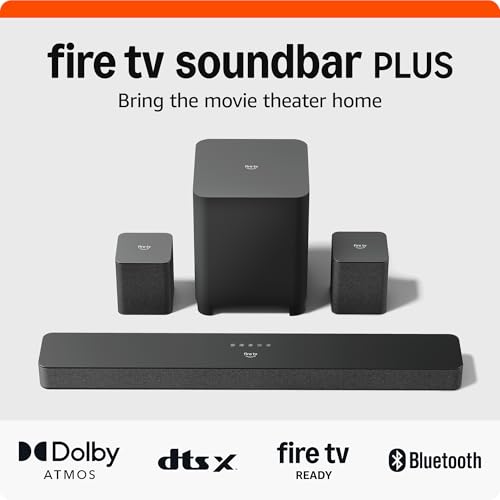
Best Mid-Range: Sony BRAVIA Theater System 6
This 5.1-channel system brings the more traditional soundbar, subwoofer, and wireless rear speaker layout at a more accessible price than the Theater Quad above, while still carrying Sony's BRAVIA branding and TV integration.
- Channels: 5.1 (soundbar, wireless subwoofer, 2 rear speakers)
- Setup: Wireless subwoofer and rear speakers
Pros:
- True rear surround speakers instead of virtual surround
- Wireless subwoofer keeps cable clutter down
- Solid review base at a mid-range price point
Cons:
- Fewer channels than the Atmos-enabled picks above
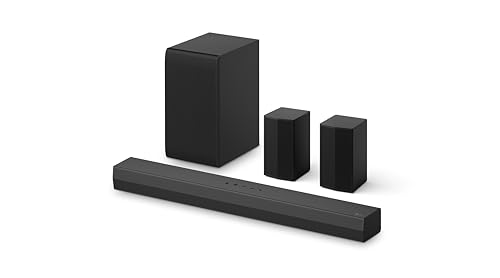
Best Budget: LG S40TR 4.1 Channel Home Theater Soundbar
LG's S40TR keeps things simple with a 4.1-channel layout, wireless rear surround speakers, and a wireless subwoofer, making it an easy first step up from a TV's built-in speakers without a complicated setup.
- Channels: 4.1 (soundbar, wireless subwoofer, 2 rear speakers)
- Setup: Wireless subwoofer and rear speakers included
Pros:
- True rear surround speakers included at a budget price
- Large, well-established review base
- Straightforward setup for a first surround system
Cons:
- No Dolby Atmos height channels at this price point
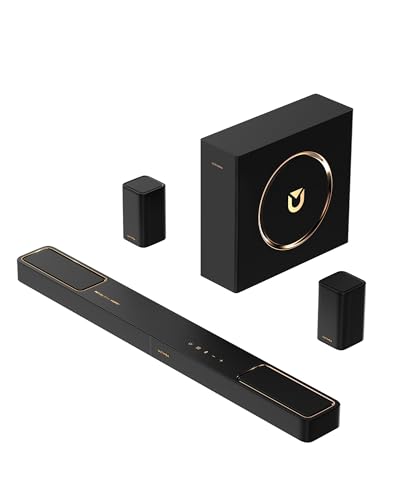
Best Value: ULTIMEA 7.1ch Surround Sound Bar
ULTIMEA has built a reputation for packing a lot of channels into a budget-friendly soundbar system, and this 7.1-channel setup includes 4 dedicated surround speakers rather than relying on virtual surround processing alone.
- Channels: 7.1 (soundbar, subwoofer, 4 surround speakers)
- Setup: Wireless surround speakers
Pros:
- More discrete channels than most systems in this price range
- Includes 4 dedicated surround speakers, not just 2
- Lowest price point on this list
Cons:
- Newer brand with a smaller review history than the established names above
More About Wireless Surround Sound Systems: History, Benefits, and Types
Home surround sound systems have been popular ever since the 1980s, as more people prefer the convenience of turning their own home entertainment centers into home movie theaters.
If you like to watch a lot of movies or shows with 5.1, 7.1, or Atmos soundtracks, adding a system like this can enhance your viewing and listening experience immensely. Surround sound puts you and other viewers at the center of the on-screen action and gives you the feeling of being in a real movie theater.
A surround sound system includes a subwoofer and a set of speakers which, thanks to their drivers, provide an immersive sound field. The most common configuration is a 5.1 channel system, which includes 3 front speakers, 2 surround speakers, and a subwoofer. Systems can also include 7.1 or 7.2 channels, and for movies and games with Dolby Atmos or DTS:X soundtracks, you'll want a system with height channels, often labeled as 5.1.2, 7.1.2, or 7.1.4.
Wireless surround sound systems use either Bluetooth or Wi-Fi connectivity, or both. Some connect to your home Wi-Fi network, while others create their own dedicated wireless connection that doesn't interfere with your home internet.
Wi-Fi based systems are generally more expensive than Bluetooth-only ones, but most come with their own apps for streaming and calibration, plus Wi-Fi typically has a longer range, which helps in larger rooms or multi-room setups. Bluetooth systems are easier to set up and pair, and tend to cost less, making them a good fit for smaller rooms or simpler setups.
Keep in mind that most "wireless" surround systems still need a cable running from the soundbar to the TV or another source, and the soundbar itself usually needs to be plugged into power. It's the subwoofer and rear speakers that connect wirelessly, which still cuts down dramatically on the cables running across your room compared to a fully wired setup.
Conclusion
For most home theaters, a 5.1 or 7.1 system with true wireless rear speakers strikes the best balance of sound quality and easy setup. Step up to an Atmos-enabled system with height channels if you want overhead effects for movies and games, and consider a simpler budget soundbar if you mainly want an upgrade over your TV's built-in speakers without a big investment.
Resources 5.1 surround sound - Wikipedia


