
Best Swing Sets for Backyard: A Complete Buying Guide
Disclosure: We may earn a commission when you buy through links on this page, at no extra cost to you. As an Amazon Associate I earn from qualifying purchases. Learn more

A swing is usually the first piece of outdoor equipment kids actually ask for by name, and you don't need a sprawling wooden fort to give them one. If your yard is on the smaller side, your budget is tighter than a full multi-tower playset, or you just want something simpler to assemble and maintain, a dedicated swing set gets kids outside without turning your backyard into a construction project. Finding the best swing sets for backyard use comes down to a handful of details that rarely show up on the product page: which swing type fits which kid, how the frame gets anchored, how much room the swing arc really needs, and what should sit under it. This guide walks through all four so you can shop with a clear list instead of guessing.






Swing Set or Full Playset First
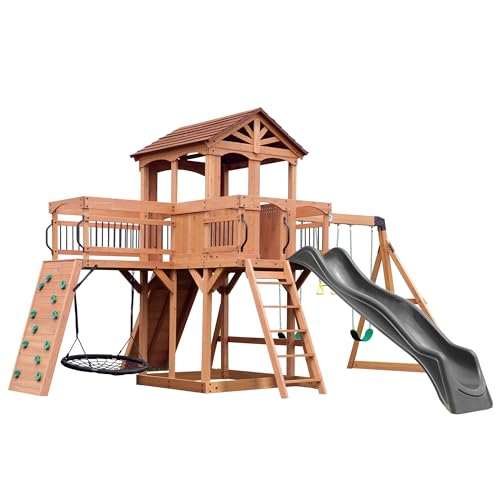
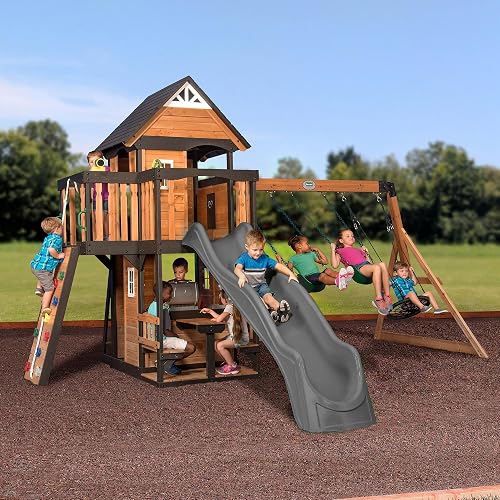
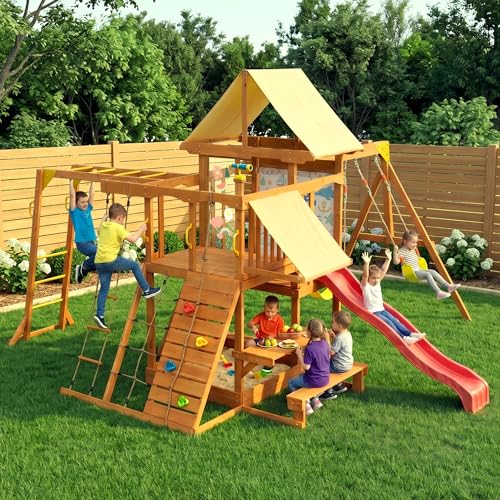
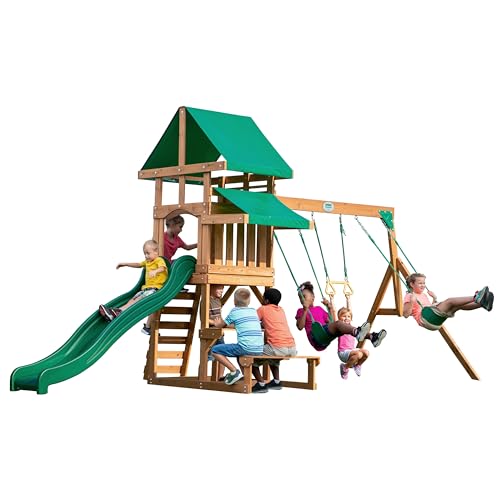
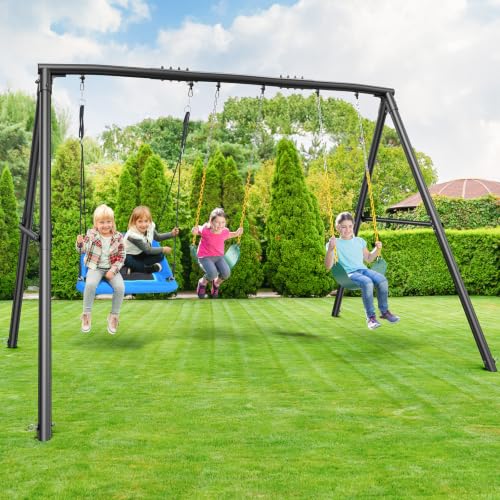
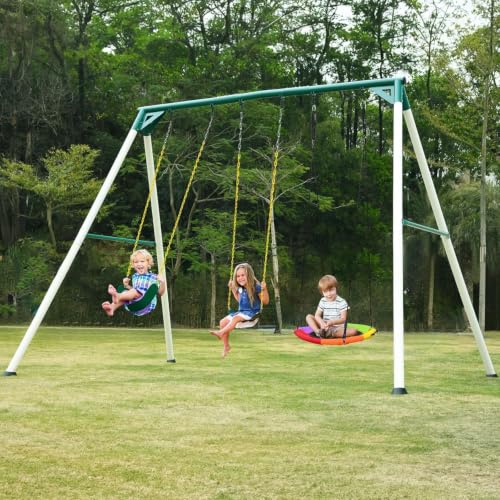
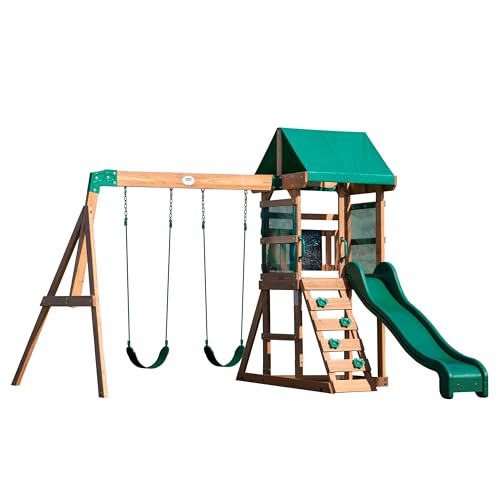
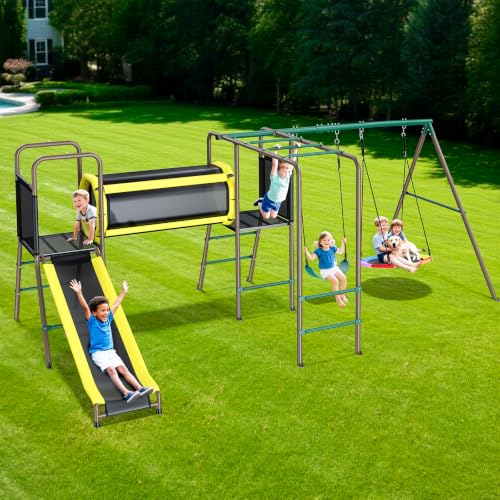
Before comparing individual swing sets, it helps to settle whether you actually want a swing set or a full playset. The two get lumped together in search results, but they're different products. A playset is a multi-activity structure, typically a wooden fort or tower with a slide, climbing wall, and one or two swing bays attached to the side. A swing set (sometimes sold as a swing frame or A-frame swing) is usually just that: a simple beam on two or four legs with two to four swings hanging from it, with no deck, no fort, and a much smaller footprint.
If your family wants climbing, sliding, and imaginative play built into one structure, a full playset is the better fit, and material, sizing, and maintenance for that category are covered in our backyard playset buying guide. If you mainly want a place to swing, a lighter frame you can move or take down seasonally, or something that fits along a fence line instead of the middle of the yard, a dedicated swing set is usually the simpler and cheaper choice. Most of the best swing sets for backyard use fall firmly into this second category rather than trying to double as a full playset.
Families torn between styles of active outdoor play sometimes end up comparing a swing set against a backyard ninja course instead, since both fit in tighter yards without the footprint of a full playset.
Types of Swings and What Each One Is Rated to Hold
Once you know you want a swing set, the next decision is which swing types to put on it. Most frames support two to four bays, and mixing types lets more than one age group use the set at once. This is where the best swing sets for backyard use tend to stand out from the rest, since the frame matters less than whether the bays actually fit your kids.
Belt, Bucket, Glider, and Tire Swings
Belt swings are the flat rubber strap most people picture, built for kids who can sit and hold on independently, and residential models commonly carry a per-seat weight rating in the 150 to 250 pound range. Bucket or toddler swings have a full seat with a leg-hole design that keeps younger children secure, but they carry a lower weight limit, often well under 100 pounds, so they get outgrown faster than other types. Glider swings seat one or two riders facing each other and swing on a slightly different motion path, with capacity that varies widely by model. Tire swings hang from a single point rather than two chains, which lets them spin as well as swing, and they need extra side clearance that straight swings don't.
Matching Swing Bays to Family Size
A single-bay frame works fine for one child, but most families end up wishing they'd bought a two- or three-bay frame once a sibling or neighborhood kid wants a turn. It's worth checking the weight limit printed for each individual seat rather than assuming the whole-frame rating applies to every swing. A frame advertised as supporting several hundred pounds total is describing combined load across all bays, not what any single seat can hold, and that distinction matters most when an adult wants to push or ride alongside a child. It's a detail worth checking closely, since it's often what separates the best swing sets for backyard use from ones that look similar on paper but fall short once real families start using them.
Anchoring So the Frame Doesn't Tip or Walk
A swing set gets less stability from sheer weight than a full playset does, since there's no deck or tower adding mass, which is exactly why anchoring matters more here, not less. An unanchored frame can rock forward with each swing cycle or shift position entirely during rough play or high wind, and that movement is one of the more common reasons a swing set ends up feeling unsafe even when the swings themselves are fine. Proper anchoring is one of the few things that separates the best swing sets for backyard use from ones that end up wobbly or repositioned after a single windy weekend.
Reading Your Soil Before You Choose an Anchor
Soft ground like lawn or garden soil generally takes a twist-in auger anchor well: a corkscrew-shaped stake you turn into the ground near each leg using a rod or bar for leverage. Compacted or rocky soil sometimes needs a driven metal stake instead. Concrete or paved surfaces need a different approach entirely, using anchors set with concrete mix rather than driven into the ground, which takes more setup time but holds the most securely. Whichever method fits your yard, galvanized or otherwise rust-resistant hardware is worth the small extra cost since anchors stay in the ground through every season.
How Much Clearance the Swing Arc Actually Needs
Frame dimensions on a product listing describe the footprint, not the space you'll actually use. Swings need clear room both in front of and behind the frame equal to roughly twice the length of the swing arc, since a child can travel that full distance forward and back with each push. Adjacent swings need at least 24 inches between them, and closer to 30 to 36 inches gives more comfortable room in practice. It's worth pacing this distance out in your actual yard, including checking for overhead branches or power lines, before ordering rather than after.
What Goes Under the Swings
Ground surfacing matters more directly under a swing than almost anywhere else on a play structure, because that narrow strip absorbs repeated impact from feet dragging, jumping off mid-swing, and the occasional fall, all concentrated in the same few square feet. Engineered wood fiber and rubber mulch are the two most common loose-fill choices, and both cushion falls far better than grass or bare dirt. Wood fiber costs less upfront but compacts and breaks down over a few years, so it needs topping off periodically to keep its cushioning depth. Rubber mulch costs more to install but doesn't decompose, so it holds its shock-absorbing depth much longer with less regular maintenance. Either material should be raked level occasionally, since displaced or thin spots under the swing arc lose their cushioning exactly where it's needed most. Surfacing is an easy line item to skip when budgeting, but it's part of what makes the best swing sets for backyard installs feel safe in daily use, not just on installation day.
Frequently Asked Questions
How much space do I need for a swing set?
Plan for the frame footprint plus clearance equal to roughly twice the swing arc in front of and behind it, not just a few feet around the frame itself. Most families shopping for the best swing sets for backyard use end up needing more open space than the listed dimensions suggest.
Is wood or metal better for a swing set?
Metal frames need less ongoing maintenance and hold up well to weather, though dark finishes can get hot in direct sun. Wood frames often carry higher weight capacity and a more natural look, but need periodic sealing to prevent splintering and graying over time. Both show up regularly among the best swing sets for backyard use, so the choice usually comes down to how much upkeep you're willing to do.
How do you anchor a swing set to the ground?
Twist-in auger anchors work well in soft soil, driven stakes suit compacted ground, and concrete-set anchors are used on paved surfaces. The right method depends on your specific soil or surface type.
What is the weight limit for a swing set?
It depends on the individual seat, not just the frame. Belt swings commonly hold 150 to 250 pounds, bucket or toddler seats hold considerably less, and the whole-frame rating listed on a product page describes combined capacity across all bays rather than any single swing.
What should I put under a swing set?
Engineered wood fiber or rubber mulch both provide meaningful shock absorption. Wood fiber is cheaper but needs periodic refreshing as it compacts, while rubber mulch costs more initially but lasts longer without breaking down.
How long do swing sets last?
A well-maintained frame with rust-resistant hardware and, for wood models, regular sealing, can reasonably last many years of daily use. Chains, seats, and other moving parts typically wear out and need replacing well before the frame itself does.
Getting It Right the First Time
A swing set earns its keep when the swing types match who's actually using it, the frame is anchored for the soil it sits on, and there's enough real clearance for the arc rather than just the frame footprint. Get those three things right along with solid ground surfacing underneath, and the rest of the shopping decision comes down to style and budget. Weigh those details against your yard and family size, and the best swing sets for backyard use become an easy shortlist instead of a guessing game.