
11 Best Solar Powered Watches for 2026
Disclosure: We may earn a commission when you buy through links on this page, at no extra cost to you. As an Amazon Associate I earn from qualifying purchases. Learn more

Running out to buy a new battery is one small annoyance a solar powered watch eliminates entirely. As long as it sees a reasonable amount of light, a quality solar watch keeps running for years, sometimes decades, without ever needing a battery replacement.
Here's what actually separates a genuinely reliable solar watch from a gimmick, followed by three standout picks and a full lineup of other strong options to compare.


What to Look for in a Solar Powered Watch
Power reserve tells you how long the watch keeps running on a full charge without additional light exposure. Quality solar movements typically hold a charge for several months to a year in power-saving mode, which matters if the watch sits unworn in a drawer for a while.
Charging method varies between brands, though most work the same basic way: any light source, sunlight or even indoor lighting, hits a solar cell beneath the dial and converts it to electrical charge stored in a rechargeable cell inside the watch.
Water resistance is worth checking against how you'll actually use the watch. Everyday wear is fine with 30 to 50 meters of resistance, while serious swimming or diving calls for 100 meters or more, and dedicated dive watches often exceed 200 meters.
Additional features range widely by price point. Basic solar watches offer straightforward timekeeping, while premium models add atomic radio-controlled accuracy, GPS tracking, multiple time zones, or full smartwatch functionality layered on top of the solar charging.
Build materials affect both durability and price. Stainless steel cases and bands hold up well to daily wear and resist corrosion, while resin cases keep weight and cost down, which suits sport-focused watches that prioritize durability over polish.
Brand reputation genuinely matters for solar movements specifically, since the technology needs to reliably hold a charge for years. Casio, Citizen, and Garmin have each built substantial reputations specifically around dependable solar-powered timekeeping.
Display type comes down to personal preference and use case. Analog dials offer a classic, dressier look that suits everyday and office wear, while digital and hybrid displays pack in more functions like stopwatches, alarms, and multiple time zones at a glance.
Best Overall: Casio G-Shock Tough Solar Atomic Watch
This solar powered watch combines Casio's Tough Solar technology with radio-controlled atomic accuracy across six global calibration signals, meaning it stays precisely on time without ever needing manual adjustment. A full charge holds roughly 9 months of power even without further light exposure, and 200-meter water resistance covers serious water sports.
- Power reserve: Approximately 9 months on a full charge
- Water resistance: 200 meters
- Best for: Buyers who want set-and-forget accuracy with rugged durability
Pros:
- Atomic radio-controlled accuracy across 6 global signals
- Exceptional 9-month power reserve without light exposure
- 200-meter water resistance handles serious water activities
Cons:
- Larger stainless steel case may feel bulky for smaller wrists
- More expensive than basic solar digital watches
Best Budget: Gosasa Men's Solar Digital Sports Watch

At around $25 and with good customer reviews, this affordable digital watch proves solar charging doesn't require a premium price. It combines a 10mm ultra-thin case with 50M water resistance and built-in solar panels that capture light from the sun or indoor lamps.
- Case: 10mm (0.39 inches) thin, about 1.15 ounces with the silicone band
- Water resistance: 50M (164 feet)
- Best for: Budget-conscious buyers who still want solar power
Pros:
- Genuinely affordable entry point into solar watches
- Ultra-thin, lightweight case is comfortable for all-day wear
- Chronograph stopwatch, alarm, hourly chime, auto-calendar and EL backlight
Cons:
- Fewer premium features like atomic timekeeping or GPS
- Digital display only, with no analog hands
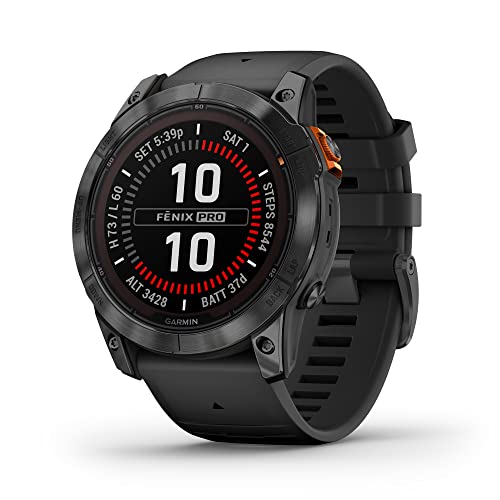
Best Premium: Garmin fenix 7X Pro Solar Multisport GPS Smartwatch
This is a full GPS multisport smartwatch that happens to run on solar power, and the combination is genuinely powerful. Garmin's Power Glass solar charging lens extends smartwatch mode battery life to weeks, while a fiber-reinforced polymer case with a steel bezel and built-in LED flashlight brings serious durability to match the advanced training features.
- Display: 1.4-inch, 51mm fiber-reinforced polymer case
- Charging: Power Glass solar lens
- Best for: Serious athletes who want GPS training tools and solar-extended battery life
Pros:
- Solar charging meaningfully extends already-long battery life
- Advanced training metrics like hill score and endurance score
- Preloaded maps for golf courses, ski resorts, and topo navigation
Cons:
- Significant price jump compared to traditional solar watches
- Larger 51mm case is noticeably bigger than a standard watch
Solar vs. Traditional Battery Watches: Is the Switch Worth It?
A traditional quartz battery watch is simpler and often cheaper upfront, but the battery typically needs replacing every 1 to 3 years, an easy thing to forget about until the watch suddenly stops.
A solar watch avoids that maintenance cycle almost entirely, since the rechargeable cell inside gets topped off by any reasonable light exposure during normal wear. Many solar movements are also designed to last decades before the internal cell needs professional replacement, if ever.
For anyone who wants to buy a watch once and stop thinking about it, solar is the more convenient long-term choice, even if the upfront cost runs slightly higher than a comparable battery-powered model.
Environmental impact is a smaller but real consideration too, since a solar watch avoids the small but steady stream of disposable batteries a traditional watch requires over its lifetime.
Frequently Asked Questions
Do solar watches work in indoor lighting, or do they need direct sunlight?
Most solar watches can charge from indoor lighting, though far more slowly than direct sunlight. For reliable long-term charging, occasional outdoor exposure, even just a normal daily commute, is usually enough to keep the watch topped off.
How long does the solar cell inside the watch actually last?
Quality solar movements from established brands like Casio and Citizen are often rated for 10 to 20 years or more of reliable operation before the internal rechargeable cell shows meaningful degradation. This makes solar watches a genuinely long-term investment compared to standard battery watches.
What happens if a solar watch is never worn or exposed to light?
Most solar watches enter a power-saving mode after extended darkness, stopping the second hand or dimming the display to conserve the remaining charge, which can last months depending on the model. Placing the watch in indirect light for a few hours periodically prevents it from fully draining during long storage.
Can a solar watch overcharge from too much sun exposure?
No, quality solar watches include built-in circuitry that stops charging once the internal cell reaches full capacity, so leaving one in direct sunlight won't damage the movement. Extended heat exposure from direct sun for very long periods can affect the case or band material over time, but this is unrelated to the charging system itself.
Conclusion
The Casio G-Shock Tough Solar Atomic is the best all-around pick for most people, pairing genuine set-and-forget accuracy with rugged durability. If you're on a budget, the Gosasa Men's Solar Digital Sports Watch proves reliable solar charging doesn't require a big spend. And for serious athletes who want GPS training tools alongside solar-extended battery life, the Garmin fenix 7X Pro Solar is worth the investment. Whichever you choose, a good solar powered watch is one purchase you can genuinely stop thinking about once it's on your wrist.


