Best Pool Cue Sticks in 2026: Which Type Is Right for You?
Disclosure: We may earn a commission when you buy through links on this page, at no extra cost to you. As an Amazon Associate I earn from qualifying purchases. Learn more

The best pool cue sticks by type: house sets, carbon fiber, break and jump and short cues compared.
The cue is the one piece of billiards gear that is truly yours. A straight, well balanced cue with a good tip makes it easier to strike the cue ball where you aim, add spin and break with power, while a warped house cue with a flattened tip fights you on every shot. Pool cues now range from inexpensive maple house cues sold in sets to carbon fiber cues with low deflection shafts, dedicated break and jump cues and short cues for kids and tight rooms. This guide to the best pool cue sticks compares each type's pros, cons, ideal players and price range, so you can choose the right style.
We cover the main cue types, how beginner and all around cues compare, how to choose, care tips and common questions. Every cue in the table above is sold new on Amazon US.



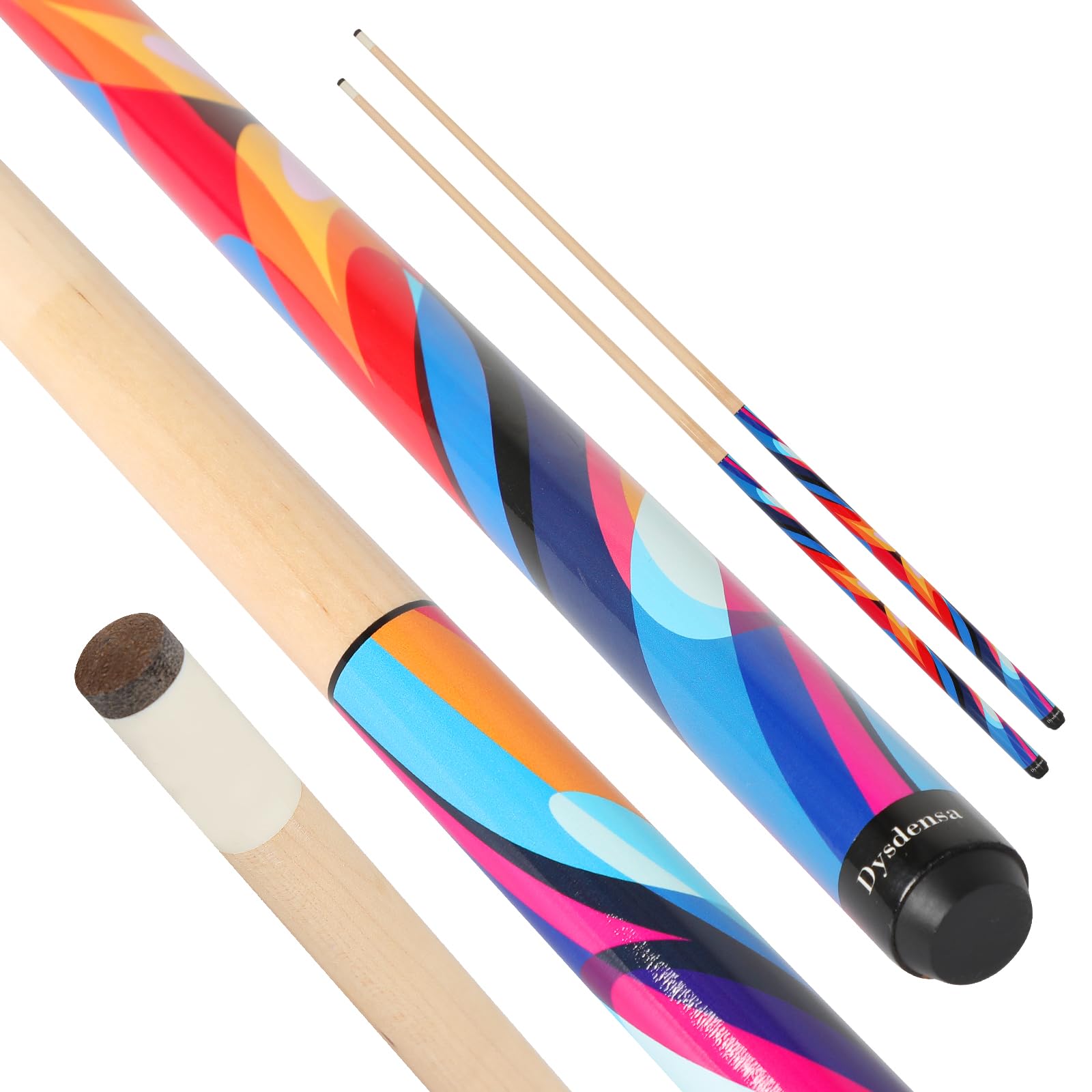
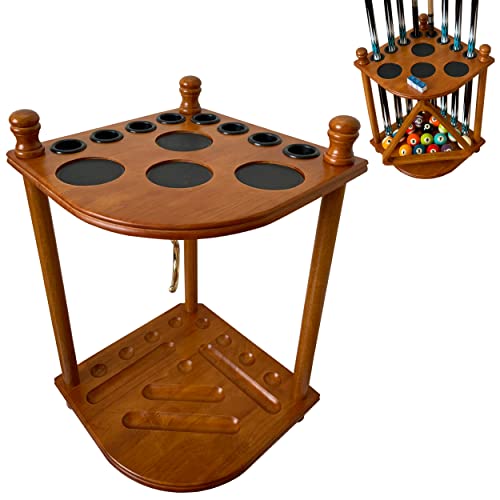
Types of Pool Cue Sticks Compared
The main types of pool cue sticks are house and beginner cues, carbon fiber playing cues, break and jump cues and short cues for kids and tight spaces. House cues suit game rooms and casual players, carbon fiber cues suit improving players who want consistency, break and jump cues suit players who want a second specialized cue and short cues suit children and small rooms.
| Type | Best For | Pros | Cons | Typical Price |
|---|---|---|---|---|
| House / beginner cue | Game rooms, casual play | Low price, sets of 4 | Basic tips, can warp | around $11 per cue in sets |
| Carbon fiber playing cue | Improving players | Straight, low deflection, consistent | Higher price | around $120 to $215 |
| Break / jump cue | Powerful breaks, jump shots | Hard tip, heavier, 3 piece | Specialized, second cue | around $130 to $285 |
| Short / junior cue | Kids, tight spaces | Right length, light | Not for adult full length play | around $35 to $52 |
Think about who will use the cue and how often. A family game room needs several sturdy cues at a low price, a weekly league player needs one consistent cue that stays straight, and a child needs a shorter, lighter cue.
Beginner Options: House Cues and Starter Sets
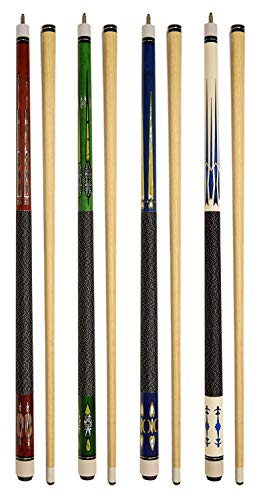
House cues are the best fit for families setting up a game room and casual players. The Billiard Depot set of four 58 inch cues, at around $43, includes 13mm leather tips, hardwood shafts, 5/16 by 18 joints and standard weight, according to Billiard Depot, which works out to about $11 per cue.
Sets give every player a cue and make sure guests have one at hand. Many players start with house cues and upgrade once they play regularly.
The trade off is consistency. Wood house cues can warp if stored badly, and basic tips flatten and lose grip quickly. Re tipping and proper storage help them last.
When buying a set, check that cues are the same length and weight so players get consistent feel, and add a wall or floor rack to keep them straight between games.
Intermediate/All Around Options: Carbon Fiber Playing Cues
Carbon fiber cues suit players who play weekly and want a straight, consistent cue. The CRICAL Carbon Fiber Pool Cue, at around $129, has a 58 inch length, a foam filled carbon shaft for less deflection on spin shots, a 12.5mm multi layer pigskin tip from Japan and a 3/8 by 8 stainless steel joint, according to CRICAL.
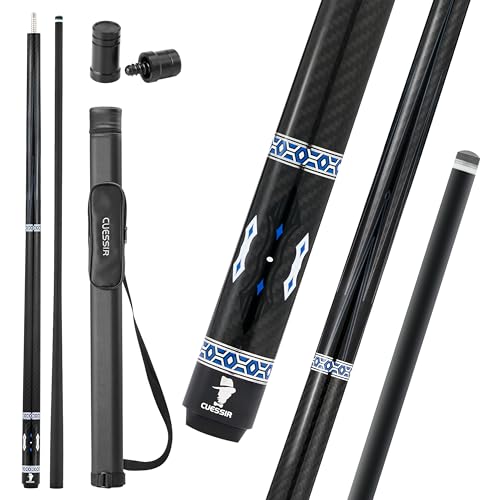
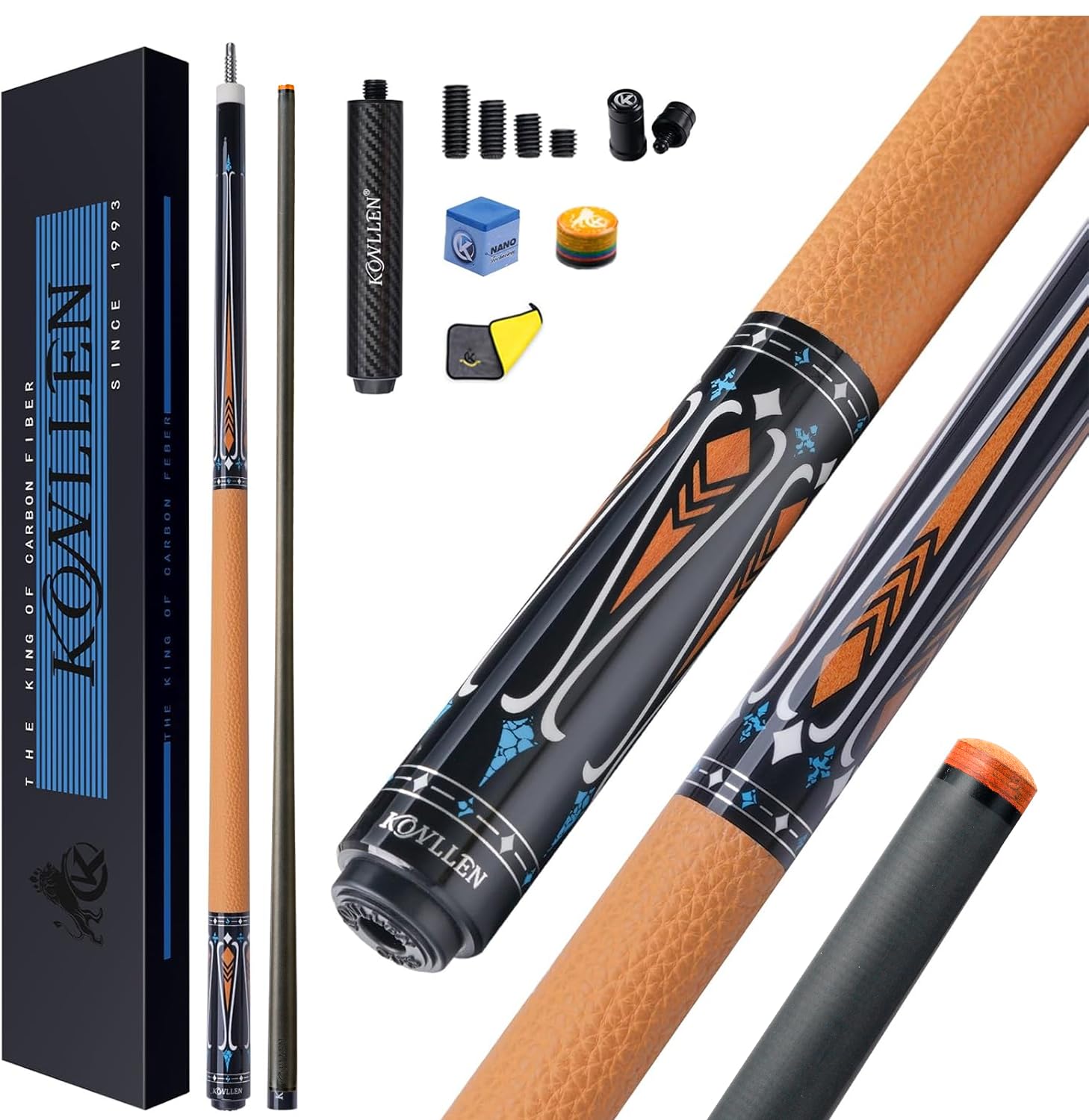
The CUESSIR Ascend, at around $130, uses aerospace grade carbon fiber that does not warp, a pro taper of about 13 inches for low deflection, a 19 to 20 ounce weight and an included case. KONLLEN's carbon fiber set, at around $215, also lists low deflection.
Low deflection shafts reduce how much the cue ball pushes off line when you add side spin, which makes aiming more predictable. Carbon does not warp with humidity, a big advantage over wood.
Carbon cues also wipe clean easily and slide smoothly through the bridge hand, since the shaft is sealed. Many players use a glove to keep the stroke smooth on any shaft.
Advanced/Performance Options: Break and Jump Cues
Break and jump cues suit serious players who want a second cue for powerful breaks and jump shots. The McDermott Star S2 two piece break and jump cue, at around $285, comes from a long established American cue maker. Billmart's 25 ounce Heavy Hitter Jump Break Cue, at around $132, uses a three piece design that converts between break and jump lengths.
Break cues use hard tips and stiff shafts to transfer energy without damaging your playing cue's softer tip. Jump cues are shorter and lighter for controlled jump shots where rules allow.
Most players do not need a break cue until they play competitively; a good playing cue handles casual breaks.
Billmart's three piece design lets you remove the butt section to create a shorter jump cue, so one cue handles both jobs. Check league or venue rules, since some ban jump cues or jump shots.
Kids' and Youth Options: Short Cues
Short cues suit children and rooms where walls are too close for full length cues. The Tai ba 48 inch junior cue, at around $50, uses hardwood Canadian maple with a 13mm tip in a two piece design. Short cues in 36, 42 and 48 inch lengths, at around $48, and a weighted short cue for tight spaces, at around $52, cover other needs.
A cue that matches a child's height makes it easier to hold a proper stance and bridge. Kids' sets of two, at around $35 to $39, suit siblings.
Short cues also help adults shoot near walls, but use a full length cue for most shots.
As a rule of thumb, children under about 4 feet tall do well with 36 inch cues, children up to about 5 feet with 42 to 48 inch cues and taller teens with full length cues.
Beginner House Cues vs Carbon Fiber Cues: Which Should You Choose?
Choose house cues if you are equipping a game room for family and guests, play occasionally or want several cues for little money. A set of four costs less than one premium cue.
Choose a carbon fiber cue if you play weekly, join a league or want a cue that stays straight and plays the same every time. Carbon cues cost more but resist warping, and low deflection shafts make spin shots easier to aim.
A middle path is to keep a house set for guests and buy one quality personal cue for yourself. That way your cue stays in good condition and you always play with familiar equipment.
Players who travel to bars and halls should add a case to protect a personal cue; CUESSIR includes one with its Ascend cue.
How to Choose the Best Pool Cue Sticks
To choose among the best pool cue sticks, match length, weight, tip and shaft to your height and skill, then check joint type and storage.
Length and Weight
Standard cues are 57 to 58 inches long, suiting most adults. Taller players may add an extension, which CUESSIR's design supports. Most players use cues between 18 and 21 ounces; CUESSIR lists 19 to 20 ounces. Heavier cues add power, while lighter cues add control.
Try a few weights at a local hall if you can. Many players settle around 19 ounces for a balance of power and control, then fine tune with weight bolts where the cue allows, as CRICAL's design does.
Tip Size and Hardness
Tips usually measure 12 to 13mm. Smaller tips, like CRICAL's 12.5mm, offer precision for spin, while 13mm tips, like Billiard Depot's, are more forgiving. Soft tips grip the ball better but wear faster; hard tips last longer and suit break cues.
Layered tips, like CRICAL's multi layer pigskin tip, hold shape longer and grip consistently compared with single layer tips. Chalk before every shot to prevent miscues.
Shaft Material and Deflection
Maple shafts are traditional and affordable but can warp. Carbon fiber shafts stay straight, resist humidity and often offer low deflection. Low deflection technology, like CRICAL's foam filled shaft and CUESSIR's pro taper, helps with spin shots.
Shaft taper affects feel. CUESSIR lists a pro taper of about 13 inches, which keeps the shaft diameter consistent where your bridge hand slides for a smoother stroke.
Skill Level and Intended Use
Beginners do well with standard house cues or an affordable carbon cue. League players benefit from carbon fiber playing cues and a separate break cue. Kids need short cues sized to their height.
If several people share one cue at home, a durable carbon cue that resists warping and tip wear holds up better than a basic wood cue.
Joints, Portability and Storage
Two piece cues with stainless steel joints, like CRICAL's 3/8 by 8 joint, unscrew for travel. Store cues upright in a rack or flat in a case, away from heat and humidity. The GACCO floor rack, at around $63, holds eight cues and accessories.
Joint type also affects feel and compatibility with extensions and spare shafts. Stainless steel joints, like the 3/8 by 8 joints on CRICAL and CUESSIR cues, are common on carbon cues, while house cues often use 5/16 by 18 joints.
How to Make Your Pool Cue Stick Last Longer
Store cues in a rack or case, never leaning against a wall where they can warp. Keep them away from heaters, sunny windows and damp basements.
Wipe the shaft with a clean cloth after play to remove chalk and oils. Shape and scuff the tip regularly so it holds chalk, and replace it when it flattens or mushrooms. Use a break cue for hard breaks to protect your playing cue's tip.
Do not lean on your cue or use it to retrieve balls from pockets, which strains joints and tips. Clean the ferrule area gently to remove chalk buildup.
FAQs
Is it worth buying a premium cue as a beginner?
Not necessarily. A straight house cue or an affordable carbon fiber cue around $120 to $130 is enough for beginners. Premium cues make more sense once you play regularly and know the weight and tip you prefer.
How long does a pool cue last?
A well cared for cue can last decades. Tips wear out and need replacing every few months to a year with regular play, and wood shafts can warp if stored poorly. Carbon fiber shafts resist warping.
Does carbon fiber play differently than wood?
Carbon fiber shafts feel stiffer and more consistent, with less deflection on spin shots, and they do not warp. Some players prefer the traditional feel of maple. Both can play well with a good tip.
What size cue should I get?
Most adults use a 58 inch cue weighing 18 to 21 ounces. Children use 36 to 48 inch cues depending on height, and short cues help in tight rooms.
How often should I replace the tip?
Replace a cue tip when it becomes flat, hard and shiny, mushrooms over the ferrule or no longer holds chalk. Regular players often re tip every few months, while casual players may go a year or more.
Do I need a cue case?
A case protects your cue from bumps, temperature changes and humidity when traveling to bars, halls and leagues. At home, a rack is enough. CUESSIR includes a case with its Ascend cue.
Our Verdict
The best pool cue sticks match your skill and space. House cue sets like Billiard Depot's suit game rooms, carbon fiber cues like CRICAL and CUESSIR suit improving players, break and jump cues like McDermott and Billmart suit competitive players and short cues like Tai ba's junior cue suit kids and tight rooms. Store cues properly and keep tips in shape.
For more game room guides, see the best board games for families, the best hand tool sets, the best office chairs for gaming and the best gaming monitors for ps5. Then compare current prices in the product table above.