Best Patio Coolers: A Complete Buying Guide
Warm drinks can end an afternoon on the patio faster than almost anything else, especially once the sun climbs and the ice in a cheap picnic cooler starts working against you. The best patio coolers are built for exactly this kind of outdoor duty, holding a steady chill through a long cookout instead of turning into a bucket of lukewarm water by mid-afternoon.
Some are made to sit permanently next to a grill or outdoor kitchen counter, while others roll from the garage to the backyard and back whenever you need them. This guide walks through built-in versus rolling designs, how to size capacity for your usual crowd, which materials and insulation actually hold up outside, and when a smaller cooler makes more sense than a full-size one.
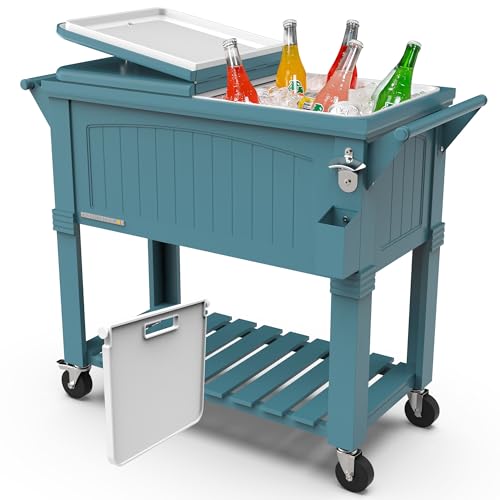
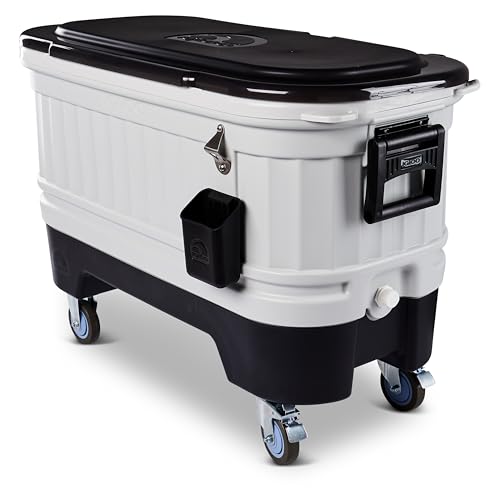
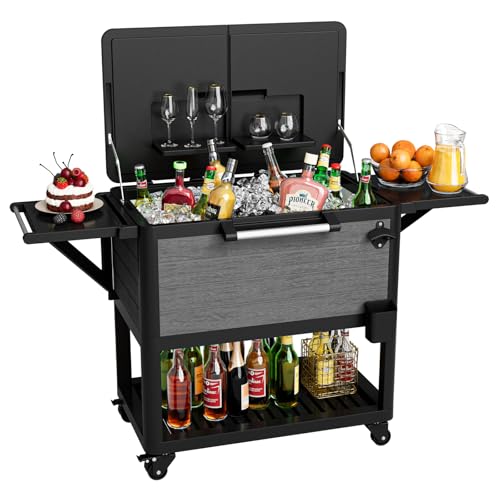
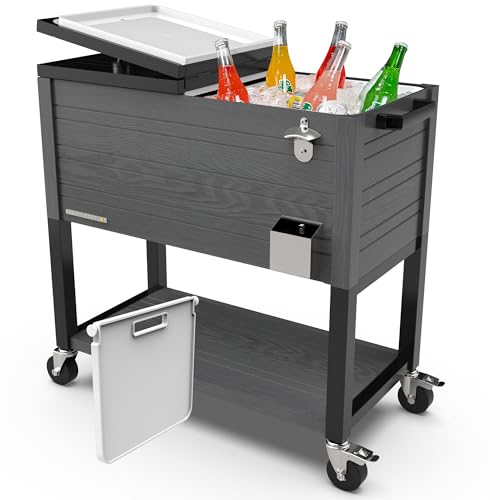
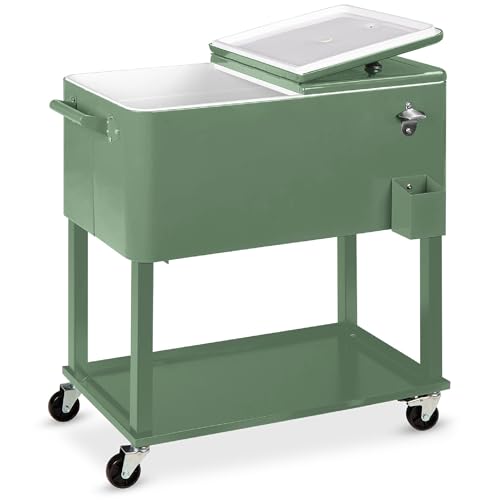
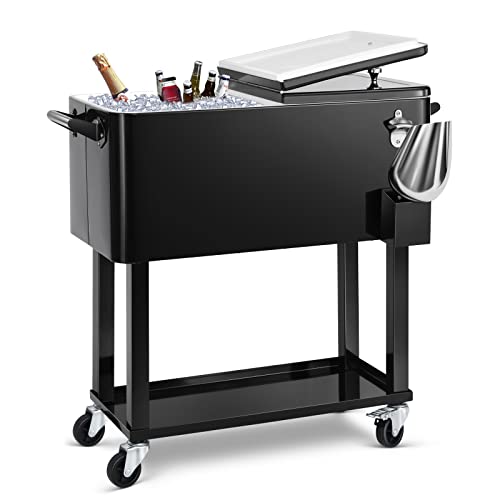
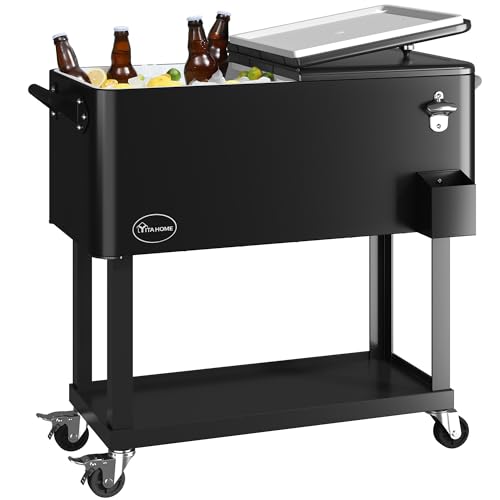
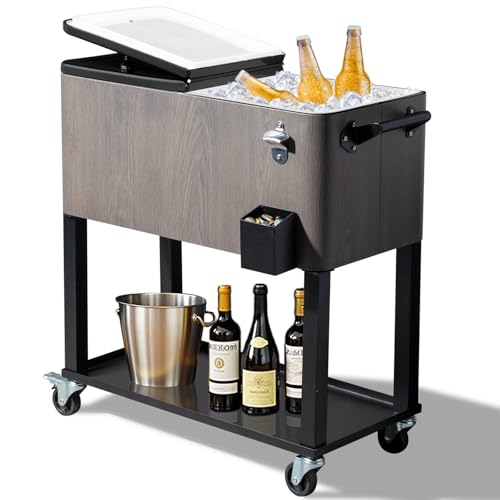
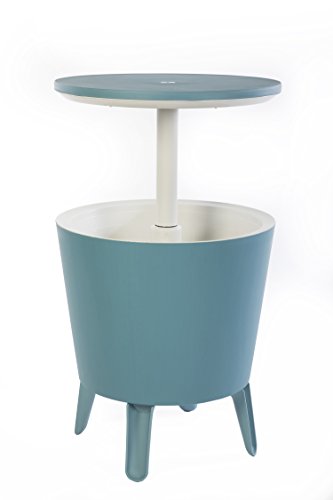
Built-In vs. Rolling Cart: Which Type Fits Your Patio
Patio coolers generally split into two very different approaches, and picking the wrong one is the most common regret people run into after buying.
Built-In Patio Coolers for a Permanent Outdoor Kitchen
A built-in patio cooler installs into a countertop or masonry surround, usually next to a grill station or bar setup, and stays in that spot year after year. These units tend to use insulated stainless steel jacketing and a front-facing drain so you can hose them out without pulling anything apart. Because they're fixed in place, they make the most sense for a patio that already has a permanent outdoor kitchen or bar, where you're not trying to move seating or furniture around from one event to the next.
Rolling Cooler Carts for Flexible, Movable Setups
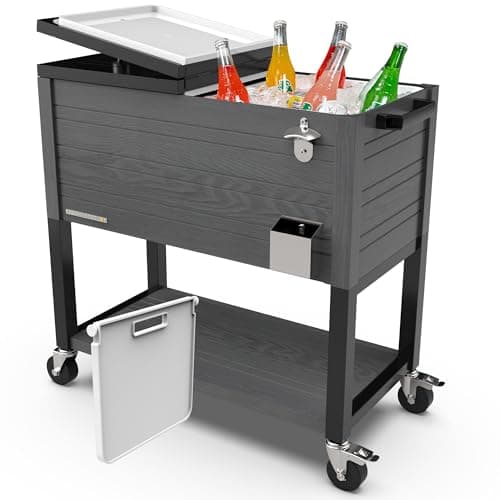
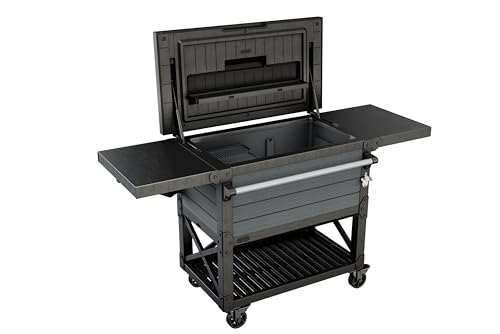
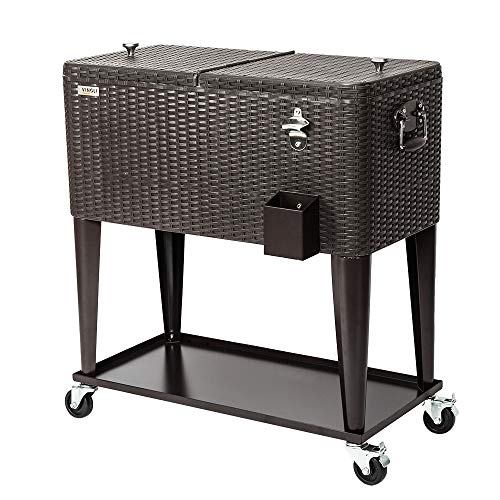
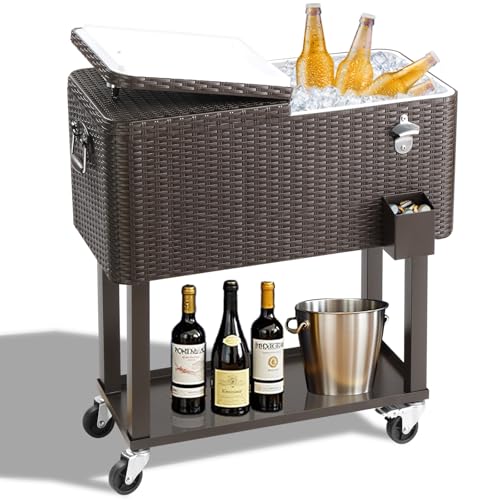
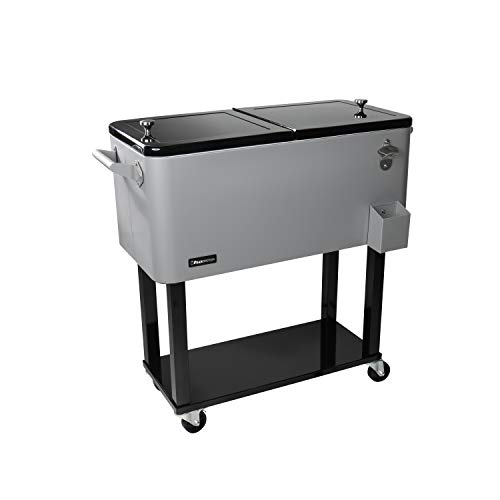
A standalone rolling cooler cart, by contrast, goes wherever the party goes, from a corner of the deck to poolside to the driveway for a tailgate. Most add a bottom shelf or side trays for cups and snacks, plus a bottle opener built into the frame. If your patio layout changes with the season or you host in more than one spot in the yard, a rolling model gives you that flexibility without any installation at all.
How Much Capacity Your Gatherings Actually Need
Capacity is usually the first spec people check, and it's also the one most likely to get misjudged in either direction.
Sizing for Everyday Family Use
For a household that mostly uses the cooler for weeknight dinners or a handful of drinks on the deck, something in the 40 to 60 quart range is typically plenty. That size holds a couple dozen cans plus ice without eating up more space than a small patio actually has room for.
Sizing for Parties and Larger Cookouts
Regular entertaining calls for more headroom, and models in the 80 to 120 quart range are common for exactly that reason, often holding well over 100 cans alongside a full load of ice. If you're already planning the rest of your outdoor dining setup, matching a larger cooler to something like patio dining tables that seat a crowd keeps the whole space feeling proportional instead of cramped.
Materials and Insulation That Hold Up Outdoors
A cooler that lives outside full time faces sun, rain, and temperature swings that indoor appliances never deal with, so the build matters more than it would for something kept in a garage.
Housing Materials: Rotomolded Plastic vs. Metal
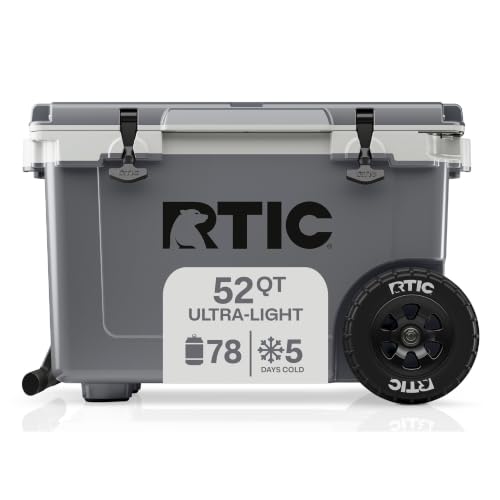
Rotomolded plastic housings resist cracking, fading, and rust better than almost anything else on the market, which is why they show up on higher-end rolling coolers meant to stay outdoors year-round. Powder-coated steel is the other common option, especially on built-in units, and it holds up well as long as any scratches or chips get touched up before rust has a chance to spread.
Insulation That Keeps Ice Frozen in Summer Heat
Thick injected foam insulation in the walls and lid is what actually determines how long ice survives on a hot afternoon, with well-insulated models holding solid ice for a day or two rather than a few hours. A gasketed, tight-sealing lid matters just as much as the foam itself, since a loose seal lets warm air creep in no matter how good the walls are.
Wheels, Handles, and Everyday Details
The details that seem minor in a product listing are often the ones you notice every single time you use the cooler.
Casters and Locking Wheels
Large, multi-directional casters roll far more smoothly over grass, gravel, or uneven pavers than small hard plastic wheels, and at least two of them should lock so the cart doesn't drift away from you on a sloped patio. Sturdy pull handles matter just as much once the cooler is loaded with ice and drinks, since that's when the weight actually becomes noticeable.
Lids, Shelves, and Drain Plugs
A hinged or fully removable lid changes how easy it is to load a cooler with bagged ice versus fishing drinks out one at a time through a small opening. A drain plug at the base saves you from tipping the whole unit over to empty melted ice, and side shelves or a bottom rack give you somewhere to set cups and condiments without needing a separate table.
Patio Cooler or Small Ice Chest? Deciding Which You Need
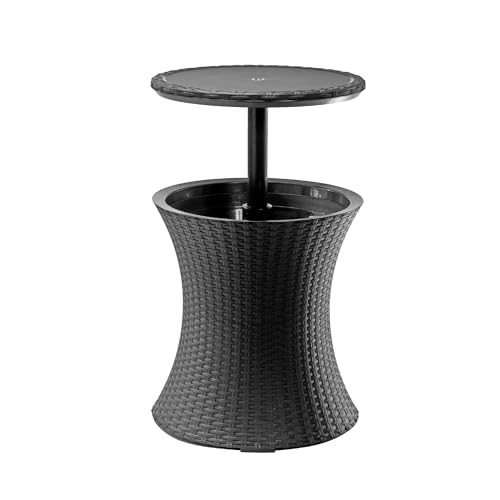
Not every backyard needs a full-size rolling model, and it's worth being honest about how you actually use one before spending on the bigger option. If your outdoor time is mostly two people relaxing after work, a compact option from a lineup of portable coolers that you can carry in one hand often covers it just fine, with none of the storage footprint a larger cart demands. A full-size patio cooler earns its space when you're regularly hosting groups, running a grill station for hours at a stretch, or want drinks staged in one fixed spot instead of carrying a chest back and forth from the kitchen.
Frequently Asked Questions
What's the difference between a built-in and a portable patio cooler?
A built-in model installs permanently into a countertop or outdoor kitchen surround and stays in one location, while a portable or rolling model moves around the yard on wheels. Built-in units suit a fixed outdoor kitchen setup, and rolling carts suit patios where the layout changes from one gathering to the next.
How many quarts do I need for a family of four?
A cooler in the 40 to 60 quart range is usually enough for a family's everyday use, holding a couple dozen drinks plus ice without taking up excessive patio space. Households that entertain often should size up toward 80 quarts or more.
Do rotomolded coolers really keep ice longer than metal ones?
Ice retention depends more on insulation thickness and lid seal than on the outer shell material alone, though rotomolded plastic often pairs with thicker foam walls in higher-end models. A well-built metal cooler with a tight seal can perform just as well as a plastic one.
Can I leave a patio cooler outside year-round?
Rotomolded plastic and powder-coated steel models are generally rated for full outdoor exposure, but checking the manufacturer's weather rating before leaving one out through winter is still worth doing. Covering the unit during freezing months helps protect seals and hardware either way.
Are wheels necessary if my cooler stays in one spot?
If the cooler genuinely never moves, wheels add cost without much benefit, and a stationary or built-in model may be the better fit. Wheels only pay off if you actually plan to relocate the cooler between the patio, garage, or different areas of the yard.
Is a large patio cooler better than several small ice chests?
A single large cooler is usually more convenient for hosting since it centralizes drinks in one spot with more consistent insulation, but a couple of small ice chests can be easier to store and split up for different uses, like drinks versus food. The right choice comes down to how often you host larger groups versus everyday use.
How often should I clean a patio cooler?
Rinsing the interior after each use and doing a deeper wash with mild soap every few weeks during heavy summer use keeps mildew and odor from building up. Letting the lid stay open to air dry between uses also helps, especially on rotomolded models with a tight seal.
Making Your Decision
Choosing between a built-in and a rolling patio cooler really comes down to how permanent your outdoor setup is and how often you actually entertain. Once you've settled on a type, matching capacity to your typical crowd size and prioritizing real insulation over flashy extras will do more for your ice than almost any other spec on the listing.