
Best Outdoor Patio Heaters: Reviews and Buying Guide for 2026
Disclosure: We may earn a commission when you buy through links on this page, at no extra cost to you. As an Amazon Associate I earn from qualifying purchases. Learn more

Patio heaters compared, with Amazon Basics, Pamapic pyramid and Briza electric picks plus BTU, fuel and safety advice.
A good patio heater turns a chilly deck, porch or backyard into a space you can use from early spring to late fall. The challenge is choosing between tall propane towers, glowing pyramid heaters, compact tabletop units and electric infrared models, each with very different heat output, running costs and setup needs. This guide to the best outdoor patio heaters explains how to match a heater to your space, fuel and safety needs.
We start with three top picks from the product table above, then cover how to choose by heat output, fuel, safety features and placement, followed by the main types, care tips and answers to common questions.






Our Top 3 Picks at a Glance
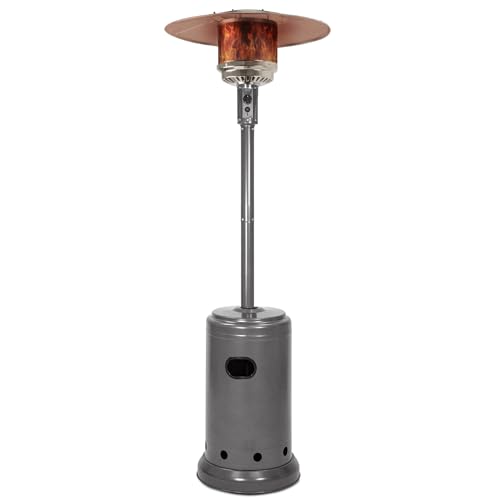
Best Overall: Amazon Basics 46,000 BTU Propane Patio Heater
The Amazon Basics 46,000 BTU heater suits homeowners and small cafes that want strong, reliable heat for a dining area or seating group. It heats up to a 9 foot radius, with an adjustable knob to control output, and starts with one touch ignition. Safety features include a tilt activated automatic shut off valve, a water box to weigh down the base and a chain to secure the tank.
Wheels make it easy to roll into place, and the powder coated finish resists the weather. It is one of the most widely bought patio heaters on Amazon. The limitation is that it needs a 20 pound propane tank, which is not included, and stands about 91 inches tall, so it needs open overhead clearance. It sits around $156.

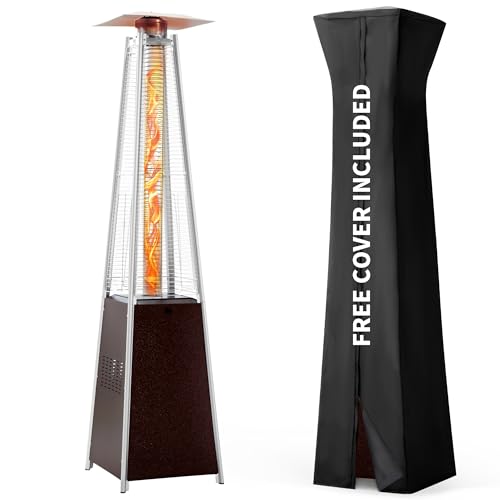
Best Value: Pamapic 89 inch Pyramid Patio Heater
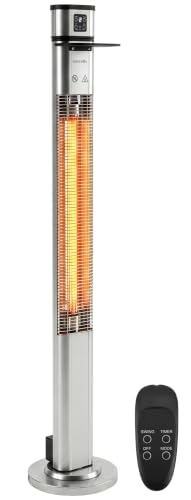
The Pamapic 89 inch pyramid heater suits people who want warmth and ambiance in one piece. A real flame rises through a quartz glass tube, creating a striking centerpiece while it heats the space around it. It runs on a standard 20 pound propane tank with pulse ignition, so no matches or electricity are needed, and a side door makes tank changes easy.
Triple safety protection includes a tip over shut off valve, flame failure protection and an overheat guard. Wheels and a fitted cover come included, and Pamapic says most buyers assemble it in about an hour. The limitation is that pyramid heaters focus more on looks than maximum reach compared with mushroom style heaters. It sits around $170.

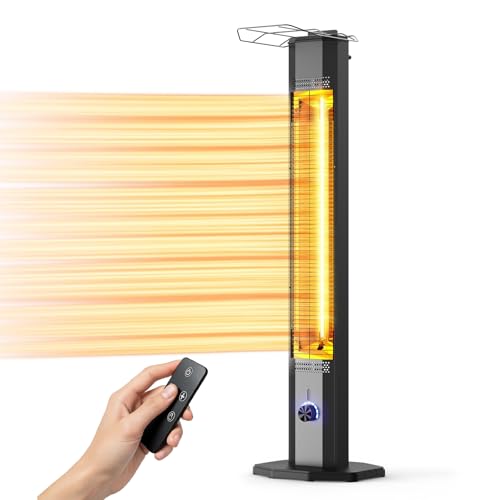
Best for Beginners: Briza Infrared Electric Patio Heater
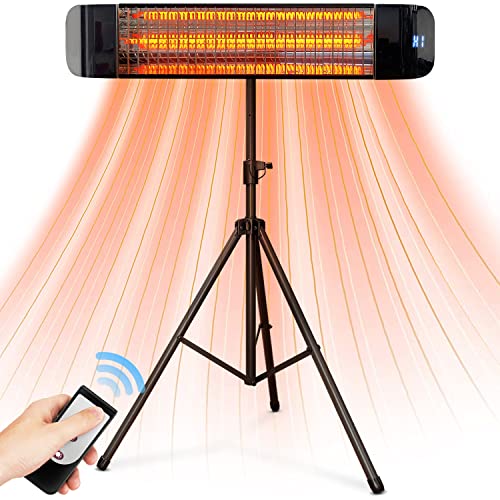
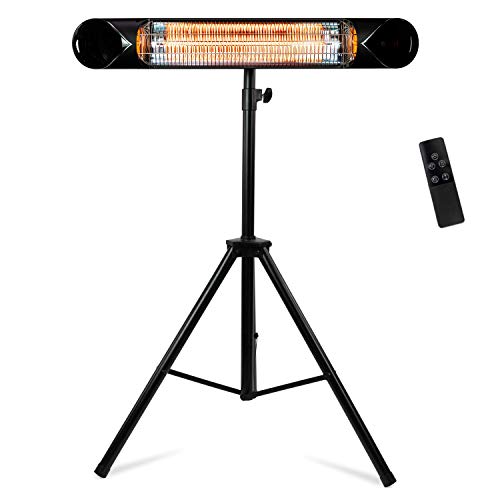
The Briza 1500W infrared heater is the easiest option for first time buyers, since there is no propane to buy, store or connect. It plugs into a standard outlet and uses carbon infrared technology that warms people and surfaces directly. It comes with an adjustable tripod stand plus hardware for wall or ceiling mounting, a remote with three heat levels (900W, 1200W and 1500W) and a 1 to 9 hour timer.
An IP55 rating means it can handle rain, snow and dust, and a tip over sensor shuts it off automatically. The limitation is a smaller heat zone than large propane heaters, best for a few people close by. It sits around $200.
How to Choose the Best Outdoor Patio Heaters: Buying Guide
These criteria matter most when comparing patio heaters. Use them to narrow the product table to the right few models.
Heat Output and Coverage
Propane heaters are rated in BTUs, while electric heaters are rated in watts. Tall propane heaters with around 40,000 to 48,000 BTUs warm a circle roughly 9 to 10 feet in radius in calm conditions, enough for a dining table or seating group. FOOWIN rates its 48,000 BTU pyramid for about 130 square feet.
Tabletop propane units around 11,000 BTUs warm about 30 square feet. Electric infrared heaters around 1,500 watts warm smaller zones, often around 25 square feet, while 4,500 watt hardwired models cover much more. For large patios, use two heaters rather than one oversized unit.
Fuel Type and Operating Cost
Propane is portable and powerful, but tanks need refilling. Hykolity estimates that a 20 pound tank runs its 48,000 BTU heater for about 8 to 10 hours, so frequent users should plan on regular refills.
Electric heaters cost little to run at 1,500 watts on most home electricity rates and never run out of fuel, but they need a nearby outdoor outlet. Natural gas heaters connect to a home gas line for unlimited fuel but require professional installation. Choose the fuel that matches how often and how long you use the heater.
Safety Features
Safety features are essential. Look for tip over shut off switches, which stop the flame or power if the heater falls, as on every pick above.
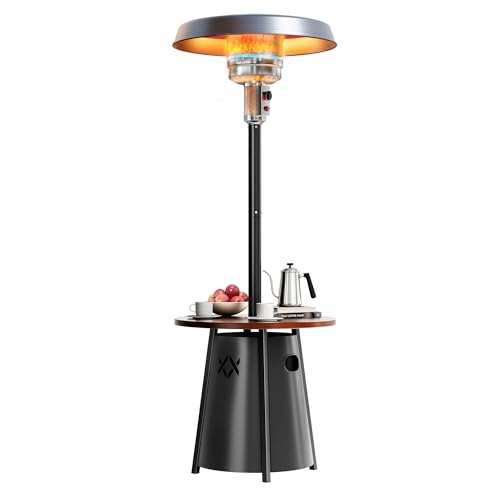
Flame failure protection shuts off the gas if the flame goes out, and overheat protection guards against damage. ETL or CSA certification, as listed on the INVARIA pyramid heater and the Pamapic round table heater, shows the design meets safety standards. For electric heaters, mesh guards, like the one on the SereneLife model, keep children and pets from touching hot elements.
Placement and Clearance
Propane patio heaters are for open outdoor spaces only. Never use them indoors, in a garage, in a tent or in a fully enclosed porch, since burning propane produces carbon monoxide.
Keep them away from walls, umbrellas, awnings, plants and anything flammable, following the clearance listed in the manual. Place heaters on flat, stable ground, and weigh or anchor tall units in windy areas. Electric heaters can mount on walls or ceilings, but follow the clearance rules and plug them into a GFCI protected outdoor outlet.
Weather Resistance and Durability
Look for stainless steel or powder coated steel bodies, which resist rust, and weatherproof covers to protect heaters between uses. Electric heaters carry IP ratings that show water and dust resistance; IP55 on the Briza and IPX5 on the VAGKRI handle rain well, while lower ratings need covered spots. Stainless steel burners, such as the 304 stainless steel burner on the Pamapic round table heater, last longer than thin mesh. A cover adds years of life for any heater stored outside.
Portability and Setup
Wheels make tall propane heaters easier to move, and detachable wheels on models like the INVARIA and Hykolity help with storage. Tabletop heaters like the Cuisinart and Tangkula are light enough to carry to a camp table or tailgate.
Most propane heaters take about an hour to assemble. Electric heaters set up in minutes on a stand or need basic tools for wall mounting; hardwired models like the Dr. Infrared 4500W need an electrician.
Controls and Convenience
Propane heaters use simple knobs and push button ignition. Electric infrared heaters often add remotes, multiple heat levels and timers, like the 9 heat levels and 24 hour timer on the VAGKRI tower. Timers prevent heaters from running all night by accident. Some newer electric models add WiFi control, but basic remote models are enough for most patios.
Types of Outdoor Patio Heaters
Tall Mushroom Propane Heaters
These classic heaters, like the Amazon Basics 46,000 BTU model, place a reflector hood on a tall pole to spread heat in a circle. They give the widest reach of portable heaters and suit dining areas and larger patios, though they need open overhead space and propane refills.
Pyramid Flame Heaters
Pyramid heaters from Pamapic, INVARIA, Hykolity and FOOWIN run a visible flame through a glass tube. They add ambiance and solid warmth around the base, suiting poolside areas, decks and entertaining. Heat reach is a little more focused than mushroom heaters.
Tabletop Propane Heaters
Compact heaters like the Cuisinart 11,000 BTU and Tangkula models sit on a table and warm a small group. They use 1 pound propane cylinders or adapt to 20 pound tanks, and suit balconies, small patios, camping and tailgates.
Electric Infrared Heaters
Electric models from Briza, VAGKRI, SereneLife and Dr. Infrared plug in or hardwire and warm people directly with infrared heat. They are quiet, produce no fumes and work under covered patios, but heat smaller zones per unit and need a nearby outlet. See our outdoor electric patio heater guide for more.
Care and Maintenance Tips
- Check for gas leaks each season. Brush soapy water on hose connections; bubbles mean a leak to fix before lighting.
- Keep burners and vents clean. Spiders and debris can block burners and cause uneven flames, so inspect before each season.
- Cover the heater when not in use. A fitted cover protects against rain, sun and dust.
- Store propane tanks outside. Keep tanks upright in a ventilated area away from heat sources, never indoors.
- Wipe electric heater elements gently. Unplug and let cool first, then remove dust from the reflector for best heat.
Outdoor Patio Heaters: Your Questions Answered
How long does a propane tank last in a patio heater?
A standard 20 pound tank typically lasts around 8 to 10 hours on high in a 46,000 to 48,000 BTU heater, and longer on lower settings. Tabletop heaters on 1 pound cylinders often run a few hours. Keep a spare tank on hand for long gatherings.
What size heater do I need for my patio?
For a dining table or seating group, a 40,000 to 48,000 BTU propane heater covers roughly a 9 to 10 foot radius. For two or three people, a tabletop propane heater or 1,500 watt electric heater works well. Large patios need two or more heaters spaced around the area.
Where is the best place to put it?
Place propane heaters on flat, stable ground in an open area, away from walls, umbrellas, plants and anything flammable, with open sky above. Put the heater near seating but not where people will bump into it. Electric heaters can mount on walls or ceilings under covered patios with proper clearance.
Is it expensive to run a patio heater?
Electric heaters are usually cheaper to run per hour than propane at typical home electricity rates, but heat smaller areas. Propane costs depend on local tank refill prices; heavy use can add up. Use timers and lower settings to save fuel and energy.
Do outdoor patio heaters really work?
Yes, on calm, cool evenings they keep people noticeably warmer within their heat zone. Wind blows heat away, so shelter from walls or fences helps. Infrared heaters warm people directly and work better in light wind than heaters that warm the air.
Can I use a patio heater under a covered porch?
Electric heaters are the safer choice under covers, following the clearance in the manual. Most propane heaters need open overhead space and should not be used under low roofs or in enclosed areas, since heat and carbon monoxide build up. Always follow the maker's clearance rules.
Wrapping Up
Three things matter most: enough heat output for your space, the right fuel for how often you use it and solid safety features like tip over shut off. The Amazon Basics 46,000 BTU heater is the best all round choice, the Pamapic pyramid heater adds ambiance at a good price and the Briza electric heater is the simplest choice for beginners. Pair your heater with our outdoor fire pits and fire pit chairs guides, then check the product table above to choose from the best outdoor patio heaters for your space.


