
Best Paper Towel Holders: The Complete Buying Guide
Disclosure: We may earn a commission when you buy through links on this page, at no extra cost to you. As an Amazon Associate I earn from qualifying purchases. Learn more
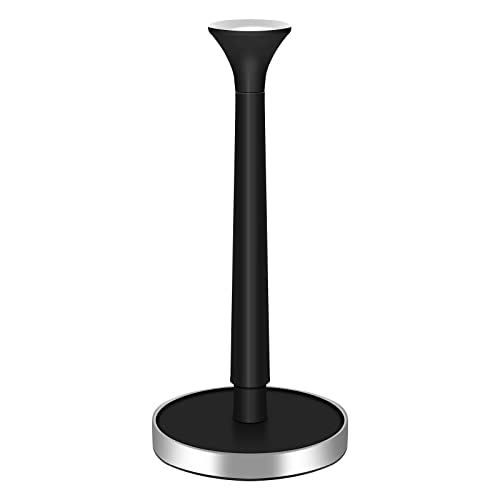
If your paper towel roll spins uselessly every time you try to tear off a sheet, or your holder has already pulled loose from the wall once, you know a paper towel holder is not as simple a purchase as it looks. Finding the best paper towel holders for your kitchen really comes down to matching the mounting style, tearing mechanism, and roll size to how you actually cook and clean. In this guide, you will learn what separates a holder that lasts from one that ends up in a drawer, how to choose between countertop, wall-mounted, and under-cabinet styles, and how to keep a wall-mounted model from working itself loose.
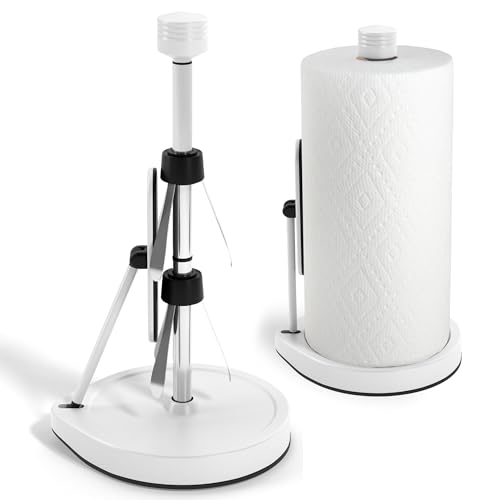
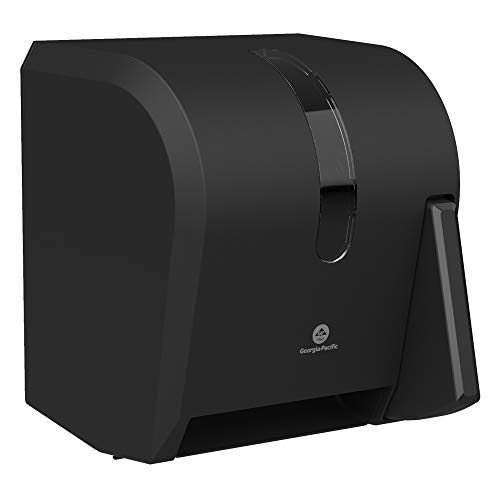
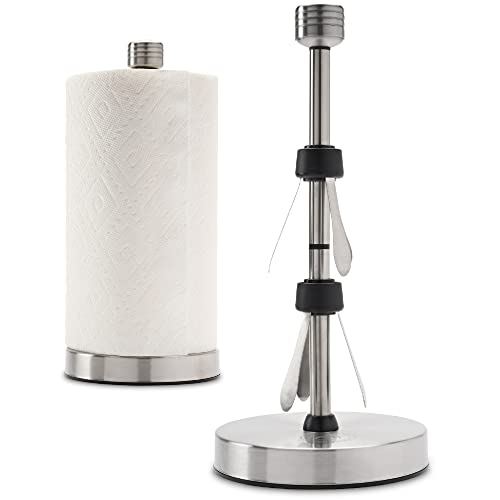
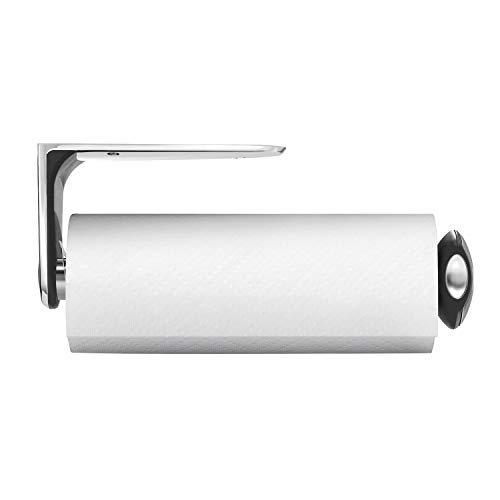
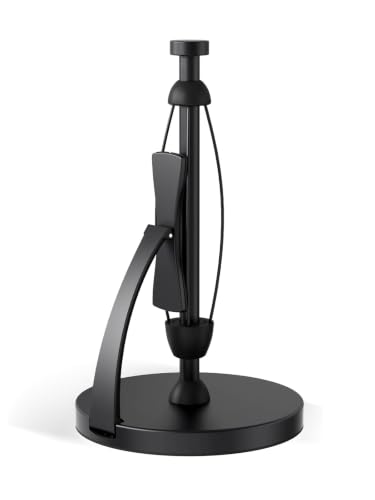
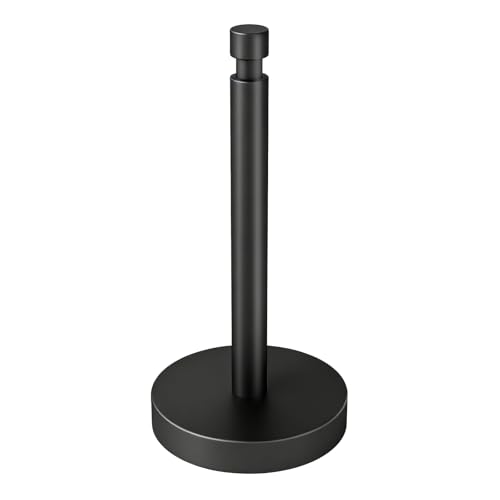
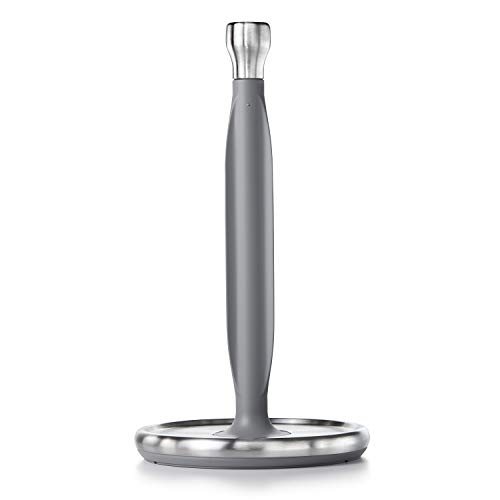
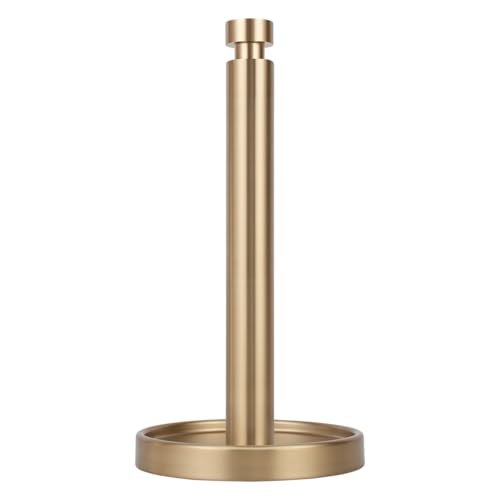
What Actually Makes a Paper Towel Holder Worth Buying
Most paper towel holders look nearly identical in a product photo, but the differences show up the moment you actually use one. Three factors decide whether a holder earns a permanent spot on your counter or wall: how cleanly it tears sheets, how stable it stays while you pull, and how easy it is to swap in a fresh roll.
Tearing Performance and the Tension Arm Question
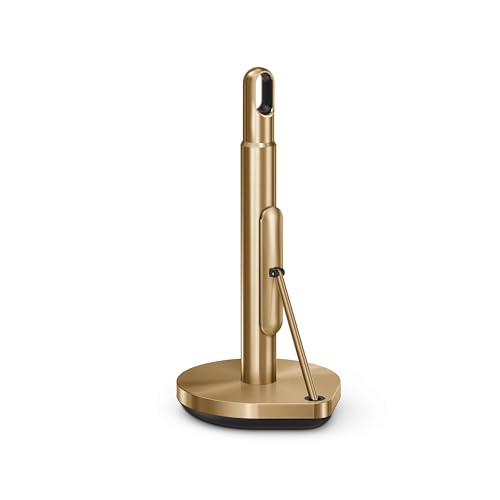
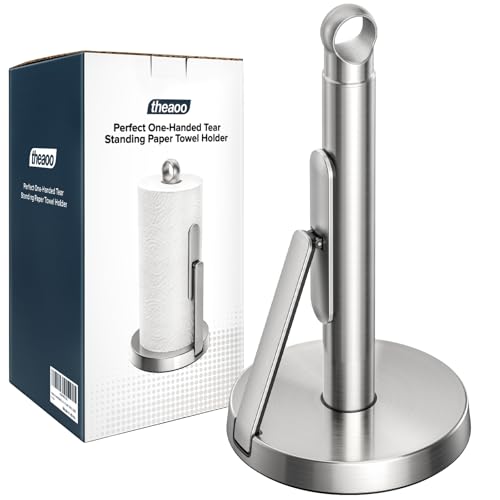
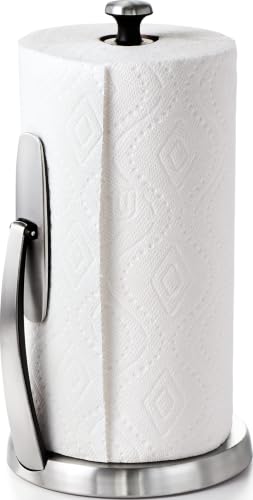
Many holders use a spring-loaded or tension arm that presses against the outside of the roll to keep it from unspooling on its own and to let you tear a sheet with one hand instead of wrestling the roll with both. The tricky part is that the tension has to be balanced. An arm that presses too lightly lets the roll spin freely, so you end up unrolling several feet of paper towel just to tear off one sheet. An arm that presses too firmly can make the roll so stiff that it barely turns at all, which defeats the purpose just as badly. Look for reviews or product descriptions that specifically mention adjustable or graduated tension, since that is usually a sign the tightness has been tuned rather than guessed at.
Stability While You Tear
A paper towel holder that slides across the counter or wobbles when you tug on the paper is more annoying than useful. For countertop models, a genuinely weighted base, often reinforced with rubber or non-slip feet, keeps the whole unit anchored while you pull a sheet with force. For wall-mounted versions, stability depends less on weight and more on how securely the bracket is fixed to the wall, which is worth thinking through before you drill anything.
How Easy It Is to Load and Replace a Roll
You will replace the roll far more often than you will ever compare holders, so loading should not require two hands and a moment of frustration every few days. Holders with a simple top-loading pole or an open-ended arm tend to be faster to reload than fully enclosed designs, which sometimes require threading the roll through a narrow opening. If a holder has a locking cap or spring-loaded end cap, check that it releases easily instead of requiring you to pry it open.
Countertop, Wall-Mounted, or Under-Cabinet: Picking the Right Setup
Before comparing tearing mechanisms or materials, it helps to settle on where the holder will actually live, since this decision affects nearly everything else about the purchase.
Countertop Holders
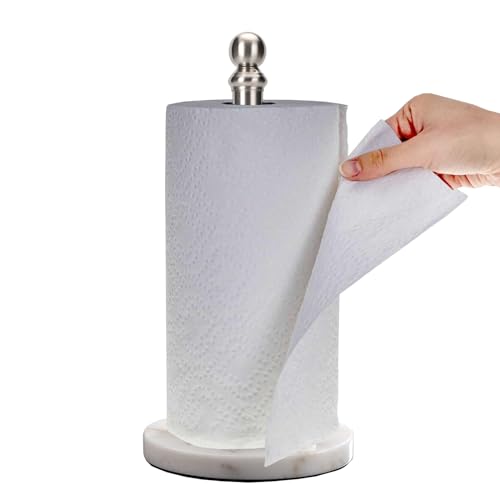
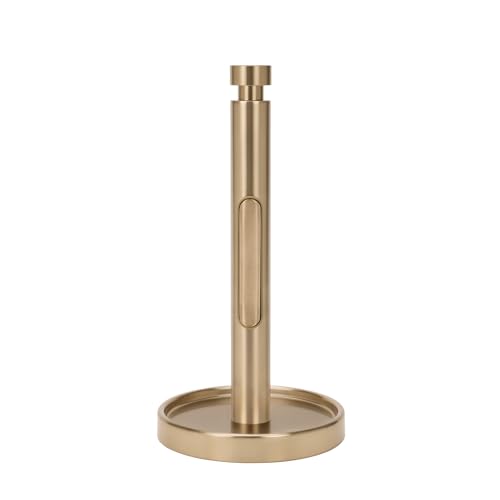
A freestanding countertop paper towel holder is the easiest option to set up since there is no drilling and nothing permanent about it, which makes it a natural fit for renters or anyone who rearranges their kitchen often. The tradeoff is that it claims a small but real footprint, typically somewhere around four by six inches, right in the same zone where people often keep a dish drying mat or other sink-side accessories, so counter real estate near the sink can get crowded fast. Because it sits in plain view and within easy reach, it can also make it a little too easy to grab a sheet you did not really need.
Wall-Mounted Holders
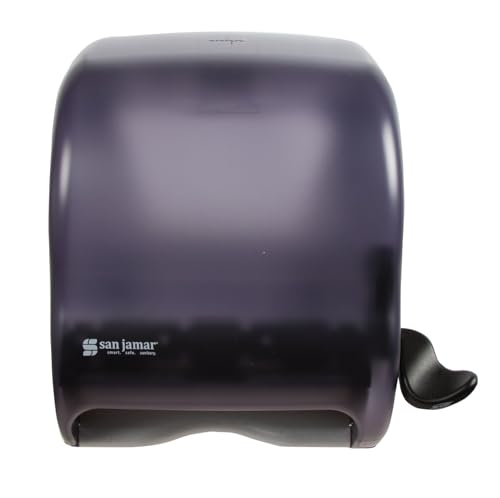
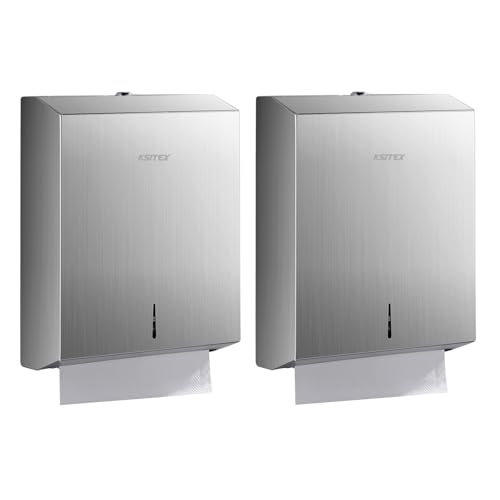
A wall-mounted paper towel holder frees up that counter space entirely and keeps the roll out of the way of prep work and spills. Because reaching for a sheet takes a small deliberate motion rather than an instant grab, some households find they use fewer sheets overall with a wall-mounted setup. The downside is that it requires drilling into a wall or the underside of a cabinet, which is not ideal if you are renting or reluctant to put holes in the wall.
Under-Cabinet Holders
An under-cabinet paper towel holder mounts to the bottom of an upper cabinet and typically hangs down only three or four inches, so it keeps the counter completely clear while still staying within easy reach. This works especially well in small kitchens, galley layouts, or RVs where every inch of counter matters. The catch is that many of these models rely on adhesive strips rather than screws, and that adhesive can fail on textured, humid, or slightly greasy cabinet surfaces over time, so a screw-mounted version is usually the safer long-term bet if your cabinets allow it.
Making Sure Your Roll Actually Fits
It is easy to overlook roll size until a jumbo or mega roll refuses to fit onto a holder built for a standard one. Roll diameter varies more than most shoppers expect, and enclosed or under-cabinet designs with limited clearance are the most likely to reject an oversized roll entirely. If your household regularly buys bulk or jumbo packs, check the maximum roll diameter listed for a holder before assuming it will work, rather than finding out after the fact. Open-arm and countertop tension-arm designs tend to be more forgiving of larger rolls than fully enclosed housings, simply because there is nothing boxing the roll in on all sides. If you switch between standard and jumbo rolls depending on what is on sale, a holder with an adjustable or extendable arm will save you from having to buy a second holder just for the bigger size. For everyday spills that do not warrant tearing off a sheet, keeping a stack of reusable kitchen dishcloths nearby can also cut down on how fast you burn through a roll.
Keeping a Wall-Mounted Holder From Coming Loose
A wall-mounted holder that eventually rips out of the wall is almost never a defect in the holder itself. The usual culprit is the anchor hardware, since the lightweight plastic anchors that ship in the box are only rated for light, occasional pulling, not the repeated daily tugging a paper towel holder gets. If you are installing one, swap the included anchors for heavier-duty ones, such as self-drilling or toggle-style anchors rated for the actual weight and pull force involved, rather than trusting whatever came in the package. It also helps to mount into a stud when one lines up with your preferred location, since a screw driven into solid wood framing will always outlast one anchored only in drywall. If a holder you already own has started to wiggle, tightening the mounting screws and checking the anchors for cracking is worth doing before the whole thing pulls free.
Frequently Asked Questions
What is the best type of paper towel holder for a small kitchen?
An under-cabinet or wall-mounted holder is usually the better fit for a small kitchen, since both keep the counter clear. Under-cabinet models are especially useful in galley kitchens where every inch of workspace counts.
Are wall-mounted paper towel holders better than countertop ones?
Neither is universally better; it depends on your priorities. Wall-mounted holders free up counter space and can reduce impulse use, while countertop holders are faster to install and easier to move if you rearrange your kitchen.
Will a paper towel holder fit jumbo or mega rolls?
Not always. Enclosed and under-cabinet designs often have limited clearance and may not accommodate larger roll diameters, so it is worth checking the maximum roll size before buying if you regularly use jumbo packs.
Why does a paper towel holder keep falling off the wall?
In most cases, the holder itself is fine and the anchors are the problem. Lightweight plastic anchors that come standard in installation kits often fail under repeated daily pulling and should be replaced with heavier-duty hardware.
What makes a paper towel holder easy to use with one hand?
A properly tensioned spring or tension arm paired with a stable, weighted base is what allows one-handed tearing. The arm needs enough resistance to stop the roll from spinning freely, but not so much that it prevents the roll from turning at all.
Should a paper towel holder have a weighted base?
For a countertop model, yes. A weighted, non-slip base keeps the holder anchored while you pull a sheet, which matters more than most people expect once you are tearing with any real force.
Do under-cabinet paper towel holders damage cabinets?
Screw-mounted versions leave small holes similar to any hardware installation, while adhesive-mounted versions are removable but can sometimes leave residue or lift paint on certain finishes. Testing the adhesive on an inconspicuous spot first is a reasonable precaution.
Making Your Decision
There is no single correct answer among countertop, wall-mounted, and under-cabinet paper towel holders, since the right pick depends on your counter space, your willingness to drill, and how large a roll you typically buy. Focus on tearing performance, real stability, and easy roll changes, and you will end up with a holder you barely think about, which is exactly the point.