
Best Outdoor Rocking Chairs: A Complete Buying Guide
Disclosure: We may earn a commission when you buy through links on this page, at no extra cost to you. As an Amazon Associate I earn from qualifying purchases. Learn more

A porch rocker sees a lot of abuse over the years: baking sun, driving rain, freezing nights, and the occasional spilled drink. If you have already ruled out natural wood, whether because of the upkeep or just personal taste, there is still a wide field of outdoor rocking chairs built specifically to shrug off the weather without a single coat of sealant. Resin, synthetic wicker, and metal frames each handle sun and moisture differently, and the rocking mechanism itself, whether a traditional curved runner or a glider track, changes how the chair feels and how much space it needs. This guide breaks down the non-wood materials worth considering, how they compare to each other, and which rocking style fits your porch or patio best.




Resin and Poly Lumber Rockers: Built to Ignore the Weather
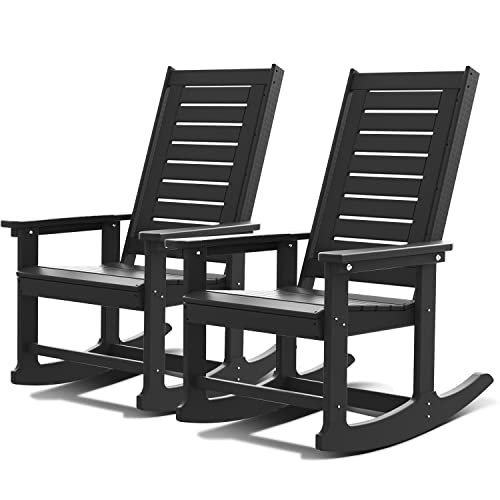
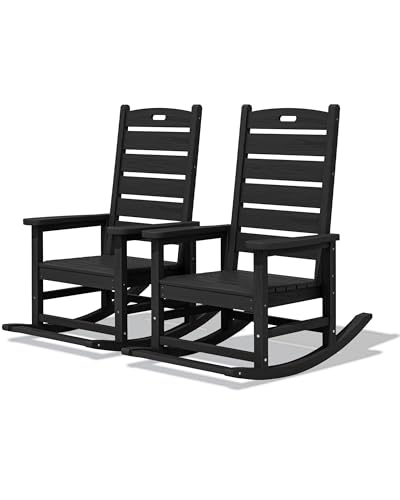
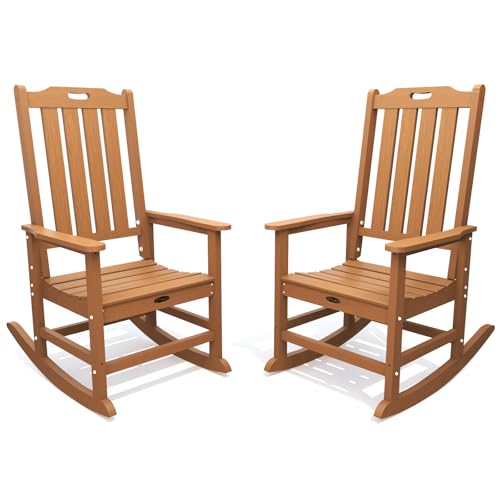
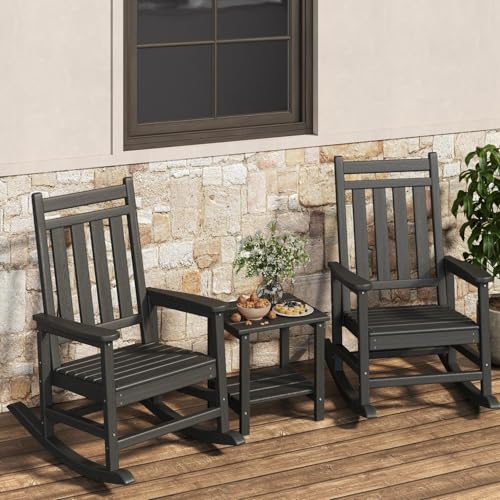
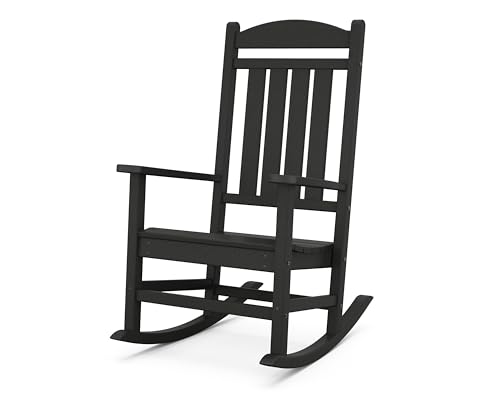
High-density poly lumber, often just called resin, has become the default recommendation for anyone who wants a chair to look the same in ten years as it does on day one. The material is essentially recycled plastic engineered to resist UV rays, moisture, and temperature swings without cracking or fading the way lower-grade plastics do. If you like the look of natural wood but not the maintenance, our separate guide to wooden rocking chairs covers species and sealing routines in more depth.
How Poly Lumber Holds Up Season After Season
Because poly lumber is solid through and through rather than coated, scratches and scuffs do not expose bare material underneath the way they would on painted wood or powder-coated metal. It will not rot, splinter, or attract termites, and it never needs to be repainted or resealed. Color is mixed into the material itself, so fading happens far more slowly than with surface finishes, though some lightening can still occur after years of direct sun.
Trade-offs to Know Before Buying
Poly lumber outdoor rocking chairs tend to cost more upfront than basic wood or metal options, and the material has a noticeably heavier, denser feel than natural wood of the same thickness. That weight is actually an advantage outdoors, since it keeps the chair planted in wind, but it makes the chair harder to move around or carry up steps by yourself.
All-Weather Wicker: Woven Style Over a Metal Frame
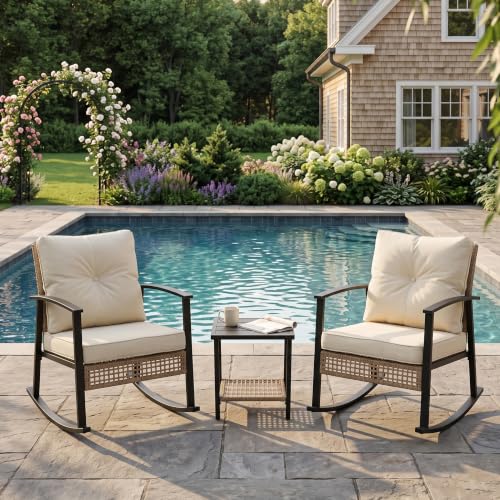
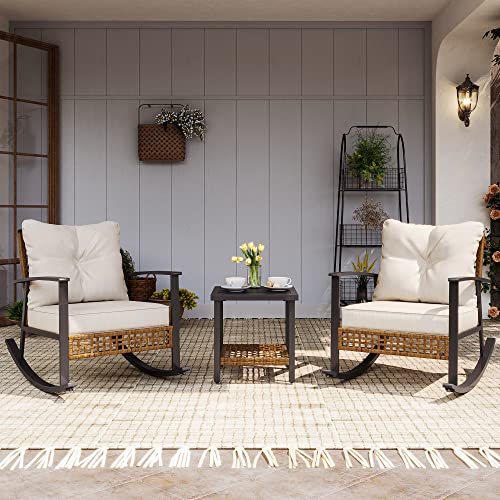
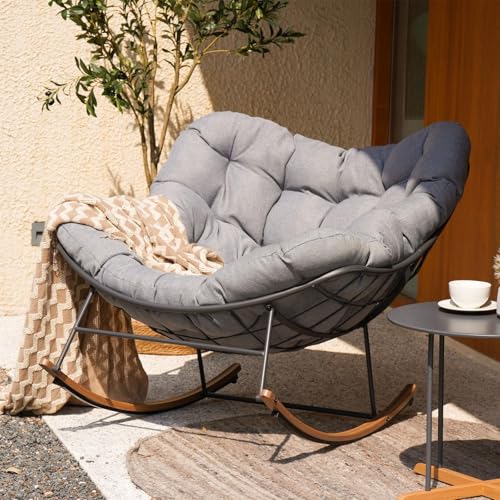
Wicker brings a softer, more textured look to a porch than resin or metal alone, and it shows up on plenty of all-weather outdoor rocking chairs for exactly that reason, but natural rattan has no business sitting outside unprotected. Modern all-weather wicker solves that by weaving synthetic resin fibers, usually polyethylene, over an aluminum or steel frame instead of natural cane.
What Makes Synthetic Wicker Different From Natural Rattan
The woven fibers on an all-weather piece are extruded plastic rather than plant material, so rain and humidity that would rot real rattan within a season or two just run off. Quality varies a lot between products, though, and thinner, cheaper weaves can crack or fray at stress points within a couple of years, while denser weaves hold up much longer.
Choosing a Frame That Will Not Rust
The frame underneath the weave matters just as much as the wicker itself. Aluminum frames resist rust entirely and stay lightweight, which makes them the safer long-term pick for anyone in a humid or coastal climate. Steel frames are sturdier under heavy use but need a rust-resistant coating that can eventually chip and expose bare metal underneath. If you want the woven look elsewhere on your patio too, matching wicker patio chairs can round out the seating around a rocker.
Metal and Wrought Iron Rockers: Classic Lines, Different Comfort Needs
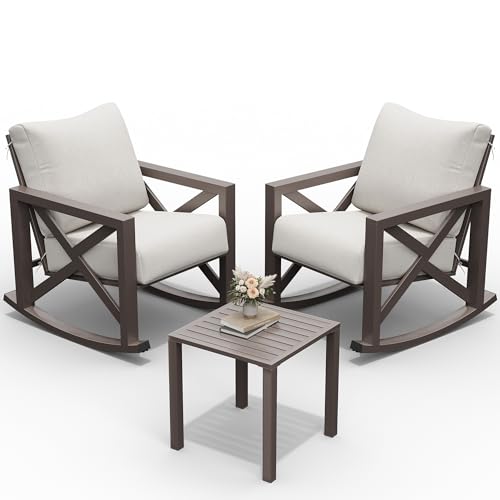
Metal rockers, whether cast aluminum or wrought iron, bring a more traditional silhouette than resin and a sturdier feel than wicker. Among metal outdoor rocking chairs, they handle exposure well on their own, but comfort is where they need the most thought before buying.
Why Metal Rockers Need Extra Cushioning
A bare metal seat gets uncomfortable fast, both from the hard surface and from how hot it can get sitting in direct sun. Most owners add a weather-rated cushion pad, which solves both problems at once, but it does mean budgeting for an extra accessory that resin and wicker chairs usually do not require.
Aluminum vs Wrought Iron for Outdoor Use
Cast aluminum is light enough to move easily and naturally resists rust, though that same light weight can let it shift or tip in strong wind. Wrought iron is far heavier and more stable in gusty spots, but any scratch through the powder coating leaves bare metal exposed to rust unless it is touched up. For a full outdoor seating setup, pairing a metal rocker with a patio dining table in a matching finish keeps the whole space consistent.
Comparing Resin, Wicker, and Metal Side by Side
Each of these outdoor rocking chairs materials trades off maintenance, comfort, and price a little differently, so the right pick really depends on what you are willing to deal with.
- Resin and poly lumber: lowest long-term maintenance, highest upfront cost, heaviest and most stable in wind.
- All-weather wicker: most comfortable and textured look, moderate maintenance depending on weave quality, best suited to covered spaces.
- Metal and wrought iron: most durable frame, needs a cushion for real comfort, can get hot in direct sun.
None of these materials require the sealing or staining that wood does, which is the main reason people move away from wood rockers in the first place, but each still benefits from an occasional rinse to clear dust and pollen buildup.
Traditional Rockers vs Gliders: Which Motion Fits Your Space
The rocking mechanism matters just as much as the material, and it applies no matter which of the materials above you choose. A traditional rocker sits on curved runners that arc directly against the floor, producing the classic back-and-forth sway most people picture. That motion needs real clearance, typically two to three feet of open space front and back, so the runners do not bump a railing or wall.
Gliders swap the curved runners for a fixed track or suspended frame, keeping the seat's motion contained within its own footprint. That makes gliders a better fit for smaller porches or spots pushed up against a wall, and the motion tends to feel smoother and quieter since nothing is rocking directly against the floor. Traditional rockers still win out for that familiar, rhythmic feel many people associate with porch sitting, so the choice usually comes down to available space versus classic motion. If you want a lower, more reclined option for stretching out instead of rocking, a chaise lounge chair is worth a look for the same patio.
Frequently Asked Questions
What is the best material for an outdoor rocking chair besides wood?
Among non-wood outdoor rocking chairs, poly lumber and resin generally hold up the longest with the least maintenance, since the material resists moisture and UV damage all the way through rather than just on the surface. All-weather wicker and metal are both solid choices too, depending on whether you prioritize comfort or a more classic look.
Are resin rocking chairs actually durable outdoors?
Yes, high-density poly lumber is built specifically for constant outdoor exposure and will not rot, splinter, or need repainting the way wood does. It can show minor fading after many years of direct sun, but the structure itself holds up extremely well.
Is synthetic wicker durable enough to leave outside?
Quality all-weather wicker woven over an aluminum frame handles regular outdoor exposure well, though a covered porch will extend its life compared to a fully exposed patio. Cheaper, thinly woven wicker is more prone to cracking or fraying over time than denser weaves.
Do metal rocking chairs get too hot to sit in?
Metal surfaces can get noticeably hot in direct summer sun, which is why most metal rockers are paired with a cushion rather than used bare. In shaded or covered spots, heat is much less of an issue.
What is the difference between a rocking chair and a glider?
A traditional rocking chair moves on curved runners that rock directly against the floor, while a glider moves along a fixed track or suspended frame within its own footprint. Gliders generally need less clearance space and feel quieter, while traditional rockers offer a more classic swaying motion.
How much space do you need for a rocking chair to move freely?
Plan for roughly two to three feet of open space in front of and behind a traditional rocker so the runners can complete their arc without hitting a wall or railing. Gliders need much less clearance since their motion stays contained within the frame.
Can resin or metal rocking chairs stay outside all winter?
Poly lumber and powder-coated aluminum can generally handle winter weather without much issue, though covering them or moving them somewhere sheltered helps preserve the finish long term. Wrought iron and steel benefit the most from covering, since any exposed scratch in the coating is more likely to rust in freezing, wet conditions.
Making the Right Call for Your Porch
Once wood is off the table, choosing among non-wood outdoor rocking chairs really comes down to how much comfort, upkeep, and wind resistance matter most for your space. A covered porch opens up more options, including wicker, while a fully exposed patio favors the lower-maintenance resin and metal builds. Whichever material you land on, matching the rocking style, traditional or glider, to how much clearance you actually have will make the chair feel right every time you sit down.


