Best Outdoor Coffee Tables: A Complete Buying Guide
Disclosure: We may earn a commission when you buy through links on this page, at no extra cost to you. As an Amazon Associate we earn from qualifying purchases. Learn more
A coffee table looks like the easiest piece of patio furniture to buy, until the one you picked turns out too tall for the sectional, starts rusting by the following season, or holds a puddle every time it rains. Outdoor seating areas take a beating from sun, moisture, and daily use that a table built for a living room was never designed to handle. Finding the best outdoor coffee tables comes down to a handful of details that rarely show up in a product photo: how well the material actually resists weather, whether the height lines up with your seating, how the surface handles standing water, and whether the table stays put once it's sitting on pavers or an uneven stone patio. Here's what to check before you buy.


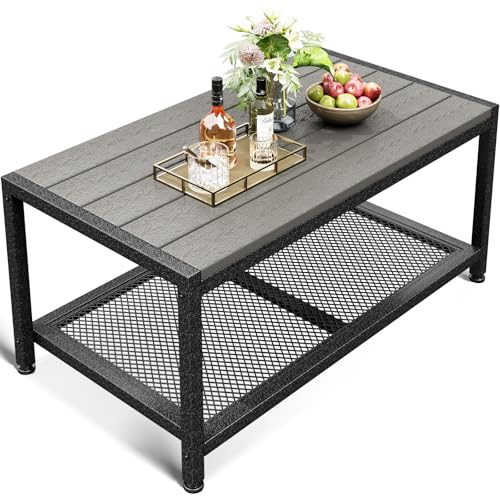
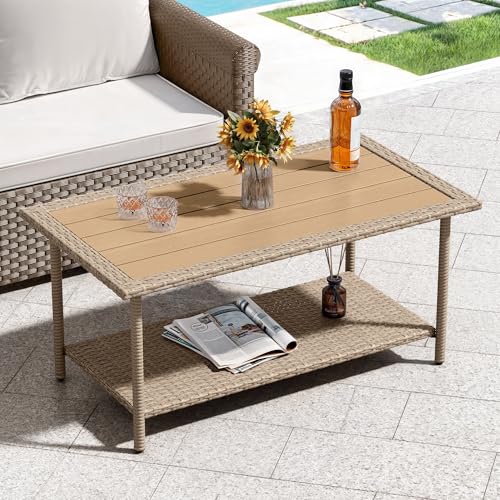
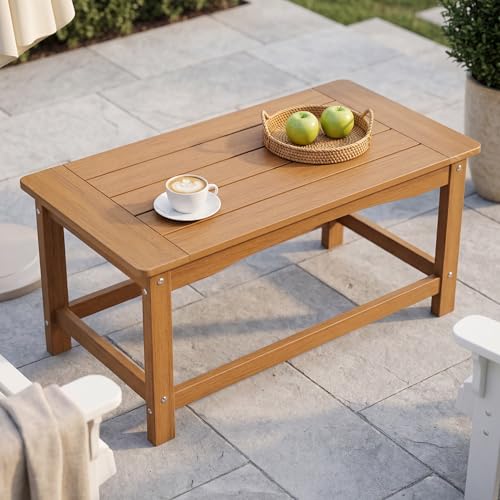
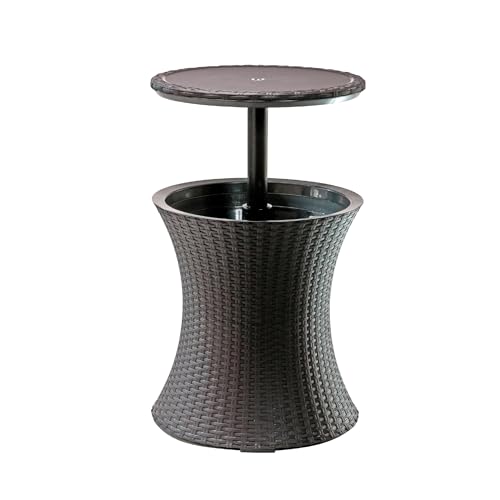

Materials That Actually Hold Up Outdoors
The material does more to determine how long outdoor coffee tables last than their style ever will. Some finishes that look identical to indoor furniture are only rated for a covered porch, while others are built to sit in open weather for years without much attention.
Tempered Glass and Stone or Concrete Tops
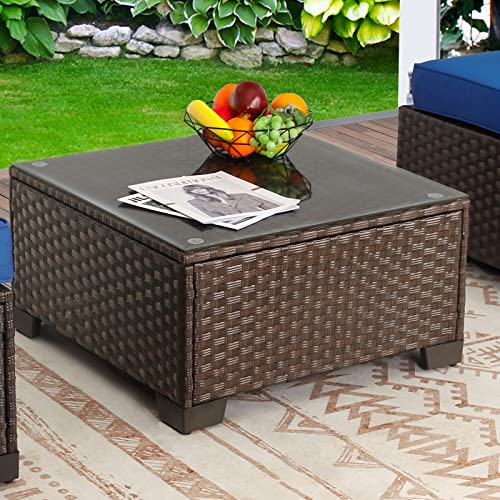
Tempered glass resists scratching and won't fade, and it works well when paired with a rust-resistant aluminum or powder-coated steel base. Natural stone and cast concrete tops are heavier still, which helps with stability, and neither one absorbs moisture the way untreated wood does. The tradeoff is weight: both are harder to move once placed, so pick the spot carefully.
Composite Wood and Resin Wicker
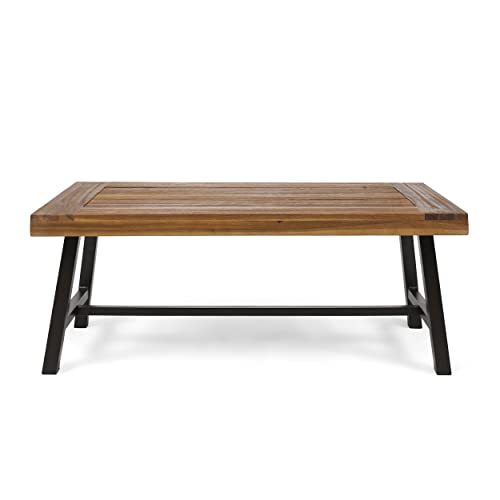
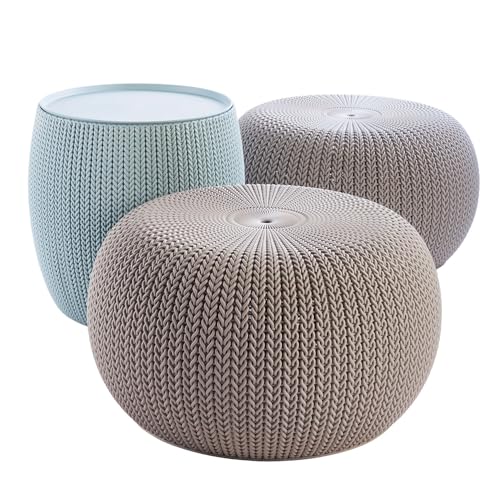
Composite or engineered wood tops mimic the look of teak or acacia without the seasonal oiling that natural wood needs. Resin wicker, the same weave used on outdoor chaise lounge chairs and other pool-side seating, holds up to sun exposure far better than traditional rattan and won't crack or peel in a few seasons.
Metal Frames and Rust Resistance
Powder-coated aluminum is the safest bet for frames since aluminum naturally forms a protective layer that slows corrosion. Steel frames can work too, but only with a genuine rust-resistant coating, not just a painted finish that chips the first time the table gets bumped.
Matching the Height to Your Outdoor Seating
Most outdoor sofas and patio chairs put the seat cushion somewhere between 17 and 19 inches off the ground, and a coffee table works best when it sits close to that line, usually 1 to 2 inches lower. That puts most tables in the 16 to 18 inch range, though deep lounge-style sets with taller cushions can call for something closer to 20 inches.
A table that's noticeably taller than the seating interrupts the relaxed, low profile most outdoor lounge areas are going for. One that's too low makes it awkward to reach a drink or a plate without leaning forward every time.
Sizing a Table to Fit Your Patio Layout
Beyond height, the table's footprint needs to match the seating around it. A useful rule of thumb is to keep the table's length somewhere between half and two-thirds the length of the sofa or sectional it sits in front of, with roughly 14 to 18 inches of clearance between the table edge and the seating so knees and shins have room.
On a smaller patio, an oversized table eats up the walking space you need to get in and out of your seats, while an undersized one looks lost in a large layout. If the space also needs a dedicated spot for meals, a separate patio dining table usually works better than asking one coffee table to do both jobs.
Why Standing Water on the Tabletop Is a Bigger Deal Than It Looks
Rain doesn't just wet an outdoor table, it can sit there for hours if the surface has nowhere for it to go. A flat, solid top with no drainage will collect a shallow puddle after almost every storm, and that pooled water is what actually causes long-term damage: it seeps into unsealed wood seams, stains fabric-wrapped surfaces, and can crack a glass top if it freezes in a cold snap.
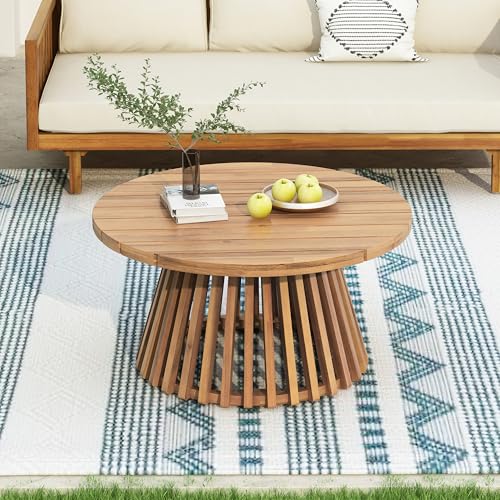
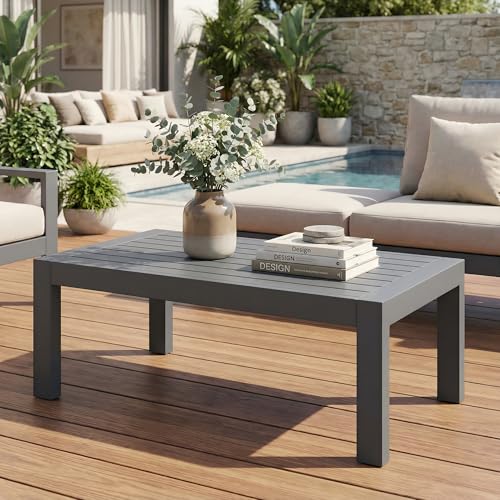
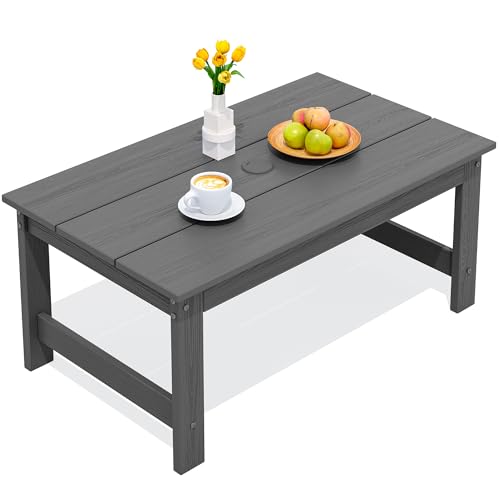
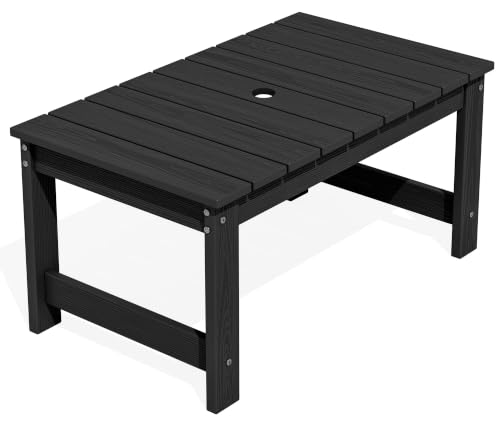
Slatted tabletops, whether wood, composite, or metal, let water drain straight through instead of collecting on top. Tempered glass tops with a slight slope or a raised lip design shed water on their own, and open-weave resin wicker surfaces have the same advantage built into the material. Before buying, it's worth checking whether a listing mentions drainage at all, since a lot of budget tables simply don't address it.
Keeping a Table Steady on Pavers, Gravel, or an Uneven Patio
Very few outdoor surfaces are perfectly flat, and a table that wobbles on your particular patio might sit fine in a showroom. Adjustable or self-leveling feet solve most of this, letting each leg extend independently to compensate for dips in pavers, brick, or poured concrete. Wide, flared bases are also more forgiving on uneven ground than a slim pedestal design, since the extra footprint spreads the weight over a bigger area.
Heavier materials like stone or concrete resist shifting in wind on their own, while lightweight aluminum tables benefit from rubber or felt pads under each foot to keep them from sliding or scratching a hard surface. If your patio is gravel or loose stone rather than a solid pad, look for wider feet or a base plate rather than narrow, pointed legs that sink in.
Frequently Asked Questions
How tall should an outdoor coffee table be?
Most work best between 16 and 18 inches, which sits 1 to 2 inches below a typical outdoor sofa's seat cushion. Deeper lounge seating with taller cushions can call for a table closer to 20 inches.
What's the best material for an outdoor coffee table?
Powder-coated aluminum frames, tempered glass, resin wicker, and natural or cast stone all hold up well to sun and rain. Untreated wood and painted steel tend to need the most upkeep and are the first to show wear.
Do outdoor coffee tables rust?
Aluminum resists rust on its own because of a natural oxide layer, so it rarely corrodes. Steel can rust if the protective coating chips or wears through, which is why a genuine rust-resistant finish matters more than the metal itself.
How do I stop an outdoor coffee table from wobbling?
Look for a table with adjustable or self-leveling feet, which let you compensate for dips in pavers or concrete. A wider base also resists wobble better than a narrow pedestal on uneven ground.
Does rain damage an outdoor coffee table?
The table itself usually survives rain fine, but water that pools on a flat top can seep into seams, stain fabric surfaces, or crack glass if it freezes. Tables with a slatted, sloped, or open-weave surface avoid this by letting water drain instead of sitting on top.
What size coffee table works with a sectional?
Aim for a table between half and two-thirds the length of the sectional, placed roughly 14 to 18 inches from the front edge of the seating so there's room for legs without the table being out of reach.
Can a glass-top outdoor coffee table crack in cold weather?
Tempered glass is built to handle temperature swings better than standard glass, but water left sitting on the surface can still crack it if it freezes and expands. Wiping the top dry before a cold snap or choosing a sloped design avoids the issue.
Making the Right Call for Your Space
The outdoor coffee tables that hold up longest aren't necessarily the most expensive ones, they're the ones matched correctly to their conditions: a weather-resistant material, a height that lines up with the seating around it, a footprint that fits the patio, and a design that doesn't trap water or wobble on an imperfect surface. Check those four things before anything else, and the style choice becomes the easy part.