
Best LED Grow Light Under $500: What Your Budget Buys
Disclosure: We may earn a commission when you buy through links on this page, at no extra cost to you. As an Amazon Associate I earn from qualifying purchases. Learn more

You have narrowed your search down to one number: $500. That is enough to move past the cheap panels that struggle past seedling stage, but it is not unlimited, and every extra dollar spent on the wrong feature is a dollar you cannot put toward coverage. Finding the best led grow light under 500 dollars means understanding exactly what that budget buys in terms of wattage, coverage area, and build quality, not just picking whichever fixture has the biggest sticker on the box. In this guide, you will learn how to match your space to a realistic wattage range, whether one large fixture or two smaller ones makes more sense at this price, and where the real trade-offs sit above and below the $500 mark.
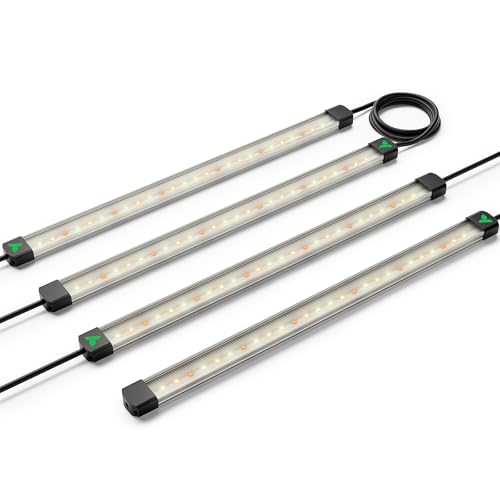


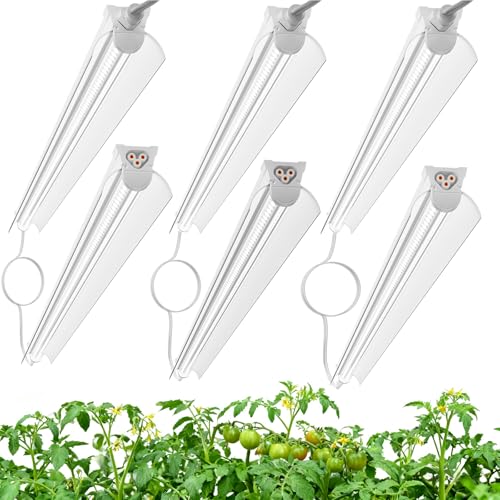

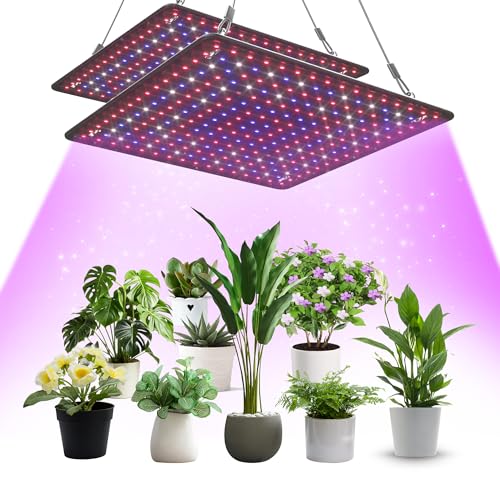
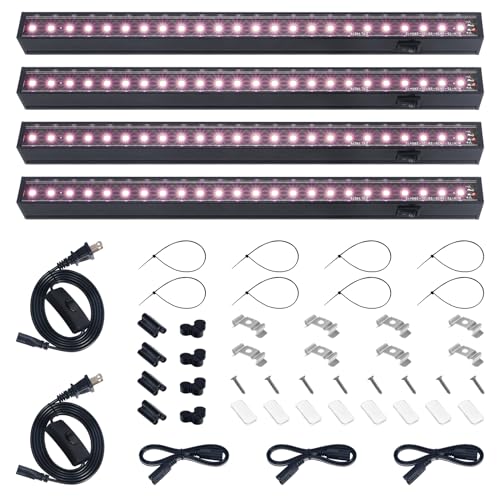
What $500 Actually Buys You in Coverage and Wattage
At this price point, you are typically looking at a fixture drawing somewhere between 300 and 500 actual watts from the wall, depending on the brand's efficiency and how much of the budget goes into the diodes versus the driver and housing. That range is enough to properly cover a 3x3 or 4x4 grow space through both vegetative and flowering stages, assuming the fixture uses efficient diodes rather than cheap, high-heat chips padded out with extra hardware.
Matching Wattage to Your Actual Grow Space
Start with your footprint, not the light. A useful starting range is 30 to 50 actual watts per square foot of canopy, with the higher end reserved for flowering or fruiting plants that need more intense light than seedlings or leafy greens. A 4x4 space works out to roughly 480 to 800 watts of demand at full flower, which puts a $500 fixture near the lower end of that range unless you scale the space down slightly or supplement with a second, smaller light later.
Why the Number on the Box Isn't the Real Wattage
Manufacturers frequently list an "equivalent wattage" figure that compares the fixture to old-style HPS bulbs rather than telling you what the LED itself actually draws. A light marketed as "1000W equivalent" might pull closer to 150 to 200 actual watts from your outlet. Always look for the true power draw on the spec sheet, listed as actual wattage or measured at the wall, and treat any equivalency claim as marketing rather than a spec you can plan around.
Coverage That Holds Up Once Plants Start Flowering
Coverage area listed by a manufacturer is almost always measured for vegetative growth, where plants need less intense light. That same fixture's usable flowering footprint is usually smaller, often 20 to 30 percent less than the advertised veg coverage. When comparing options at this budget, look specifically for a flowering or "core coverage" figure, not just the headline square footage on the box.
One Larger Fixture or Two Smaller Ones at This Budget
This is one of the most common decisions buyers face once they hit the $500 range, and there is no single right answer. It depends on how your space is shaped and whether you expect to expand later.
The Case for Putting It All Into One Quantum Board
A single quantum-board style fixture in this price range typically offers the best efficiency per dollar, since manufacturers can put more of the budget into the diodes and driver rather than duplicating housing, wiring, and hardware across two units. It is also simpler to hang, dim, and control, and it produces more even coverage across a square space without the seam or overlap issues two separate fixtures can create.
The Case for Splitting Into Two Smaller Bars
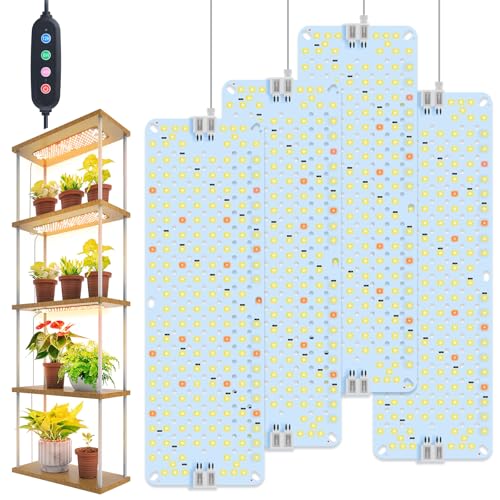
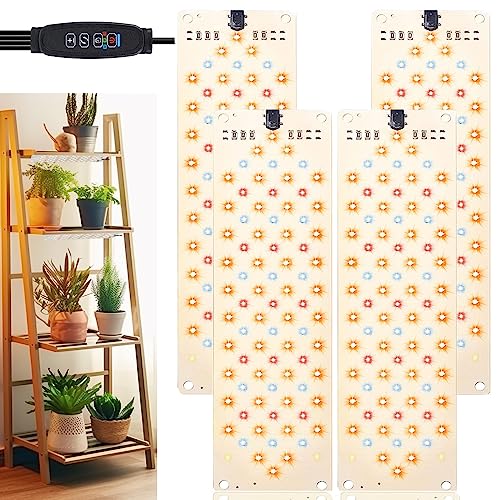
Two smaller foldable bar fixtures can outperform one large panel in rectangular or irregularly shaped spaces, since you can position them independently to match the canopy rather than being locked into one fixed footprint. Splitting the budget also lets you scale gradually. If your space or plant count grows later, you buy a third bar instead of replacing the whole system. The trade-off is slightly lower total efficiency for the same dollar spent, since you are paying for two drivers and two housings instead of one.
Anyone weighing this decision alongside their physical space should also look closely at how a grow tent's dimensions interact with fixture shape, since a tent built long and narrow favors two bars far more than one square panel. Either route can land you a genuinely capable best led grow light under 500 dollars, the shape of your space is really what should decide it.
Where the Extra Money Goes If You Spend More or Less
Price tiers in LED grow lighting are not arbitrary. Each jump in budget tends to buy a specific, identifiable improvement rather than just more brand name.
What Changes if You Push Past $500
Fixtures priced above this range usually improve in three specific ways: higher diode efficacy measured in micromoles per joule, meaning more usable light per watt of electricity; better spectrum tuning across the growth cycle instead of a single fixed output; and driver components rated for a longer service life, which matters if you plan to run the light daily for years. None of these upgrades change whether the light works, they change how efficiently it works and how long it lasts. If you want a fuller breakdown of the specs worth checking on any fixture regardless of price, the site's broader LED grow light buying guide covers that ground in more depth.
What You're Risking Well Below It
Dropping significantly under $500 usually means cutting corners in less visible places: cheaper drivers that run hotter and fail sooner, diode bins that produce less usable light per watt even when the wattage number looks similar, and coverage claims that are optimistic at best. A light in the $150 to $250 range can still work for a small tent or a few houseplants, but expecting flowering-stage performance from it in a 3x3 or larger space is usually setting yourself up for disappointment.
Budget Mistakes That Waste Money at This Price Point
A handful of specific mistakes show up repeatedly among buyers shopping in this exact price range, and most of them come from misallocating the budget rather than picking a bad brand.
- Spending extra on app-based control, elaborate dimming schedules, or smart-home integration before locking in adequate raw coverage and efficiency, features that matter far less than actual PPFD at canopy level
- Splitting the whole $500 evenly between the light and other equipment like a tent or exhaust fan, when the light itself typically deserves the larger share since it directly determines plant growth
- Buying based on the highest "equivalent wattage" number on the packaging instead of checking actual watts drawn and PPFD readings at multiple points across the coverage area, not just the center
- Choosing a fixture without checking driver warranty length, since the driver, not the diodes, is the component most likely to fail first on a budget light
If your setup also involves hydroponics rather than soil, budgeting correctly matters even more, since a reliable pH meter and a properly sized light both compete for the same limited dollars, and neither one compensates for the other being underpowered.
Frequently Asked Questions
What size grow tent can $500 cover?
A $500 LED fixture typically covers a 3x3 to 4x4 tent well through flowering, assuming it draws 300 to 500 actual watts. Larger tents, such as 5x5 or bigger, usually need either a higher-wattage fixture above this budget or a second light added later.
Is it better to buy one light or two lights for $500?
One larger fixture generally offers better efficiency per dollar and simpler setup for square spaces. Two smaller fixtures make more sense for rectangular tents or if you plan to expand your grow space gradually over time.
How many watts do I need per square foot for growing?
A common starting range is 30 to 50 actual watts per square foot of canopy, with the higher end reserved for flowering or fruiting plants that demand more intense light than seedlings or leafy greens.
What's the real difference between a quantum board and a bar-style light?
A quantum board is typically one fixed panel with diodes spread across a flat surface, while bar-style fixtures use several narrow strips connected by a central driver. Bars fold flatter for shipping and can be spaced to match irregular canopy shapes, while quantum boards often edge out bars slightly in raw efficiency.
Does actual wattage matter more than "equivalent wattage" claims?
Yes. Equivalent wattage compares an LED to older HPS bulbs and tells you almost nothing about real output or coverage. Actual wattage drawn from the wall, combined with a PPFD reading, is a far more reliable way to judge what a fixture can actually do.
What's a good PPFD for flowering under a budget light?
Most flowering plants respond well to a PPFD in the 600 to 900 micromoles per square meter per second range at canopy height. Check whether the manufacturer's figure is measured at the center of the coverage area only, since corners often receive noticeably less light.
Can a $500 grow light handle both veg and flower stages?
Yes, most fixtures in this range are built as full-spectrum lights meant to run through the entire growth cycle. Some offer separate veg and flower dimming channels, which lets you adjust intensity without buying a second fixture for each stage.
Is it better to buy now or save up for a pricier light?
If your current space is 4x4 or smaller, a $500 fixture is usually enough to get strong results without waiting. If you are planning a larger space or expect to scale up soon, it can be worth saving a bit longer, since jumping tiers later often means replacing the whole fixture instead of adding to it.
Getting the Most Out of a $500 Budget
A $500 budget is enough to run a genuinely capable setup, as long as the money goes toward actual wattage, driver quality, and coverage that holds up through flowering rather than toward marketing claims or unnecessary extras. Match the fixture to your space first, decide between one larger light or two smaller ones based on that shape, and finding the best led grow light under 500 dollars for your setup becomes a much simpler decision.