Best Kitchen Island Carts: A Complete Buying Guide
Disclosure: We may earn a commission when you buy through links on this page, at no extra cost to you. As an Amazon Associate we earn from qualifying purchases. Learn more
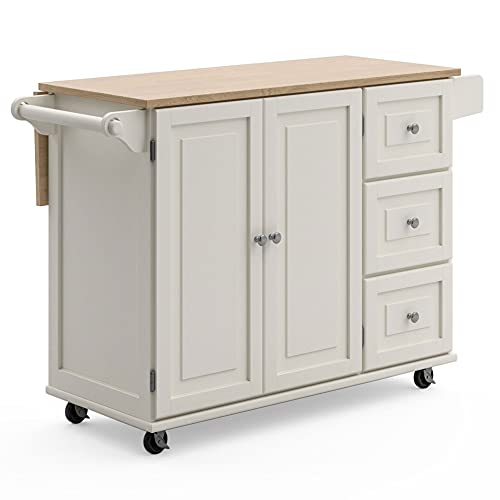
A cramped kitchen rarely needs a full renovation to feel more workable. Often what's missing is just a few extra square feet of counter space and somewhere to stash the cutting boards, spice jars, and small appliances that keep piling up on the counter. A kitchen island cart solves that problem without eating up the room a full island would need. Unlike a large island built to anchor an open floor plan, a cart is a compact piece of furniture, usually under three feet wide, designed to slot into a gap, add a bit of prep surface, and hold onto extra storage. This guide walks through sizing, storage features, countertop materials, and how carts differ from bigger mobile islands, so you can pick one that actually fits your kitchen.


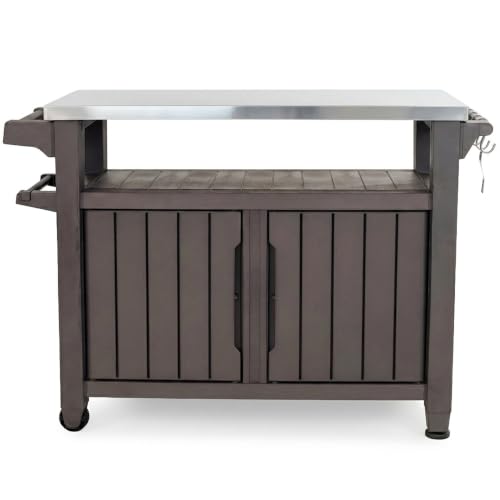
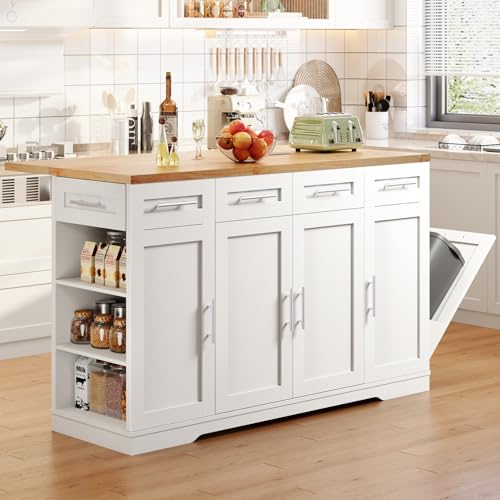
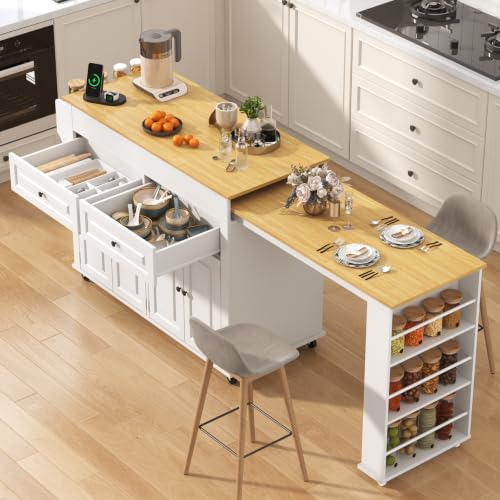
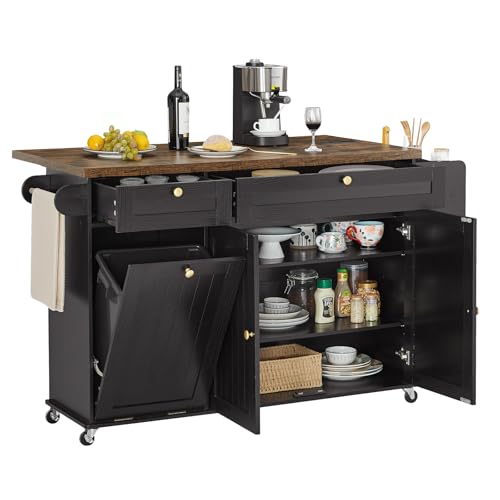
Finding the Right Size Cart for a Small Kitchen or Apartment
Size is the first thing to nail down, and it matters more with a cart than with almost any other piece of kitchen furniture. Most carts built for small kitchens run somewhere between two and three feet wide and three to five feet long, which is narrow enough to fit into a corner, next to a fridge, or at the end of a run of cabinets without blocking foot traffic.
Before you shop, measure the actual gap you're planning to fill and leave at least two feet of clearance on any side with drawers or doors, since a cart you can't fully open is a cart you'll stop using. Apartment kitchens in particular tend to have awkward leftover space rather than a clear open footprint, so a narrow cart usually works better than a wider one that looks great in a photo but doesn't leave room to walk past it. Most kitchen island carts sold for this kind of space list their exact footprint in the product specs, so it's worth double checking those numbers against your own measurements rather than guessing from a photo.
Storage Features That Actually Cut Down Clutter
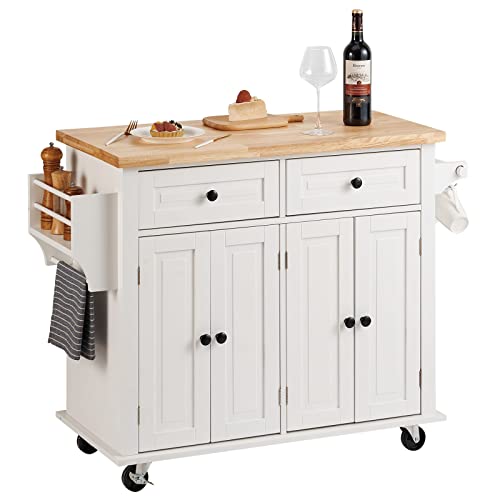
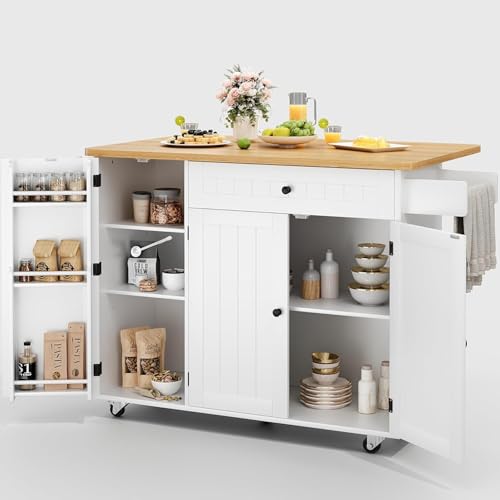
The main job of a kitchen island cart isn't really the countertop, it's the storage underneath and around it. A cart with the right mix of drawers, shelves, and small add-ons can absorb a surprising amount of clutter from an already tight kitchen.
Drawers and Cabinets vs. Open Shelving
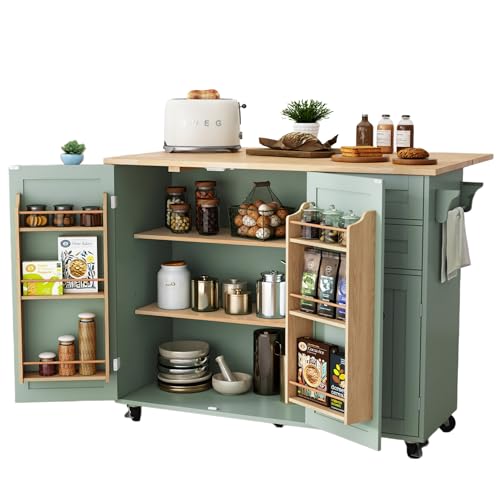
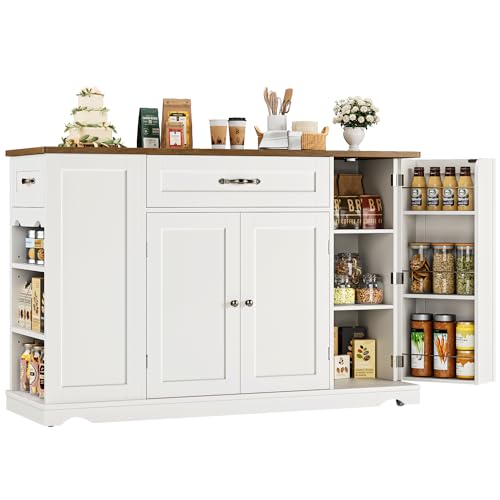
Closed drawers and cabinet doors are best for anything you'd rather not see, like dish towels, extra utensils, or snack bags. Open shelving is faster to access and works well for items you use daily, but it also means everything on it is on display, so it tends to look cluttered faster than a cart with doors. Many carts mix both, with a drawer or two up top and open shelving or a small cabinet below.
Towel Bars, Hooks, and Small Extras
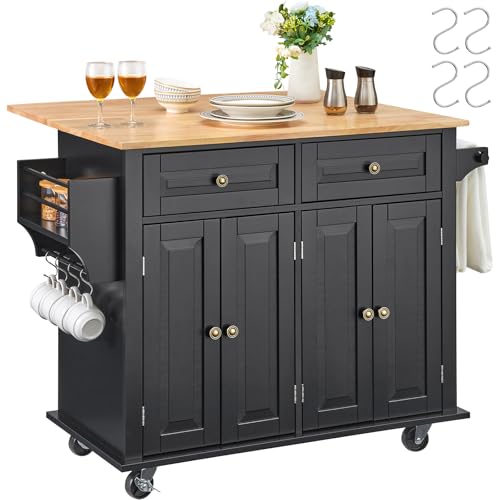
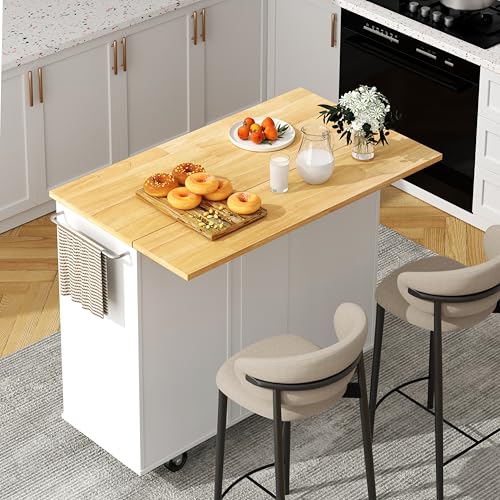
Side towel bars, hanging hooks, and a slim wine or spice rack sound like minor extras, but they're often what makes a compact cart genuinely useful day to day. A hook for oven mitts or a small utensil crock on top keeps essentials within reach without taking up drawer space, and pairing that with a set of airtight pantry storage containers on the shelf below turns a cart into a real mini pantry station instead of just extra counter space.
Countertop Materials and How They Hold Up
Since a cart's top doubles as prep space in most small kitchens, the material matters for daily use, not just looks. It's one of the first things worth comparing across different kitchen island carts before you settle on a size or storage layout.
Wood and Butcher Block
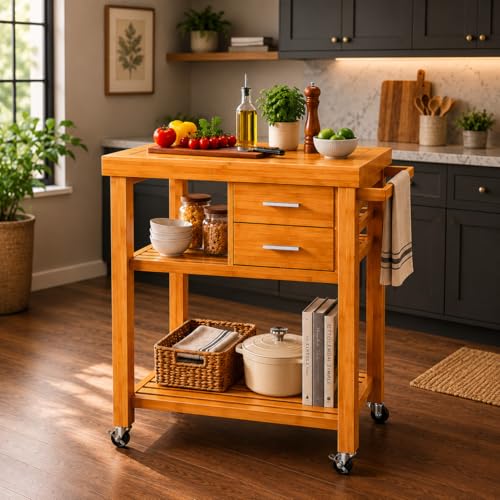
Solid wood and butcher block tops are the most popular choice for carts because they're sturdy enough for light chopping and hold up well over years of use. They do need occasional oiling to prevent cracking or drying out, and it's worth wiping up spills quickly since untreated wood can stain. A wooden or bamboo cutting surface also pairs naturally with a small set of wooden kitchen utensils stored right on top.
Laminate, Metal, and Composite Tops
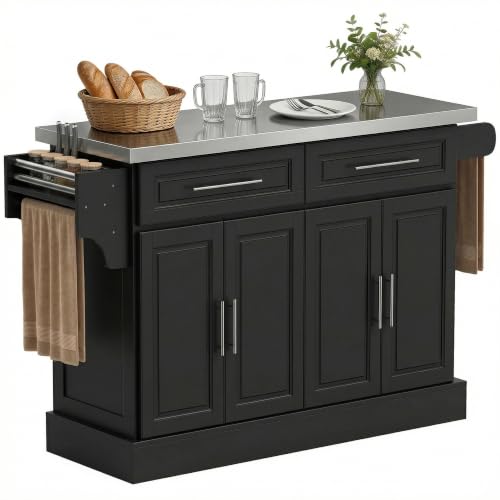
Laminate and composite tops cost less and resist stains better than untreated wood, though they're not meant for direct chopping the way butcher block is. Stainless steel tops show up on a smaller number of carts and are easy to wipe down, but they can scratch and show marks more visibly than other finishes. None of these need the periodic conditioning that wood does, which makes them a lower-maintenance pick if you'd rather not think about upkeep.
Fixed Legs, Small Casters, or Locking Wheels
This is where a kitchen island cart splits from what most people picture when they hear "kitchen island." A cart is built first for extra surface and storage, not for rolling around the kitchen, so mobility is often a secondary feature rather than the main selling point. Plenty of carts sit on plain fixed legs with no wheels at all, which gives them a bit more stability for chopping and prep.
Others include small casters, mainly so you can shift the cart aside for cleaning or slide it out of the way when you need the floor space, not so you can move it around constantly during cooking. If a cart does have wheels, check that at least the front two lock, since an unlocked cart can drift while you're leaning on it to prep food.
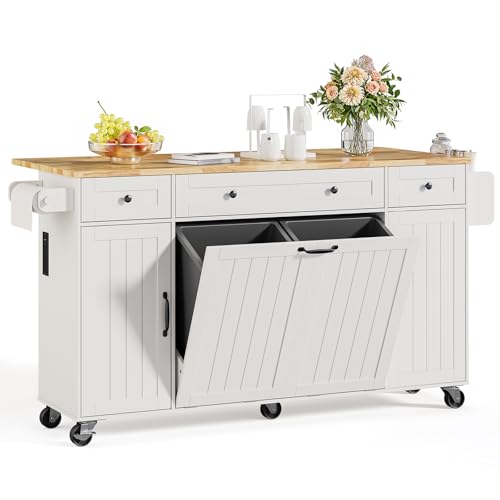
If what you actually want is a larger piece built specifically around mobility, with bigger locking casters and enough surface area to double as a movable prep and serving station, it's worth looking at kitchen islands on wheels instead, since that's a different category built around a different priority.
Frequently Asked Questions
What's the difference between a kitchen cart and a kitchen island?
A kitchen island is typically larger and often stays in one fixed spot, sometimes with plumbing or a built-in cooktop. A kitchen island cart is smaller, lighter, and meant to fill a gap or add temporary counter space, which makes it a better fit for small kitchens and rentals.
What size kitchen cart works best in a small kitchen?
Most small-kitchen carts fall between two and three feet wide and three to five feet long. Measure your available space first and leave clearance for any drawers or doors to open fully.
Do kitchen carts need to have wheels?
No. Many carts sit on fixed legs for extra stability during prep work. Casters are a convenience for occasional repositioning, not a requirement.
What's the best countertop material for a kitchen cart?
Butcher block and solid wood are the most popular for their durability and prep-friendly surface, though they need occasional oiling. Laminate and composite tops need less maintenance but aren't rated for direct chopping.
How much storage does a typical kitchen cart offer?
Most carts include some combination of one or two drawers, a shelf or small cabinet, and side hooks or a towel bar. The exact mix varies a lot by model, so check the storage layout before buying rather than assuming.
Are kitchen carts a good option for renters or apartments?
Yes. Since they're freestanding and don't require installation, carts are one of the easiest ways to add counter space and storage in a rental kitchen without making any permanent changes.
Making the Cart Work for Your Kitchen
The right kitchen island cart comes down to matching its size to your actual floor space, choosing a storage mix that fits how you cook, and picking a countertop material you're willing to maintain. Get those three things right and a compact cart can solve a surprising amount of a small kitchen's storage and counter space problem, without the cost or commitment of a full island.