
Best Drawer Organizer for Baby Clothes: A Buying Guide
Disclosure: We may earn a commission when you buy through links on this page, at no extra cost to you. As an Amazon Associate I earn from qualifying purchases. Learn more
Baby clothes are absurdly small, and that is exactly why a regular dresser drawer turns into chaos within a week. Onesies slip sideways, socks disappear into the back corner, and footie pajamas end up in a tangled pile you have to dig through at two in the morning. The right drawer organizer fixes that by giving every tiny item its own defined space instead of letting everything float loose in a big, empty drawer. Finding the best drawer organizer for baby clothes means matching material, compartment size, and layout to clothes that are smaller, softer, and faster changing than anything else in the house. This guide walks through what actually matters when you are choosing one, how to set it up so it keeps working as your baby grows, and how to answer the questions that tend to come up once you start using it.

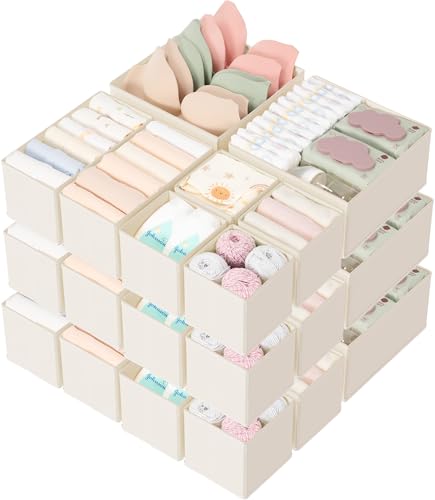
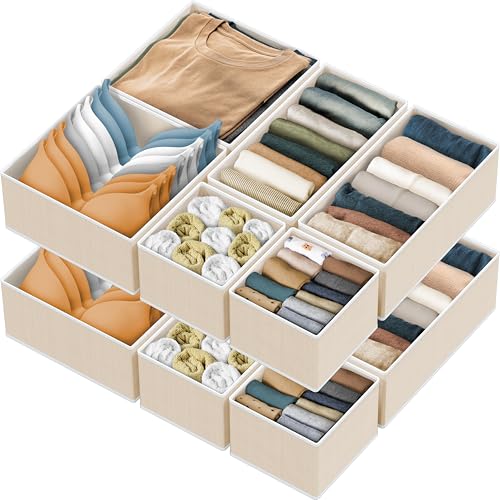
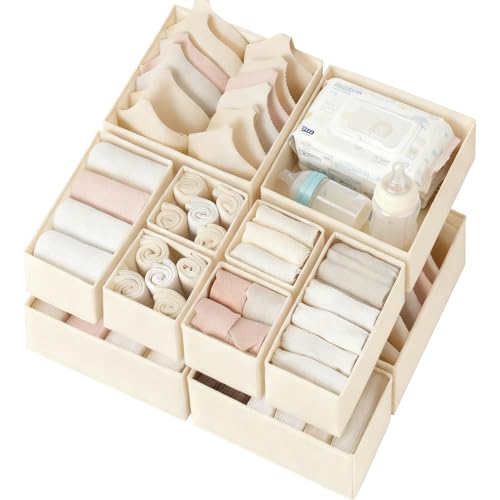
Material, Size, and Compartments: What Actually Makes a Drawer Organizer Work
Before comparing individual bins or divider sets, it helps to break the decision into three smaller ones: what it is made of, how many sections it has, and whether it actually fits the drawer you already own. Getting any one of these wrong is usually why an organizer that looked perfect online, even one marketed as the best drawer organizer for baby clothes on the shelf, ends up shoved in the back of a closet within a month, alongside the rest of your nursery storage overflow.
Fabric, Plastic, or Bamboo: Which Material Holds Up Best
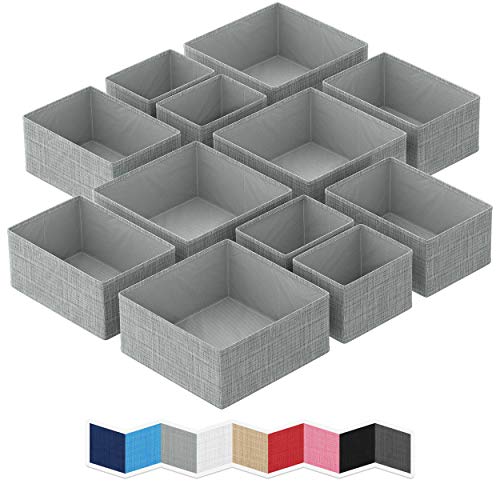
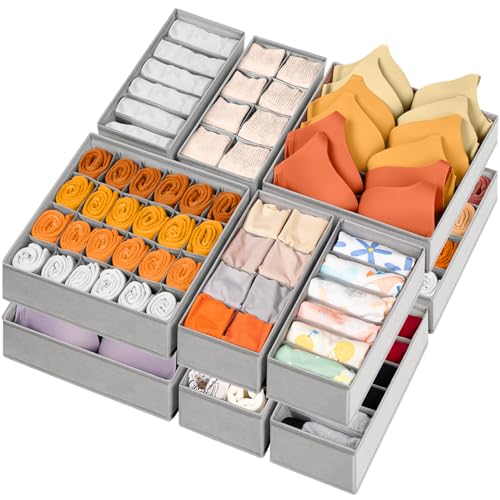
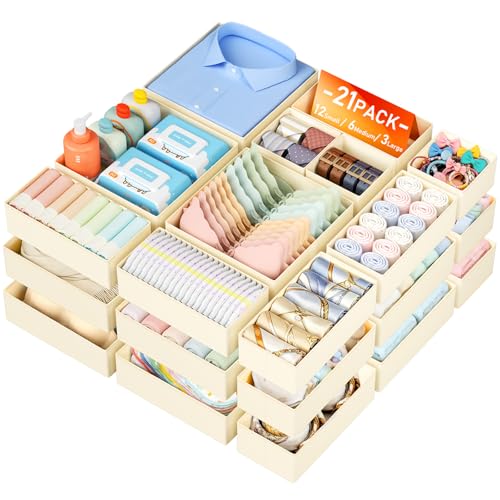
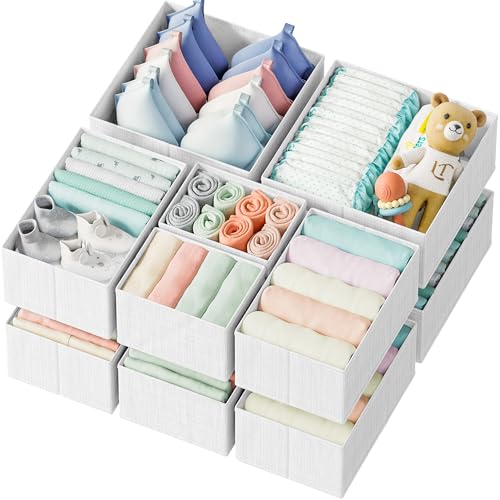
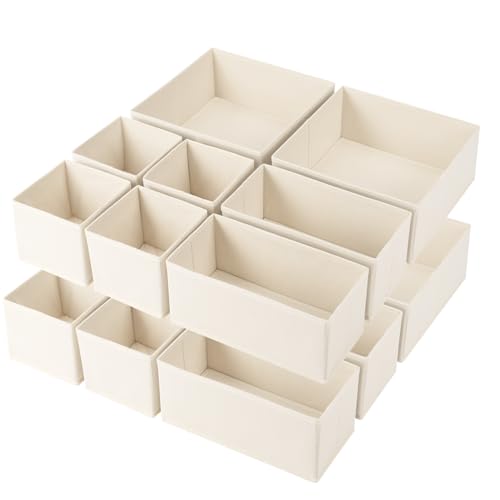
Fabric drawer organizers, usually made from a non-woven material, are the lightest and most forgiving option. They are odorless, often machine washable, and collapse flat when you do not need them, which makes them easy to swap out as sizes change. Their downside is structure: soft-sided bins can slouch or sag once they are half empty, and folded stacks inside them are more likely to tip over.
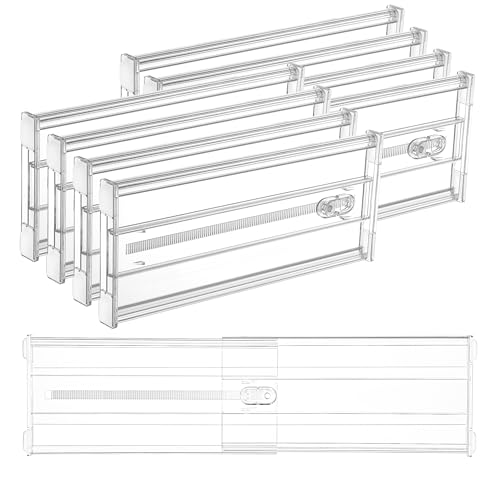
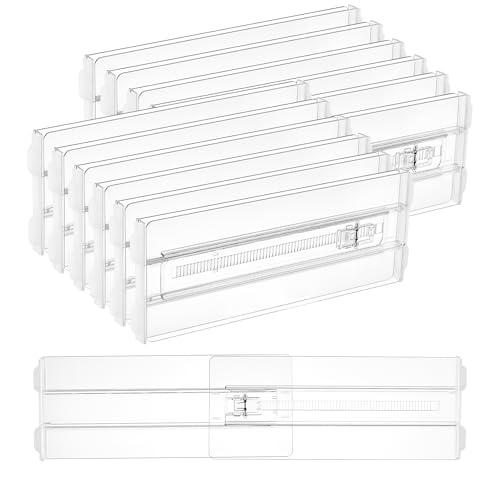
Rigid plastic dividers hold their shape no matter how full or empty a section is, and they wipe clean instantly if a diaper leaks or a bottle spills nearby. They also do a better job keeping out dust and moisture if you are storing clothes for a while before baby grows into them. The trade-off is that plastic does not compress for storage and can feel less soft against a nursery's overall look.
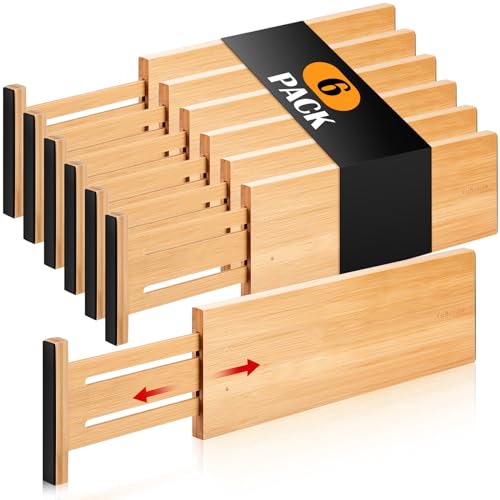
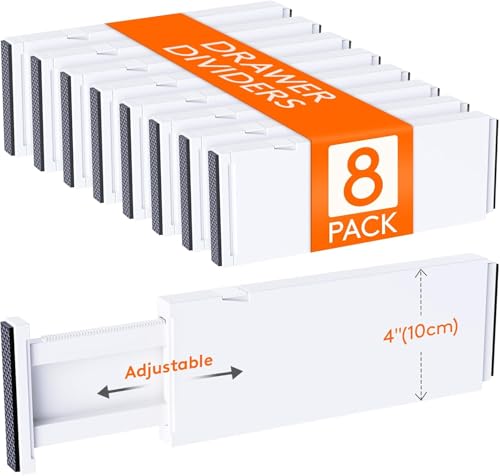
Bamboo or wood-veneer adjustable drawer dividers sit in the middle. They slide along a track so you can resize sections yourself, which is useful early on when you are still guessing at proportions. They are sturdier than fabric but usually cost more and take a few extra minutes to install compared to a fabric bin you just drop in.
How Many Compartments You Actually Need
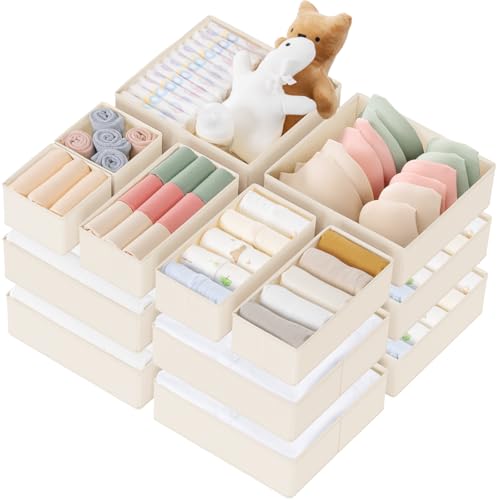
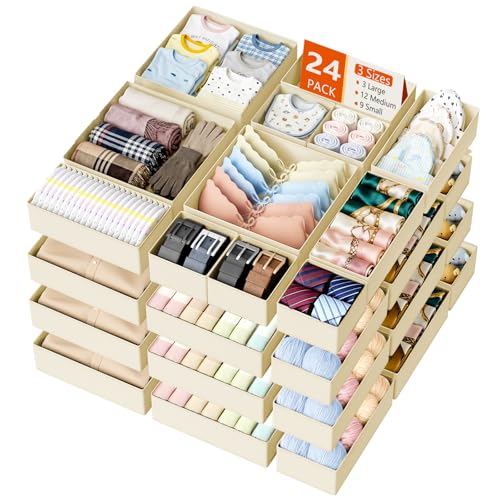
It is tempting to buy the set with the most compartments, but baby clothing really only breaks down into a handful of categories: onesies or bodysuits, footie pajamas, pants or leggings, socks and mittens, and bibs or burp cloths. Five to eight compartments per drawer is usually enough to keep those categories separate without leaving so many tiny sections that a folded item barely fits inside any one of them.
If you are organizing by size instead of by type, which is common with baby clothes for reasons explained below, fewer and larger compartments tend to work better than a dozen narrow slots, since you are storing a wider mix of item types together in each one.
Making Sure It Fits Your Drawer, Not Just the Photo
Product photos rarely show scale accurately, and a set that looks generously sized online can turn out a couple of inches too wide or too deep for your actual dresser. Take the tape measure to the real drawer, not just to the general corner of the room where you are planning to fit a glider chair or changing pad, and measure both the width and the usable depth once you account for drawer slides or a raised lip at the back.
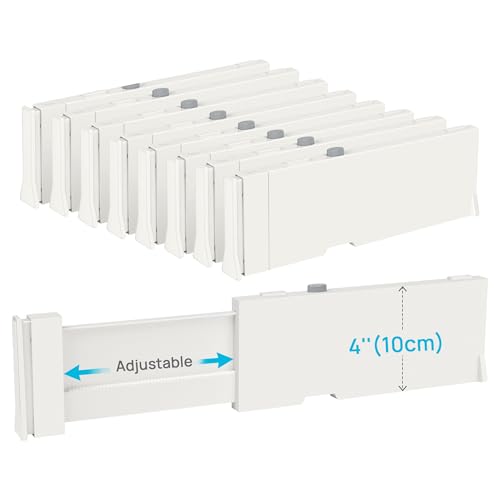
Adjustable or modular sets are the safer choice if you are not fully certain of the measurements, since individual dividers or bins can be added, removed, or shifted afterward. Fixed, one-piece organizers tend to cost less but only work well if your measurements are exact.
Matching Your System to How Fast Your Baby's Wardrobe Grows
Organizing by Size Instead of by Type
Sorting strictly by item type works fine for adult clothes, but babies move through sizes so quickly that a lot of parents end up organizing primarily by size instead, with type as a secondary layer inside each section. A drawer split into newborn, zero to three months, and three to six months sections, for example, means you can pull an entire size out at once when baby grows into the next one, rather than hunting through every compartment for a scattered handful of newborn onesies.
This approach also makes it obvious at a glance what is actually available to wear right now, which matters more with baby clothes than almost anything else, since a stretched-out newborn onesie can go from perfectly fine to unusable within a couple of weeks.
What to Do With the Sizes Baby Has Already Outgrown
Keep a separate bin, even a plain one without dividers, just outside the dresser for anything that no longer fits. Sorting outgrown clothes into their own bin the moment you notice they do not fit anymore keeps the active drawer from slowly filling up with items that are just taking up space.
Once that bin fills up, most parents either box it for storage, labeled by size for a future sibling, or pass it along right away. Doing this on a rolling basis is far less overwhelming than trying to sort an entire dresser drawer by size months later, when everything is mixed together.
Setting Up the Drawer for Fast, Fumble-Free Changes
Keeping Grab-and-Go Basics Within Reach
The top drawer, or the section closest to the changing area, should hold whatever you reach for most: a couple of onesies, a sleeper, and a spare outfit for spit-up or diaper blowouts. Keeping those basics in the same spot every time, ideally right next to the changing table, means you are not searching through multiple drawers with one hand while holding a squirming baby with the other.
Save the harder-to-reach or bottom sections for things you grab less often, like dressier outfits, seasonal layers, or accessories that are not part of the daily routine.
A Folding Method That Actually Keeps Its Shape
A simple file fold, where each item is folded into a small rectangle and stood on its edge rather than stacked flat, is worth the extra thirty seconds per item. Standing folded clothes upright means you can see and reach any single item without unstacking a pile, and it keeps a rigid divider or bin section from turning into a wall of clothes you have to dig through.
Not everything needs to be folded at all. Items like going-out outfits or anything prone to wrinkling often do better hung on a set of slim, baby-sized wooden hangers in the closet instead of competing for drawer space. If a folded item will not hold its shape on its own, a slightly narrower compartment or a stiffer divider usually solves it better than refolding, since the structure around the item is what actually keeps it upright.
Frequently Asked Questions
What size drawer organizer works best for baby clothes?
Most standard nursery dresser drawers work well with compartments in the three to four inch width range, since that roughly matches the folded width of a onesie or pair of pants. Measure your drawer's interior width and depth before buying rather than relying on the compartment count alone, since two sets with the same number of sections can still differ by several inches overall.
Should I organize baby clothes by size or by type?
Either works, but organizing primarily by size and secondarily by type tends to save more time as your baby grows quickly through sizes. It also makes it far easier to spot and remove an entire size range once your baby outgrows it, instead of picking through every compartment one item at a time.
Is fabric or plastic better for a baby clothes drawer organizer?
Fabric bins are lighter, quieter, and easier to store away when not in use, while plastic or bamboo dividers hold their shape better and resist moisture and odors more reliably over time. If you are short on drawer depth or want something that folds flat between uses, fabric is usually the better fit. If you want a setup that stays firm for years, rigid dividers hold up longer.
How many compartments do I need for a baby dresser drawer?
Five to eight compartments per drawer covers the main clothing categories, onesies, pajamas, pants, socks, and bibs, without making any single section too cramped. Adding more sections than that usually just shrinks each one to a size that barely fits a folded item.
What is the best way to fold baby onesies so they stay upright in a drawer organizer?
A file fold, where the onesie is folded into a compact rectangle and stood on its edge rather than stacked flat, keeps items upright and visible inside a divided compartment. It also lets you see the full contents of a section without removing anything else first.
What should I do with clothes my baby has outgrown?
Move outgrown clothes into a separate bin outside the active dresser drawer as soon as you notice they no longer fit, rather than letting them sit mixed in with clothes that still work. From there, most parents either store the bin by size for future use or pass it along once it is full.
Can I keep using the same organizer as my baby grows?
Adjustable or modular organizers with movable dividers can usually be resized as clothing gets bigger, which makes them a better long-term choice than fixed, one-piece sets. A fixed organizer sized for tiny newborn onesies may need to be replaced once your baby moves into twelve-month or toddler-sized clothing.
Where should I keep diaper-change essentials in the dresser?
Keep diaper-change basics, a few onesies, a sleeper, and a spare outfit, in the drawer or section closest to where you actually change your baby. That way you are not opening multiple drawers one-handed during a change, especially overnight.
Making the System Stick
In the end, the best drawer organizer for baby clothes is not the one with the most compartments or the trendiest fabric. It is the one that matches how small, fast growing, and constantly rotating a baby's wardrobe actually is. Start with a system that is easy to adjust, sort by size as much as by type, and build in a simple habit for moving outgrown items out of the way. Once that routine is in place, the organizer keeps working long after the first few weeks of new-parent chaos wear off.