Best Cradle Mattress: What Actually Matters Before You Buy
Disclosure: We may earn a commission when you buy through links on this page, at no extra cost to you. As an Amazon Associate I earn from qualifying purchases. Learn more

The best cradle mattress checklist: exact fit, firm foam, certifications and safe sleep basics, plus three picks.
A cradle mattress looks like a simple foam pad, but it is one of the most important safety items in a nursery. It must be firm, flat and the right size for your cradle, with no gaps around the edges where a baby could get stuck. This guide to the best cradle mattress walks through the checklist we use to judge them, so you know exactly what to look for before you buy.
We cover our evaluation criteria, three picks that meet them, a quick yes or no checklist, red flags and care tips. Safe sleep comes first: follow the American Academy of Pediatrics guidance to place your baby on their back on a firm, flat surface with only a fitted sheet, and ask your pediatrician if you have questions about your baby's sleep.



How We Evaluate Cradle Mattresses
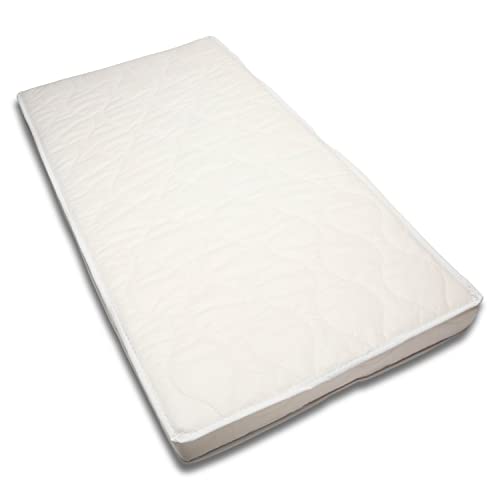
We judge cradle mattresses on six points: material, size and fit, certifications, breathability, firmness and edge fit, and suitability for safe back sleeping. A good cradle mattress passes all six; a mattress that fails on fit or firmness is not worth considering at any price.
Material and Fill
Most cradle mattresses use firm polyurethane foam about 1.5 to 2 inches thick, wrapped in a waterproof cover. Good: dense foam that springs back immediately and does not sag under pressure. Poor: soft, squishy foam, fiberfill pads or memory foam, which can let a baby's face sink in.
Covers matter too. Quilted waterproof covers and organic cotton tops feel softer, while wipeable vinyl is easy to clean. Avoid adding pillow top toppers, which make the surface too soft.
Pay attention to the cover seams too. Tight, sealed seams keep moisture out of the foam, which helps prevent odors and mold. Covers with a smooth, fitted shape are easier to dress with a fitted sheet than loose, puffy quilting.
Size and Fit
Cradles come in several sizes, with 18 by 36 inches the most common, alongside 15 by 30 and 18 by 34. Good: a mattress that matches your cradle's interior exactly, leaving no gap when pushed to one side. Poor: any mattress that leaves a gap you can fit more than two fingers into.
Measure the inside of your cradle before buying, and check the maker's instructions. The CPSC advises using only the mattress made for your bassinet or cradle, or one the cradle maker approves, because the wrong size can create dangerous gaps.
Shape matters as well. Most cradles are rectangular, but some bassinets and Moses baskets are oval or oblong, such as the 15 by 30 inch oblong pad from First Essentials. Match both the shape and the dimensions, and never trim foam to fit a different frame.
Certifications (CertiPUR US, OEKO TEX, RDS)
Certifications show that materials were screened for harmful substances. GREENGUARD Gold covers low chemical emissions, CertiPUR-US covers foam content and OEKO-TEX covers textiles. RDS applies to down, which should never be used in infant bedding.
Good: a named certification with details on the product page. Poor: vague claims like "non toxic" with no supporting standard. All infant mattresses sold in the US must also meet federal flammability requirements.
The cradle itself should meet the federal standard for bassinets and cradles, which covers stability, mattress fit and side height. Check the cradle's label for compliance, and register it with the maker so you receive recall notices.
Cooling and Breathability
Babies overheat more easily than adults, so breathability matters. Good: breathable covers, a fitted cotton sheet and a room kept at a comfortable temperature. Poor: thick vinyl covers paired with heavy bedding.
Thread count does not matter much for a cradle sheet. Choose a soft, breathable cotton fitted sheet made for your cradle's size, and avoid layering extra blankets.
Dress your baby in light sleep clothing or a wearable blanket instead of loose blankets, and keep the cradle away from heaters, radiators and direct sunlight. Feeling the back of your baby's neck is a simple way to check whether they are too warm.
Firmness and Edge Fit
A cradle mattress should feel firm, not cushy. Press your hand into the center and the edges; the foam should spring back quickly and not leave an impression. The edges should stay firm against the cradle frame without curling or compressing.
Good: uniform firmness across the surface and edges that hold their shape. Poor: soft spots, sagging centers or edges that compress and open gaps.
Check fit again every few weeks. Foam can compress slightly with use, and covers can shrink after washing, which may open gaps that were not there on day one. If the two finger gap check fails, replace the mattress or the cradle.
Safe Sleep Position
Babies should always sleep on their backs on a flat, level surface. A cradle mattress should never be inclined, wedged or propped up. Good: a flat mattress used exactly as the cradle maker intends. Poor: incline wedges, positioners or added pads.
Stop using a cradle when your baby reaches the maker's weight limit or starts rolling, pushing up or trying to sit, whichever comes first.
Place the cradle in your room near your bed, as the AAP recommends room sharing without bed sharing for at least the first six months. Keep cords from blinds, baby monitors and lamps well out of reach of the cradle.
3 Picks That Pass Our Checklist
Our picks are the Colgate cradle and bassinet mattress for most families, the Ababy cradle mattress for tight budgets and the LA Baby organic cotton cradle pad as a premium choice. Each is firm, 2 inches thick and sold in standard cradle sizes.
Other options in the table include aBaby special sized cradle mattresses in 18 by 34 and 14 by 34 inches, useful for vintage or uncommon cradles, and First Essentials oval and oblong pads for bassinets with rounded ends. Always confirm the exact interior size first.
Best Overall: Colgate Cradle and Bassinet Mattress
The Colgate cradle and bassinet mattress suits parents who want certified materials and a reversible design, at around $32. It is GREENGUARD Gold certified, 2 inches thick and wrapped in a waterproof quilted cover, and it is reversible so you can flip it.
Two strengths stand out: the GREENGUARD Gold certification for low chemical emissions and the soft but waterproof quilted cover. This listing measures 15 by 30 by 2 inches, which fits smaller cradles and bassinets. The limitation is size, since it only fits cradles with that interior. Skip it if your cradle needs the standard 18 by 36 inch size; check other Colgate sizes in that case.

Best Value: Ababy Cradle Mattress with Waterproof Top
The Ababy cradle mattress is for families who want a firm, simple standard size mattress, at around $29. It fits 18 by 36 inch cradles, uses firm, breathable foam and includes an integrated, sewn in wipeable vinyl protector.
Its strengths are a firm 2 inch foam core and easy cleaning, and it is made in the USA and meets US fire safety standards according to the maker. It is double sided as well. The trade off is feel, since vinyl tops are easy to wipe but less breathable than cotton. Skip it if you want an organic cotton surface.

Best Premium Pick: LA Baby Rectangular Cradle Mattress Pad
The LA Baby cradle pad suits parents who want natural fibers against their baby's skin, at around $50. It measures 36 by 18 by 2 inches to fit standard cradles and uses a waterproof cover with a 100 percent organic cotton top layer.
The appeal is the organic cotton surface combined with waterproof protection, plus a 2 inch thickness and a one year warranty. It is made in the USA from domestic and imported materials. The limitation is price, since it costs more than basic vinyl options. Skip it if your budget is tight or your cradle is not a standard 18 by 36 inch model.

Quick Buyer Checklist
- Does the mattress match your cradle's interior size exactly?
- Is the gap between mattress and frame two fingers or less on every side?
- Is it firm, flat and about 1.5 to 2 inches thick?
- Does it list a named certification such as GREENGUARD Gold or CertiPUR-US?
- Is the cover waterproof and easy to clean?
- Does the cradle maker approve this mattress or size?
- Do you have a fitted sheet made for this exact size?
If you answer no to any of these questions, keep looking. Fit and firmness are not areas to compromise on, even when a mattress is inexpensive or comes highly recommended by friends.
Red Flags to Watch For
- Vague sizing. Listings that say "fits most cradles" without exact dimensions.
- Soft or memory foam. Plush surfaces increase suffocation risk for infants.
- No certifications or safety statements. Missing information about materials and fire safety.
- Pillow tops or toppers. Added padding is not safe for infant sleep.
- Short or no warranty. A sign the maker may not stand behind the product.
Secondhand mattresses deserve extra caution. Inspect for cracks, stains, odors and sagging, and only use one that fits your cradle exactly and comes from a smoke free home. When in doubt, a new mattress is an inexpensive way to remove uncertainty.
How to Make Your Cradle Mattress Last Longer
Use a fitted waterproof protector made for your cradle size, and wash cradle sheets weekly in warm water. Wipe the mattress cover with mild soap and water and let it dry completely before making the bed. Rotate or flip reversible mattresses every few weeks, and replace the mattress if it sags, cracks or stops springing back.
Keep two fitted sheets and two protectors on hand, so you always have a clean set ready for nighttime leaks without leaving the mattress bare.
FAQs
How often should I replace my cradle mattress?
Most families use one cradle mattress for the few months a baby sleeps in a cradle. Replace it sooner if the foam sags, the cover cracks or tears, or it no longer fits snugly. If you reuse a mattress for a younger sibling, check that it is still firm, clean and undamaged.
Store a mattress you plan to reuse in a breathable bag in a dry place, away from damp basements and hot attics.
Do babies need a cooling cradle mattress?
Babies do not need a special cooling mattress. A firm mattress with a breathable fitted cotton sheet, a comfortable room temperature and light sleep clothing help prevent overheating. Avoid heavy blankets and extra layers in the cradle, and ask your pediatrician about safe room temperatures.
Breathable cotton fitted sheets and a well ventilated room do most of the work.
How do I wash cradle mattresses safely?
Wipe the mattress cover with warm water and mild soap, rinse with a damp cloth and let it air dry completely. Do not soak foam or put it in a washing machine unless the maker says it is safe. Wash fitted sheets and protectors separately according to their labels.
Is a higher thread count always better?
No, a higher thread count is not important for cradle sheets. Choose soft, breathable cotton fitted sheets made for your mattress size, so they stay tight around the corners. A snug fit matters far more than thread count for infant sleep safety.
How firm should a cradle mattress be?
A cradle mattress should be firm enough that it springs back immediately when pressed and does not conform to the shape of your hand. Babies need a firm, flat surface for safe sleep. Soft or plush mattresses are not safe for infants.
Final Thoughts
The best cradle mattress is firm, flat, certified and sized exactly for your cradle. The Colgate mattress is our best overall pick, the Ababy mattress offers great value and the LA Baby organic cotton pad is a premium choice. Check fit, firmness and certifications first, and always follow safe sleep guidance.
For more sleep guides, see the best cradle mattresses, the best memory mattresses, the best boxed mattresses and the best time to purchase mattresses. Then compare current prices in the product table above.