
Best Compost Bin of 2026: Complete Buying Guide
Disclosure: We may earn a commission when you buy through links on this page, at no extra cost to you. As an Amazon Associate I earn from qualifying purchases. Learn more

The best compost bin: Miracle-Gro, Geobin and FCMP picks plus capacity, pest resistance and setup tips.
Composting turns kitchen scraps, leaves and grass clippings into dark, crumbly soil food for your garden, while cutting the amount of trash you send to the landfill. A good compost bin makes the process neat, fast and pest resistant: it holds heat and moisture, lets air in and keeps raccoons and dogs out. Bins range from simple wire and plastic enclosures to rotating tumblers and countertop pails that collect scraps in the kitchen. This guide to the best compost bin explains what to look for and shares three picks for different yards and gardeners.
We start with our top picks, then cover a full buying guide, the main types of compost bins, setup and care tips and answers to common questions. Every bin in the table above is sold new on Amazon US. Wear gloves when handling compost, wash your hands afterward and keep meat, dairy and pet waste out of home compost to avoid pests and pathogens.



Our Top 3 Picks at a Glance
Our picks are the Miracle-Gro Dual Chamber Compost Tumbler for most gardens, the Geobin 246 Gallon Compost Bin for value and large yards and the FCMP Outdoor HOTFROG Rolling Composter as an upgrade pick for gardeners who want a tumbler that rolls to the garden.
We compared capacity, design, aeration, ease of turning, pest resistance, materials, assembly and price, along with the overall pattern in owner feedback. We did not compost with these bins ourselves; the notes reflect maker specifications.
Best Overall: Miracle-Gro Dual Chamber Compost Tumbler
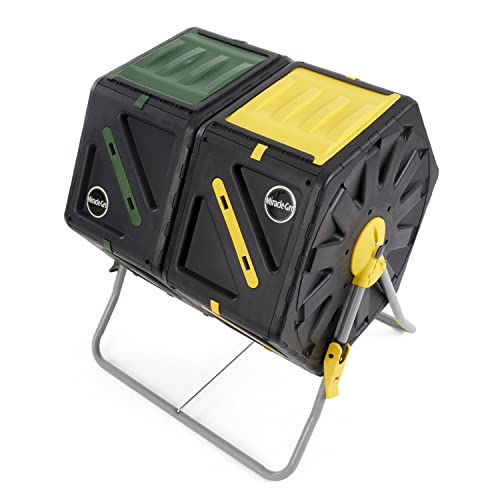
The Miracle-Gro Dual Chamber Compost Tumbler suits most backyard gardeners who want steady compost with little effort, at around $110. Miracle-Gro lists two chambers of 18.5 gallons (70 liters) each, sliding doors, sturdy side locking mechanisms and a rotating design that you turn a few times every few days instead of forking a pile.
Two strengths stand out: two chambers let one batch finish while you fill the other, giving a constant supply, and the raised, enclosed design keeps compost off the ground and away from pests. Turning the barrel mixes and aerates the contents in seconds.
The limitation is capacity compared with large open bins; two 18.5 gallon chambers suit small to medium yards rather than huge leaf piles. Skip it if you produce large volumes of yard waste.
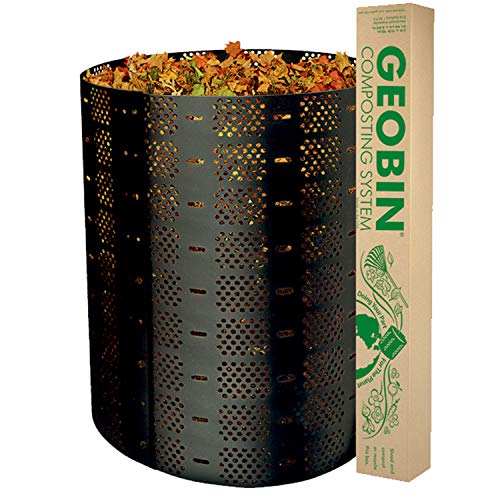
Best Value: Geobin Compost Bin (246 Gallon, Expandable)
The Geobin is for budget minded gardeners with lots of leaves and clippings, at around $36. Geobin lists a large capacity bin that expands to 3.75 feet across (about 237 gallons usable), easy assembly with closure keys, excellent ventilation and manufacturing in the USA.
Its strengths are huge capacity for the price and flexibility: you can expand, move and reassemble it as your garden changes. The open design suits leaves, grass and garden trimmings, which compost well in large piles.
The trade off is that open bins need manual turning with a fork and offer less protection from rodents than enclosed tumblers. Skip it if you mostly compost food scraps in an area with pests.
Best Upgrade Pick: FCMP Outdoor HOTFROG Rolling Composter
The FCMP Outdoor HOTFROG Rolling Composter suits gardeners who want an easy tumbler that rolls finished compost right to the beds, at around $140 for 37 gallons. FCMP says you close the door and turn it 5 to 6 times every 2 to 3 days, deep fins break up clumps and add oxygen, aeration holes help airflow and the BPA free, UV inhibited recycled polyethylene arrives ready to use with no assembly. It is made in Canada.
The appeal is a large opening and removable door for easy loading and unloading, plus the ability to roll the composter along the ground to mix contents and move compost.
The limitation is a single chamber, which means waiting for one batch to finish before adding more. Skip it if you want continuous composting.

How to Choose the Best Compost Bin: Buying Guide
The best compost bin matches your yard size, the amount of waste you produce and how much effort you want to spend. Here is what to compare.
Match the Bin to Your Garden Size and Layout
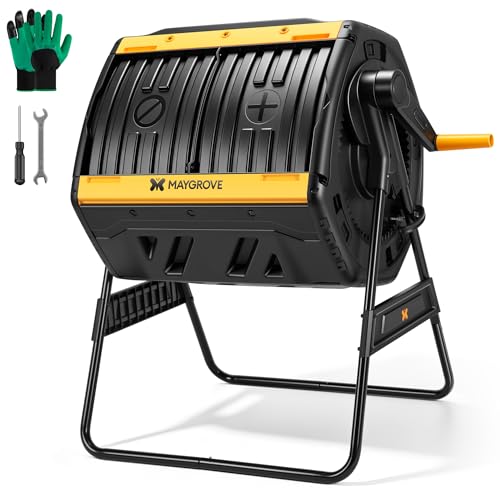
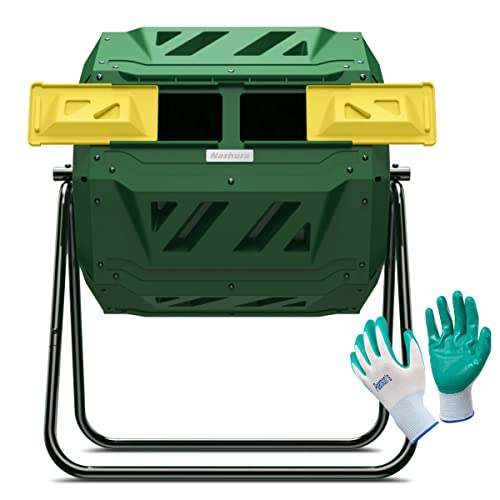
Small yards and patios suit compact tumblers like the Nazhura 43 gallon dual chamber model at around $59. Medium gardens suit dual chamber tumblers like Miracle-Gro's or Maygrove's 53 gallon tumbler at around $135. Large properties with many leaves suit open bins like the Geobin.
Place the bin on level ground with partial sun, close enough to the kitchen that you will use it in winter.
Think about access too. A tumbler near the back door gets used more in winter and rain, while a large open bin can sit at the back of the yard near leaf piles. Leave space around tumblers to turn them fully and to park a wheelbarrow when emptying.
Capacity and Composting Speed
Capacity is listed in gallons. More capacity holds more material but takes longer to fill and heat up. Tumblers can produce finished compost in a few weeks to a couple of months in warm weather with regular turning, while open piles often take several months. Dual chambers keep compost coming continuously.
Tumblers work best when filled at least halfway and turned regularly, since a nearly empty barrel does not hold enough heat. Open bins heat up best when they reach about 3 feet across and 3 feet high, which is why the Geobin's large size helps it work well with leaves and clippings.
Safety and Pest Resistance
Enclosed tumblers raised off the ground keep rodents, raccoons and dogs out better than open bins. Locking doors, like Miracle-Gro's side locks, add security. Food safe, BPA free materials, like Envirocycle's and FCMP's, reassure gardeners growing vegetables.
Never add meat, bones, dairy, oils or pet waste to home compost, which attract pests and can carry pathogens.
Ease of Use and Turning
Tumblers mix compost with a few turns, which saves effort compared with forking a pile. Check the turning height and handle grip; full barrels get heavy. Fins inside, like FCMP's, help mix contents. Large doors make loading and emptying easier.
Some tumblers turn on a horizontal axle with handles, while rolling designs like FCMP's HOTFROG roll on the ground. Gardeners with back or shoulder issues should choose a model with easy turning and avoid overfilling, since wet compost is heavy.
Material and Build Quality
UV inhibited polyethylene, like FCMP's recycled plastic, resists sun damage. Steel frames support heavy tumblers. Open bins like Geobin use flexible plastic panels. Avoid thin plastics that crack in cold weather.
Check the frame and axle on tumblers, since these carry the weight of full barrels. Powder coated steel legs and sturdy axles hold up better than thin tubing, especially when the tumbler is full and wet.
Durability and Weather Resistance
Outdoor bins face sun, rain, snow and freezing temperatures. UV protection and rust free parts, like Envirocycle's rust free design, extend life. In cold climates, composting slows in winter; insulated or dark colored bins hold heat better.
In hot, dry climates, add water occasionally to keep compost moist, since tumblers can dry out in direct sun. In wet climates, add more browns to soak up moisture and keep the mix from turning slimy.
Value and Capacity per Dollar
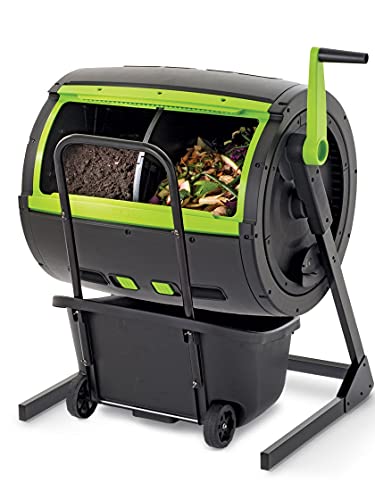
Compare price per gallon. Open bins like Geobin deliver the most capacity per dollar, while tumblers cost more but save effort and resist pests. Premium tumblers like the RSI Maze and Envirocycle at around $350 add sturdier builds and special features like liquid compost collection.
Types of Compost Bins
Compost bins fall into four types. Here is who each suits.
Open and Expandable Bins
Open bins like the Geobin hold large volumes of leaves and garden waste at a low price. They suit big yards and gardeners who do not mind turning piles.
Dual Chamber Tumblers
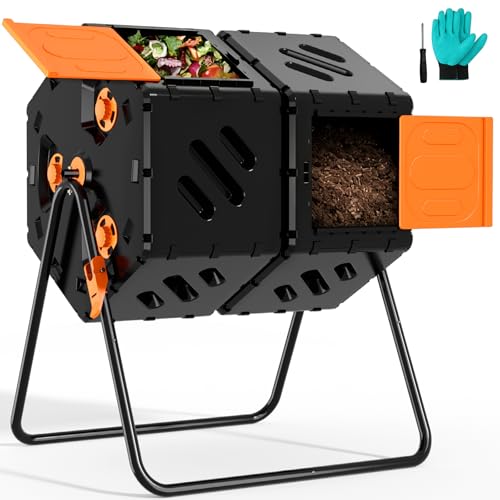
Dual chamber tumblers, like Miracle-Gro, Maygrove, Nazhura and Cozurra models, let one side finish while you fill the other. They suit most households composting kitchen and yard waste.
Single Chamber and Rolling Tumblers
Single chamber tumblers, like FCMP's HOTFROG rolling and Roto models, process one batch at a time. Rolling designs move easily around the yard.
Premium Tumblers and Kitchen Collectors
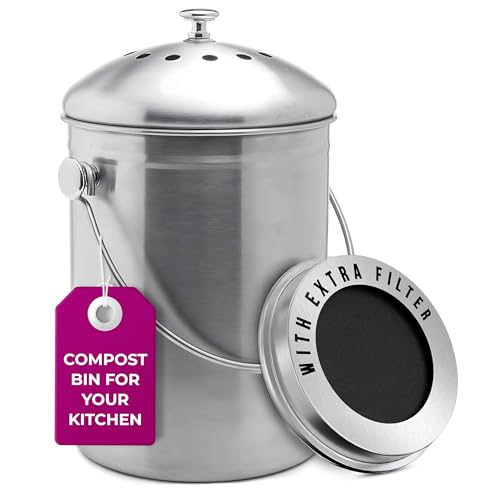
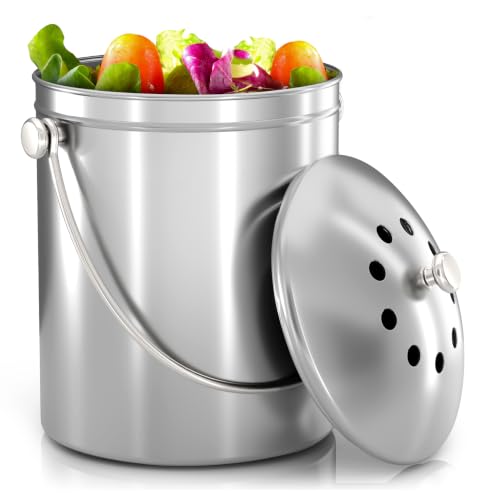
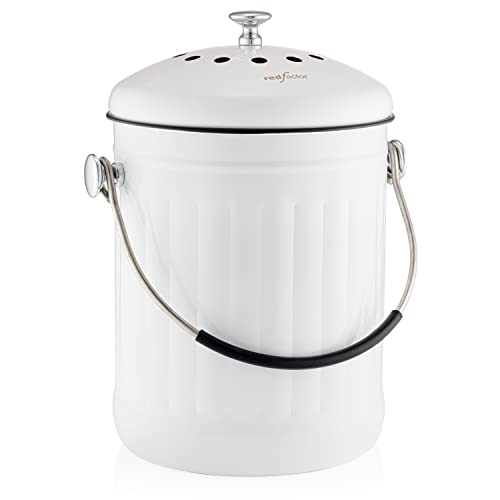
Premium tumblers, like the RSI Maze and Envirocycle, which says it produces solid and liquid compost, add durable builds. Kitchen collectors, like Epica's 1.3 gallon bin, Utopia Kitchen's stainless steel bin and RED FACTOR's bin with dual filters, hold scraps on the counter until you carry them out.
Kitchen collectors with charcoal filters, like Epica and RED FACTOR models, reduce odors between trips to the outdoor bin. Empty them every few days and rinse them regularly to keep fruit flies away.
Setup and Care Tips
Balance greens like fruit and vegetable scraps, coffee grounds and fresh grass with browns like dry leaves, shredded paper and cardboard, roughly two to three parts browns to one part greens by volume. Chop scraps small to speed decomposition.
Keep compost as moist as a wrung out sponge. Turn tumblers every few days and open piles every week or two. Finished compost is dark, crumbly and smells earthy.
Start a new tumbler with a layer of browns and a few shovels of garden soil or finished compost, which introduce microbes that speed up breakdown. Avoid adding diseased plants, weeds with seeds and treated wood, which can survive or contaminate home compost.
Compost Bins: Your Questions Answered
What size compost bin do I need?
A household composting kitchen scraps and some yard waste usually needs about 40 to 80 gallons of capacity, like a dual chamber tumbler. Large yards with lots of leaves benefit from 200 gallon plus open bins like the Geobin.
If you are unsure, start with a dual chamber tumbler for food scraps and add an open bin later for fall leaves.
How long does compost take?
Tumblers can produce compost in about four to eight weeks in warm weather with regular turning and a good mix, while open piles often take three to six months or more. Cold weather slows the process.
Smaller pieces, a good mix of greens and browns, steady moisture and regular turning all speed things up.
Why does my compost smell?
A bad smell usually means too many greens or too much moisture. Add browns like dry leaves or shredded cardboard and turn the compost to add air. Earthy smells are normal.
A dry, inactive pile needs water and greens instead. Squeeze a handful of compost: it should feel damp like a wrung out sponge, not dripping or dusty.
Can I compost in winter?
Yes, but composting slows in cold weather. Keep adding scraps; the pile resumes heating in spring. Dark tumblers in sunny spots stay warmer.
What can and cannot go in a compost bin?
Fruit and vegetable scraps, coffee grounds and filters, tea bags without plastic, eggshells, leaves, grass clippings, shredded paper and plain cardboard compost well. Keep out meat, fish, bones, dairy, oils, pet waste, diseased plants and glossy or plastic coated paper, which attract pests or break down poorly.
How do I use finished compost?
Mix finished compost into garden beds before planting, spread it as a top dressing around plants and lawns or blend it into potting mix. Screen out unfinished pieces and return them to the bin for another round.
The Bottom Line
The best compost bin fits your yard and how much you compost. The Miracle-Gro Dual Chamber Tumbler is our best overall pick for continuous, low effort compost, the Geobin offers huge capacity at a low price and the FCMP HOTFROG Rolling Composter makes turning and moving compost easy. Balance greens and browns and keep meat and dairy out.
For more garden guides, see the best composting toilets, the best solar garden lights, the best pruning shears and the best outdoor patio umbrellas. Then compare current prices in the product table above.


