
Best Compact Elliptical Trainer Review for Every Need: How to Pick the Right One for 2026
Disclosure: We may earn a commission when you buy through links on this page, at no extra cost to you. As an Amazon Associate I earn from qualifying purchases. Learn more

This best compact elliptical trainer review starts with how you train, then matches stride, footprint, noise and build quality to your home.
There is no single compact elliptical that suits every home, every body, and every training habit. A short machine that fits a studio apartment may feel cramped for a tall daily user, while a sturdy model built for frequent sessions may be too heavy to move each day. This best compact elliptical trainer review takes a use case first approach, so you start with how you will actually train and then match the size, stride, and resistance to that routine.
As you read, use the product table to compare models, and the guidance here to check footprint, weight capacity, and stride. The sections that follow explain what those numbers mean in a real room, what to measure before you order, and which tradeoffs matter most for your space and goals.


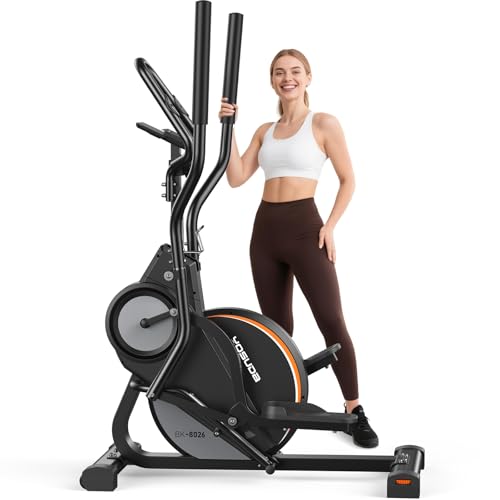


Who Should Buy Which Compact Elliptical Trainers?
Start by placing yourself in one main group below, even if you share a trait with another group. Your training frequency, room size, and storage habit should drive the choice more than a long feature list.
For Weekend Beginners
If you plan two or three gentle sessions a week, prioritize simple controls, a stable feel at slow speeds, and resistance levels that change in small, predictable steps. You do not need a large screen or advanced training plans to build a habit. Look for clear displays that show time, distance, and effort at a glance, plus pedals with a textured surface that feels secure with regular athletic shoes.
Start with short sessions and add time gradually. If you feel sharp joint pain, numbness, or dizziness, stop and talk with your clinician about whether this type of exercise suits you.
For Frequent or Serious Users
If you will train five or more days a week, or share the machine with another adult, durability and warranty coverage move to the top of your list. A heavier steel frame usually flexes less during harder intervals, and a higher weight capacity gives a useful margin above your actual body weight. Check that resistance stays smooth when you speed up, not only at an easy pace. Some buyers in this group compare compact models with commercial grade models to understand the gap in frame strength and service support, even when they still choose the smaller footprint for home.
For Small Spaces and Easy Storage
If the machine must live in a corner, roll into a closet area, or share a room with a desk, focus on the full footprint in use and how it moves. Foldable designs can shorten the length when stored, but confirm what actually folds, since some models fold the rail while others only lift the pedals. Transport wheels help only if the machine is light enough for you to tilt safely. Measure your storage spot as carefully as your workout spot, including doorways and tight turns between the two.
For Bad Weather and Tough Conditions
Many people buy an elliptical because rain, snow, heat, or darkness keeps canceling outdoor walks, and the machine then lives in a garage or basement. In those rooms, choose finishes that tolerate dust and changing humidity, and place the trainer away from direct water and pooled moisture. A level, dry floor matters more there than in a living room.
Key Features to Compare
Features only help when they solve a problem in your home, such as noise through a floor or a stride that feels too short. Reading a best compact elliptical trainer review with those tradeoffs in mind helps you weigh the product table above by fit and daily use, not by the longest list of extras. The factors below cover the checks that most often decide whether a compact model stays in regular use.
Noise Level for Apartments
Magnetic resistance is popular in compact models because it creates resistance without friction pads pressing on the flywheel, which tends to keep operation quieter and smoother. Noise still depends on the whole setup, though. Loose bolts, a worn belt area, or an uneven floor can add clicks and vibration even on a quiet design.
If you live above another unit, think about vibration through the floor as much as sound in your own room. Session timing, a stable placement, and keeping the machine level all shape how much your neighbors notice.
Build Quality and Weight Capacity
The frame carries your weight through a moving, shifting motion, so stability matters more than a slim look in photos. A steel frame with wide stabilizers and a solid joint at the upright usually feels steadier when you change pace or let go of the handles briefly. Weight capacity is the maker stated limit for the user, and you should stay comfortably below it rather than treating it as a target. A generous margin is especially wise for taller users, whose longer stride can add leverage at the front and back of each pedal stroke.
Assembly and Portability
Most compact ellipticals arrive partly assembled, with the base and flywheel housing together and the upright, handles, and console left to attach. Set aside unhurried time, lay parts out in order, and keep the hardware for each step grouped so bolts do not get mixed. Ask a second person to help lift the box and steady the upright during assembly, since the heaviest part is awkward rather than truly huge.
Space, Footprint, and Ceiling Height
Listed dimensions describe the machine, not the space you need around it. Plan clear room behind the pedals at their farthest back position and enough side space to mount and step off safely. Ceiling height is easy to forget and critical in basements.
Stand on a sturdy step at roughly pedal height and measure how close your head comes to the ceiling, then add several inches for the rise of the pedal during motion and for taller shoes. Low ceilings may rule out some compact models even when the floor area fits easily.
Measuring for Size and Portability
Before ordering, tape the full footprint on your floor, including the clearance you planned, and walk the delivery path from your front door to that spot. Stride length shapes comfort inside that footprint. Shorter strides suit smaller rooms and shorter users but can feel like stepping rather than gliding for taller people. Longer compact strides feel more natural for many adults yet need a longer frame.
Common Mistakes to Avoid When Buying Compact Elliptical Trainers
Most regrets with compact models come from a skipped measurement or a feature that sounded useful but did not match the room. Watch for these frequent errors before you buy.
- Choosing on price alone, which can leave you with a stride so short that sessions feel cramped and stop after a few weeks.
- Measuring only floor space and forgetting ceiling height, which can put your head uncomfortably close to a low basement ceiling.
- Ignoring noise and vibration in an apartment, which can limit you to hours when neighbors are away.
- Assuming foldable means light, which can leave you with a machine you cannot move safely on your own.
- Skipping the warranty terms for the frame and parts, which can turn a small failure into a full replacement cost.
- Picking the smallest model for a tall or frequent user, which can cause flex, discomfort, and early wear.
If you are comparing general formats rather than compact sizes, see our guide to the best elliptical trainer machine for how full size machines differ in footprint and feel. That contrast helps confirm whether compact is truly the right category for your room.
Care and Maintenance Tips
Place your elliptical on an equipment mat to protect floors and reduce noise, choosing a mat slightly larger than the footprint so the stabilizers sit fully on it. Wipe down the handles, console, and pedals after each workout, since sweat and dust left on surfaces can damage finishes and make pedals slippery. Use a dry or lightly damp cloth and avoid spraying cleaner directly onto the console or into joints.
Once a month, check and gently tighten accessible bolts, especially at the upright and pedal arms, stopping if a bolt resists so you do not damage the threads. Keep the area around the machine swept so grit does not build up near moving parts. If the trainer develops a new squeak, wobble, or grinding sound, stop using it and check the manual or contact support rather than training through it.
Frequently Asked Questions
These answers focus on daily ownership questions that the sections above did not fully cover, from subscriptions to storage and service life.
Is a subscription required to use a compact elliptical trainer?
No, a subscription is not required to use the core workout on most compact elliptical trainers. Manual resistance and built in programs work without an account. Some models offer Bluetooth links to apps or optional paid classes for extra content and tracking, but the machine should still run if you skip them.
Which compact elliptical trainer style is better for beginners?
A simple rear drive or center drive style with clear manual controls is usually better for beginners. These layouts tend to feel stable at slow speeds and keep the learning curve low. New users also benefit from a console that starts with one button and shows pace clearly. If balance feels uncertain at first, choose fixed plus moving handles so you can hold the steady set while you find your rhythm, then use the moving set as confidence grows over the first few weeks.
How much space does a compact elliptical trainer need?
A compact elliptical trainer needs its listed footprint plus clear space behind the pedals and on at least one side for safe entry and exit. Many owners also gain comfort from a little space in front for airflow and the console view. If your room is tight, check the taped footprint by standing inside it and miming a step off to the side. Readers comparing the smallest layouts can also see our guide to the best elliptical compact for more detail on tight room planning.
Is a compact elliptical trainer quiet enough for an apartment?
Yes, a compact elliptical trainer can be quiet enough for an apartment when it is level, maintained, and used at reasonable hours. The rider often sets the real limit, since heavy footfalls and a rocking frame travel through floors more than the drive sound does. Keep sessions steady rather than stomping at high resistance. If you share walls with close neighbors, a quick chat about workout times can prevent complaints more reliably than any single design feature or mat thickness.
How long does a compact elliptical trainer last?
A compact elliptical trainer can last for years of regular home use when its capacity suits the users and basic upkeep stays current. Service life depends heavily on total weekly sessions, user weight relative to the limit, and storage conditions. Damp garages and skipped bolt checks shorten life, while indoor storage and prompt attention to new noises extend it. Keep your proof of purchase and warranty dates together, because coverage windows for the frame, parts, and labor usually differ from each other.
Wrapping Up
Match the machine to your main use case first, then confirm the three checks that cause most returns: ceiling height, stride comfort, and a clear path into the room. After that, compare frame stability, capacity margin, and how easily the model moves or folds in your actual space. The product table above pulls those basics together so you can narrow the field quickly.
For close alternatives, see our guide to the best compact elliptical cross trainer if you want a similar motion with a slightly different layout, or browse the best elliptical cross trainers when you have room to consider larger designs. Readers who want a broader quality check can also see our guide to the best rated elliptical trainer for context. When your measurements and routine point to the same model, that best compact elliptical trainer review process has done its job, and you can order with confidence.


