Best Commercial Outdoor Speakers by Budget Tier for 2026
Disclosure: We may earn a commission when you buy through links on this page, at no extra cost to you. As an Amazon Associate I earn from qualifying purchases. Learn more

Compare the best commercial outdoor speakers by budget tier, weather rating and coverage, with notes on 70 volt wiring and placement.
Outdoor sound for a business is a coverage problem, not a volume problem. A pair of patio speakers that sounds fine on a deck will leave half of a restaurant terrace in silence, and a speaker that is not built for rain will fail before the season ends. This guide explains how to choose the best commercial outdoor speakers by type, wiring, weather rating, and budget tier.
Use the comparison table below to see how the best commercial outdoor speakers differ, then work through the sections on wiring and placement, which matter more than any single spec.




Types of Commercial Outdoor Speakers
Wall Mount Speakers
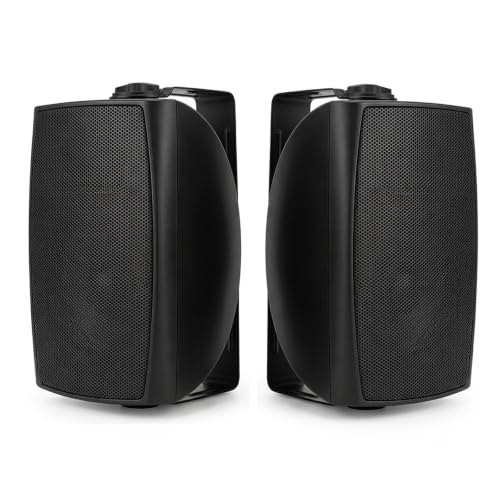
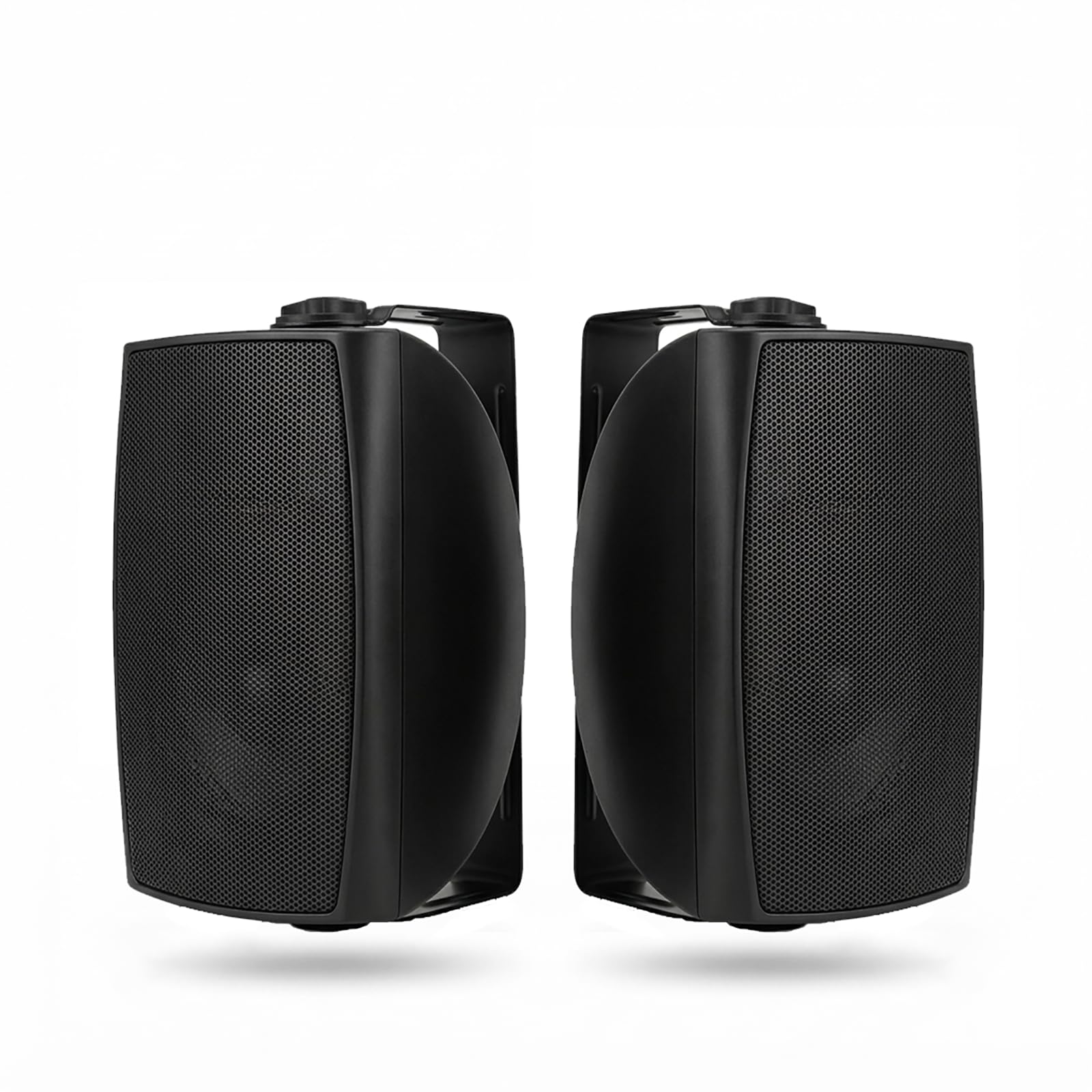
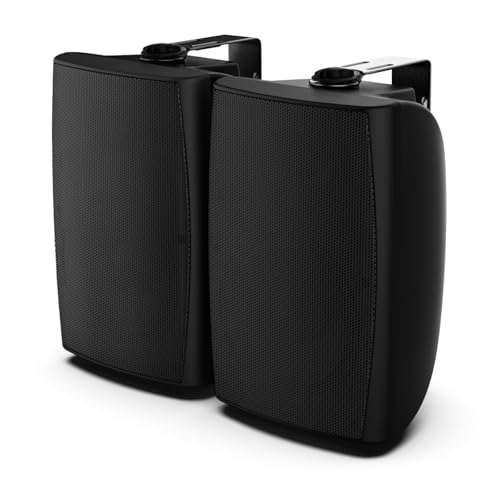
Wall mount speakers bolt to a building, a pergola post, or a fence, and most come with swivel brackets so you can aim them at the seating. They suit patios, restaurant terraces, and storefront seating where there is a wall within reach of every table. Pairs are common, and the better ones add a transformer for 70 volt wiring.
Landscape and Pendant Speakers
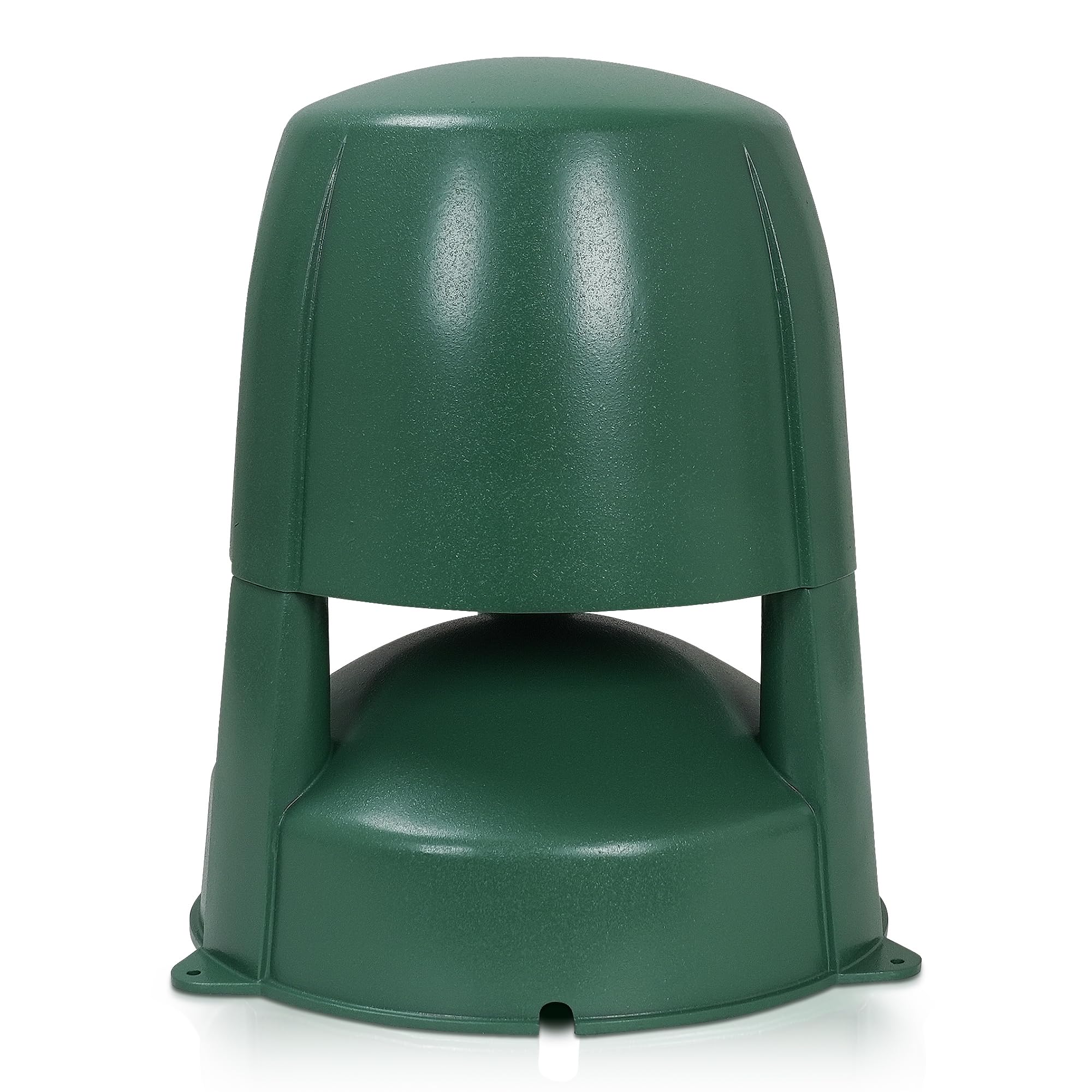
Landscape and pendant models sit in the ground, hang from a bracket, or mount under an eave, and they spread sound over a wide angle. They suit gardens, pool decks, and open lawns with no nearby walls, and they let you keep speakers out of sight. Look for a stated weather rating and corrosion resistant hardware.
Large Passive Pairs for Open Areas
Larger passive pairs with eight inch woofers move more air and cover wider areas from a single mount, which suits big yards, gyms with outdoor space, and event areas. They need an amplifier or receiver, and the cabinets are bigger, so plan the mounting carefully.
70 Volt Systems and Standard 8 Ohm Wiring
Standard speakers connect directly to a stereo amplifier, and they are the simplest choice for one pair. A 70 volt system uses a transformer at each speaker so one amplifier can feed many speakers over long cable runs, and each speaker has tap settings that let you set its power. That is why large terraces, shops, and campuses use 70 volt wiring, since you can add speakers later and keep volume even across the space.
Several models in the product table include 70 volt taps, and some also work in standard mode. Check which modes a speaker supports and match it to your amplifier before you buy. If you are unsure, an installer can design the layout in an hour and prevent expensive rewiring.
Budget Tiers: What Your Money Gets You
Entry Tier
At the entry tier you get working outdoor sound for small patios and cafes with a few tables. Cabinets are usually plastic, drivers are small, and weather protection suits covered spots better than open ground. Mounting under an eave extends life considerably. Home users comparing general options can start with our guide to the best outdoor speakers.
Midrange Tier
Midrange money buys durability first. Sealed cabinets, rustproof grilles, and proper ratings for rain mean speakers survive seasons outside without being carried in each night. This tier is where 70 volt taps become common, along with brackets that swivel for aiming and drivers that stay clear at higher volume.
Premium Tier
Premium spending pays off when coverage and uptime are the problem. Large terraces, pool decks, and event spaces need many speakers playing quietly rather than two speakers shouting, and premium lines offer matching wall, landscape, and pendant models that blend into the surroundings. You also pay for support, spare parts, and longer warranties.
Weather Ratings and Durability
Look for an IP rating, which describes how well the cabinet resists dust and water. A splash resistant rating is fine under a roof, while fully exposed mounting calls for a higher rating that handles rain and hose spray. The listings in the table show a range of ratings, so read each one rather than trusting the word weatherproof. Also check UV resistance, the temperature range, and stainless or coated hardware, because sun and freezing winters crack weak cabinets as surely as water does.
Coverage, Placement, and Volume
Outdoors, there is no room to help your speakers. Sound spreads and vanishes, so plan coverage by placing more speakers closer to listeners at lower volume instead of one pair blasting from a corner. Mount wall speakers a little above seated ear height, angle them toward the seating, and keep them clear of umbrellas and signs that block sound.
Plan zones if your space has different areas. A quiet zone near neighbors and a livelier one near the bar keeps guests happy and respects local noise rules and closing hours. Walk the space with a phone playing music before you drill any holes, so you can hear where coverage thins out.
Amplifiers, Wiring, and Long Term Costs
The speakers are only part of the bill. Budget for an amplifier or receiver with enough channels or 70 volt capacity, outdoor rated speaker wire, mounts, and possibly conduit and labor for buried runs. Add a small yearly allowance for inspection, tightening mounts, and replacing a failed unit, plus the electricity for an amplifier left on all day.
A longer warranty often repays its cost the first time a driver fails in peak season. For help choosing wireless options, see our guide to the best outdoor wireless speakers.
Common Buying Mistakes
- Buying speakers without a weather rating that matches the exposure.
- Mixing 70 volt and standard speakers on one amplifier without checking compatibility.
- Using two loud speakers instead of several quiet ones, which leaves dead zones and annoys near tables.
- Skipping outdoor rated wire and connectors, which corrode and cause noise.
- Forgetting local noise rules, which can limit volume or hours.
Frequently Asked Questions
What IP rating do I need for outdoor speakers?
For speakers under a roof, a splash resistant rating is usually enough. For fully exposed mounting, choose a higher rating that resists rain and spray, and confirm that it covers the whole unit including cable entries. If a listing hides its rating or only says weatherproof, treat that as a warning sign.
Do I need a 70 volt system?
You need it when many speakers share one amplifier over long cable runs, such as a large terrace, a campus, or a retail strip. For one pair on a small patio, standard wiring is simpler. Many commercial speakers support both, which keeps your options open.
How many speakers do I need for a patio?
That depends on the size of the space and the layout of the seating. As a rule, more speakers at lower volume give more even sound than fewer speakers at high volume. Walk the area, count the seating zones, and place a speaker for each zone, then adjust the taps or the volume until the sound is even.
Can I use Bluetooth speakers for a business?
Portable Bluetooth speakers work for temporary events and small spaces, but fixed venues do better with wired speakers fed by an amplifier, because the signal never drops and one source feeds every speaker. Wireless pairing can fail during service, so keep a wired input as a backup.
How long do commercial outdoor speakers last?
Well installed commercial speakers often last many seasons, and the main limits are sun, water, and corrosion. Mount them under eaves where possible, use sealed connections, and inspect the brackets each year. Replace a unit when the cone or grille deteriorates or the sound turns scratchy.
Final Thoughts
Decide your wiring approach by venue size, then spend first on weather rating and even coverage, and only then on extras. That order keeps a system playing season after season instead of failing in the first storm. Check the product table above to compare the best commercial outdoor speakers for your space, and match the tier to the area your guests actually sit in.