
Best Commercial Induction Cooktop for Home Kitchens (2026)
Disclosure: We may earn a commission when you buy through links on this page, at no extra cost to you. As an Amazon Associate I earn from qualifying purchases. Learn more

Compare portable, built in and large format designs to pick the best commercial induction cooktop for your kitchen, wiring and cookware.
A home cook who cans large batches or hosts big Sunday meals soon learns where a standard cooktop struggles. Pans crowd each other, water takes a long time to boil, and controls feel vague at a low simmer. Choosing the best commercial induction cooktop for a house means borrowing the strength of a pro unit without giving up a kitchen that feels like home. The comparison table below sums up the main types, and this guide matches size, power, and cost to your space and budget.


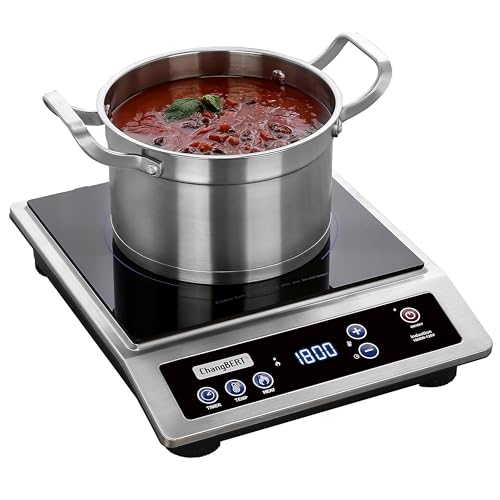


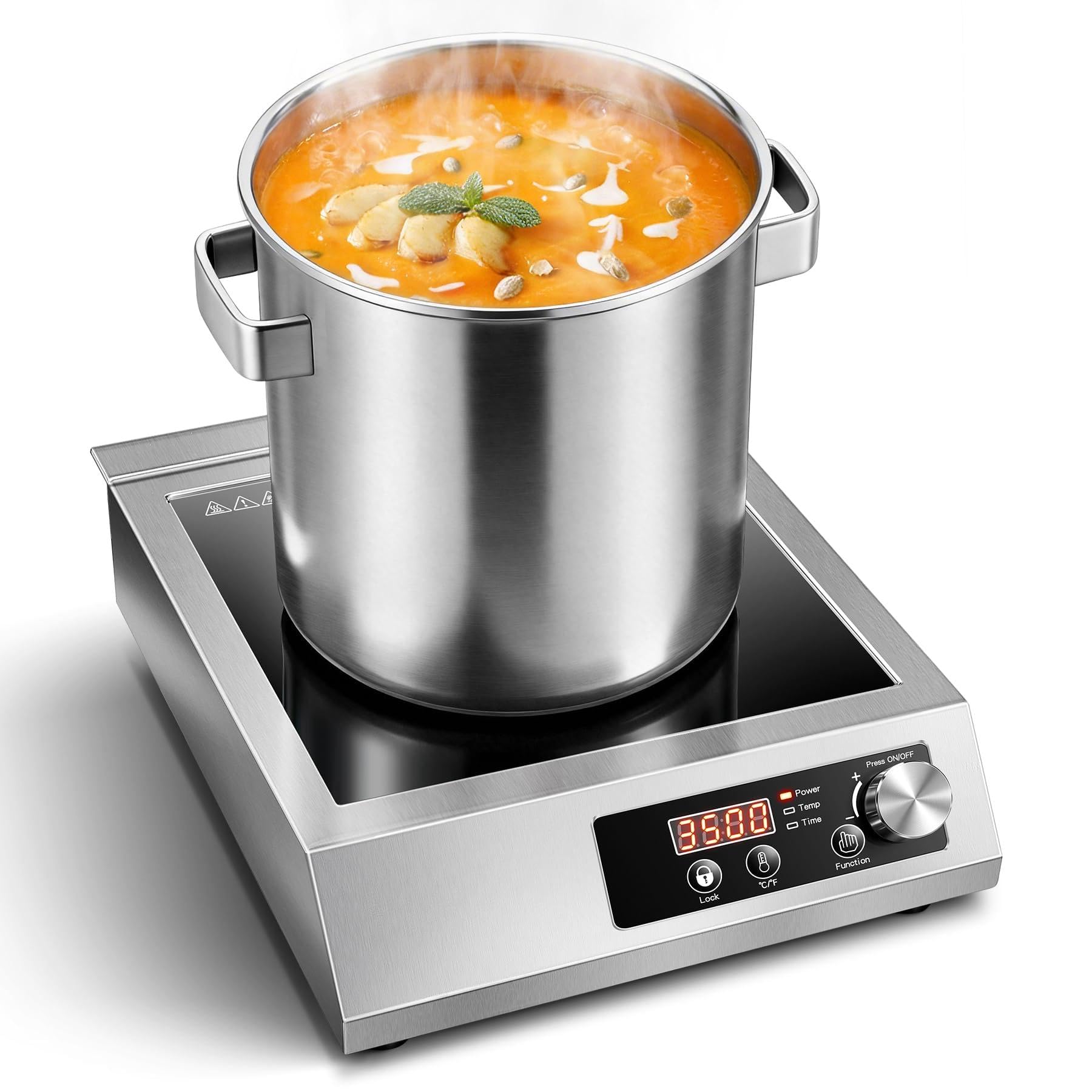
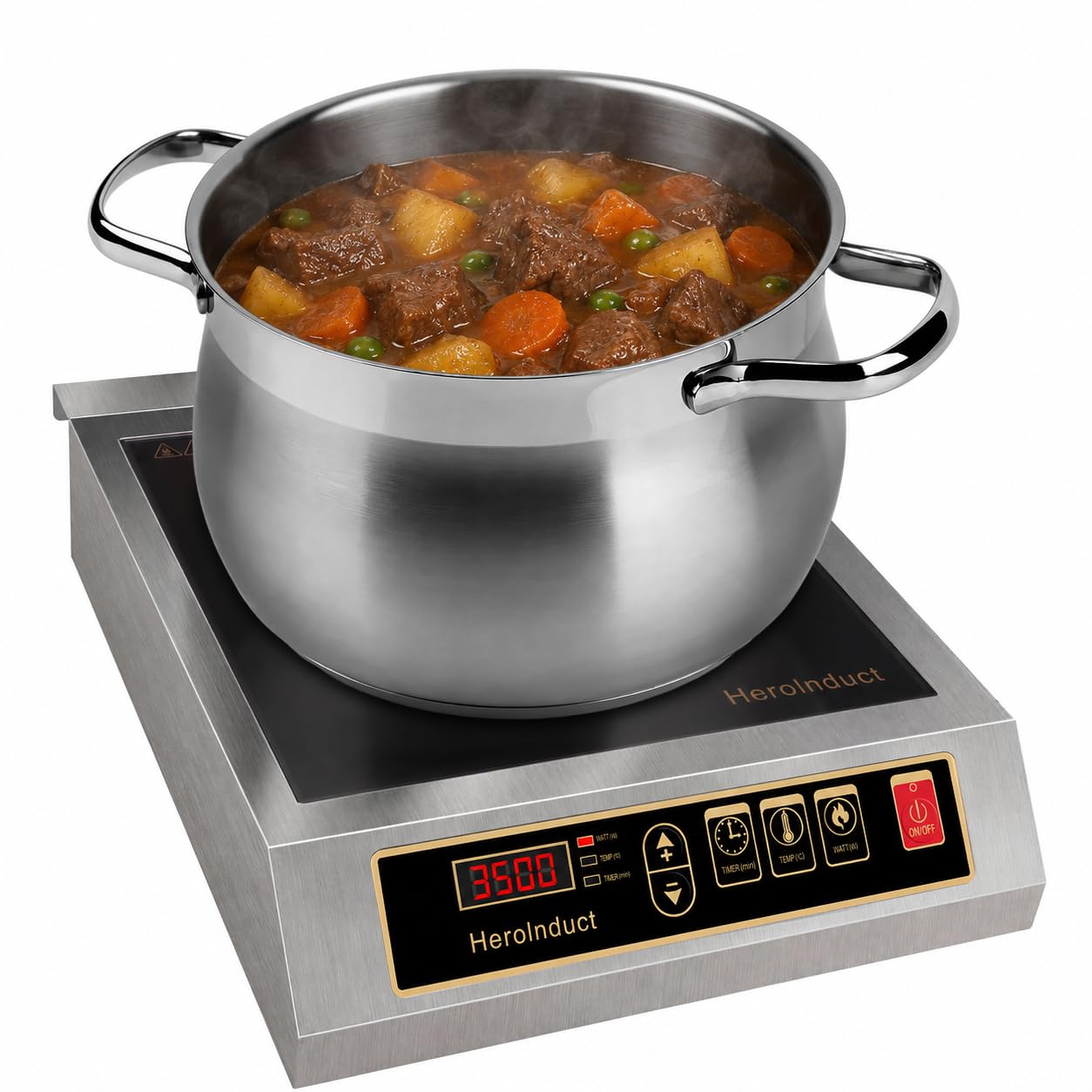
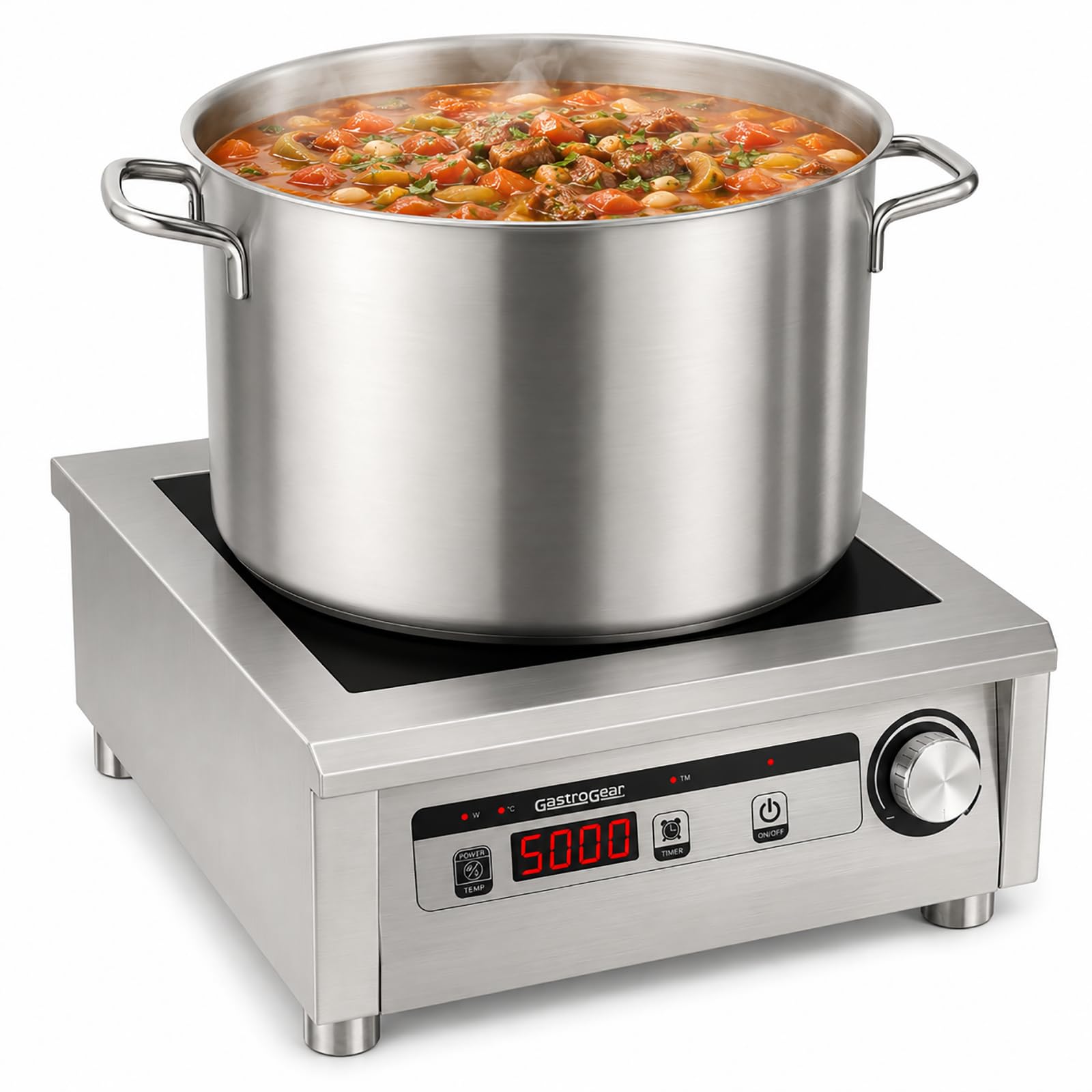
Quick Answer: Three Types That Fit Real Homes
Most home buyers choose between three forms. A portable single or double unit sits on the counter and plugs into a standard outlet, so it suits renters and small kitchens. A built in unit with four zones suits families who cook daily.
A larger unit with five zones and a bridge area suits big households and cooks who use long griddles often. Start with the form that fits your space and wiring.
Before You Buy: A Quick Checklist for Choosing an Induction Cooktop
Size: Match It to Your Space
Measure first and shop second, since size decides almost everything else. Compact units are often about 24 inches wide with two zones, which works well in apartments where counter space is tight. The most common home size is about 30 inches with four zones, and it drops into the cutout left by most standard cooktops.
Units about 36 inches wide add a fifth zone and more space between pans. Our guide to the best 30 inch induction cooktop explains standard cutouts, while the guide to the best 36 inch induction cooktop covers wider layouts.
Which Type Fits Your Routine
Think about how you cook during a normal week, not only on holidays. Portable units offer the most freedom, since you can store one in a cabinet and bring it out for canning or a second large pan, with no installation beyond a suitable outlet. Built in and drop in units give you a permanent surface and more zones, but they commit you to one layout for years.
Flexible zones and bridge elements let two areas act as one long area for a griddle. A frameless black glass surface wipes clean fast, though it shows fingerprints more than a framed edge does.
Features Worth It and Ones to Skip
A few features earn their cost in daily use. Boost mode sends extra power to one zone for a short time, which brings a large pot of pasta water to a boil much faster. A timer that shuts a zone off helps busy parents.
Pan detection stops the zone when you lift the pan, and a pause function holds a low simmer while you answer the door. Bridge mode is worth paying for only if you own a long pan that needs it. You can usually skip smart app controls, preset menus for foods you rarely cook, and downdraft systems in a home that already has a good range hood.
Measurements and Compatibility With Your Setup
Check three kinds of fit before you order. First, confirm the cutout width, depth, and clearance below the unit, since commercial style units can be deeper and may need room for ventilation. Second, confirm the electrical supply. Many built in units need a 208 to 240 volt circuit with about 40 to 50 amps, while portable units often use a standard 120 volt outlet.
Third, confirm your pans with a magnet on the base, since induction needs magnetic cookware. A pan that is too small for a zone may not be detected, and a warped base heats unevenly. For the broader category, see our overview of the best induction cooktop options.
Certifications That Matter
For home use, look for a recognized electrical safety listing such as UL or ETL on the nameplate and in the manual. If you plan to cook for paying customers or pass a local health inspection, ask your local inspector what the rules require before you buy, since many areas require an NSF or ANSI sanitation listing for commercial food service. A home listing does not become a commercial listing because the marketing calls the unit commercial.
DIY Versus Pro Installation Cost
A portable unit needs no installation cost at all, which is part of its appeal for renters. A built in unit is different. Swapping a like for like unit into an existing cutout on an existing circuit is the simplest job, but adding a new circuit or cutting a stone counter calls for licensed help.
Costs vary a lot by region and wiring age, so get a written quote before the unit arrives. Our breakdown of induction cooktop installation cost explains that quote.
Realistic Budget Ranges
Budget tiers show what extra money actually buys. Portable units often cost under $300 and give you one or two zones with modest power, plenty for side dishes. Built in four zone units commonly fall at about $500 to $1000, with stronger boost power as you move up.
Larger units can run about $1000 to $2000, and that money mainly buys more zones, flexible areas, and finer low heat control. Keep part of your budget aside for suitable pans and electrical work.
Types Compared: Portable, Built In, and Large Format
Portable Units for Small Spaces and Extra Capacity
A portable commercial style unit is the lowest risk way to add serious heat to a home kitchen. Power is lower than on a wired built in unit and most models offer one or two zones, but good ones hold a steady low temperature for sauces and still reach a fast boil. They suit apartment dwellers and cooks who need extra capacity a few times a month. The main limits are counter space, fan noise at high power, and careful storage.
Built In Four Zone Units for Most Families
For a household of three to five people who cook most nights, a four zone built in unit is usually the balanced choice. You get two larger zones for stockpots and skillets and two smaller zones for sauces, plus a smooth surface that doubles as work space when cool. Look for clear power levels and at least one zone that fits your largest pan. This is the category where comparing the best commercial induction cooktop choices for home use matters most, since small differences in control feel show up every day.
Large Format Units for Big Households and Entertaining
A 36 inch unit with five zones or flexible zones suits homes that cook for six or more people, host often, or preserve food in large batches. The extra width keeps pan handles from crowding and lets you run a griddle and a sauce pan at once. The trade offs are real, though. These units cost more, need a larger cutout and often a stronger circuit, and they take counter space a smaller kitchen may need for prep.
Our Selection Process for Commercial Induction Cooktops
We compare units on installation and compatibility first, then on build quality, control clarity, zone layout, certifications, and warranty terms. We rely on manufacturer specifications, manuals, and patterns in verified buyer reviews, with a focus on how a unit fits a real house. We leave live prices to the product listings.
What We Like and What We Do Not About Commercial Units at Home
The strengths are easy to feel in the first week. Heat changes are instant, so a pot stops boiling over the moment you lower the setting. The flat glass stays far cooler than a gas grate, which helps in a home with children and makes spills easier to wipe before they bake on.
Compared with gas, there is no open flame and no combustion fumes in the room, a point worth weighing if you are reading about induction vs gas cooktop for a small kitchen. Energy goes into the pan rather than into the air, so the kitchen stays more comfortable.
The limits deserve equal weight. You may need to replace pans that are not magnetic, including some aluminum and copper pieces you like. Glass can crack if a heavy cast iron pan drops on it, and repair often means replacing the whole top. Fans and electronics add noise and a repair path that is less simple than a basic electric coil.
Common Buying Mistakes to Avoid
- Ordering by width alone without checking cutout depth and clearance below.
- Ignoring the electrical circuit, since a unit that needs more amps than your panel can supply adds a large and unexpected upgrade cost.
- Assuming all your current pans will work, when nonmagnetic pans will not heat at all on any induction zone.
- Paying for bridge areas and extra zones you will rarely use, while spending too little on low heat stability.
- Calling a unit commercial for business use without checking the listing your local inspector requires.
Cost of Ownership and Care
Day to day running costs are modest, since induction sends most of its energy into the pan. The larger costs are less obvious. Budget for magnetic pans if your current set fails the magnet check, and for possible electronic repairs once the warranty ends, since control boards cost more than simple switches.
For care, let the glass cool, wipe spills with a soft cloth and a mild cleaner made for glass cooktops, and lift heavy pans instead of sliding them. Avoid abrasive pads, which can dull the finish. Our guide on how to clean an induction cooktop covers dried on spills.
Your Questions, Answered
What makes an induction cooktop reliable over many years?
Reliability usually comes from simple controls, good ventilation for the electronics, and a warranty that covers parts for a fair period. Units with fewer novelty features have fewer parts that can fail, and a service network in your area matters more than a long feature list. Keep the vents clear and register the unit so warranty service is easy to start if you ever need it.
How long does a commercial style induction cooktop last in a home?
A well kept unit in a home often lasts about 10 to 15 years, since home use is far lighter than restaurant use. The glass top and controls usually outlast the cooling fans and electronic boards, which are the parts most likely to need service first. Support a long life by keeping liquids out of the vents and using pans with smooth flat bases.
Are commercial induction cooktops worth it for a home kitchen?
They are worth it when you regularly cook large volumes, need fast and repeatable heat changes, or find that a standard unit leaves pans crowded and underpowered. They are harder to justify for a household that cooks simple meals for one or two people a few times a week, since a portable model will do that work for far less money. Judge the upgrade by your busiest normal week, not by your biggest holiday meal.
Can a commercial induction cooktop work for wok cooking at home?
It can, with limits you should know before you buy. A flat zone heats a flat base best, so a round base wok will rock and heat poorly unless you use a flat base wok made for induction. High boost power helps you get the fast heat that stir frying needs, but the pan must stay in contact with the glass. Choose a large high power zone and the right pan shape rather than an adapter, which wastes energy.
Does a commercial induction cooktop need special ventilation at home?
The cooktop itself produces no flame and very little waste heat, but your food still produces smoke, steam, and grease, so a working range hood vented outdoors remains important. Fast searing on a high power zone can fill a small kitchen with smoke quickly. If your hood only recirculates air, change its filter often and open a window during heavy frying.
Final Thoughts
For most houses, a four zone built in unit in the middle budget tier gives the best balance of power, space, and daily ease, while a portable unit suits renters and a large format unit earns its space in homes that cook for a crowd. Match the size to your cutout and the features to your routine, and the best commercial induction cooktop for your home becomes a clear choice. Use the product table above to compare the types before you decide.


