Best Coffee Makers With Cone Filters (2026): Cleaner, Brighter Coffee
Disclosure: We may earn a commission when you buy through links on this page, at no extra cost to you. As an Amazon Associate I earn from qualifying purchases. Learn more

How cone brewing works and which models suit you: manual drippers, carafe sets and electric machines in the best coffee makers with cone filters.
A cone filter changes how water moves through coffee. Because the grounds sit in a deep, narrow bed that tapers to a point, water passes through them more slowly and more evenly than in a flat bottom basket, which is why best coffee makers with cone filters are popular with people who like a clean, bright cup. This guide explains how cone brewing works, which machines and manual brewers use it, and what to check before you buy. Use the product table below to compare models as you read.
Cone filters come in standard sizes, so check which size a machine takes before you order a supply of paper. The common sizes are numbered, with the smaller number two for single mugs and number four for larger pots, and a mismatch means filters that slump, tear or let grounds through.




How a Cone Filter Changes the Cup
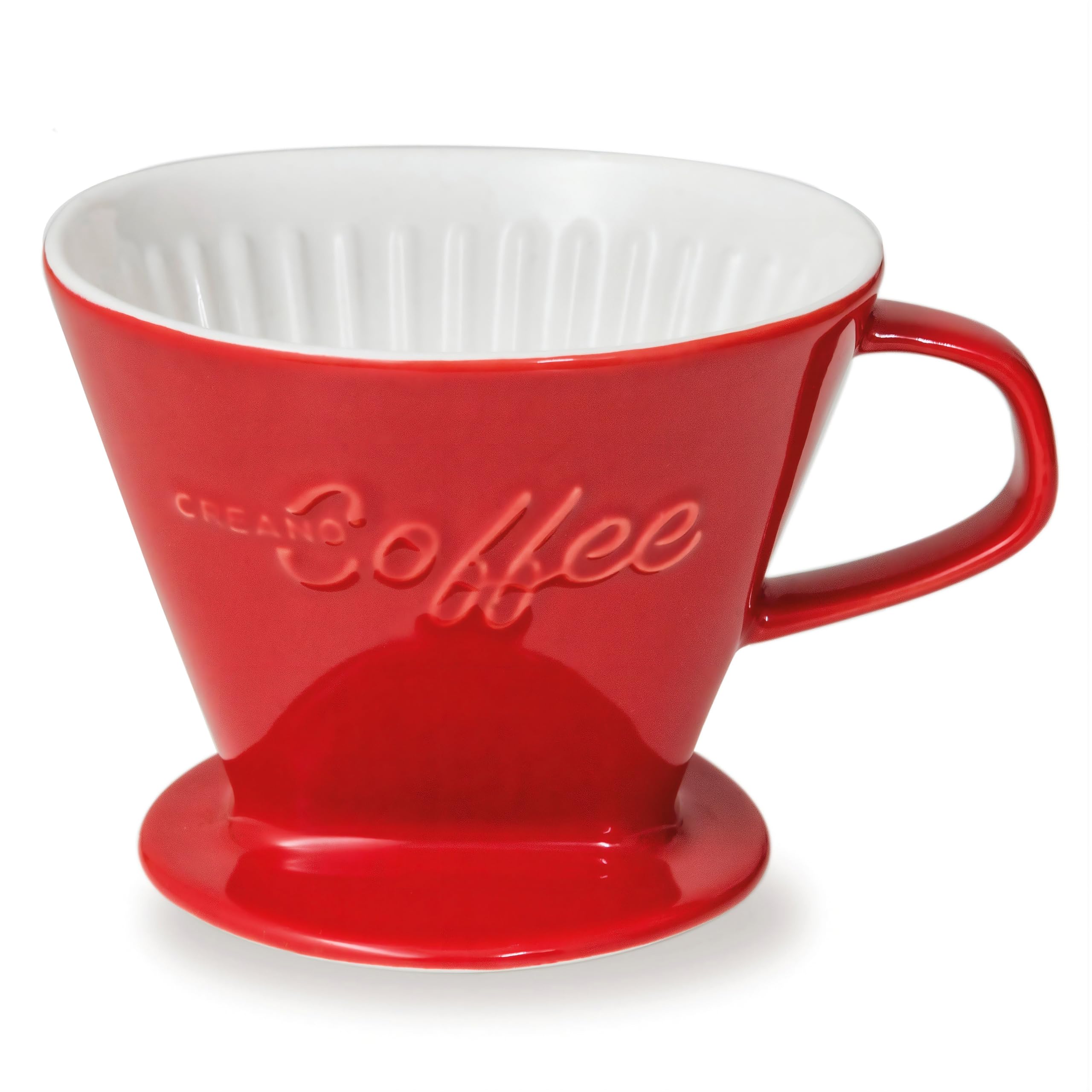
In a deep cone the coffee bed is thicker at the center, so water spends more time in contact with the grounds before it drains. That slower drawdown can pull out more sweetness and aroma, and a well made cone brewer spreads the water evenly across the bed so flavors come out balanced. Flat bottom baskets tend to brew faster and more uniformly, which suits large batches, while cones suit smaller, more carefully brewed pots. Neither is wrong, and the machine matters as much as the filter shape.
Types of Best Coffee Makers With Cone Filters
Manual Cone Drippers
A simple plastic, ceramic or metal cone sits on a mug or carafe, and you pour hot water by hand. These cost little, need no electricity and make an excellent single cup. They are the best way to learn how grind size and pour speed change flavor, but they ask for a kettle and a little attention. Ceramic cones hold heat better than plastic, and a metal cone with a built in filter removes the need for paper at all.
Cone Brewers With a Carafe
Many glass carafe pour over sets pair a cone with a heat resistant pot that holds several mugs. They make a larger batch by hand and look good on a table, and the carafe can sit on a warmer. Pick a model that takes widely sold filters, since proprietary filters are harder to find.
Electric Cone Machines
Among the best coffee makers with cone filters, electric brewers with a cone basket heat the water and spray it over the grounds for you. The better ones use a wide shower head and a heater tuned to hold the right temperature, so you get the clarity of pour over without standing at the counter. They cost more than a flat basket machine but less than most espresso machines, and they suit households that want pour over taste on a weekday morning.
What to Check Before You Buy
- Filter size and availability: confirm whether the brewer takes number two, number four or a brand specific cone, and that paper is easy to buy.
- Reusable filter option: a metal or cloth cone saves money over time, though it lets more oils through and needs rinsing.
- Brew temperature: good extraction needs water around 195 to 205 degrees Fahrenheit, so look for brewers that state their temperature or carry Specialty Coffee Association certification.
- Carafe material: thermal carafes hold heat without a plate, while glass carafes cost less and show the level.
- Batch size: cones work best at their rated capacity, so a small cone brewing a large pot can overflow.
Grind, Ratio and Technique for Cone Brewing
A medium grind, a little finer than flat basket coffee, works for most cone brewers. If the cup tastes sour or thin the water ran through too fast, so grind finer. If it tastes bitter or dry the water stayed too long, so grind coarser. A starting ratio of about one part coffee to sixteen parts water by weight works for many people, and you can adjust from there. For manual cones, wet the filter first to remove paper taste, then pour a small amount of water over the grounds and wait about thirty seconds so the bed can bloom before the main pour.
For a wider comparison of brew styles, our guide to best brewing coffee makers sets pour over next to immersion and espresso, and best filter coffee makers compares machines that use paper filters of any shape.
Paper or Reusable Cone Filters
Paper cones trap oils and fine particles, which gives a light, clean cup that many people prefer. They are cheap but need restocking, and bleached paper should be rinsed. Metal or cloth cones let more oils and fine sediment through, so the coffee has more body, and they pay for themselves over time but need a rinse after each brew and an occasional deep clean. If you like both styles, keep a small stock of paper filters for company and use the reusable cone for everyday coffee.
If you are shopping for a brewer shaped around the cone, best cone coffee makers lists models by cone design, and best coffee pot makers covers classic pots that may be easier for a large household.
Care and Cleaning
Throw away the paper and grounds, then rinse the cone and carafe right after brewing, because coffee oils turn rancid and leave a bitter taste. Wash removable parts in warm soapy water each week, and descale electric machines every one to three months depending on your water. Clear the shower head on electric models if you see uneven flow, and store paper filters in a dry place so they do not pick up odors.
Your Questions Answered
Do cone filters taste different from flat filters?
Often yes. A cone makes a deeper bed of grounds and a slower drawdown, which many people find gives a cleaner, brighter cup. Flat basket brewers are faster and more uniform for big batches. Grind size and water temperature matter as much as the filter shape.
What grind size works best with a cone filter?
Medium, a little finer than for a flat basket, suits most cone brewers. If the coffee tastes sour or weak, grind a bit finer, and if it tastes bitter, grind a bit coarser.
Which cone filter size should I buy?
Check the brewer. Number two cones fit single cup and small brewers, and number four fits many larger electric machines and pour over carafes. Use the size the manual or listing states, because a wrong size slumps or lets grounds through.
Are paper cone filters compostable?
Plain paper filters and coffee grounds can usually go into a home compost bin or a municipal food waste stream if your area accepts them. Check local rules, and remember that bleached or coated filters may be handled differently.
Can I use a cone brewer for more than one cup?
Yes, if you choose a cone sized for the batch. Many manual cones brew one or two mugs, while carafe style cones brew several, and electric cone machines brew a full pot. Pour in stages and keep within the rated capacity to avoid overflow.
Final Thoughts
Choose the cone brewer that fits how many cups you brew, confirm the filter size, and keep a little paper on hand. Compare models in the product table above, and the best coffee makers with cone filters for you will balance flavor, effort and cost.