Best 5 Cup Coffee Maker Guide for 2026: Choosing One That Fits Your Home
Disclosure: We may earn a commission when you buy through links on this page, at no extra cost to you. As an Amazon Associate I earn from qualifying purchases. Learn more

Small kitchen or two person home? See how to pick a 5 cup coffee maker by carafe type, brew temperature, footprint and budget.
A small kitchen, a two person household, and a pot that always ends with half of it poured away. That mismatch is exactly why many shoppers look for the best 5 cup coffee maker instead of another large machine. The right model brews enough for a relaxed morning at home, takes up little counter space, and stays simple enough to use half awake.
This guide helps you choose by space, number of drinkers, and budget, and explains the specs that change flavor and daily effort. Use the comparison table below to line up capacity, carafe type, and footprint.


Quick Answer: What a Good 5 Cup Model Looks Like
In short, look for a machine that brews at a steady temperature, fills about 25 ounces, and matches how you drink. A thermal carafe suits slow mornings because it holds heat without a warming plate. A glass carafe with a plate suits drinkers who finish the pot within an hour. Add a timer only if you truly set it the night before, and skip extras you will rarely touch.
Before You Buy: A Quick Checklist for Choosing a Coffee Maker
Size: Match It to Your Space and Your Mugs
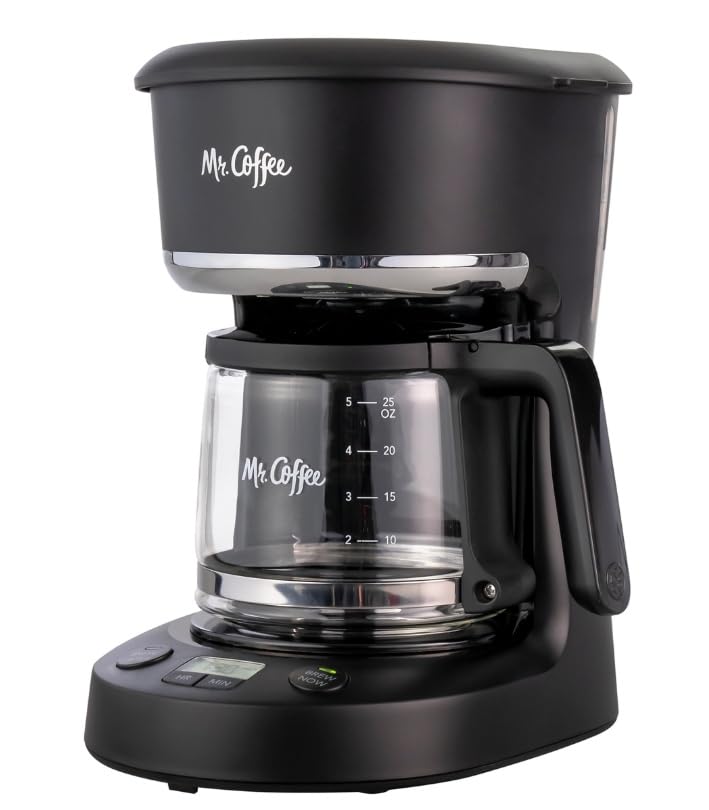
Coffee maker cups are smaller than the mugs most people drink from. One coffee maker cup is about 5 ounces, so a 5 cup machine brews about 25 ounces in a full pot. That equals roughly two generous 12 ounce mugs, or three smaller 8 ounce cups with a little room to spare. If your household regularly pours for three or more people at once, even this size can feel tight.
Capacity also shapes freshness, since a small pot brewed fresh usually tastes better than a large pot that sits for hours. Our broader guide to the best coffee maker helps you weigh this size against larger capacities.
Which Type Fits Your Routine
Nearly every model in this size is a drip machine, but the details split into a few useful types. A basic drip brewer with a single switch is the easiest to run and to clean. A programmable version lets you set a start time and adjust brew strength. A thermal carafe version skips the warming plate and keeps coffee hot inside an insulated pot, while a glass carafe version costs less and lets you see the level at a glance.
Think about your actual mornings. If you drink slowly over two hours, thermal insulation protects flavor better than a hot plate, while a glass carafe suits drinkers who brew, pour, and leave. For a deeper look at drip brewing in general, see our guide to the best drip coffee maker.
Features Worth Paying For, and Ones to Skip
A short list of features earns its keep at this size. A brew pause function lets you pour a first cup while the rest finishes, which matters when two people leave at different times. A strength setting helps when you switch between light and dark roasts. A removable water reservoir or a wide opening makes filling and cleaning far less fiddly, and an automatic shut off adds peace of mind on busy mornings.
Other extras add cost and cleaning without much payoff. A built in grinder adds noise, bulk, and one more part to wash in a compact model, and a milk frother serves drinks a small drip brewer is not built around. If grinding fresh matters most, compare options in our guide to the best coffee maker with grinder first.
Brew Temperature and SCA Certification
Flavor depends heavily on water temperature during brewing. The widely used target range is 195 to 205 degrees Fahrenheit, hot enough to extract sweetness and body without scorching the grounds. Many inexpensive small brewers run cooler than that, which can leave coffee tasting thin and sour. Listing a wattage figure does not guarantee the water reaches the grounds at the right heat, so look for clear temperature claims in the specifications.
Certification from the Specialty Coffee Association is one independent signal, because certified brewers must hold that range and brew evenly. Few compact models carry it, so treat it as a helpful shortcut rather than a requirement.
Water Reservoir, Filters, and Descaling
Daily handling matters as much as brew specs. A reservoir with clear markings in cups and ounces prevents guesswork, and a lid that opens wide makes filling easier. Some models use paper filters you throw away with the grounds, while others include a reusable mesh filter you rinse after each pot. Paper can give a slightly cleaner cup, while mesh saves repeat purchases.
Mineral scale builds up inside any brewer, faster in homes with hard water. A model with a clean cycle alert or a simple descaling routine protects heating performance and flavor over time. Plan to descale about every one to three months depending on your water, using either a manufacturer solution or a plain vinegar rinse followed by fresh water cycles.
Counter Footprint
Measure before you order, because headline dimensions can mislead. Note the width and depth of the base, then add the height with the lid fully open, since many small kitchens have cabinets about 18 inches above the counter. A machine that fits on the counter but cannot open under your cabinets forces you to slide it forward every morning. Also check cord length and where the cord exits, so the brewer can sit near an outlet without stretching across a sink.
Realistic Budget Ranges
Prices in this size cluster into clear tiers. Models under $30 are usually basic switch operated brewers with glass carafes, fine for a dorm room or a spare machine. The range of about $30 to $50 adds timers, strength settings, and better carafe handles. Between about $50 and $100 you find most thermal carafe models and sturdier builds. Spending under $200 makes sense mainly for certified brewing performance or premium materials, not for extra drink programs.
Match the tier to how often you brew. A daily drinker recovers the cost of a midrange model quickly, while a weekend only user may be happy at the lower end if the carafe pours cleanly.
Three Buying Profiles and What to Prioritise
Profile One: The Solo or Two Person Home
If one or two people drink the pot, prioritise brew quality and a footprint that suits your counter. A steady brewing temperature and an even shower over the grounds matter more than programs you will never open. Choose glass if you finish within the hour, or thermal if your mornings stretch out.
Profile Two: The Tight Budget Setup
If keeping cost low comes first, focus on the basics done well rather than a long feature list. Look for a carafe that pours without dribbling, a filter basket that removes in one piece, and a warming plate that switches off on its own. Replacement carafes for common small models are usually easy to find, which protects a budget purchase if the original ever cracks. Skip paid extras like a grinder or frother and put the savings toward better beans.
Profile Three: The Long Term Upgrade
If you plan to keep the machine for years, prioritise build and temperature control. A thermal carafe removes the plate that can cook leftover coffee and often signals a sturdier overall build. Stainless steel housing resists stains and wipes clean, and a certified brewing system supports consistent results across different roasts. Check that the maker stocks spare carafes, lids, and filters, because small parts decide how long a brewer stays in service.
How to Judge Quality From Specifications
Start with the published specifications: brewing temperature, capacity in ounces, carafe material, and footprint with the lid open. Then read owner feedback for repeated patterns, such as carafes that dribble or reservoirs that are hard to fill, rather than single complaints. Finally, confirm warranty length and spare part availability, since both reveal how long the maker expects the machine to last.
Is a 5 Cup Coffee Maker the Right Size for You?
This size fits households that brew once in the morning and drink the pot within a couple of hours. Solo drinkers who like a large mug plus a refill, couples who each take one mug, and small home offices are the natural audience. It also works well in a guest room, a studio apartment, or a camper where counter space and storage are limited and a full size machine would dominate the room.
It is the wrong size when mornings involve three or more drinkers or frequent entertaining. A second pot is a fair workaround, but if that happens daily, a larger brewer will serve you better.
Common Buying Mistakes to Avoid
- Judging size by mug count alone: a 5 cup rating means about 25 ounces, so two large travel mugs can empty the pot at once.
- Forgetting the open lid height: a brewer that fits under cabinets when closed may not open there, which makes daily filling awkward.
- Paying for features you will skip: grinders, frothers, and drink programs add cost and cleaning to a machine bought for simple drip coffee.
- Ignoring replacement costs: paper filters, descaling solution, and a spare carafe add up over the life of the machine.
- Choosing a warming plate for slow drinking: coffee held on a hot plate for hours turns bitter, so slow drinkers should pick a thermal carafe instead.
Cost of Ownership and Care
Running costs stay modest in this size. Paper filters cost only a few cents each, a reusable mesh filter removes that expense entirely, and descaling solution or vinegar adds a small amount a few times a year. Electricity use is low because brew cycles are short and the pot is small. The most common larger expense is a replacement carafe, so handling the original with care protects your budget.
Daily care takes a minute. Rinse the carafe and filter basket after each use so old oils do not stale the next pot. Wipe the warming plate once it cools, and follow the steps in our guide on how to clean a coffee maker when flavor tastes flat or brewing slows down.
Your Questions, Answered
What is the most reliable coffee maker brand at this size?
Reliability at this size depends more on simple design and spare parts than on any single brand name. Models with fewer electronic programs, a standard carafe shape, and widely stocked filters tend to stay in service longest. Check that the maker sells replacement carafes and offers at least a one year warranty. A brewer you can descale easily also avoids the mineral buildup that ends many small machines early.
How do you clean a 5 cup coffee maker properly?
Wash the carafe and filter basket in warm soapy water after each brew day, and descale the inside about every one to three months. Run a cycle with a descaling solution or diluted vinegar, let it sit partway through so minerals loosen, then run two cycles of plain water. One extra tip for small machines: wipe the spray head above the basket, because coffee oils collect there and drip back into fresh pots.
Is a 5 cup coffee maker worth it for one person?
Yes, a 5 cup coffee maker is worth it for one person who drinks two mugs or likes a refill on hand. It wastes less than a large brewer, heats faster, and takes far less counter space than a full size machine. The main case against it is a household that regularly serves guests. A solo drinker who prefers one small cup only might instead brew a half pot, which most models handle well with a slight increase in grounds.
How long does a 5 cup coffee maker last?
Most small drip brewers last about three to five years with regular descaling and gentle handling of the carafe. Lifespan drops when scale builds up unchecked, because the heating element works harder and brewing temperatures drift. You can stretch service life by using filtered water in hard water areas. When brew times stretch noticeably or the pot tastes sour despite fresh beans, the machine is usually near the end.
What size coffee maker do I need for two people?
For two people, match the brewer to your mugs rather than to the cup rating on the box. Two 12 ounce mugs need about 24 ounces, which a full 5 cup pot covers almost exactly. If either of you fills a large travel mug as well, plan on brewing a second pot or choosing a larger size. Couples who drink at different times may prefer a thermal carafe so the second pour still tastes fresh.
What is the best 5 cup coffee maker for a small kitchen?
The right choice for a small kitchen is the model that fits with its lid open, pours cleanly, and matches your drinking pace. Measure your cabinet clearance first, then decide between a glass carafe for fast drinking or a thermal carafe for slow mornings. Shoppers in compact spaces often overlook the filter basket swing direction, which decides whether the machine can sit in a corner. Prioritise that fit over extra programs every time.
Final Thoughts
A small brewer earns its place when it matches your mugs, your counter, and your pace in the morning. Compare capacity in ounces, carafe type, brewing temperature, and footprint, then pick the profile that sounds like your home. Before you order, look back at the product table above and confirm the dimensions and carafe style one last time. Chosen well, the best 5 cup coffee maker quietly becomes the most used appliance in the kitchen.