Best Closet Shoe Rack 2026: Types Compared and How to Choose
Disclosure: We may earn a commission when you buy through links on this page, at no extra cost to you. As an Amazon Associate I earn from qualifying purchases. Learn more
Measure your closet floor, count your pairs, and compare open racks, fabric racks, and cubby modules to pick the best closet shoe rack for your space.
A closet floor covered in loose pairs wastes space and slows you down every morning. The right rack lines your shoes up in rows you can see at a glance, so matching a pair takes seconds instead of a search. Finding the best closet shoe rack for your space starts with measuring the floor area or shelf you can spare, then counting the pairs you wear most often. The comparison table below lays out the main rack types side by side, so you can spot the format that fits your closet before reading the detail.
This guide covers only racks made to live inside a closet, from open tiered frames to enclosed cubbies. We compare them on capacity and fit, frame materials, stability, and how easy they are to keep clean. If your storage problem reaches beyond the closet, our guide to the best shoe rack covers formats for the whole home.


Closet Shoe Rack Types at a Glance
Three formats cover nearly every closet layout. Each one trades capacity, cost, and looks in a different way, and the right choice depends mostly on how much floor width you can give up and how many pairs need a home.
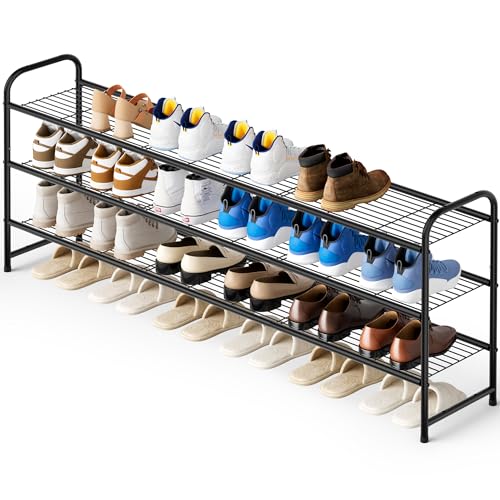
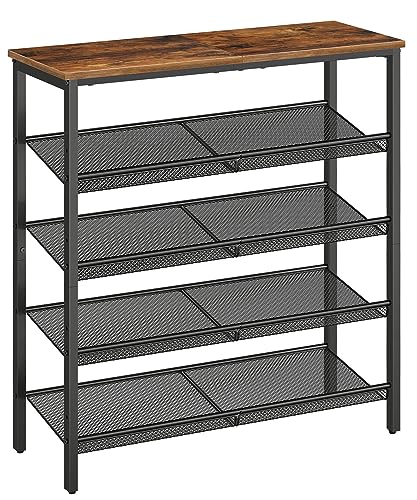
- Open tiered rack: rows of horizontal bars or flat shelves on a frame. It suits wide closet floors and shoes you wear every day, because every pair stays visible and easy to grab.
- Fabric tier rack: cloth shelves stretched over a light tube frame. It suits renters and spare closets, where low cost and easy moving matter more than a finished look.
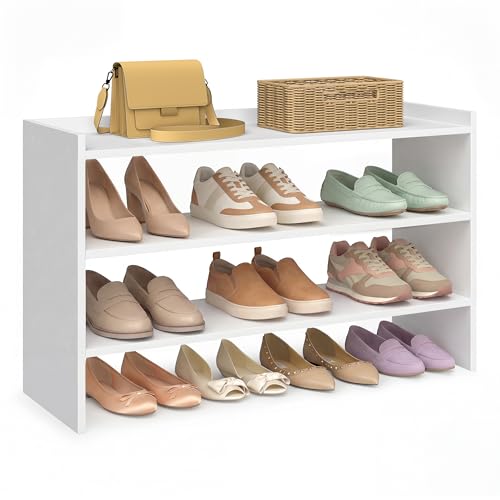
- Stackable cubby modules: box shaped units you arrange and stack to fit your wall. They suit large collections and closets you want to look tidy, since each pair gets its own compartment.
Closet Shoe Rack Types Compared
Open Tiered Racks: The Best All Round Choice
An open tiered rack is the format most closet owners end up keeping. The frame holds two to four levels of bars or shelves, and a typical two foot wide model stores about eight to twelve pairs within easy reach. Air moves freely around the shoes, which helps damp pairs dry between wears. The frame also stays stable under heavy leather shoes and work boots placed on the lowest tier. The main trade off is looks, because open rows show dust and a jumble of colors. Choose this type if your closet has a clear stretch of floor at least two feet wide and you value quick access over a neat front.
Fabric Tier Racks: The Lowest Cost Route
A fabric tier rack pairs a light metal or plastic tube frame with cloth shelves, and it often costs less than a single pair of the shoes it holds. Assembly takes minutes, and the whole unit is light enough to carry to another room when you rearrange. The cloth shelves flex under weight, so heavy boots can bow a shelf and let smaller shoes slide toward the middle. Capacity is still useful, with tall versions holding twenty pairs or more in a narrow footprint. Choose this type for a guest room closet, a dorm, or a first apartment, where the rack may move or be replaced in a few years.
Stackable Cubby Modules: The Upgrade Route
Cubby modules are individual boxes, usually wood, engineered wood, or sturdy plastic, that lock or stack into a grid shaped to your closet wall. You buy only the number of compartments you need now and add more later, which makes this the most flexible format for growing collections. Each pair sits in its own cell, so shoes never lean on each other or get crushed, and a closed front panel is an option when dust is a problem. The trade off is price and assembly time, since a full wall of modules costs far more than one open rack. Choose cubbies when the closet is a permanent dressing space.
How to Judge a Closet Shoe Rack
We judged every type in this guide on the same five points, using maker specifications and patterns in verified buyer feedback. Capacity and fit come first, because a rack that holds fewer pairs than you own solves nothing. Next are frame materials and joint strength, then stability on carpet and hard floors. Cleaning matters too, since closet dust settles on shoes and shelves alike. Value comes last, judged on cost per pair stored rather than the sticker price alone. The sections below turn those five points into decisions you can make with a tape measure and a shoe count.
How to Choose the Right Shoe Rack
Size and Form Factor
Measure the closet floor or shelf first, in width, depth, and height, and write the numbers down before you shop. A standard pair of adult shoes needs about eleven inches of depth, so a shelf shallower than that leaves toes hanging over the edge. Count your pairs, then add room for two or three more, because collections rarely shrink. Two tier racks fit under hanging clothes in many closets, while tall narrow towers use vertical space in a corner. If your closet is tight on every side, our guide to the best shoe rack for small spaces covers compact formats in more depth.
Rack Types Explained
Beyond the three main formats above, a few special types solve specific closet layouts. Over the door racks hang on the closet door and use space that would otherwise go to waste, though the pockets suit flats and sneakers better than stiff leather shoes. Rotating racks spin a vertical column of shelves and work well in deep corner closets where the back is hard to reach. Bench racks belong mostly at the door rather than in the closet, and our guide to the best entryway shoe rack covers those. Hidden racks that slide under a shelf or bed serve overflow pairs, not the shoes you wear daily.
Features Worth Paying For
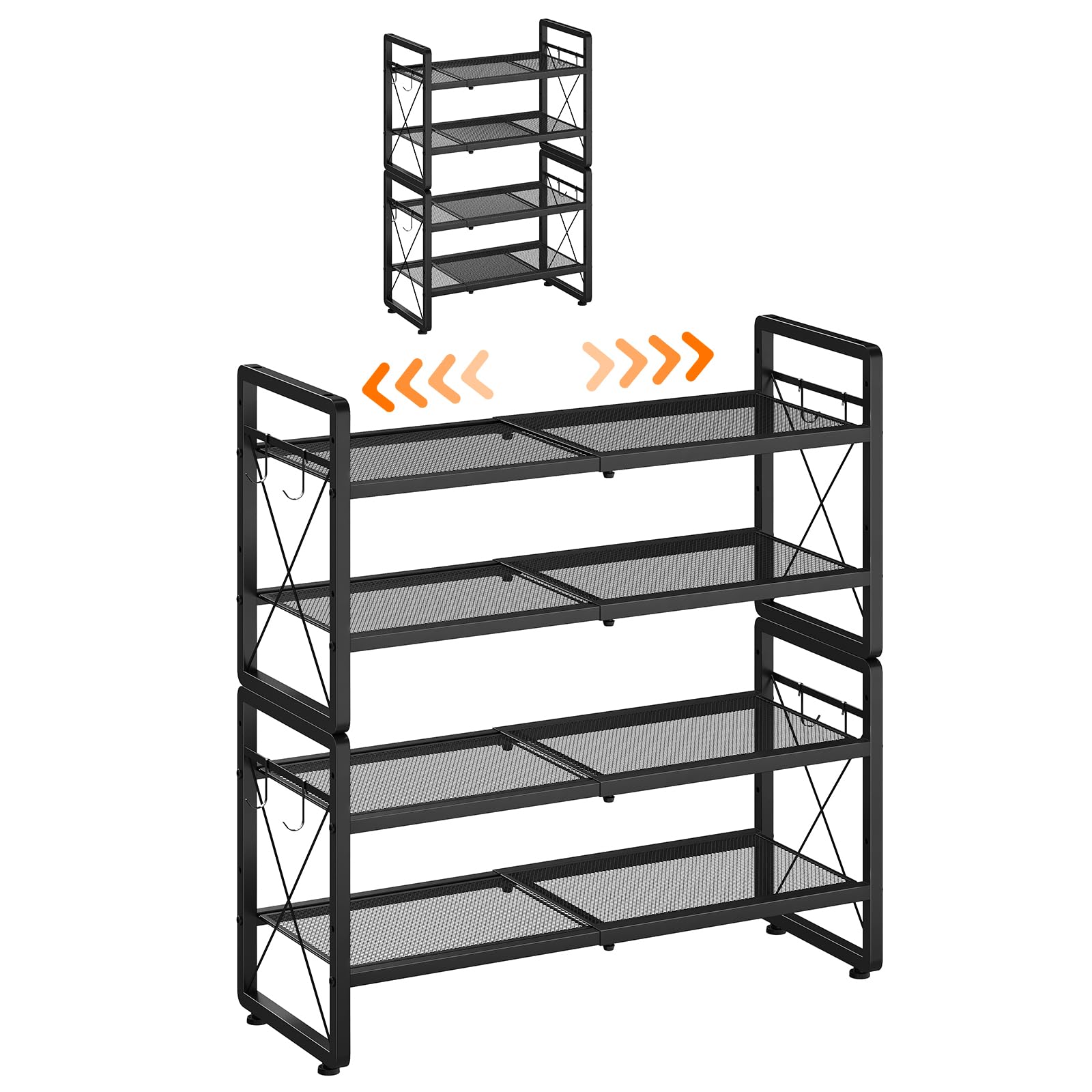
A few extras earn their cost inside a closet. Doors or a fabric cover keep dust off shoes you wear only on special occasions, and they make a crowded closet look calmer. Small hooks on the side of a frame hold a shoe horn, a brush, or a pair of laces. Adjustable shelf height is worth paying for if your collection mixes flats with ankle boots, since fixed tiers waste the tall gaps. Features worth skipping include decorative finishes you will never see behind a closet door and complex rotating hardware in a closet too small to spin it. Spend on structure first, and on extras only after the frame is sound.
Materials and Air Flow
Frame material decides how a rack ages. Powder coated metal is strong, wipes clean, and shrugs off the scuffs of daily use. Bamboo and solid wood look warmer and handle weight well, though they cost more and can swell in very damp closets. Plastic is light and cheap but can crack at the joints under heavy boots. Air flow matters as much as strength, because shoes trap moisture after a wet day. Open bars and slatted shelves let that moisture escape, while fully closed boxes can hold a musty smell unless you leave the doors ajar after wearing the pair.
How Much Should You Spend?
Simple fabric tier racks cost about $15 to $30 and cover basic storage well. Sturdy metal and bamboo tiered racks run about $30 to $60, and that step up buys stronger joints and shelves that stay flat. Cubby systems and enclosed closet racks range from about $60 to $150 depending on how many compartments you build. Spending above that usually pays for furniture grade looks rather than more storage, which makes sense in a dressing room closet but not in a spare room. Match the tier to how long you plan to keep the closet layout, not to the price of the shoes.
Closet Racks Compared With Other Shoe Storage
A closet rack keeps shoes out of sight, near the clothes they go with, and away from hallway clutter. The cost of that privacy is convenience, since you open a door every time you change shoes. Garage storage solves the opposite problem, holding muddy boots and work shoes where the dirt belongs, and our guide to the best shoe rack for garage covers those tougher builds. If you are torn between open shelves and an enclosed unit, our comparison of shoe rack vs shoe cabinet weighs dust protection against air flow and price.
- Closet rack pros: shoes stay with your outfits, floors at the door stay clear, and pairs are protected from pets and hallway traffic.
- Closet rack cons: capacity is limited by closet size, and a rack can crowd out floor space you need for luggage or storage boxes.
How to Make Your Closet Shoe Rack Last Longer
Most closet racks fail at the joints, not the shelves, so check the screws and connectors twice a year and tighten any that have worked loose. Keep the heaviest pairs on the lowest tier, where the frame is strongest, and stay within the weight guide in the product listing. Shoes brought in wet should dry at the door before they go on the rack, because standing moisture softens fabric shelves and can spot bare wood. Rotating which pairs sit at the front spreads wear across the shelves instead of bowing the same one. A rack treated this way should serve for many years.
FAQ
What is the best closet shoe rack for most homes?
For most homes it is an open tiered rack wide enough for the pairs you wear weekly, with your least worn shoes stored higher or elsewhere. One detail buyers miss is shelf depth. Large sizes can run thirteen inches long, so measure your longest pair and choose a rack at least that deep, or the heels will rest on the frame and the shoes will sit at an angle.
Are closet shoe racks worth it?
Yes, if your shoes currently pile up on the closet floor. A rack keeps pairs upright and separated, which stops soft uppers from being crushed and creased by the weight of the pile. It also keeps soles off the closet carpet, so grit from outside stays on the shelf where you can wipe it away instead of grinding into the flooring.
How long does a closet shoe rack last?
A metal or wood rack in a dry closet commonly lasts five to ten years, while light fabric models often need replacing sooner. Watch for the warning signs that the end is near: shelves that stay bowed after you remove the shoes, joints that wobble even after tightening, and cracked plastic connectors. Replacing a rack at that stage is safer than waiting for a loaded tier to collapse.
How do you clean a closet shoe rack?
Take every pair off, then vacuum the shelves and the closet floor beneath, since grit collects where the frame meets the ground. Wipe metal and plastic with a cloth dampened with water and a drop of mild soap, and brush bamboo or wood with a dry cloth instead. Let everything dry fully before the shoes go back, because sealing leftover moisture inside a closed closet invites a stale smell.
Can a closet shoe rack hold tall boots?
Yes, if one tier or the floor space beside the rack gives the boot shafts room to stand upright. Measure the shaft height of your tallest pair, often fourteen to eighteen inches, and compare it with the gap between tiers before you buy. When no tier is tall enough, store boots on the closet floor next to the rack and give the rack to your shorter shoes.
Final Thoughts
Start with your measurements and your pair count, and the right format usually becomes obvious. Open tiered racks cover most closets, fabric racks cover tight budgets, and cubby modules cover big collections. When you are ready to pick the best closet shoe rack for your space, look back at the product table above and match each type against the width and depth you wrote down.