Best Chunky Knit Weighted Blanket: Buying Guide for 2026
Disclosure: We may earn a commission when you buy through links on this page, at no extra cost to you. As an Amazon Associate I earn from qualifying purchases. Learn more
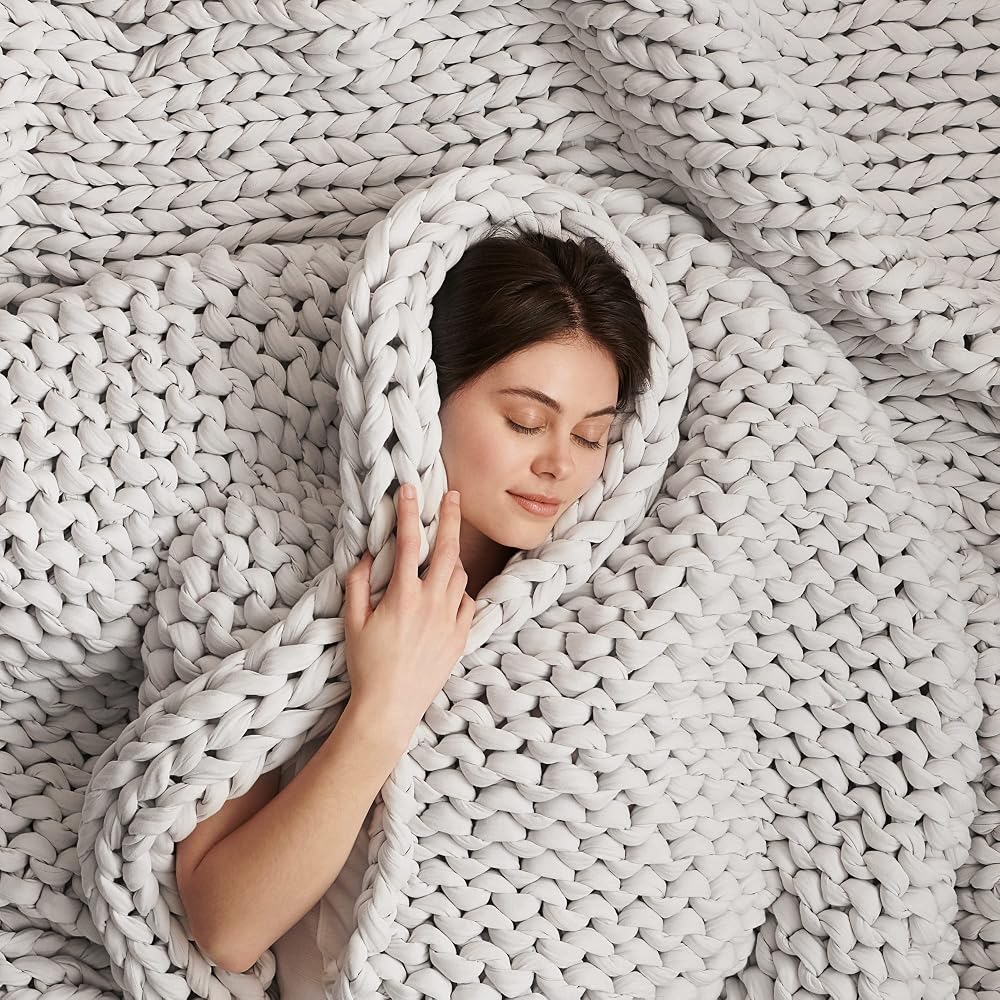
How to choose the best chunky knit weighted blanket: weight by body size, cotton or synthetic yarn, loop size, airflow and care for hot sleepers.
A chunky knit weighted blanket gets its weight from thick yarn looped into a loose, open weave, not from pockets of glass beads. That structure changes how the blanket breathes, drapes, and feels against your body. If you want the calm pressure of the best chunky knit weighted blanket without the heat and shifting fill of a classic design, this guide explains exactly what separates a good knit from a poor one.
You will learn how weight, yarn, loop size, and coverage work together, and how knitted styles compare with bead filled options. The comparison table below sums up the main types at a glance. If you are still deciding whether any weighted style suits you at all, start with our overview of the best weighted blanket options before you narrow your choice down to a knit.

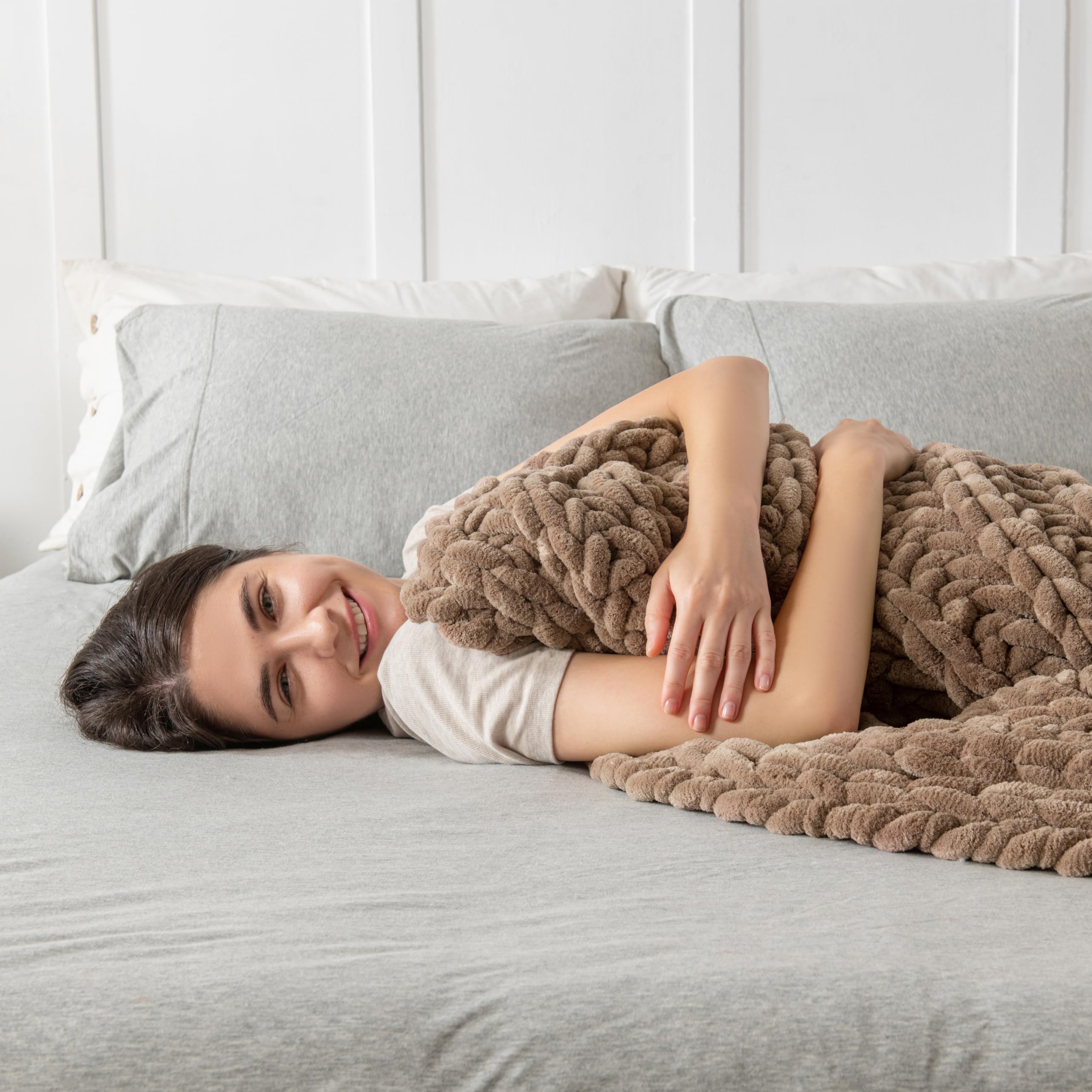

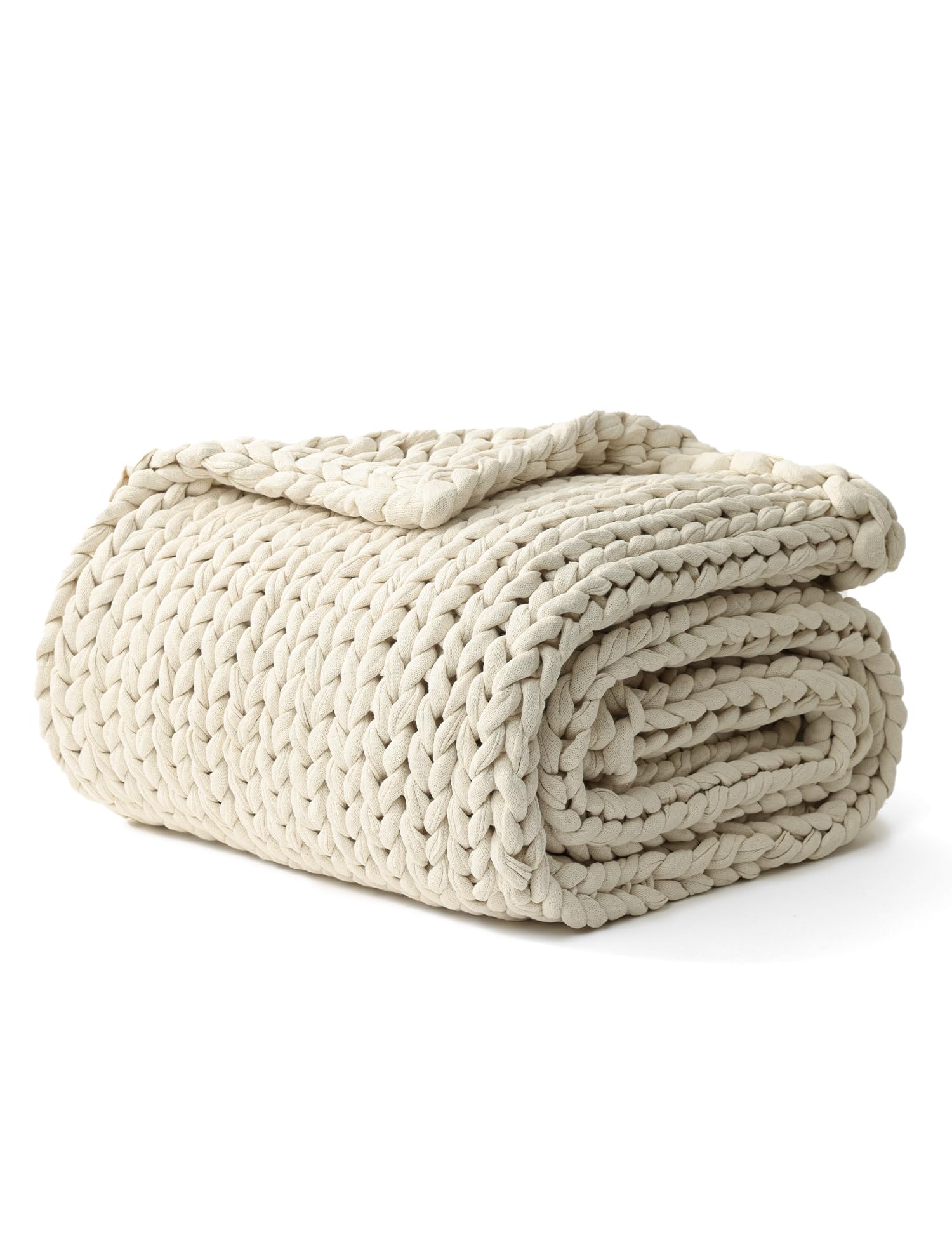

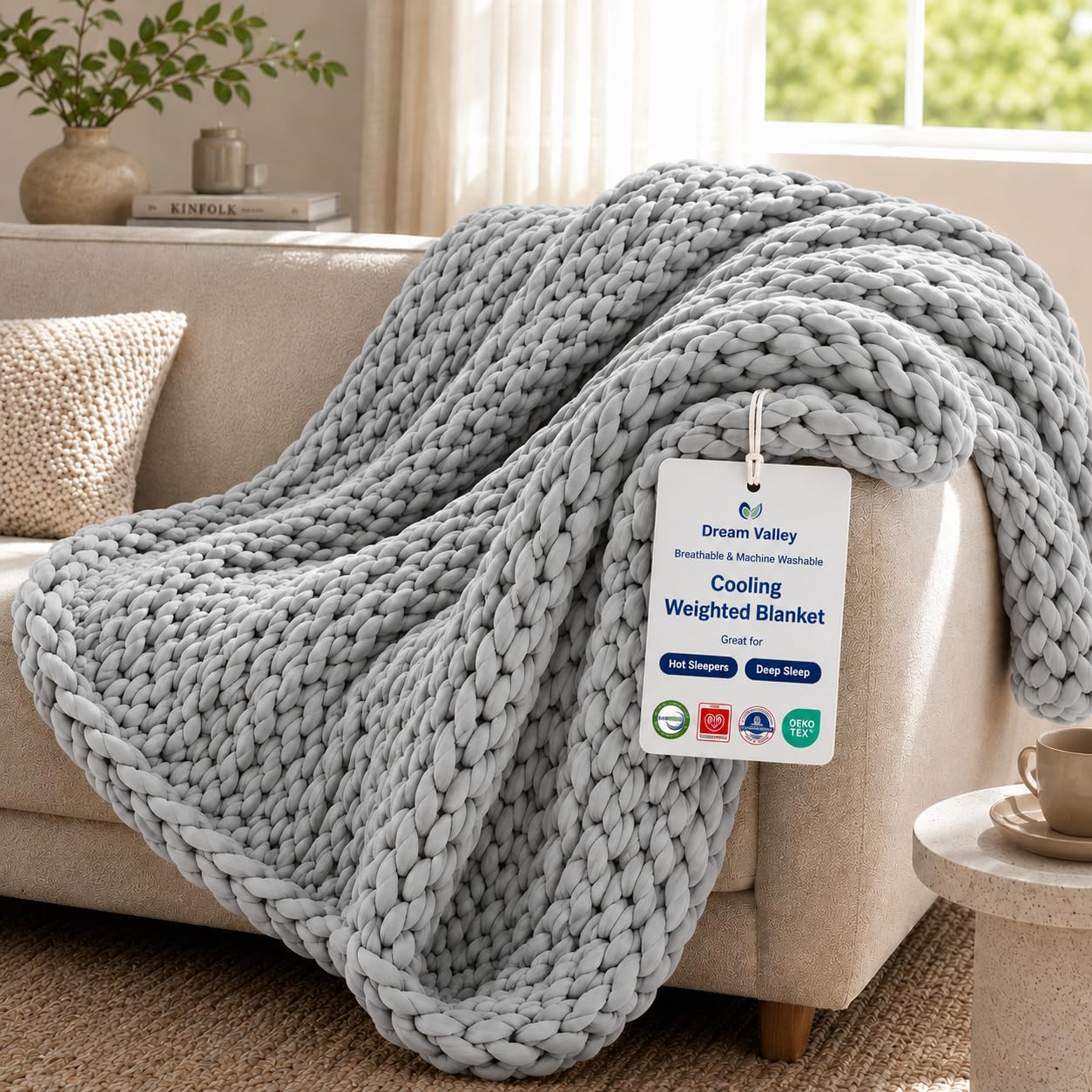

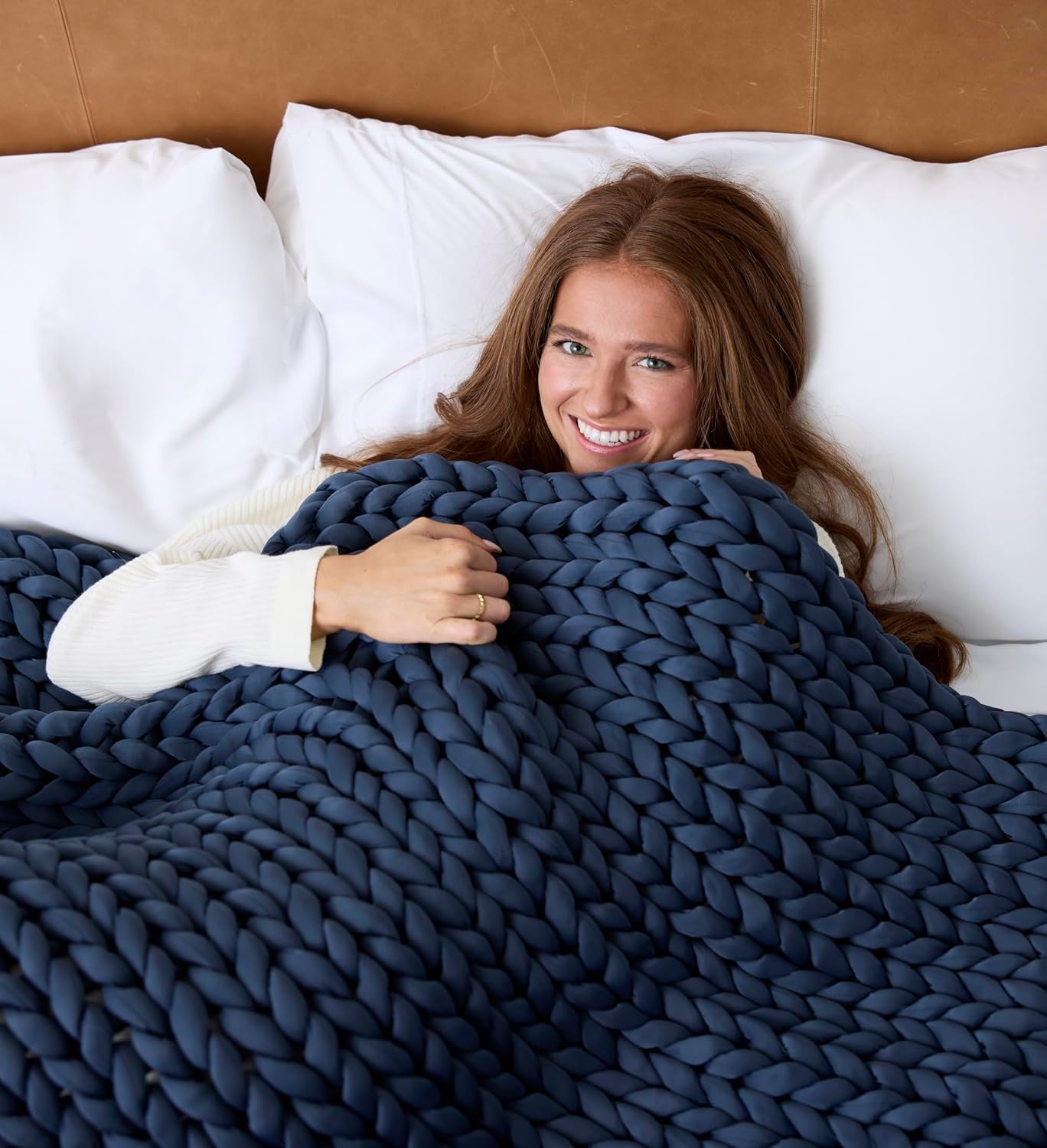
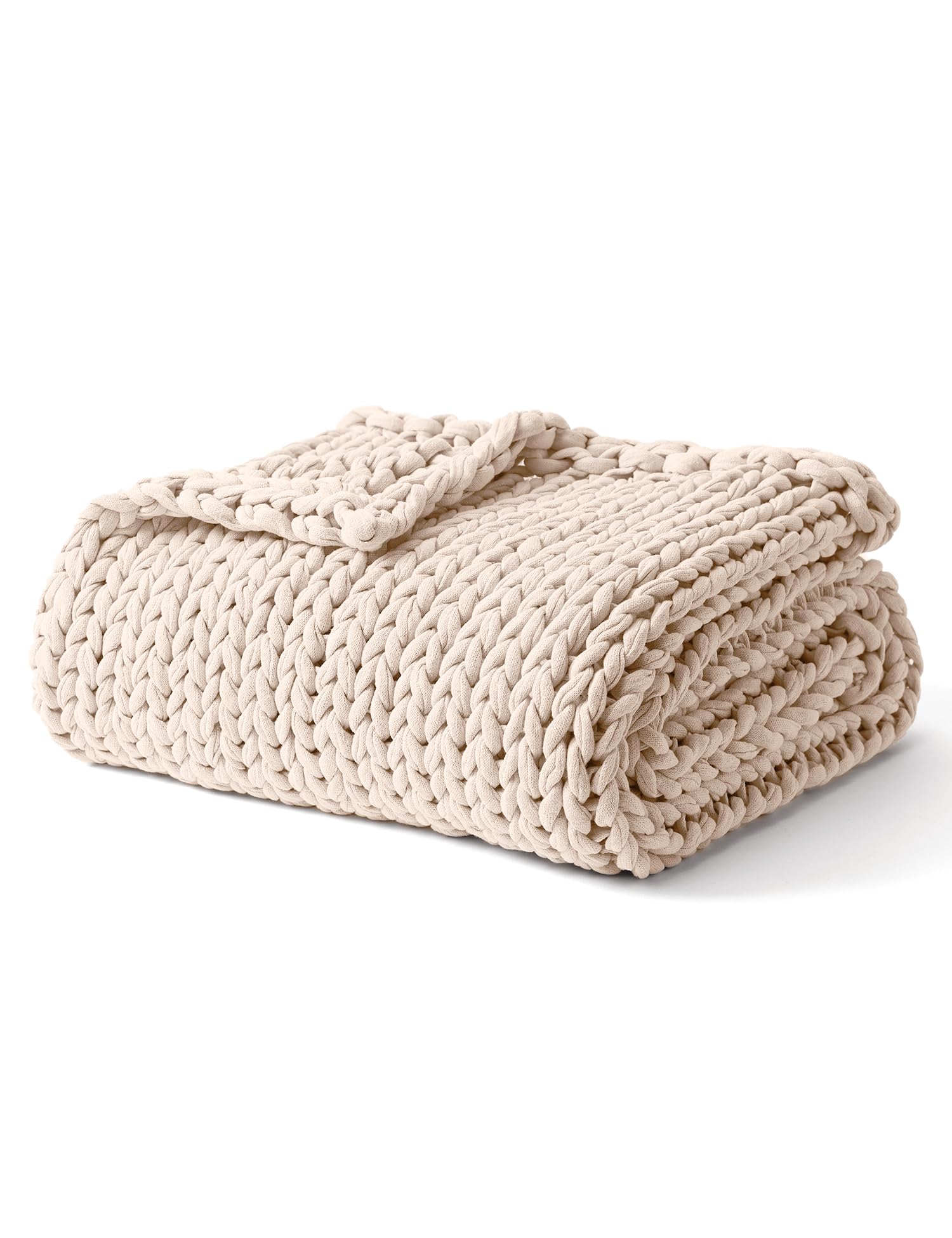
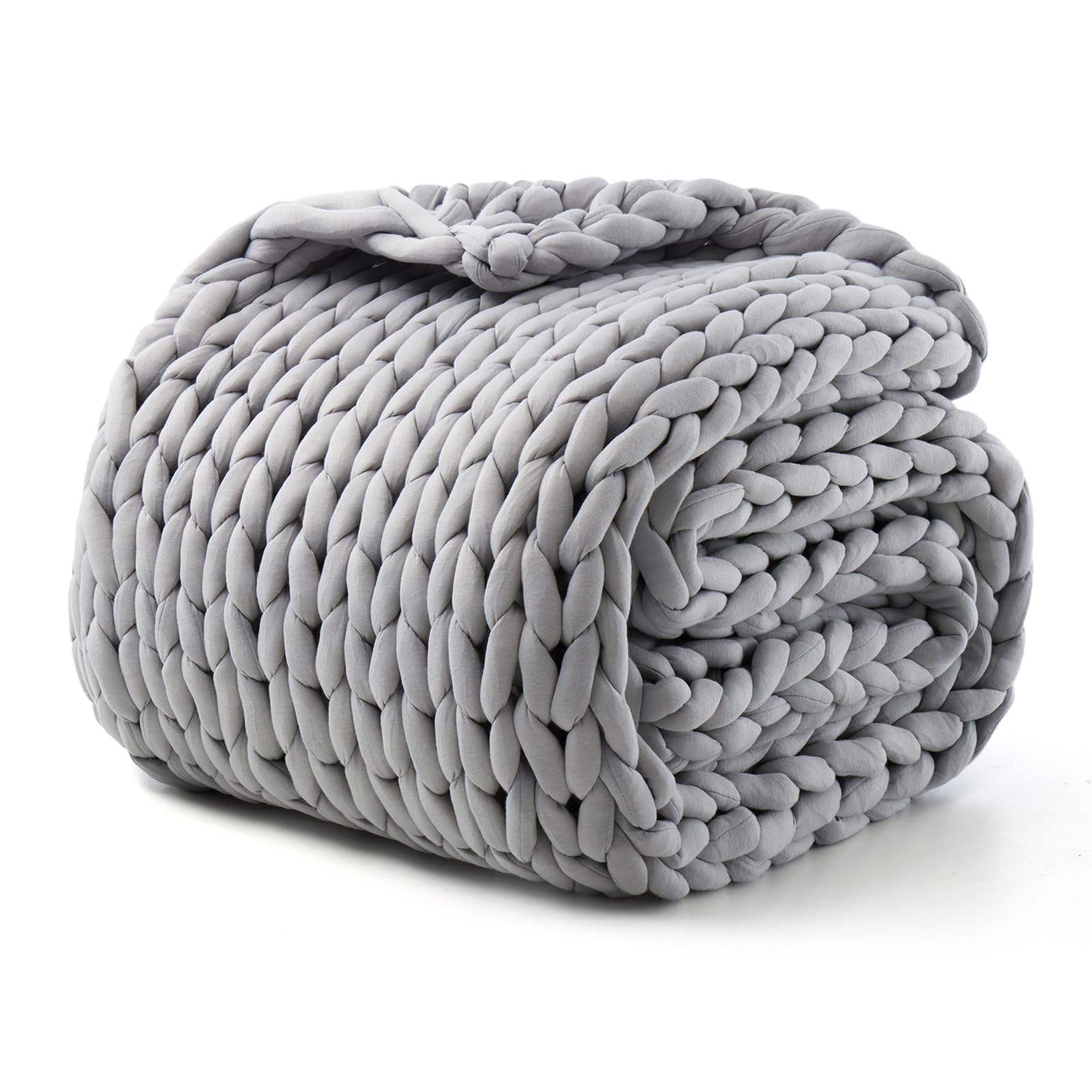
Types of Chunky Knit Blankets Compared
Instead of naming individual picks, it helps to compare the three yarn families you will see again and again. Each gives the same basic looped weight, but they differ in feel, care, airflow, and price.
Cotton Yarn Knits
Cotton yarn knits feel soft and natural against the skin, and they breathe well through the open loops. The weight feels calm and even, and the fabric has very little rustle when you turn over. Cotton tends to cost more and can feel heavier to lift when wet, so check the care label before you buy. This family suits sleepers who dislike synthetic textures and want a blanket that also looks at home draped over a bed.
Synthetic Yarn Knits
Synthetic yarn knits, often made from polyester blends, usually cost less and resist stretching a little better than pure cotton. The loops hold their shape well, and the blanket often dries faster after washing. The trade off is warmth, since synthetic yarn can trap more heat around your body on mild nights. This family suits buyers who want the chunky look and steady pressure while keeping spending modest and care simple.
Blended and Recycled Yarn Knits
Blended yarn knits mix fibers to balance softness, strength, and airflow in a single blanket. Some blends use recycled yarn, which appeals if you prefer to limit new material use. Feel varies widely between blends, so read how the yarn is spun and whether the loops are filled or hollow, since a filled tube of yarn adds weight without needing extra bulk.
Who Should Buy a Chunky Knit Weighted Blanket?
Hot Sleepers Who Want Weight Without Trapped Heat
If you love steady pressure but kick off a normal weighted blanket by midnight, the open weave of a chunky knit lets air move through the loops all night. Your body still feels held, yet heat escapes instead of building under a dense shell. Our guide to the best cooling weighted blanket explains more ways hot sleepers can stay comfortable.
Adults Who Want Calm, Even Pressure
Many adults choose a weighted blanket to settle into sleep with a sense of gentle, steady pressure across the torso and legs. A knit spreads that pressure evenly because the weight lives in the yarn itself, so nothing pools at one corner. If ongoing anxiety or poor sleep is affecting your days, a blanket is a comfort aid, not a treatment, and you should talk with a clinician about your personal needs. See our guide to the best weighted blanket for anxiety for more context.
Readers and Loungers Who Mostly Use a Throw
A smaller chunky knit works beautifully as a living room throw for reading, watching a film, or winding down after work. The bold loops add texture to a sofa, and the weight helps you sit still and relax. Because a throw covers less of your body, you can often choose a slightly lighter weight than a full bed size.
Key Features to Compare in the Best Chunky Knit Weighted Blanket
Weight and the Ten Percent Guide
A common starting point is about ten percent of your body weight, rounded to the nearest size a maker offers. A person who weighs about 150 pounds often starts near 15 pounds, while a lighter adult may prefer 10 or 12 pounds. Weight should feel grounding, never hard to breathe under or hard to lift off.
If you fall between sizes, the lighter option is usually the safer first step. Our roundup of the best weighted blanket for adults shows how adult sizing differs from smaller sizes.
Yarn Material and Safety Certifications
Yarn decides how the blanket feels, breathes, and ages. Cotton feels cool and natural, synthetics add strength and lower the price, and blends try to give you both. Look for clear fiber content on the product page rather than vague words like soft or premium.
Independent textile certifications can confirm that a yarn was screened for harmful substances, which matters for something that rests on your skin for hours. If a listing hides its fiber content or certification details, treat that silence as a reason to keep looking.
Loop Size, Open Weave, and Airflow
Loop size shapes both the look and the feel of the blanket. Large loops create wide gaps that let air pass freely, which keeps the blanket cooler but can let a foot or hand slip through during sleep. Smaller, tighter loops feel more like a solid cover and hold warmth a little better.
Look at close photos of the weave before you order, and picture how it will sit on your bed. A weave that looks sparse in photos will feel even more open in person.
Size and Coverage for Your Bed or Sofa
Coverage should match where you will use the blanket most. A throw size suits one person on a sofa, while larger sizes spread across a twin, queen, or king bed. A weighted blanket should cover your body, not hang far over the sides of the mattress, since extra overhang pulls weight off you and onto the bed.
Measure your mattress and your own sleeping space before you choose. Two people who share a bed often do better with two smaller blankets than one very large one.
Trial Period, Warranty, and What You Should Spend
A home trial matters because weight is a personal feel that photos cannot convey. Look for a trial long enough to try the blanket across warm and cool nights, and read the return terms before you order. Prices vary by yarn and size, from about $50 to $100 for basic synthetic throws, about $100 to $200 for mid range cotton styles, and about $200 to $300 for large premium knits.
A longer warranty on seams and loops adds value. Our guide on how to choose a weighted blanket walks through these checks in order.
Chunky Knit Compared With Bead Filled Blankets
The biggest strength of a chunky knit is airflow. With no solid outer shell, air passes through the weave, so the blanket rarely feels stuffy. The weight also stays put, because there is no loose fill to shift, clump, or leak through a torn seam. Many people also prefer the look, since the loops read as decor rather than bedding equipment.
The trade offs are real, though. An open weave gives slightly less uniform pressure than a dense bead filled design, and fingers or pet claws can catch in the loops. Chunky knits also tend to cost more per pound of weight, and very heavy sizes can be awkward to wash. If breathability and even weight matter most, the knit usually wins.
Common Mistakes to Avoid
- Choosing weight by bed size alone: a king bed does not mean you need the heaviest blanket, and excess weight can disturb your sleep instead of deepening it.
- Ignoring the care label: a heavy wet knit can strain a small home washer, so buying without a washing plan leads to a blanket you dread cleaning.
- Letting a child use an adult blanket: a child must be able to lift the blanket off alone, and adult weights are simply too heavy for small bodies.
- Expecting a medical result: a blanket can support a calm bedtime routine, but it cannot treat anxiety, insomnia, or any other health condition.
- Judging by photos only: loop size and yarn thickness vary a lot between listings, and skipping the stated dimensions often ends in a blanket that feels too sparse or too small.
Care and Maintenance
Good care keeps the loops even and the yarn soft. Shake the blanket out each morning and rotate it on the bed every few days, so the same loops do not carry your body weight every night. Spot clean small marks promptly with a mild detergent and cool water, then let the area air dry fully before you use the blanket again.
For a full wash, follow the maker label first, since yarn type decides the safe method. Many knits wash cold on a gentle cycle in a large capacity machine, while heavier sizes may need a commercial machine or professional cleaning. Dry the blanket flat or on a low setting as directed, and never hang a wet knit by one edge, since its own weight will pull the loops out of shape. Our full guide on how to clean a weighted blanket covers stain care and drying in more detail.
FAQ
Are chunky knit weighted blankets worth it for hot sleepers?
For many hot sleepers, yes, because the open weave solves the main problem that makes classic weighted blankets feel unbearable in summer. Air moves through the loops instead of sitting under a sealed shell, so you keep the pressure and lose much of the trapped heat. They still add some warmth, so pair one with a cool bedroom and light bedding. If you sleep hot even under a thin sheet, try the blanket during a trial period before you commit.
How long does a chunky knit weighted blanket last with nightly use?
A well made knit can last for several years of nightly use when you rotate it and wash it gently. The first signs of age are usually stretched loops and a slightly looser drape rather than any loss of weight, since the yarn itself holds the weight. Resting the blanket off the bed on some days, and keeping pet claws away from the loops, both extend its life. If loops begin to unravel, repair or replace the blanket before the weave weakens further.
Can children use a chunky knit weighted blanket safely?
Children should only use a size and weight made for children, and only when the child can push the blanket off alone without help. Weighted blankets are not for infants or toddlers, and a child should never sleep with an adult weight. People who have breathing problems, sleep apnea, or trouble moving a heavy blanket should talk with a clinician before using one at any age. When in doubt, ask your clinician what weight, if any, fits your child.
Will a chunky knit weighted blanket stretch out over time?
Some gentle loosening is normal, because looped yarn relaxes under its own weight and yours. You can slow it by drying the blanket flat, rotating it often, and storing it folded rather than hanging. A slight stretch does not reduce the total weight, but it can spread that weight over a wider area and soften the pressure a little. If even pressure matters most to you, choose a tighter weave, since smaller loops tend to hold their shape longer.
Can you use a chunky knit weighted blanket with a duvet cover?
You can, but most owners skip the cover because it blocks the airflow that makes a knit appealing in the first place. A cover also hides the looped texture and can bunch around the open weave as you move. If you want a barrier for easier washing, choose a thin, breathable cover and secure it at the corners so the blanket does not fold inside. Many people instead wash the knit itself on a schedule and use a light top sheet beneath it nightly.
Final Thoughts
Start with the right weight for your body, then choose a yarn and loop size that match how warm you sleep. The product table above pulls those choices together so you can compare types side by side. When you find the best chunky knit weighted blanket for your bed or sofa, you get steady, even pressure with the airflow that bead filled designs rarely offer. Check the care label, confirm the trial terms, and let a few calm nights make the final decision.