Best Chunky Knit Blankets: How to Choose for 2026
Disclosure: We may earn a commission when you buy through links on this page, at no extra cost to you. As an Amazon Associate I earn from qualifying purchases. Learn more

The best chunky knit blankets compared by yarn, loop size, weight and care: chenille, wool and tube yarn knits for sofas, beds and gifts that do not shed.
A chunky knit blanket is built from yarn as thick as a thumb, looped into stitches you can see from across the room. That scale is the whole appeal, and it is also why the best chunky knit blankets are harder to judge from a photo than a plain fleece throw: the yarn, the stitch size, and the finished weight decide whether the blanket drapes over a sofa for years or sheds, stretches, and sags within a season. The comparison table below lines up the main options, and this guide explains what each detail means once the blanket is in daily use.
Most chunky knits sold today are hand looped from chenille, merino style wool, or a thick acrylic or polyester tube yarn, and each behaves differently in a home with pets, children, or a warm bedroom. Read the yarn first, then the size, then the care label, and the rest of the choice becomes simple.






Who Should Buy a Chunky Knit Blanket
Living Room Loungers
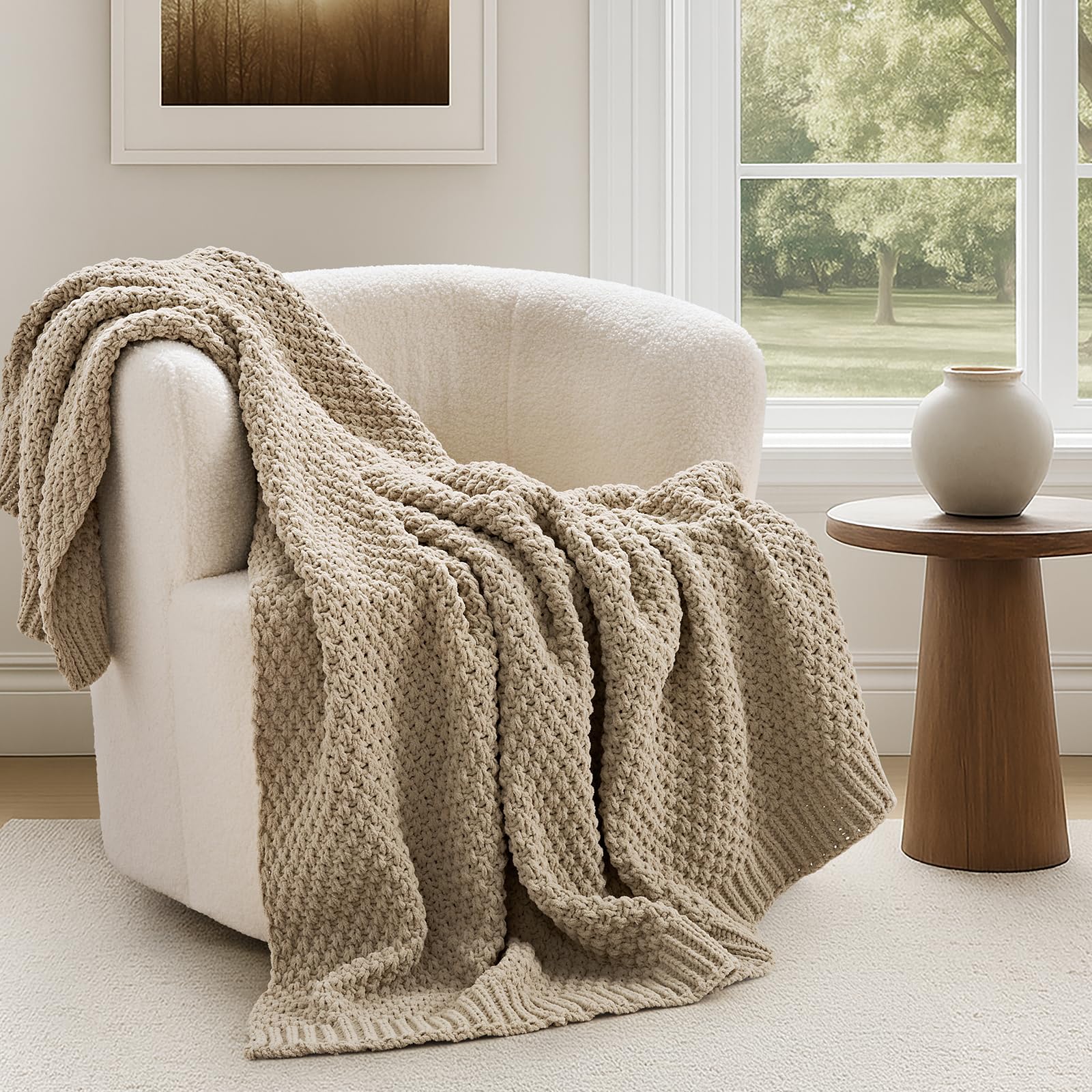
If the blanket will live on a sofa for evening reading and television, you want a throw size, usually about 50 by 60 inches, in a mid weight knit that covers a lap and shoulders without overheating. Chenille is the common choice here because it feels soft against bare arms and holds a tidy fold on the sofa arm between uses.
Bedroom Layer Buyers
As a top layer on a bed, a chunky knit needs enough width to reach both edges of the mattress, which means a 60 by 80 inch size for a full or queen bed, and a heavier knit that stays put overnight instead of sliding to the floor. Tighter loops hold their shape better under the weight of a sleeper who turns often.
Gift Buyers
A chunky knit makes a striking gift, but it only gets used if the recipient can care for it. Choose a machine washable chenille or acrylic knit in a neutral color such as cream, gray, or taupe, and include the care card. A hand wash only wool knit looks luxurious and then sits in a cupboard because nobody wants to risk it.
Key Features to Compare in the Best Chunky Knit Blankets
Yarn Type and Softness
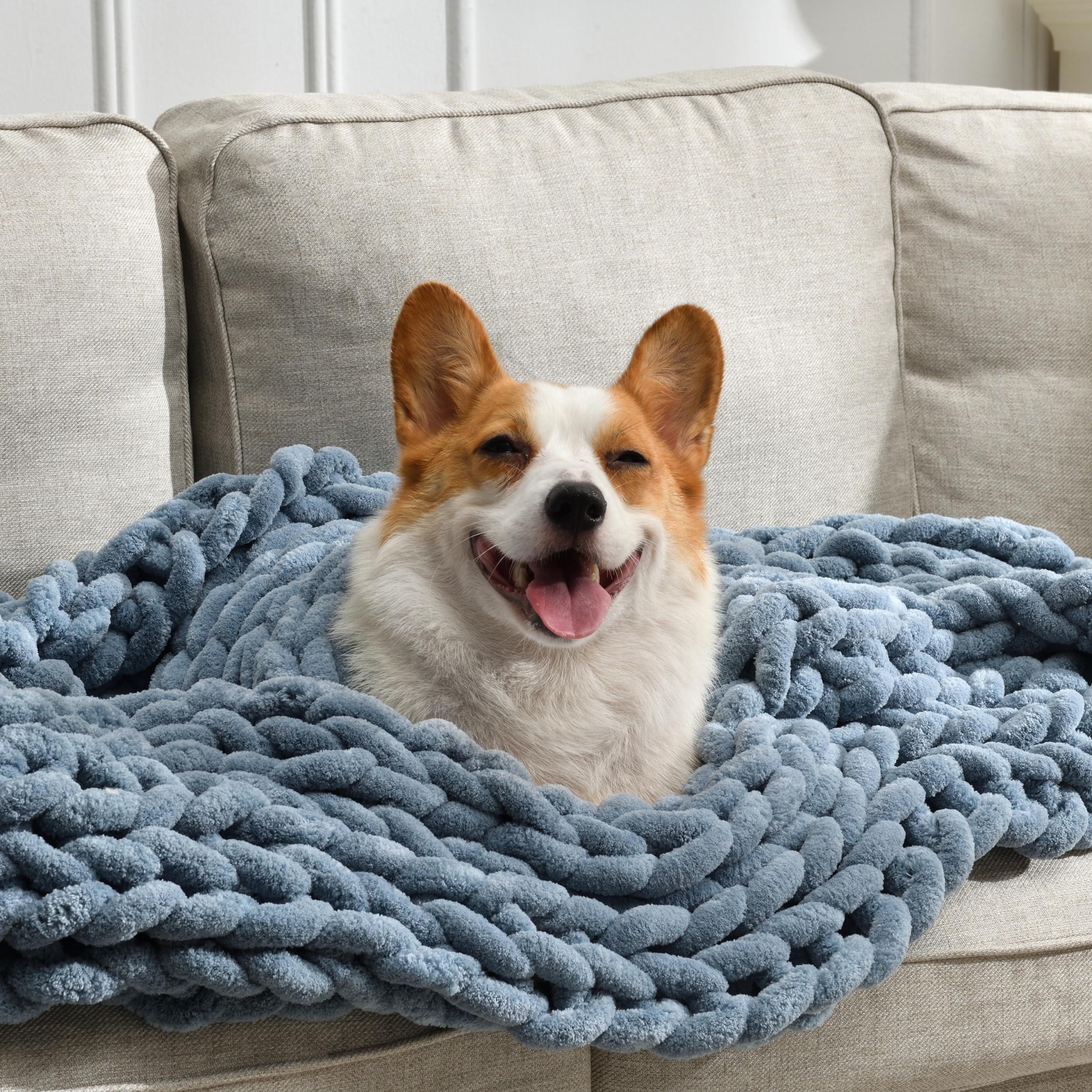
Chenille yarn gives the velvety, plush surface most buyers picture when they think of a chunky knit, and it is the easiest to wash. Its weakness is shedding when the yarn is cheaply made, so look for listings that describe a filled or sealed core and a tight hand finish. Wool and merino blends feel warm and springy and look the most traditional, but many need hand washing and can felt if they meet hot water. Thick acrylic and polyester tube yarns are the budget route: light, washable, and good at holding a bold stitch, though they feel less plush and can look shiny under lamps.
Loop Size and Stitch Density
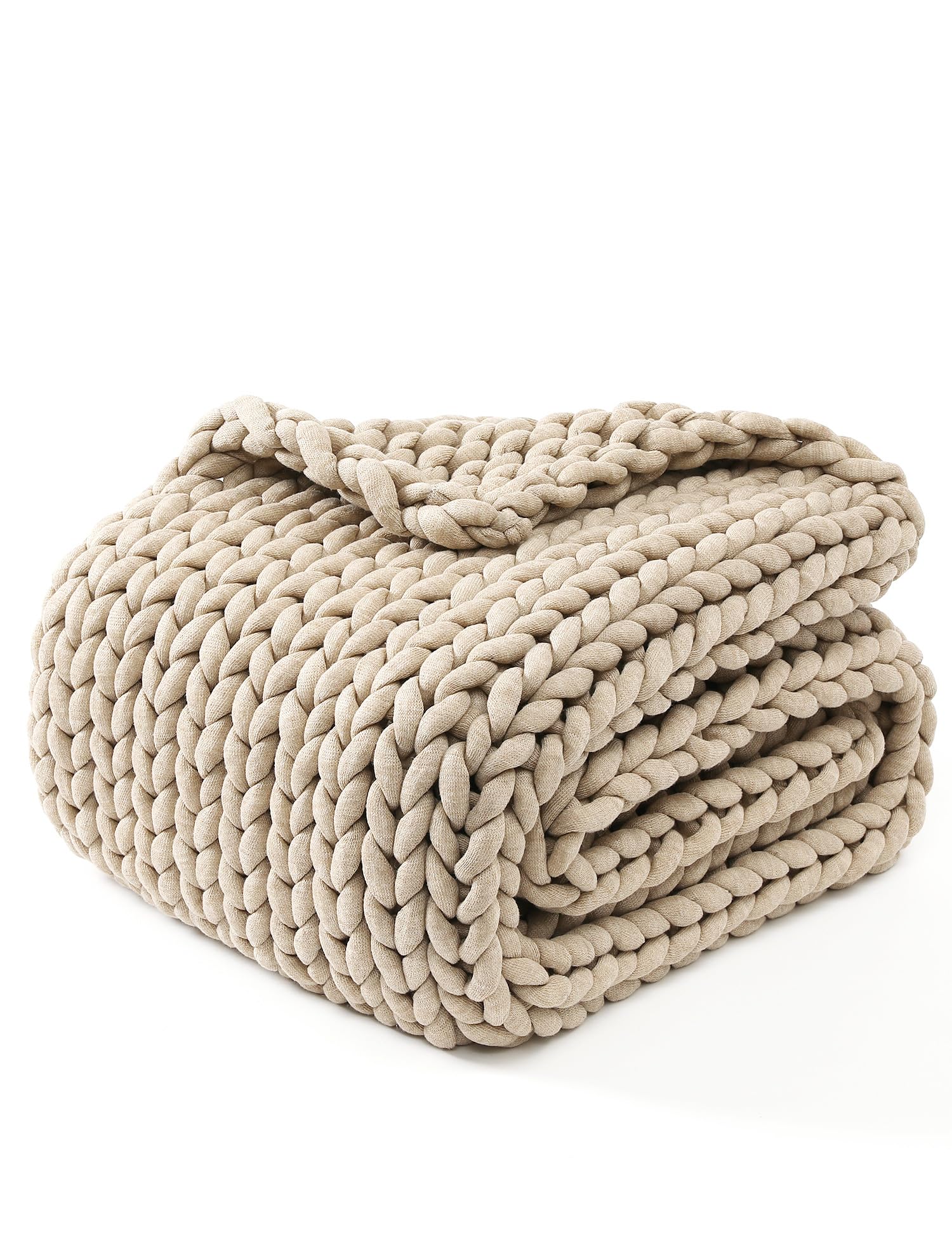
The size of each loop changes both the look and the lifespan. Very large open loops read as dramatic on a styled bed, yet fingers, toes, pet claws, and zipper pulls catch in them, and the open structure stretches under its own weight when hung over a chair back. Smaller, denser loops look more like a classic cable knit, snag less, and hold warmth better. For a blanket that gets used nightly, lean toward the denser knit; for a decorative throw folded at the foot of a guest bed, the open look is fine.
Weight and Warmth
Chunky knits trap warmth in the air between loops rather than in a solid layer, so a dense wool knit feels much warmer than an open chenille knit of the same size. Weight is listed on most product pages, and a 50 by 60 inch chenille throw often lands somewhere between about 4 and 8 pounds. Heavier knits feel grounding and stay in place; lighter ones suit warm rooms and summer evenings. If you run hot, choose the lighter end and an open loop so air moves through.
Size and Coverage
Size names such as throw, twin, and queen vary between makers, so compare the stated inches with your sofa or mattress. A throw around 50 by 60 inches covers one adult; a 60 by 80 inch blanket covers the top of a queen bed or two people on a sofa. Chunky knits also lose a little length as the loops relax, so when you are between sizes, buy the larger one.
Shedding, Pilling, and Construction
Shedding is the most common complaint with chenille knits, and it comes from loose fibers on the yarn surface working free. A light shed in the first week is normal; constant fuzz on dark clothing after a month is a construction problem. Look for yarn described as non shedding or with a bonded surface, and check that loop ends are tied off and tucked rather than left loose, since a single pulled end can unravel a whole row.
Types of Chunky Knit Blankets
Chenille Chunky Knits
Chenille knits are the mainstream choice: soft, machine washable in most cases, widely available in neutral and bold colors, and priced from roughly $30 for a small throw to about $120 for a bed size. They suit busy homes and gift buyers. Their limits are shedding on cheaper yarn and a slightly heavy feel when the blanket is large.
Wool and Merino Style Knits
Wool knits bring natural warmth, bounce, and the classic look that started the chunky knit trend. They cost more, often $100 to $300 or above for a bed size, and most require hand washing or professional cleaning. They suit cool bedrooms and buyers who treat the blanket as a long term piece rather than an everyday throw.
Acrylic and Polyester Tube Yarn Knits
Tube yarn knits use a hollow or lightly filled synthetic yarn that keeps the chunky look at a lighter weight and a lower price. They wash easily and dry faster than wool, which makes them practical for children and pets. The texture is less plush than chenille, and the loops can flatten over time if the yarn is thin.
Weighted Chunky Knits
Some chunky knits are built heavy on purpose, with filled yarn that puts 10 to 20 pounds across a bed size for people who like steady pressure while they sleep. They breathe better than bead filled weighted blankets because air moves through the loops. They are a sleep aid, not a treatment, and anyone with breathing or circulation concerns should ask a doctor before using one.
Common Mistakes to Avoid
- Choosing size from the product name alone instead of the stated inches, then finding the throw barely covers a lap.
- Picking a very open loop for a home with cats, dogs, or small children, where claws and fingers snag the yarn daily.
- Ignoring the care label and machine washing a wool knit, which felts and shrinks it beyond repair.
- Buying the heaviest knit for a warm bedroom and then rarely using it.
- Hanging the blanket over a chair back for storage, which stretches the loops out of line within weeks.
How to Choose Step by Step
- Measure the sofa or bed and decide whether the blanket must cover one person or the whole mattress top.
- Pick the yarn for your household: chenille or tube yarn for washing and pets, wool for warmth and a traditional look.
- Choose loop size by use: dense for nightly use, open for a styled display piece.
- Confirm the stated size, weight, and care instructions on the listing before you order.
Care and Long Term Use
Shake the blanket outdoors once a week to release loose fibers, and spot clean small marks with cool water and a drop of mild detergent before they set. When the label allows machine washing, use a large drum, cold water, a gentle cycle, and a mesh bag or duvet cover so the loops do not catch on the agitator. Dry flat or on a no heat tumble setting, never hung, since a wet chunky knit is heavy enough to pull its own loops out of shape.
Store the blanket folded on a shelf or rolled in a basket, away from direct sun that fades dyed chenille. Keep scissors, pet claws, and jewelry away from the loops, and if a loop does snag, pull the neighboring loops gently to even out the tension rather than cutting anything. A pulled yarn end can usually be tucked back through with a crochet hook.
Related Guides
If you would rather make a blanket than buy one, start with our guide to the best yarn for chunky knit blankets and the broader look at the best chunky yarn for blankets. For ready made throws beyond the knit style, see the best chunky blankets, and for long lasting bedding of every kind, the best quality blankets.
Frequently Asked Questions
Are chunky knit blankets warm?
They can be, but warmth depends on yarn and loop density rather than looks. A dense wool knit traps a lot of air and feels very warm, while an open chenille knit lets heat escape and suits warmer rooms. Check the stated weight and fiber before assuming a thick looking blanket will be hot.
Can I machine wash a chunky knit blanket?
Many chenille and acrylic knits can go in a large machine on a cold, gentle cycle, ideally inside a duvet cover or mesh bag. Most wool knits cannot. Always follow the care label, and dry the blanket flat rather than hanging it.
What size chunky knit blanket should I choose for a sofa?
A 50 by 60 inch throw suits one person on a sofa, and a 60 by 80 inch blanket covers two people or drapes across the back of a three seat sofa. Measure the seat width first, since blanket names vary between makers.
Do chunky knits snag easily?
Open loops snag on jewelry, zippers, and pet claws, while tighter loops resist catching. Choose a denser knit for a busy home and keep sharp objects off the blanket. A snagged loop can usually be eased back into place by hand.
Are chunky knit blankets good for people with allergies?
Washable chenille and acrylic knits are easier to keep free of dust and pet hair than hand wash only wool, so they often suit allergy sensitive homes better. Wash regularly, air the blanket well, and check the fiber content if wool itself is a trigger. Ask your doctor if symptoms persist.
Final Thoughts
The product table above gives a quick overview, but the right blanket comes from matching yarn, loop density, size, and care to the way your household lives. A washable chenille throw in a dense knit covers most sofas and gift lists, a wool knit rewards buyers who want warmth and will hand wash, and a weighted knit suits sleepers who like steady pressure. Choose the best chunky knit blankets for real daily use, and they will stay soft and in shape for years.